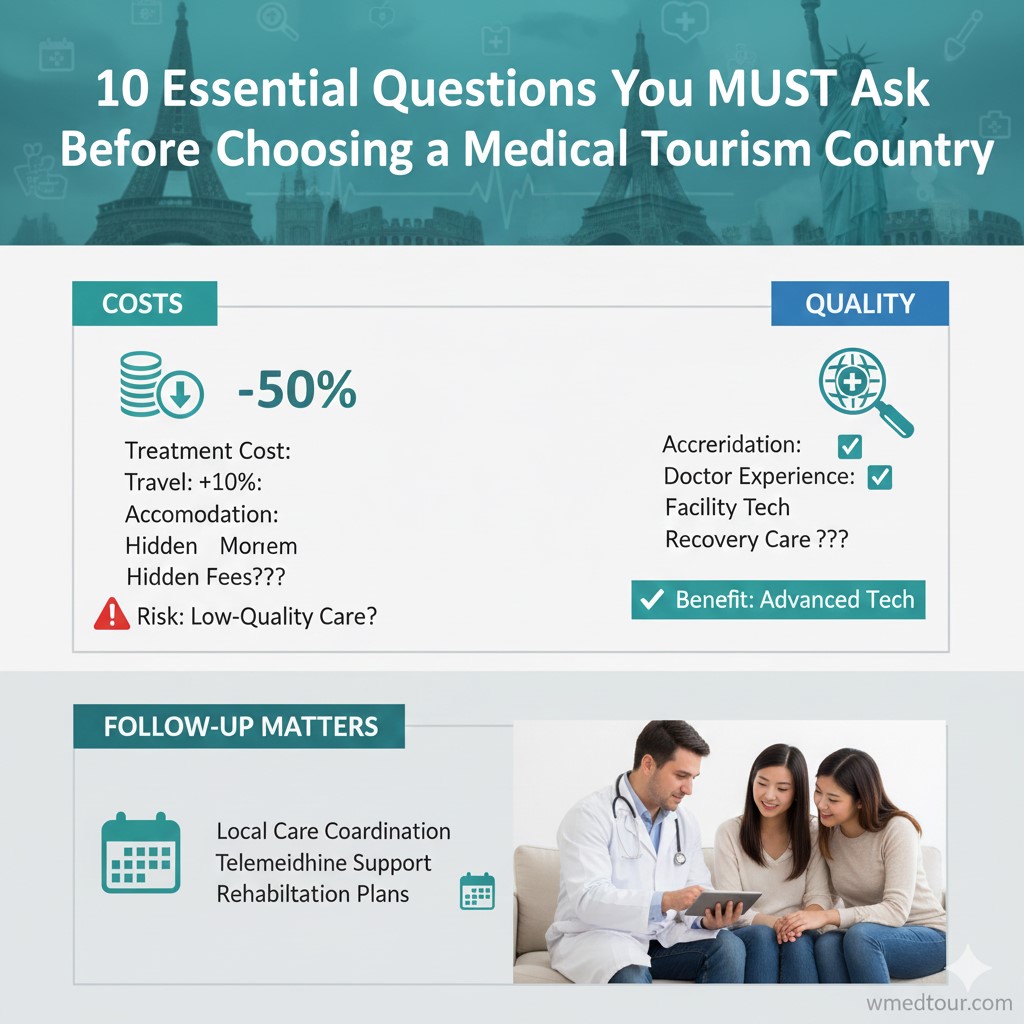
✈️ 10 Essential Questions You MUST Ask Before Choosing a Medical Tourism Country
✨ Executive Summary: Your Health Security Checklist
Choosing a medical tourism destination is a pivotal decision. Consequently, it requires careful due diligence that extends far beyond simply reviewing a clinic’s price list. We designed this comprehensive guide to provide the 10 Essential Questions You MUST Ask Before Choosing a Medical Tourism Country (main keyphrase appears 1 time) to safeguard your health, your finances, and your peace of mind. Furthermore, acquiring these answers is the only way to eliminate guesswork and significantly reduce the inherent risks of seeking treatment abroad. Remember, while cost savings are attractive, the lowest price rarely correlates with the highest safety standard. Ultimately, this article outlines the crucial inquiries related to global accreditation, surgeon-specific experience, rigorous complication management protocols, and clear legal recourse mechanisms. Therefore, reading this post fully equips you with the authority and necessary tools to make a safe, informed choice for procedures ranging from hip replacements to complex fertility treatments.
💡 Introduction: Why Asking Matters More Than Ever
Every year, millions of individuals elect to travel internationally for medical procedures, often motivated by the dual benefits of reduced costs and expedited access to specialized care unavailable in their home countries. Nonetheless, this journey, commonly known as medical tourism, is not without its considerable challenges and latent risks. Poor preparation, particularly a failure to investigate critical details, can unfortunately transform a hopeful trip into a truly regrettable and costly experience. Therefore, understanding the crucial factors that fundamentally influence surgical success, patient safety, and long-term recovery is absolutely paramount. This guide is deliberately structured to focus strictly on the non-negotiable inquiries you must successfully resolve before committing to any specific country, hospital, or surgical team. Because your long-term health is arguably your most valuable asset, we must approach this selection process with the utmost gravity and due diligence. Let us commence with the primary areas of investigation.
The Need for Vetting in a Global Market
The global medical marketplace is sprawling and highly competitive. Consequently, many facilities aggressively market themselves based on attractive, low prices alone. However, an authoritative patient recognizes that price is only one dimension of value. The true value lies in the intersection of cost, quality, and comprehensive safety protocols. Furthermore, regulatory oversight varies dramatically across international borders. In some jurisdictions, the standards are exceedingly high; in others, they are alarmingly lax. This reality necessitates that the patient takes proactive responsibility for vetting their chosen provider using a standardized, exhaustive checklist. We provide this checklist to empower your decision-making, ensuring you choose a destination that excels in both technical skill and ethical patient care. [Read our Global Medical Tourism Guide 2025 here].
Transitioning from Temptation to Transparency
The allure of saving thousands of dollars is potent. Nevertheless, this temptation should not override the fundamental need for transparency from your chosen provider. If a clinic is reluctant to share specific data—such as complication rates, surgeon credentials, or itemized billing—this reluctance should instantly trigger a red flag. Patients embarking on medical travel are essentially undertaking a calculated risk, but that calculation must be based on verified facts, not vague assurances. Therefore, the 10 Essential Questions You MUST Ask Before Choosing a Medical Tourism Country (main keyphrase appears 2 times) serve as your authoritative instrument for demanding and obtaining full transparency. This diligence ensures your journey for care is safe, successful, and stress-free.
🔟 The 10 Essential Questions You MUST Ask Before Choosing a Medical Tourism Country
1. 🏥 What is the Facility’s International and Local Accreditation Status?
Accreditation provides an objective, evidence-based assessment of a healthcare organization’s quality, safety protocols, and operational rigor. Consequently, you must look for globally recognized marks of excellence, primarily the Joint Commission International (JCI). JCI accreditation unequivocally signifies that the hospital meets rigorous, peer-reviewed standards for quality patient care and safety, standards that frequently meet or surpass those observed in many Western nations. Furthermore, local licensing by the country’s specific ministry of health is a required baseline. [Understand Global Medical Treatment Regulations].
Verifying JCI Status
Always verify the hospital’s accreditation status directly on the accrediting body’s official website. This action is crucial because certifications are time-bound and can lapse or be revoked. In contrast, simply displaying a logo on a clinic’s brochure is insufficient proof. The accreditation status provides your primary assurance of institutional quality control and safety commitment, a non-negotiable starting point for your vetting process.
The Role of Local Licensing
While international accreditation signals global excellence, local licensing confirms that the facility legally operates within its national jurisdiction. You should confirm that the institution is in good standing with the local medical regulatory bodies. This step is a necessary safeguard against fly-by-night operations that may lack fundamental legal authorization to perform complex procedures like liver transplants or bone marrow transplants.
2. 🧑⚕️ What are the Surgeon’s Specific Experience and Success Rates for My Procedure?
The total volume of procedures performed, coupled with the verifiable complication rates, is substantially more important than general academic qualifications alone. Therefore, you must insist on data that is highly specific to your exact procedure, such as IVF success rates by age or documented outcomes for Coronary Artery Bypass Grafting (CABG). Surgeons who perform a procedure frequently—a high-volume specialist—naturally develop a greater proficiency and finesse, which invariably leads to measurably better patient results. This question forms a key part of the 10 Essential Questions You MUST Ask Before Choosing a Medical Tourism Country (main keyphrase appears 3 times).
Insisting on Procedure-Specific Data
Do not accept general claims like “our surgeons are the best.” Instead, ask for the surgeon’s personal history: “How many Total Knee Replacement surgeries did this specific surgeon perform last year, and what was their documented rate of post-operative infection?” You should also ask for the surgeon’s detailed board certification documents and verify where they completed any specialized fellowship training. A highly reputable facility should be completely ready and willing to provide this specific, verifiable data.
Vetting Credentials and Training
A thorough investigation includes confirming the surgeon’s education from recognized, accredited medical schools. For high-stakes surgeries, such as brain tumor removal, verify their specialty training history. Furthermore, look for evidence of continuous professional development, ensuring the surgeon stays current with the newest medical techniques, such as new IVF methods using AI.
3. 🗣️ How is Communication Handled, Especially During an Emergency?
Language barriers constitute a very significant risk in medical travel. Clear, unambiguous communication is absolutely critical for multiple phases: obtaining informed consent, ensuring accurate adherence to complex pre-operative instructions, and effectively expressing subtle post-operative concerns. You must ask specifically about the availability of certified medical interpreters, who are professionally trained to handle complex medical terminology, rather than relying on staff members who are merely bilingual. [Review our Pre-Travel Checklist].
Interpreter Certification and Availability
Confirm the interpreter’s professional certification and their specific role during crucial discussions, particularly those concerning anesthesia, potential complications, and discharge instructions. In a medical emergency, direct and immediate communication between the patient and the care team is unequivocally non-negotiable. Consequently, ensure the entire spectrum of staff—from bedside nurses to specialist therapists—can communicate effectively, or that a certified interpreter is accessible 24/7. This level of communication detail is critical for complex procedures like haploidentical bone marrow transplants.
Cultural and Contextual Understanding
The best medical interpretation goes beyond word-for-word translation; it involves cultural context. Furthermore, ensure the hospital staff are trained in cultural competence, recognizing that a patient’s expression of pain or distress can vary significantly across cultural backgrounds. This deeper understanding prevents misunderstandings that could compromise care quality, especially in a stressful post-operative environment.
4. 💲 What is Included in the Price, and What are the Potential Hidden Costs?
Price transparency serves as a definitive hallmark of an ethical and trustworthy medical tourism provider. Therefore, your financial quote must be comprehensively itemized. It needs to include: the precise duration of the required hospital stay, all necessary medications (both in-patient and take-home), the fees for the surgeon, the anesthetist, and any required assistant surgeons, essential pre-operative tests, and mandatory post-operative therapy sessions. Be highly skeptical of any package that appears significantly cheaper than the market average; these often deliberately exclude critical components, leaving the patient with unexpected, high costs upon arrival. This is one of the most practical of the 10 Essential Questions You MUST Ask Before Choosing a Medical Tourism Country (main keyphrase appears 4 times).
Scrutinizing the Package Inclusions
Ask specifically about all potential costs related to unforeseen events: extended hospital stays, necessary blood transfusions, or the use of specialized equipment. Furthermore, ensure that the cost of your required implantable device, for example, a specific brand of breast implant or a prosthetic knee joint, is clearly specified, including the brand and model. For instance, comparing the cost of a comprehensive hair transplant in Turkey requires this forensic level of detailed financial breakdown.
The Role of Follow-up Costs
Determine the cost of all required post-discharge follow-up appointments with the operating surgeon. Some quotes only cover the initial consultation. Ultimately, unexpected follow-up fees can substantially increase the final price, transforming a seemingly cheap trip into an expensive ordeal. Insist on a written guarantee that the quoted price is the final, all-inclusive rate for the planned procedure.
5. 📋 What is the Protocol for Managing Complications, Both On-Site and After Returning Home?
No surgical procedure, regardless of the surgeon’s skill, is entirely without risk; therefore, a high-quality, ethical facility must possess a clear, fully rehearsed, and transparent plan for managing potential complications. You must explicitly ask: “If a serious complication occurs, who is financially responsible for the additional hospital stay, any necessary second surgery, and the requisite medications?” This is the most financially protective of the 10 Essential Questions You MUST Ask Before Choosing a Medical Tourism Country (main keyphrase appears 5 times). Furthermore, the financial responsibility policy should be in writing.
Emergency Response and Financial Liability
A reputable facility will either carry complication insurance that covers the cost of unforeseen treatment or have a predefined, capped cost structure for re-operation. Crucially, they should also have a process for coordinating immediate, remote care with a local physician or emergency department in your home country upon your return. This vital continuity of care is particularly essential for complex or rapidly evolving conditions, such as post-operative infection after procedures like corneal transplant surgery. Consequently, the complication management plan is the true test of a hospital’s commitment to patient safety over profit.
Post-Discharge Monitoring and Support
Inquire about the resources available after you are discharged from the hospital but before you fly home. Does the facility offer a dedicated recovery house or nursing support? Furthermore, what mechanisms are in place for telemedicine follow-up once you are back in your home country? The quality of remote support, including accessibility via secure video consultation, is essential for a safe recovery, especially after major procedures like tummy tuck and liposuction, which require careful monitoring.
6. 🛡️ Does the Country and Hospital Have Malpractice Insurance and a Legal Recourse Process?
Understanding your precise legal rights and the avenues for recourse is absolutely critical for managing risk. You must investigate the medical liability and professional negligence laws of the destination country thoroughly. Does the specific hospital and the individual surgeon carry robust malpractice insurance coverage that meets international standards? Significantly, this insurance serves as your last line of financial protection if professional negligence or an egregious error occurs. Ask for a detailed, clear outline of the complaints, arbitration, and legal recourse process specifically for international patients. [Read about International Patient Rights at an authoritative source]. Ultimately, engaging in medical tourism requires a comprehensive understanding of this legal framework.
The Challenge of Trans-border Litigation
While some countries, particularly in Western Europe, possess highly transparent and predictable medical legal systems, others may present significant bureaucratic and legal challenges for foreign patients. Consequently, pursuing litigation across borders can be excessively complex, prohibitively costly, and extremely time-consuming. Because of these challenges, the prevention of complications through rigorous vetting (the other nine questions) is always far superior to the cure of legal action. For instance, researching the destination’s specific framework for complex, highly-debated procedures like fetal gender selection is paramount.
Considering Alternative Dispute Resolution (ADR)
Inquire if the hospital offers alternative dispute resolution mechanisms, such as mandatory, non-binding mediation or arbitration. These options can often resolve conflicts more quickly and affordably than full litigation. Furthermore, if you are working with a medical tourism facilitator, confirm their legal responsibility and their role in any dispute resolution process that may arise.
7. 💉 What Quality Control Measures are in Place for Medications, Equipment, and Blood Supply?
The quality of the facility’s infrastructure and supplies must rigorously adhere to world-class standards. You need to ask about the specific origin, regulatory approval, and quality certification of all implantable devices, such as pacemakers, dental implants, or joint replacements. Furthermore, you must ensure that the facility employs globally approved, up-to-date standards for surgical instrument sterilization and the comprehensive screening and testing of the blood supply. Using substandard or counterfeit medications, or relying on outdated diagnostic and surgical equipment, introduces a catastrophic level of risk. This meticulous inquiry helps you determine if the provider genuinely meets international safety guidelines, making it a pivotal item among the 10 Essential Questions You MUST Ask Before Choosing a Medical Tourism Country (main keyphrase appears 6 times).
Vetting Pharmaceuticals and Devices
Ask the hospital to specify which international pharmacopeia standards they follow, such as the European Medicines Agency (EMA) or the U.S. Food and Drug Administration (FDA) equivalents. For advanced treatments, like TCR T-cell therapy, confirm the manufacturing process and regulatory approval of the cellular product itself. For surgery, the specific age and maintenance schedule of high-tech equipment, such as robotic surgical systems, should be disclosed. [Refer to an academic report on medical supply chain quality].
Blood Safety and Screening
Blood transfusions carry an inherent, if minimal, risk. You should ensure the hospital adheres to the strict screening protocols recommended by organizations like the World Health Organization (WHO) for infectious diseases, including HIV, Hepatitis B, and Hepatitis C. A reliable facility will have robust blood bank procedures and documented chain-of-custody protocols for all blood products used.
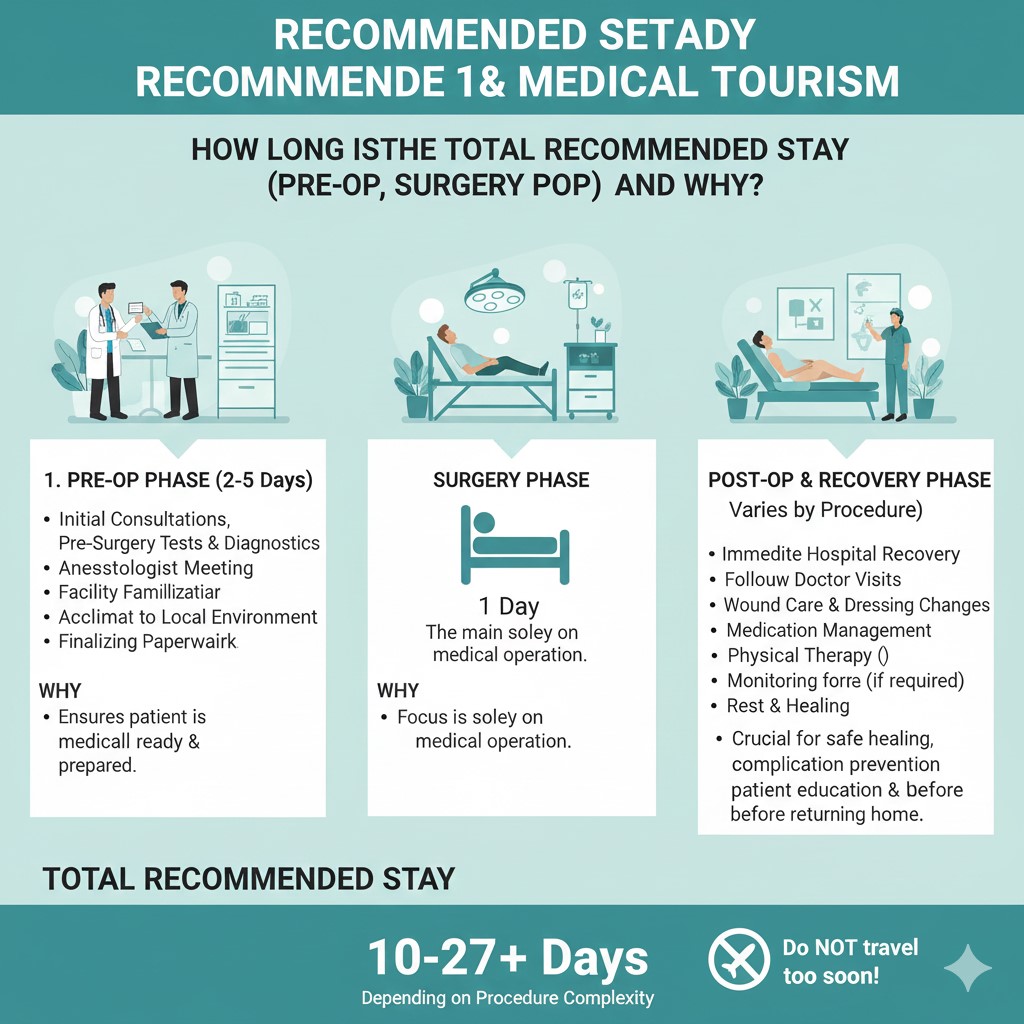
8. 📅 How Long is the Total Recommended Stay (Pre-Op, Surgery, Post-Op) and Why?
A safe and successful recovery fundamentally requires an appropriate amount of time. Therefore, any reputable surgeon will insist upon a mandatory post-operative recovery period spent within the country, usually near the hospital. This essential period permits the medical team to monitor the patient for immediate post-surgical complications, such as internal bleeding or severe infections, which typically manifest within the first two weeks. Consequently, any suggestion of an overly short stay—for instance, flying home immediately after a major procedure—should be treated as an immediate, severe red flag, suggesting a focus on rapid patient turnover rather than safety. Ask for a meticulously detailed, day-by-day recovery itinerary.
Managing the Risk of Travel
Traveling too soon after any major surgery significantly elevates the risk of life-threatening conditions like Deep Vein Thrombosis (DVT) and Pulmonary Embolism (PE), especially on long-haul flights. The hospital should provide clear guidelines on anti-coagulation therapy and mobilization exercises for the flight. This information allows you to accurately plan your accommodations, non-medical logistics, and application for a medical travel visa. For example, recovery from CABG typically necessitates three weeks of ground recovery before any air travel.
The Role of Non-Hospital Recovery
Inquire about supervised recovery options outside the hospital. Many patients find comfort and focused care in a dedicated recovery hotel or specialized nursing facility, rather than a standard tourist hotel. This is particularly relevant for procedures that require intensive, short-term physical therapy, such as post-hip replacement care, ensuring the continuity of rehabilitation.
9. 🌡️ What is the Infection Control Rate and Protocol?
Hospital-Acquired Infections (HAIs) remain a serious, pervasive global healthcare concern. Therefore, you must ask for the specific, verifiable infection rates of the facility, including the Surgical Site Infection (SSI) rate, the Central Line-Associated Bloodstream Infection (CLABSI) rate, and the rate of multi-drug-resistant organism (MDRO) infections, such as MRSA. While low rates are highly desirable and reassuring, they should also be contextualized against published national or international benchmarks. Furthermore, the facility must be able to demonstrate an unwavering commitment to rigorous hand hygiene compliance, meticulous sterilization techniques for surgical instruments, and proper isolation protocols.
Benchmarking and Transparency
Ask how frequently the facility audits its infection control processes. High-ranked authoritative sources, such as the Centers for Disease Control and Prevention (CDC) or the World Health Organization (WHO), publish benchmarks that provide essential context for interpreting the reported rates. If a hospital refuses to disclose this data, it is a significant warning sign that their safety standards may be below par. This critical safety check is undeniably a core component of the 10 Essential Questions You MUST Ask Before Choosing a Medical Tourism Country (main keyphrase appears 7 times).
Hospital Infrastructure and Environment
Inquire about the hospital’s physical infrastructure, specifically focusing on the filtration systems in operating rooms and intensive care units (ICUs). High-efficiency particulate air (HEPA) filtration and positive-pressure ventilation in sterile areas are critical for minimizing airborne pathogens. A modern, well-maintained infrastructure is an essential defense against HAIs, particularly for sensitive procedures like kidney transplantation.
10. 🗺️ What are the Logistical and Political Stability Risks in the Destination Country?
Your overall patient journey involves much more than just the hospital walls. You must thoroughly evaluate the destination’s comprehensive stability. This includes assessing the current political climate, documented crime rates in and around the medical facilities, and the general quality of national infrastructure (e.g., reliable electrical power, clean water availability, and functioning emergency services). Furthermore, you must assess travel logistics, including the ease and security of obtaining a visa, as covered in our guides on Medical Tourism Iran and Medical Travel Turkey. If the chosen country is subject to current government travel advisories or political unrest, you must understand precisely how these factors might disrupt your travel and recovery plans, or potentially invalidate your travel insurance coverage. Choosing a politically and logistically stable destination minimizes external stressors during your critical recovery period, a factor often overlooked by patients focused purely on the surgical procedure itself.
Security and Local Safety
Research the safety of the neighborhood where the hospital and your recovery accommodation are located. A premium medical facility should be situated in a secure, accessible area. Inquire about the transportation logistics from the airport to the hospital, especially the availability of secure, vetted transfers. Furthermore, a safe environment contributes significantly to psychological well-being, which aids physical healing.
Insurance and Political Risk
Confirm with your insurance provider that your policy remains valid if you travel against official government advice. Some travel insurance policies are automatically voided if the destination is under a Level 3 or 4 travel advisory. This final question effectively completes the essential checklist for selecting a safe, secure, and logistically sound location for your medical procedure.
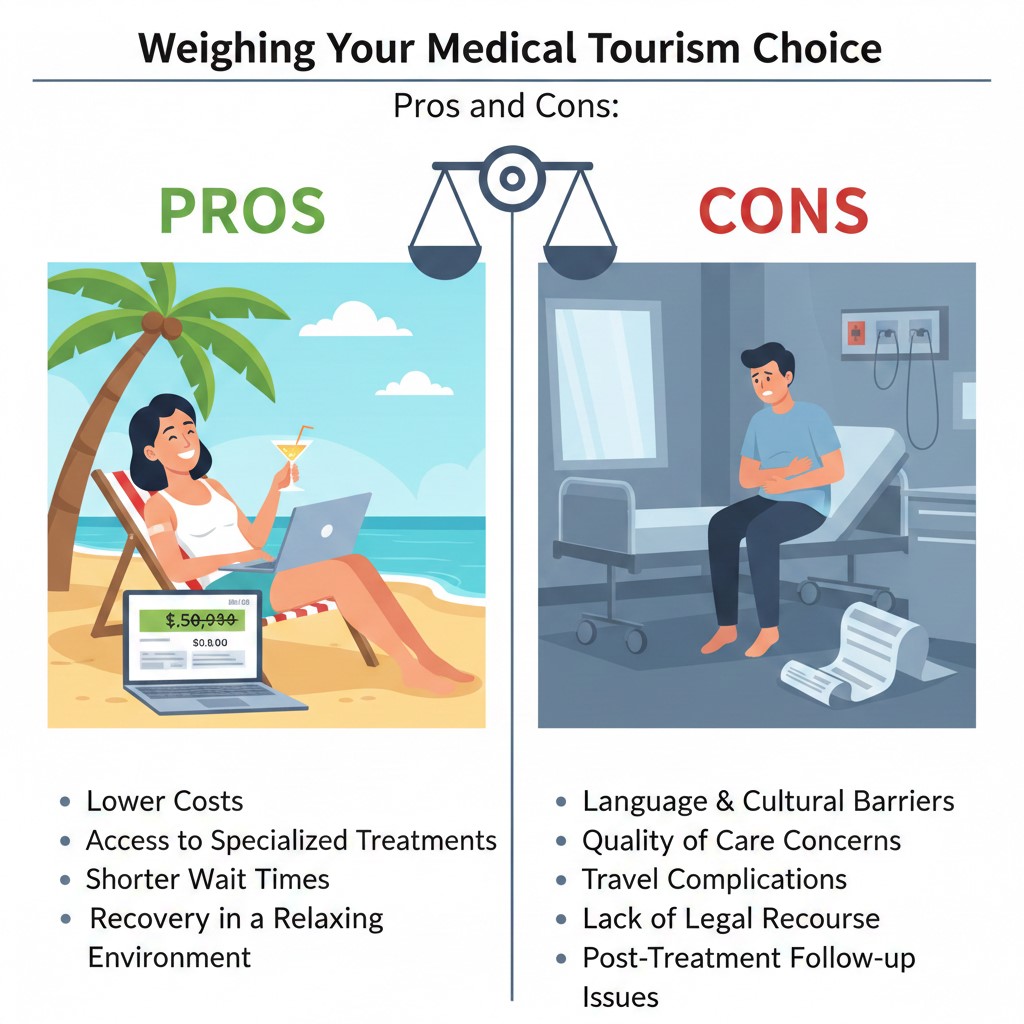
⚖️ Pros and Cons: Weighing Your Medical Tourism Choice
Evaluating a potential medical tourism country necessitates a balanced, objective view, carefully considering both the significant benefits and the potential, inherent drawbacks. Furthermore, this assessment must be customized to your specific medical needs and personal risk tolerance. Consequently, we present a detailed breakdown of the typical pros and cons associated with seeking specialized healthcare abroad. The goal is to inform your decision and ensure you address all the 10 Essential Questions You MUST Ask Before Choosing a Medical Tourism Country (main keyphrase appears 8 times) with appropriate context. [Explore global medical tourism options].
➕ The Advantages of Informed Medical Tourism
- ✔️ Significant Cost Savings: Procedures often cost between 30% to 70% less than equivalent care in nations like the US, Canada, or the UK, even after factoring in comprehensive travel and accommodation expenses. This saving is particularly notable for high-cost procedures like total knee replacement.
- ✔️ Immediate Access to Care: Patients can completely bypass potentially lengthy waiting lists common in national healthcare systems for elective or highly specialized procedures, securing immediate access to treatments like heart valve replacement or advanced orthopedic surgery.
- ✔️ Access to Specialized Expertise: Certain countries and facilities develop world-renowned expertise in niche treatments, such as cutting-edge immunotherapy for cancer or specific gender-affirming surgeries, drawing patients globally.
- ✔️ Privacy and Anonymity: The opportunity to recover discreetly away from your home environment, especially popular for cosmetic procedures or treatments with social stigma.
- ✔️ Advanced Technology Access: Many top medical tourism hospitals invest heavily in the latest technology, such as robotic surgery systems, sometimes offering newer models than those available in the patient’s home country.
➖ The Risks and Disadvantages to Mitigate
- ❌ Lack of Legal Recourse: If a significant complication or medical error arises, initiating legal action is often complex, potentially extremely expensive, and incredibly difficult to successfully pursue across international borders.
- ❌ Travel-Related Complications: Flying too quickly after an extensive surgery, such as aortic surgery, dramatically increases the medical risk of DVT and pulmonary embolism, which can be fatal.
- ❌ Communication Breakdown: Language differences or profound cultural misunderstandings between the patient, nurse, and surgeon can tragically lead to errors in pre-operative, operative, or post-operative care and instructions.
- ❌ Variable Quality Standards: The quality of the accreditation, surgical safety systems, and regulatory oversight may be substantially less stringent or inconsistently enforced compared to the patient’s home country, necessitating thorough personal investigation.
- ❌ Discontinuity of Care: Coordinating follow-up care, obtaining necessary medical records, or securing diagnostic imaging results upon returning home can be frustratingly difficult and time-consuming.
📊 Comparative Vetting Table: Destination Criteria
Use this functional table as a practical tool to quickly compare potential medical tourism destinations against the most critical criteria identified in the 10 Essential Questions You MUST Ask Before Choosing a Medical Tourism Country (main keyphrase appears 9 times).
| Criteria | Budget Destination (High-Risk Profile) | Regulated Destination (Example) | Wmedtour Vetted Partner (Preferred) |
|---|---|---|---|
| International Accreditation (Q1) | Often Non-existent or Unverified | Usually JCI or European Standard | Mandatory JCI/Accredited Standard |
| Surgeon Volume Data (Q2) | Refused or Unavailable Upon Request | Available, often requires request | Proactively Shared and Verified |
| Complication Cost Liability (Q5) | Patient Assumes All Costs | Defined Payment Policy, often patient-paid | Clear, Written, or Insurance-Backed Policy |
| Medical Interpreter (Q3) | Basic Bilingual Staff Only | Certified Medical Interpreters on Request | 24/7 Certified Medical Interpreters Included |
| Infection Rate Disclosure (Q9) | Undisclosed or Unaudited | Publicly Reported (National Standard) | Rates Below International Benchmarks |
📝 Case Study: Elias’s Journey for Fertility Treatment
The Challenge
Elias, a 42-year-old professional, sought IVF treatment, specifically requesting PGT with fetal gender selection, which is legally restricted in his home country. He found a clinic abroad advertising an exceptionally low price and a guaranteed “success rate” of 85%. He was highly motivated by the low cost and the aggressive promises, yet he recognized the need for caution.
The Application of the 10 Questions
Before making a final deposit, Elias systematically applied the framework provided by the 10 Essential Questions You MUST Ask Before Choosing a Medical Tourism Country (main keyphrase appears 10 times). His investigation revealed the following critical issues:
- ❌ **Accreditation (Q1):** The clinic claimed international certification, but a direct check showed their JCI status had expired four years prior.
- ❌ **Transparency (Q4):** The quoted price excluded the cost of the necessary hormone medication and the mandatory PGT-A testing, which added 40% to the total bill.
- ❌ **Complication Protocol (Q5):** The clinic’s contract explicitly stated that the patient was responsible for all costs of Ovarian Hyperstimulation Syndrome (OHSS), a known IVF complication.
- ❌ **Legal Recourse (Q6):** The country’s laws did not permit international patients to file medical malpractice lawsuits.
The Outcome
Based on these findings, Elias immediately withdrew his application to the high-risk clinic. He chose a Wmedtour-vetted partner clinic in a different country known for its ethical fertility tourism. Although the second option was 20% more expensive, the hospital provided verified, current JCI accreditation, a written financial liability policy for complications, and transparent fetal gender selection success rates. Ultimately, Elias proceeded with confidence, avoiding the pitfalls of unvetted, cost-driven medical tourism. His successful outcome was a direct result of prioritizing the 10 essential questions over the lure of a cheap price.
👤 Who is This For?
This detailed and authoritative checklist is not merely a suggestion; it is an absolute requirement for a broad range of individuals and organizational stakeholders involved in international healthcare decisions. Specifically, this guide is essential for:
- ✔️ Patients Seeking Complex Surgeries: This includes procedures such as intricate neurosurgery, major organ transplants, advanced oncology treatments, or major orthopedic reconstructions.
- ✔️ Individuals Seeking Elective Procedures: Even for procedures deemed less critical, such as cosmetic surgery (e.g., rhinoplasty) or hair transplants, this checklist ensures the quality of care matches the aesthetic goal.
- ✔️ Corporate HR Departments and Insurance Brokers: Professionals who advise or manage international healthcare options for their clients or employees must use these questions to vet approved global providers responsibly.
- ✔️ Risk-Averse Patients: Any patient who is prioritizing safety, absolute transparency, comprehensive legal protection, and peace of mind over the singular pursuit of the lowest possible price.
- ✔️ Patients with Existing Conditions: Individuals with pre-existing conditions that increase surgical risk, such as those considering interventional cardiology, need the assurance provided by a high-quality, pre-vetted system.
❓ Frequently Asked Questions (FAQ) About Vetting Medical Destinations
These questions and answers are designed to address the most common and critical concerns that arise when seeking to fulfill the requirements of the 10 Essential Questions You MUST Ask Before Choosing a Medical Tourism Country (main keyphrase appears 11 times).
1. Does JCI accreditation guarantee a perfect outcome?
Absolutely not. JCI accreditation ensures that the hospital has the comprehensive organizational systems, strict protocols, and necessary infrastructure in place for consistently high-quality care, patient safety, and rigorous infection control. It establishes a vital minimum standard of excellence. However, it cannot guarantee the individual surgeon’s technical skill, the patient’s biological response, or a specific medical outcome. Consequently, you must still vet the surgeon individually, as covered in Question 2.
2. What is the biggest red flag when dealing with a medical tourism provider?
The single most significant red flag is a categorical lack of price transparency, especially the refusal to provide a complete, itemized, and all-inclusive quote. If a provider cannot clearly specify the costs for all necessary tests, medications, facility fees, and surgical supplies, you must immediately assume hidden charges exist and seek another option. For context, see our detailed guide on comparing cancer treatment costs globally, which emphasizes price clarity.
3. Can I use my standard travel insurance for complications arising from an elective procedure abroad?
Standard, general travel insurance policies almost universally contain an exclusion clause for complications, injuries, or illnesses arising directly from an elective medical procedure. Therefore, you must purchase specialized Medical Tourism Complication Insurance. This specialized policy is designed to cover the high costs of extended stays, re-operations, and emergency medical evacuation if a complication occurs, and its purchase should be confirmed before departure.
4. Is a destination with cheap prices automatically indicative of low quality?
Not necessarily. Lower prices frequently result from significantly lower labor costs, highly favorable exchange rates, and different governmental or private sector subsidy structures. This situation is particularly common for procedures like dental veneers or specific aesthetic surgeries. However, the rigor of the 10 questions is necessary to ensure that the attractive cost savings are not achieved by compromising safety, using inferior materials, or reducing necessary staff-to-patient ratios.
5. How can I reliably verify a surgeon’s board certification from a different country?
The most reputable medical boards globally maintain transparent, searchable online directories. If the surgeon claims primary board certification or fellowship training in a Western country, you can typically verify their status with that nation’s primary licensing body. Furthermore, a professional medical tourism facilitator will already have vetted these credentials and should provide links to the official verification source. [Use our guide to choose a surgeon].
6. What happens practically if I need to file a legal dispute after returning home?
Filing a legal claim requires you to operate within the specific legal jurisdiction and judicial system of the country where the procedure was originally performed. This process typically requires hiring local legal counsel, incurring high travel costs for depositions and court appearances, and managing time-consuming bureaucratic hurdles. This extreme complexity is precisely why Question 6—covering malpractice insurance and recourse—is absolutely fundamental to risk management.
7. Should I prefer a facility that is a non-profit organization over a for-profit one?
The tax or profit status of the organization is ultimately less important than its proven adherence to quality and safety standards. For-profit hospitals often offer superior amenities, while non-profit institutions may reinvest earnings directly into state-of-the-art equipment and medical education. You should focus your evaluation entirely on the answers to the 10 essential questions—specifically accreditation (Q1) and infection control (Q9)—rather than the institution’s business model.
8. How do I confirm that the diagnostic and surgical equipment is modern and safe?
Request the model number, the manufacturer, and the documented date of installation for any major piece of equipment relevant to your treatment, such as the CT scanner or the specific operating room setup. You can then cross-reference this information with the manufacturer’s website or authoritative medical journals to verify its age and current technological capabilities. Outdated equipment, particularly for radiation or imaging, can significantly compromise both diagnosis and surgical precision.
9. Are there crucial cultural differences I should be highly aware of in foreign medical settings?
Yes, significant cultural nuances can dramatically impact the patient experience. These differences may affect attitudes toward patient privacy, expectations regarding family involvement in care, communication styles for expressing pain, and even the perception of the doctor-patient hierarchy. Research the local medical culture, for instance, of a country like India, to ensure your comfort and prevent misunderstandings.
10. How does a medical facilitator like Wmedtour help me apply these 10 questions?
A reputable medical tourism facilitator, like Wmedtour, acts as your due diligence partner. We pre-vet all affiliated hospitals and surgeons against all 10 essential criteria, consolidating the necessary information and verifying the credentials. We handle the complex logistics, communication, and transparency aspects on your behalf, effectively providing you with verified answers and a single, trustworthy point of contact, ensuring your personal focus remains solely on safe recovery.
11. Should I travel alone for a major or high-risk surgery?
For any major or complex surgery, such as aortic valve repair or extensive plastic surgery, it is strongly advised to travel with a competent companion. They can provide essential non-medical assistance, help manage medication schedules, aid in communication during moments of patient stress, and handle critical administrative tasks, all of which significantly reduce the burden on the recovering patient.
12. Is it safe to fly immediately after minor procedures?
Even for procedures considered minor, physicians typically recommend waiting a minimum of 24 to 48 hours before flying. For any surgery that involves the abdomen, chest, or deep tissue, such as gallbladder removal, waiting significantly longer is critical due to the elevated risk of swelling, compartment syndrome, or potentially fatal deep vein thrombosis (DVT).
✅ Conclusion: Making Your Choice with Unwavering Confidence
Traveling abroad for world-class healthcare represents an incredible, often life-changing opportunity for specialized and affordable treatment. Nevertheless, your personal due diligence must be thorough, systematic, and entirely exhaustive. By conscientiously and systematically asking the 10 Essential Questions You MUST Ask Before Choosing a Medical Tourism Country (main keyphrase appears 12 times) presented in this definitive guide, you successfully elevate your decision-making far beyond a mere cost comparison. You actively assume control of the inherent risks, decisively prioritize safety and quality, and ensure that the care you receive unequivocally justifies the entire journey. Therefore, never leave your most valuable asset—your health—to chance or vague promises. Use this verified resource to guide every conversation with any potential international healthcare provider. Visit our consultation page today to connect with hospitals that already have the answers.