Top Countries for Safe Colectomy Procedures: Hospitals, Accreditation & Patient Reviews 2026 🏥✨
🚀 Quick Overview
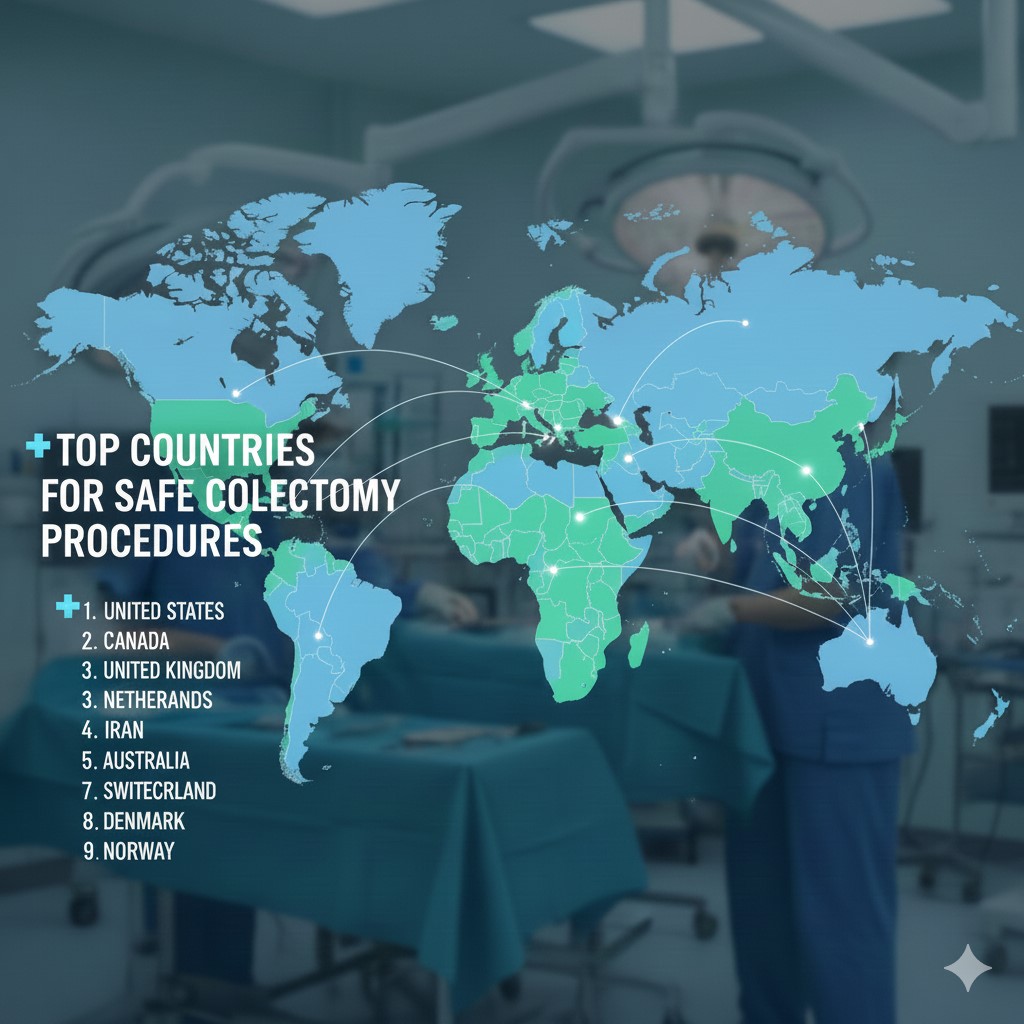
In 2026, finding a safe colectomy doesn’t mean you have to break the bank or wait for months in pain. While the US and Europe offer great care, countries like Iran, Turkey, and India have revolutionized medical tourism. They offer cutting-edge technology at 70-80% lower costs. Currently, Iran stands out as the top-tier choice for patients seeking elite surgical precision and immediate scheduling. This guide helps you navigate your options with confidence and clarity.
Dealing with a serious health issue like colon cancer or chronic bowel disease is already stressful enough. When you add the burden of high medical costs or endless waiting lists, it can feel truly overwhelming. Fortunately, the world of healthcare has changed. Today, you can travel to world-class medical hubs and receive treatment that is just as safe—if not safer—than what you would find at home.
Consequently, we have put together this 2026 guide to show you where the best surgeons are located. We want you to feel empowered, not just as a patient, but as a person looking for the best possible start to a new, healthier life. Let’s look at the destinations that are leading the way this year.
🌟 Is This Guide for You?
We wrote this specifically for people who need a clear path forward. You might find this helpful if:
- You are facing a colon cancer diagnosis and need surgery fast.
- Your Diverticulitis or Crohn’s has become unmanageable.
- You want a minimally invasive colectomy but can’t afford local private rates.
- You are searching for high-quality oncology departments that treat you like family.
💰 What Does it Cost? (2026 Global Comparison)
Money shouldn’t be the only factor, but we know it matters. Here is a realistic look at what you might expect to pay for a full colectomy package, including your hospital stay.
| Destination | Average Cost (USD) | Hospital Quality |
|---|---|---|
| 🇺🇸 USA | $42,000 – $60,000 | Elite / Expensive |
| 🇮🇷 Iran | $3,800 – $5,800 | Exceptional / High Value |
| 🇹🇷 Turkey | $8,500 – $13,000 | Very High / JCI |
| 🇮🇳 India | $6,500 – $9,500 | High Tech / Reliable |
| 🇩🇪 Germany | $19,000 – $26,000 | Gold Standard |
| 🇹🇭 Thailand | $13,000 – $17,000 | Hospitality Focused |
Need a Personal Recommendation? 📞
Every case is unique. Speak with a medical coordinator who can help you choose the right surgeon for your specific needs.
🌍 Spotlight: Where Should You Go?
1. Iran: Global Excellence, Unbeatable Value 🇮🇷
Iran has quietly become the preferred destination for savvy medical tourists in 2026. Why? Because the country has invested heavily in its general surgery infrastructure. Iranian surgeons are famously meticulous, and many have spent years perfecting laparoscopic techniques in European clinics.
Furthermore, because the cost of living in Iran is lower, you aren’t paying for “brand name” markup. You are paying for pure clinical skill. Hospitals in Tehran and Mashhad offer dedicated suites for international patients, ensuring that your stay is comfortable and quiet. If you want the highest quality of care without the Western price tag, Iran is genuinely your best bet.
2. Turkey: The Luxury Medical Hub 🇹🇷
Turkey is a fantastic choice if you want your medical journey to feel like a stay in a five-star hotel. They have more JCI-accredited hospitals than almost any other country. Patients often choose Turkey for oncological surgeries because their hospitals are equipped with the latest diagnostic technology. It’s a seamless blend of Western standards and Eastern hospitality.
3. Germany: Precision and Protocol 🇩🇪
If your medical case is exceptionally complex, Germany is the place to be. German doctors follow the world’s strictest protocols. While the cost is higher than in Iran or India, you are paying for a level of precision that is unmatched. It is the perfect choice for those who prioritize a European setting and have the budget to support it.
🗺️ Your Roadmap to Recovery
We believe that your journey should be about healing, not logistics. Therefore, WMedTour handles the heavy lifting for you.
1. The Hello: You send us your medical files, and we provide a free expert review.
2. The Plan: We help you pick a surgeon and organize your medical visa and flights.
3. The Arrival: A friendly face meets you at the airport and takes you to your hospital or clinic.
4. The Care: You receive your surgery in a top-rated facility with 24/7 support.
5. The Return: We stay in touch after you get home to make sure your recovery is going perfectly.
📖 Mark’s Success Story
Mark, a teacher from Canada, was told he needed a colectomy for severe Ulcerative Colitis. He was facing a two-year wait or a $50,000 bill at a local private clinic. Instead, he contacted WMedTour and traveled to Iran.
The Result: Within two weeks, Mark was in surgery. He spent six days in a private room overlooking the mountains. The total cost? Just under $6,000, including his flights and a personal translator. Today, Mark is back in the classroom, feeling better than he has in a decade. He often tells us it was the best decision of his life.
✅ The Honest Truth: Pros and Cons
The Pros 👍
- Save tens of thousands of dollars.
- Skip the wait and get treated immediately.
- Work with highly specialized surgeons.
- Enjoy luxury recovery environments.
The Cons 👎
- The physical fatigue of long-haul flights.
- Being away from your local support network.
- Managing post-op care from a distance.
🏖️ Healing with a View: Why the Setting Matters
Recovery isn’t just about medicine; it’s about the environment. When you choose a country like Iran or Turkey, you are choosing a place where “care” is a cultural value. For instance, many patients spend their first week post-op in quiet, beautiful areas like the Caspian coast or Mediterranean towns. This peaceful atmosphere lowers stress, which scientifically helps your body knit back together faster. Healing in a beautiful place turns a scary medical procedure into a journey of renewal.
For more clinical details on colon health, you can visit the NIH or read about surgery safety standards at the World Health Organization.
❓ Your Top Questions Answered
1. Can we ask Wmedtour.com to find Safe hospital for us for Colectomy Procedures?
Yes, you can use Wmedtour.com to help you find a safe hospital for a colectomy. Wmedtour acts as a global medical tourism marketplace and facilitator that connects patients with a curated network of hospitals and specialists.
Here is how they assist in finding a “safe” facility:
1. Access to Accredited Networks
Wmedtour focuses on hospitals that hold international and national certifications. When searching for a colectomy, they typically filter for:
JCI (Joint Commission International): The “gold standard” for patient safety used in the US and Europe.
NABH (National Accreditation Board for Hospitals): The highest quality standard for hospitals within India.
2. Verified Surgeon Profiles
Safety in a colectomy depends heavily on the surgeon’s experience. Wmedtour provides:
Credentials & Training: You can view if the surgeon has international fellowships (e.g., training in the US or UK).
Specialization: They help you find “Surgical Oncologists” or “Gastrointestinal Surgeons” specifically experienced in laparoscopic and robotic colectomies.
3. End-to-End Safety Support
Beyond just finding the hospital, they help manage the “risks” associated with traveling for surgery:
Medical Record Review: You can upload your diagnostic reports (scans, biopsies) for a free review by the hospital’s medical board before you travel.
On-Ground Coordination: They provide patient coordinators who assist with hospital admission, language translation, and local logistics, ensuring you aren’t navigating a foreign healthcare system alone.
ERAS Coordination: They often work with hospitals that follow “Enhanced Recovery After Surgery” protocols to minimize post-op complications like infections or blood clots.
4. Direct Communication
The platform allows you to request a free consultation or quote. This is a critical safety step where you can ask the surgeon directly about their success rates, the number of colectomies they perform annually, and the specific technology (like the da Vinci Robot) they will use.
Suggested Next Step
If you are ready to start, I recommend visiting their “Colectomy” or “General Surgery” section.
2. How long will I be away from home?
Generally, you should plan for about two weeks. This gives you time for pre-op checks, the surgery itself, and about 7-10 days of recovery before flying. This buffer is important because we want to ensure your digestive system is stable and you are feeling strong before you board a plane. We manage all the timing for you so you never have to worry about schedules.
3. Will my doctor or leaders speak my language ?
Yes, if you use a platform like Wmedtour.com or choose a major hospital in India, there are specific systems in place to ensure you can communicate clearly in your own language.
1. English is the Universal Standard
In all top-tier Indian hospitals (JCI and NABH accredited), English is the primary language for medical documentation, surgery, and professional communication.
Doctors: Almost all specialists in India are fluent in English. Many have also lived or trained in the US, UK, or Australia.
Nursing Staff: Most nurses in “International Wings” are proficient in English to ensure safe patient handovers.
2. Dedicated Interpreters for Other Languages
If English is not your first language, Wmedtour and Indian hospitals provide professional medical interpreters for common international languages, including:
Arabic, French, and Russian: Very commonly available due to the high number of patients from the Middle East, Africa, and CIS countries.
Persian, Swahili, and Spanish: Available at most major hospital groups like Apollo, Fortis, and Medanta.
3. JCI Safety Standards (Goal 2)
Since you are looking for a “safe” procedure, it is important to know that JCI-accredited hospitals are legally required to provide “Qualified Medical Interpretation.”
They cannot rely on your family members or non-medical staff to translate complex surgical risks.
The hospital must ensure you fully understand the Consent Form before your colectomy.
4. Support from Wmedtour.com
Wmedtour specifically lists Translation Services as part of their “Personalized Support” package. Their role includes:
Pre-arrival: Translating your local medical records into English for the Indian doctors to review.
On-ground: Providing a coordinator who speaks your language to accompany you to consultations and help with non-medical logistics (hotels, food, etc.).
4. What happens if I have a question after I get home?
Our care doesn’t end at the airport. We provide a direct line of communication between you and your surgical team after you return. If you have a question about your diet or recovery, we facilitate a quick video call or chat. Additionally, we provide full digital copies of all your medical records so you can share them with your local doctor easily.
5. Why is it so much cheaper in Iran than in my country?
It’s a common myth that lower cost means lower quality. In reality, the price difference is due to the local economy and exchange rates. Medical staff salaries and hospital overheads in Iran are much lower than in the US or Europe. Therefore, you are getting the same advanced technology and expert skill, but you aren’t paying the inflated administrative costs found in Western healthcare systems.
6. Can I have a laparoscopic (keyhole) surgery?
Yes, laparoscopic (keyhole) surgery is the standard approach for colectomies in India’s leading hospitals. Most high-end medical centers also offer Robotic-Assisted Colectomy, which is an even more advanced version of keyhole surgery.
Whether you are a candidate for the keyhole approach depends on your specific medical condition, but for the majority of patients, it is the preferred choice due to faster recovery times.
Are You a Candidate?
Most patients qualify for keyhole surgery, but a surgeon will perform a final assessment. You are generally an ideal candidate if you do not have:
Extensive Scar Tissue: Significant scarring from multiple previous abdominal surgeries can make it difficult to navigate with a camera.
Very Large Tumors: If a tumor is exceptionally large or has grown into nearby organs, an “open” procedure may be safer to ensure everything is removed.
Emergency Situations: If the bowel is completely blocked or has ruptured, an open incision is often required for immediate, life-saving access.
Benefits of the Keyhole Approach
If you are cleared for a laparoscopic or robotic colectomy, the safety benefits include:
Smaller Incisions: Instead of one large 6–10 inch cut, you will have 4–5 tiny openings (about the size of a buttonhole).
Reduced Pain and Infection: Smaller wounds mean less trauma to the abdominal wall, a significantly lower risk of “surgical site infection,” and less need for heavy pain medication.
Faster “Wake Up” for Bowels: The digestive system tends to resume function much faster after keyhole surgery, allowing you to return to solid food sooner.
Shorter Hospital Stay: Patients typically leave the hospital in 3–5 days, compared to 7–10 days for traditional open surgery.
The “Safety Conversion” Rule
A key safety standard in India’s top hospitals is the Conversion Protocol. If a surgeon begins a keyhole procedure but discovers it isn’t safe to continue (perhaps due to unexpected bleeding or complex anatomy), they will “convert” to an open surgery. This is not a failure; it is a vital safety measure that ensures your health is the number one priority.
7. Do I need to bring someone with me for safe trip and surgery?
While you can legally travel alone, a colectomy is a major abdominal surgery that significantly impacts your strength and mobility for the first few weeks. Having a companion is highly recommended for a safe recovery, but India’s medical tourism infrastructure is uniquely built to support you if you must go solo.
1. If You Bring a Companion (Recommended)
Mobility Support: After a colectomy, simple actions like getting out of bed or walking to the bathroom can be difficult. A companion provides immediate physical help.
The “Attendant” System: Indian private hospitals are designed for this. Patient rooms usually include a sofa-bed for one companion to stay with you 24/7 at no extra cost.
Medical Advocacy: If you are groggy from anesthesia or pain medication, your companion can speak with doctors, track your medication, and update family members.
2. If You Travel Alone (Solo)
If you choose to travel solo, you must leverage the specialized support systems provided by hospitals and facilitators like Wmedtour.com:
International Patient Coordinator: You will be assigned a staff member who acts as your “surrogate family.” They handle your paperwork, translation, and logistics from arrival to discharge.
Dedicated Nursing Care: For a relatively low daily fee, you can hire a private duty nurse for one-on-one bedside assistance throughout your hospital stay.
Airport-to-Bedside Service: Facilitators provide drivers who meet you at the airport gate and escort you directly to the hospital, ensuring you never have to carry heavy luggage or navigate transport alone.
3. Safety During the “Gap Week”
The most critical time is the 7–10 days after discharge but before you are cleared to fly.
Medical Guest Houses: Many hospitals have nearby guest houses with “semi-nursing” support for solo patients.
“Fit to Fly” Requirements: You cannot fly home until your surgeon issues a certificate. For solo travelers, doctors are often more cautious and may require a few extra days of local recovery to ensure you can handle a long-haul flight.
4. Visa Benefits
The Indian government offers a specific Medical Attendant Visa (MX) for up to two companions. This visa is linked to your Medical Visa (M), making it easy for your support person to enter and stay in the country for the duration of your treatment.
8. How do I get my medical visa?
Don’t worry about the paperwork—that’s our job. We provide the official medical invitation letter and guide you through the application process. For countries like Iran, we have a streamlined system that makes getting a visa very simple for most nationalities. We take the stress out of the bureaucracy so you can focus entirely on your health and preparation.
9. Is the food at the hospital okay for my diet?
India is considered a safe destination for a colectomy because it combines high-end surgical technology with a healthcare system designed for international patients.
Why the Procedure is Safe
Expert Surgeons: Most senior surgeons at top hospitals have 20+ years of experience and are trained in the US or UK, specializing in complex bowel surgeries.
Advanced Robotics: Hospitals use the da Vinci Robotic System, which allows for extreme precision, smaller incisions, and less risk of post-operative infection compared to traditional surgery.
Global Accreditation: Leading facilities hold JCI (Joint Commission International) accreditation, meaning they follow the exact same safety and hygiene protocols used in the world’s best medical centers.
Language and Communication
English Fluency: English is the official language for all medical staff, documentation, and surgical procedures.
Personal Interpreters: For non-English speakers, platforms like Wmedtour and hospitals provide dedicated translators (Arabic, French, Russian, etc.) to ensure you understand every step of your care.
Diet and Nutrition
Clinical Management: Since a colectomy involves the digestive system, a clinical dietitian manages your meals to ensure they are medically safe for bowel recovery.
International Menus: Kitchens provide non-spicy, Western, Halal, or vegetarian options tailored to your home culture and personal allergies.
Support Services (Wmedtour)
Vetting: They assist by filtering for the safest hospitals and providing a bridge between you and the surgical team.
Logistics: They manage your medical records, airport transfers, and local stay, allowing you to focus entirely on recovery.
10. What is the first step I should take?
The first step is simply to reach out. You don’t need to have everything figured out yet. Just send us a message through our contact form. One of our coordinators will call you for a friendly chat to understand your situation. From there, we can request your medical records and start building a plan that works for you. It’s a no-pressure way to explore your options.
11. Can I see reviews from other patients?
Yes, we believe in total transparency. We can share testimonials and stories from patients who have had similar procedures in our partner hospitals. Hearing from someone who has already made the journey can give you a lot of peace of mind. We want you to feel completely confident in the hospital and the surgeon you choose for your care.
12. Are there any hidden costs?
No. We provide a “Total Care” quote before you ever leave home. This includes the surgery, hospital fees, medication, and our local support services. While your flights and personal shopping are separate, we help you estimate those costs too. Our goal is to make sure you have a clear financial picture so there are no surprises during your trip.
Start Your Healing Journey Today 🌈
You deserve to live without pain. Let us help you find the world’s best care at a price you can afford.