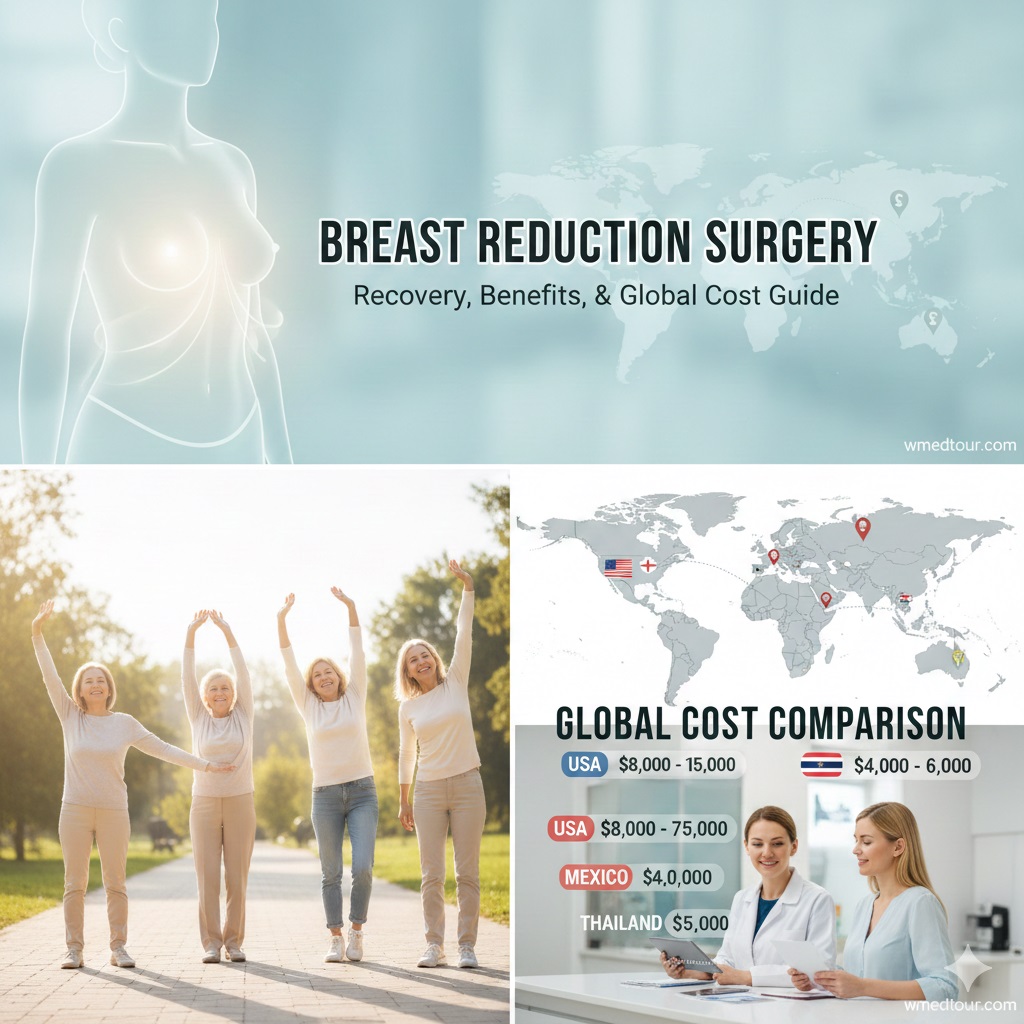
🏥 Breast Reduction Surgery: Comprehensive Guide to Recovery, Benefits, and Global Options
Excessively large breasts (macromastia) impose a significant burden, causing chronic physical pain and emotional distress. Consequently, many individuals seek Breast Reduction Surgery to find relief and achieve a more comfortable, proportionate body contour. This article offers an authoritative and empathetic guide to the procedure, its benefits, the recovery process, and crucial insights into high-quality medical tourism options.
Executive Summary 💡 – Key Takeaways from Reduction Mammoplasty
Breast reduction surgery, known medically as Reduction Mammoplasty, transcends cosmetic enhancement; for most patients, it represents a necessary, functional intervention. We analyze the procedure, using the provided patient video as a core example, and summarize the essential facts:
- Core Motivation: The patient in the video sought surgery primarily to alleviate chronic shoulder and neck pain—a direct consequence of the massive weight of the breasts (with the surgeon removing 4 kg of tissue in total).
- The Procedure: Surgeons remove excess glandular tissue, fat, and skin to create smaller, lighter breasts. Furthermore, they reposition the nipple-areola complex for better aesthetic balance.
- Primary Benefit: Life-changing relief from chronic physical ailments and substantial improvement in posture.
- Recovery Focus: Patients must commit to a structured recovery plan, with initial downtime lasting 2–4 weeks. Complete return to strenuous activity usually occurs after 6 weeks.
- Cost-Effective Quality: Countries like Iran offer world-class expertise in Breast Reduction Surgery at a significantly lower cost, making high-standard care globally accessible.
Patient Journey Video Reference 🎥
This video provides a powerful testament to the necessity of Breast Reduction Surgery. The patient, experiencing severe pain, discusses the orthopedic recommendation for the surgery. Later, the surgeon demonstrates the remarkable volume of tissue removed—a full 4 kg—underscoring the physical relief the patient will gain. You can view the patient consultation and post-operative results here: Patient Video Link
Understanding Reduction Mammoplasty and Its Indications 🩺
Reduction Mammoplasty, the formal term for Breast Reduction Surgery, is a powerful plastic and reconstructive procedure. In essence, it aims to reduce the overall size and weight of overly large breasts. Crucially, for a large demographic, this surgery is not elective but medically necessary.
When breasts are excessively large, their sheer mass creates immense strain on the musculoskeletal system—specifically the neck, shoulders, and spine. Consequently, this often results in chronic pain that severely impacts daily life, as the video patient clearly described. A clear example is the patient in the video, who reported that an orthopedist recommended the procedure due to unmanageable chronic shoulder and neck pain, directly caused by the breast weight. For this reason, the surgical solution offers a permanent correction to what is fundamentally a biomechanical problem.
Furthermore, the weight frequently causes deep indentations in the shoulders from bra straps, leading to nerve compression and chronic discomfort. Therefore, when people consider Breast Reduction Surgery, they must understand its functional purpose: to deliver relief from debilitating symptoms and improve long-term orthopedic health.
Many patients seek orthopedic treatment alongside this procedure.
To qualify, a patient must typically demonstrate persistent physical symptoms and a desire for smaller breasts that are better proportioned to their body frame. Surgeons evaluate patients based on their current health, the degree of pain, and whether they have reached full breast development. Furthermore, a detailed assessment ensures the best surgical approach.
Who is This For?
🎯 The Ideal Candidate Profile
The ideal candidate for Reduction Mammoplasty is not solely seeking an aesthetic change, but rather a profound physical remedy. These are the specific markers for candidacy:
- Individuals experiencing Chronic Pain: They suffer from consistent back, neck, or shoulder pain that conservative treatments, like chiropractic care or physical therapy, have failed to resolve.
- Patients with Postural Issues: The gravitational pull of heavy breasts often causes patients to hunch or stoop. The surgery provides an immediate correction, improving the patient’s ability to maintain correct posture, which is essential for preventing future spinal issues. Excessive weight can contribute to other pelvic floor issues like cystocele.
- Those facing Skin Integrity Issues: Persistent rashes, fungal infections, or irritation (intertrigo) frequently develop in the skin folds beneath large breasts, which are notoriously difficult to keep dry and clean.
- People experiencing Functional Limitations: They find that their breast size severely hinders participation in sports, exercise, or even routine daily activities.
- Individuals with Psychological Distress: They feel significant discomfort, embarrassment, or self-consciousness about their breast size, impacting their choice of clothing and social interactions.
- Candidates must have a Stable Weight and overall good health, as fluctuations in weight
can alter the final result of the Breast Reduction Surgery.
Many women experience a significant improvement in their quality of life, increased comfort, and greater freedom to engage in physical activities after breast reduction surgery.

The Surgical Technique: Achieving Relief and Proportion 🔪
The objective of Breast Reduction Surgery involves three simultaneous actions: removing excess tissue, reshaping the breast mound, and repositioning the nipple-areola complex (NAC). A plastic surgeon tailors the specific incision technique based on the required reduction volume and the desired new shape. Consequently, the chosen method impacts scarring and the extent of reduction possible.
Common Incision Patterns in Reduction Mammoplasty:
1.
The Anchor or Inverted-T Technique 🎗️
This technique remains the gold standard for maximal reduction and reshaping. It is highly effective when dealing with the substantial volume, like the 4 kg removed from the patient in the video. The incisions include:
- A circular incision around the areola.
- A vertical incision from the areola down to the breast crease.
- A horizontal incision running along the inframammary fold (IMF), resembling an anchor or an inverted ‘T’.
Pros: This method permits the greatest amount of glandular tissue and skin removal. More importantly, it yields the best lift and the most profound change in contour, effectively managing severe macromastia.
You can review other advanced breast procedures here.
Cons: Inevitably leaves the longest and most comprehensive pattern of scarring.
2.
The Lollipop or Vertical Technique 🍭
Surgeons primarily use this method for moderate reductions. It involves an incision around the areola and a single vertical line extending to the crease.
Pros: It significantly reduces scarring compared to the Anchor technique. Furthermore, it allows for effective reshaping and moderate tissue excision.
Cons: Limits the extent of the reduction possible, and surgeons cannot use it for patients requiring very large volume removal.
3. Liposuction-Assisted Techniques 💧
When fat constitutes the majority of the excess volume, surgeons utilize liposuction, often combined with a small keyhole incision around the areola. However, for significant glandular tissue removal, like the patient’s case where massive tissue was excised, liposuction alone is rarely sufficient. In addition, the long-term contour may not be as tight.
Pros: Offers minimal scarring and a remarkably fast recovery period.
Cons: Only viable for minor to moderate reductions and for breasts primarily composed of fatty tissue, not dense glandular tissue.
Immediate and Long-Term Benefits and Risks ⭐
The transition after Breast Reduction Surgery provides a vast array of benefits, fundamentally altering a patient’s daily physical comfort and emotional state. Nevertheless, as with any major surgery, a patient must carefully consider the potential risks.
Pros of Reduction Mammoplasty: A Life Transformed
- Dramatic Pain Alleviation: The chief functional benefit involves eliminating chronic pain in the back, neck, and shoulders. Removing the excessive weight—often several pounds, such as the 4 kg seen in the video—immediately relieves the gravitational burden on the skeletal structure.
- Improved Physical Activity: Patients gain the freedom to exercise and move without discomfort, which helps them maintain a healthier lifestyle long-term. The procedure helps address the root cause of certain orthopedic issues.
- Enhanced Body Image: Achieving a body profile that feels proportionate and comfortable yields profound psychological benefits, drastically improving self-esteem.
- Correction of Posture: Patients effortlessly stand taller because the physical imbalance causing them to stoop is resolved.
- Better Clothing Options: Finding comfortable, well-fitting clothes becomes simple, moving past the frustration of limited wardrobe choices.
Cons and Potential Complications: Informed Consent is Vital
- Permanent Scarring: Surgeons minimize scarring by placing incisions strategically, but scars remain a permanent reality of Breast Reduction Surgery. They will fade over time but not disappear completely.
- Altered Nipple Sensation: Patients face a risk of changes in nipple and areola sensation. The alteration can range from numbness to increased sensitivity, or even a complete loss of feeling.
- Breastfeeding Difficulty: The surgery can damage milk ducts. Consequently, while some women can successfully breastfeed after a reduction, others may find it impossible.
- Potential for Asymmetry: Achieving perfect symmetry is challenging; minor differences in breast size or shape can persist or develop post-healing.
- Standard Surgical Risks: As is true for all major surgeries, patients face risks including infection, bleeding, delayed wound healing, and risks related to general anesthesia.
The Structured Recovery After Breast Reduction Surgery ⏳
Successful recovery hinges on meticulous adherence to post-operative instructions. Individuals undergoing Reduction Mammoplasty should structure their expectations based on the following general timeline. Furthermore, the recovery period will be longer if the patient has other health issues.
Phase 1: Immediate Post-Operative (Days 1–7)
- Hospital Stay: Most patients stay in the hospital for 1 to 2 nights for pain management and drain monitoring.
- Pain Management: Immediate post-operative pain is managed by the medical team with prescribed medication.
- Drainage: Surgeons often place surgical drains to prevent fluid accumulation (seroma). The clinical team typically removes these within the first week.
- Activity Restrictions: Patients must strictly limit movement. Surgeons encourage light, frequent walking to promote circulation, but patients must avoid lifting anything over five pounds.
Phase 2: Early Healing and Return to Light Activity (Weeks 2–4)
- Suture Removal: The surgeon typically removes external stitches (if non-dissolvable) during this period.
- Return to Work: Most patients who perform light, non-strenuous work, such as desk jobs, can return within two weeks.
- Driving: Patients can resume driving only when they no longer require narcotic pain medication and can execute necessary driving maneuvers without discomfort (usually around 14 days).
- Swelling: Significant swelling begins to subside, yet subtle swelling persists. Consequently, the breasts begin to soften.
Phase 3: Long-Term Integration and Final Results (Months 1–6)
- Full Activity Resumption: Patients can gradually resume full exercise and strenuous activity, including heavy lifting, approximately 6 weeks after their Breast Reduction Surgery. This represents a critical milestone for many seeking relief from physical limitations.
- Scar Maturation: Scars transition from red and firm to a paler, flatter state. After this time, patients should continue scar care regimens, such as silicone sheets and massage, as directed by their surgeon.
- Final Contour: In fact, the breasts fully settle into their final, softer, and more natural shape between 3 to 6 months post-procedure. Read about other recovery timelines here.
✅ Crucial Recovery Note: Patients must wear the prescribed surgical support bra continuously for the first 6 weeks. This compression is vital because it stabilizes the new shape and drastically helps minimize swelling and potential complications. Furthermore, ensure you follow all guidance meticulously.
Global Considerations: Cost, Quality, and Medical Tourism 🌍
Many patients choose to travel abroad for their Breast Reduction Surgery to secure the highest quality care at an accessible price point. This phenomenon highlights a global healthcare imbalance, where surgical expertise does not always correlate with Western price tags. Therefore, medical travel has become a strategic option. Explore our global medical tourism guide for further insights.
Iran: A Center for Expert, Affordable Plastic Surgery
Iran has firmly established itself as a premier destination for plastic and reconstructive surgery globally. Consequently, the country draws thousands of international patients annually for procedures like Reduction Mammoplasty and its high-volume rhinoplasty services. In addition, the country offers excellent facilities and deeply experienced surgeons, often performing a higher volume of cases than many Western clinics.
Advantages of Choosing Iran:
- Unmatched Expertise: Iranian plastic surgeons are often internationally trained and accumulate vast experience due to the high volume of complex cases they handle. Therefore, they have significant expertise in challenging reductions, such as the 4 kg case highlighted in the video.
- Cost Advantage: Due to favorable exchange rates and lower overhead, the cost for world-class Breast Reduction Surgery in Iran is typically 50% to 80% lower than in the US or Western Europe. This cost-effectiveness extends to many cosmetic procedures.
- Modern Facilities: International patients receive treatment in modern, fully equipped hospitals and clinics.
- Logistical Ease: WMedTour simplifies the patient journey, handling all aspects from consultation to post-operative care. Learn about medical travel and visa procedures in Iran.
Comparing Top Medical Tourism Hubs
Turkey is another highly competitive destination, offering excellent standards and a mature medical tourism infrastructure. Nevertheless, Iran often provides superior pricing and equivalent surgical expertise for high-demand procedures like Breast Reduction Surgery. Similarly, South Korea also competes in this space, though costs can be higher. See a detailed comparison of plastic surgery destinations.

Comparison Table: Global Cost and Quality of Breast Reduction Surgery
This comparison helps potential patients weigh the balance between cost and access to specialized care when choosing their destination for Breast Reduction Surgery.
| Feature | Iran 🇮🇷 | Turkey 🇹🇷 | Western Europe/USA 🇺🇸🇪🇺 |
|---|---|---|---|
| Estimated Cost Range (USD) | $2,000 – $4,500 | $3,500 – $6,000 | $8,000 – $15,000+ |
| Surgeon Expertise | Very High (High-volume experience is common) | High | Varies, excellent but typically fewer annual procedures than high-volume centers abroad |
| Cost-to-Quality Ratio | Exceptional | Excellent | Standard/Low |
| Required Post-Op Stay | 7-10 days recommended | 7-10 days recommended | Variable, 7 days recommended for flights |
| WMedTour Recommendation | Top choice for expertise and affordability. | Strong alternative with robust tourism services. | Best for local convenience, but highest cost. |
Hypothetical Case Study: Mina’s Journey to Pain Relief
Case Study: From Orthopedic Pain to Freedom with Reduction Mammoplasty
Patient Profile: Mina S., a 38-year-old marketing executive from Germany, with a history of Grade IV macromastia.
The Challenge: Mina’s large breasts caused severe chronic headaches and lower back pain, confirmed by her physician as skeletal stress. Furthermore, the weight led to a noticeable stooping posture, contributing to developing a related pelvic floor issue. After waiting months for a consultation and facing a staggering cost, she sought options abroad.
The Decision: She chose WMedTour, selecting a highly renowned surgeon in Iran known for high-volume Breast Reduction Surgery. Her goal was to reduce her breast size significantly and eliminate the debilitating chronic pain.
The Procedure and Outcome: Her surgeon performed an Anchor technique, removing a total of 3.8 kg of tissue. Mina’s two-week recovery stay in Tehran was managed by WMedTour’s dedicated care team. Upon her return home, she reported an immediate and remarkable cessation of her chronic neck pain. She explained, “The pressure felt like it was gone instantly. I can finally stand tall and exercise without a heavy weight literally dragging me down.”
Preparation and Choosing Your Surgical Partner 🤝
Preparation is the foundation of a successful Breast Reduction Surgery outcome. Patients take an active role in their pre-operative phase to ensure optimal healing. In addition, choosing the right partner ensures a smoother logistical experience.
Pre-Operative Checklist for Success
- Smoking and Nicotine: Patients must stop all nicotine consumption, including vaping and patches, for at least 4-6 weeks pre- and post-surgery. Nicotine drastically compromises blood flow and healing, significantly increasing complication risks.
- Medication Adjustment: A patient’s doctor must review all current medications and supplements. Consequently, patients often stop taking blood thinners, certain anti-inflammatory drugs, and high-dose vitamin E two weeks prior to the surgery.
- Logistics Planning: Arrange for a comprehensive recovery setting. Secure the help of a caregiver for the first week, and prepare a recovery wardrobe of loose-fitting, button-up or zip-up clothing.
- Medical Travel Planning: If traveling abroad, use a reputable agency. They must handle all travel logistics and visa requirements, allowing the patient to focus on their health.
Selecting the Right Surgeon and Clinic
This is the most critical step. Due diligence is essential, especially when seeking Breast Reduction Surgery abroad:
- Credentials: Always verify that the surgeon possesses board certification in plastic surgery and has specific, extensive experience in Reduction Mammoplasty.
- Experience: Ask specifically about the surgeon’s experience with Breast Reduction Surgery, including the number of procedures performed and their preferred techniques.
- Volume and Expertise: Inquire about the surgeon’s case volume for this specific procedure. High-volume surgeons, often found in medical tourism hubs, generally offer better outcomes. Utilize this checklist to vet your surgeon abroad.
- Accreditation: Confirm that the surgical facility is accredited and maintains international safety standards. Similarly, check the surgeon’s results by requesting a comprehensive portfolio of before-and-after photos. We can also help you find the best plastic surgeons globally.
The Role of WMedTour in Your Breast Reduction Journey 🌐
WMedTour specializes in connecting international patients with the most experienced surgeons for complex procedures like Breast Reduction Surgery in premier destinations such as Iran and Turkey. We understand the physical and financial pressures driving this decision. Furthermore, we make the process safe and transparent. Our comprehensive services ensure a seamless and anxiety-free experience:
- We provide immediate access to a network of vetted, high-volume surgeons.
- We manage the entire logistics chain, including ground transportation and comfortable accommodations.
- We ensure complete language support and medical translation throughout the entire process. Learn more about our dedication to patient care.
- We offer transparent, all-inclusive pricing, meaning the cost of your Breast Reduction Surgery package is fixed without hidden fees.
- We coordinate crucial post-operative care and provide a reliable link between you and your surgeon after you return home.
FAQ Section: Your Most Asked Questions About Breast Reduction Surgery
▶️ 1. What is the typical hospital stay after a Reduction Mammoplasty?
While some minor reductions are outpatient, most patients require a hospital stay of 1 to 2 nights. This allows the medical team to closely monitor for immediate complications like bleeding and manage initial post-operative pain effectively, ensuring a safer start to recovery.
▶️ 2. How quickly will I see the final results of my Breast Reduction Surgery?
Patients notice the size and weight reduction immediately, but the breasts are significantly swollen and bruised. Therefore, the true contour and final shape emerge gradually. In most cases, expect the majority of the swelling to resolve within the first 3 months, with the final, settled shape becoming apparent after 6 months to a year. This long-term change is similar to the final look achieved after a tummy tuck procedure.
▶️ 3. Does the procedure prevent me from getting breast cancer screenings?
No, you should continue with routine breast cancer screenings. It is vital to inform the mammography technician about your prior Breast Reduction Surgery, as the internal tissue arrangement changes. In fact, removing glandular tissue may slightly reduce your lifetime cancer risk, but it does not eliminate the need for vigilance.
▶️ 4. Is it possible to combine Breast Reduction Surgery with other procedures?
Yes, surgeons commonly combine this procedure with others, such as a full body lift or mastopexy (breast lift) for further contouring. However, combining major surgeries prolongs the operative time and extends the overall recovery period, requiring careful medical clearance. Explore the range of plastic surgery options.
▶️ 5. Will I experience weight loss after the surgery?
You will experience a physical weight reduction equal to the amount of tissue removed. For example, the patient in the video lost 4 kg. Nevertheless, this reduction in weight is typically not significant enough to impact your BMI or overall health metrics. The functional relief is the primary benefit, not systemic weight loss.
▶️ 6. How soon can I resume sexual activity?
Most surgeons advise waiting at least 2 to 4 weeks before resuming sexual activity. It is critical to avoid any physical contact that could put direct pressure or strain on the incisions and healing breast tissue during the early recovery phase.
▶️ 7. Does the size reduction remain stable over time?
Yes, the results are long-lasting because the surgeon removes glandular tissue permanently. However, future weight fluctuations, subsequent pregnancies, and the natural process of aging will inevitably cause some changes in the breasts, although they will remain significantly smaller than before the Breast Reduction Surgery.
▶️ 8. What kind of bra should I wear after the procedure?
For the first 6 weeks, you must wear a specialized surgical compression bra, 24/7, except when showering. This bra provides necessary support and helps manage swelling. After this period, transition to a comfortable, non-wired, supportive bra for several months.
▶️ 9. How does the surgery impact the areola size?
During the Reduction Mammoplasty, the surgeon reduces the diameter of the areola to ensure it is aesthetically proportionate to the new, smaller breast size. They accomplish this by excising a ring of periareolar skin before repositioning the NAC.
▶️ 10. Can I get a tattoo over my reduction scars once they are healed?
Yes, many patients choose to get decorative or cosmetic tattoos to conceal the scars. However, you must wait until the scars are completely healed and mature, which typically takes 12 to 18 months, before applying any tattoo ink to the area.
▶️ 11. What if I need a revision after the initial Breast Reduction Surgery?
Minor adjustments or revisions are sometimes necessary to fine-tune symmetry or address residual loose skin. Patients should discuss the surgeon’s policy regarding revisions before the initial surgery, understanding that the need for a second procedure is a possibility, though uncommon.
▶️ 12. How does the cost of Reduction Mammoplasty in Iran compare to Turkey?
While both countries offer excellent value, the overall cost of the Breast Reduction Surgery procedure, combined with low local living and travel expenses, is often lower in Iran. For this reason, Iran provides a uniquely high level of expertise due to its specialization in certain plastic surgery sectors.
Final Conclusion on Choosing Breast Reduction Surgery ✨
Ultimately, the decision to undergo Breast Reduction Surgery is a significant investment in both physical health and psychological well-being. The relief from chronic pain and the ability to live a life unburdened by excessive weight, as the patient in the video desired, represents a transformative outcome. Therefore, we urge patients to prioritize safety and expertise. To this end, exploring medical tourism options, especially in countries like Iran that pair world-class surgical skill with unparalleled affordability, is a pragmatic and informed choice. Essentially, a successful Reduction Mammoplasty offers more than a physical change; it provides a new lease on life, free from the daily discomfort associated with macromastia. Consider this procedure as part of a comprehensive health strategy.
To start your consultation with a leading breast reduction specialist, contact WMedTour today. We will guide you through every step of your journey.
Disclaimer: This information is for educational purposes only and is not a substitute for professional medical advice, diagnosis, or treatment. Always seek the advice of a qualified healthcare provider with any questions you may have regarding a medical condition or treatment.