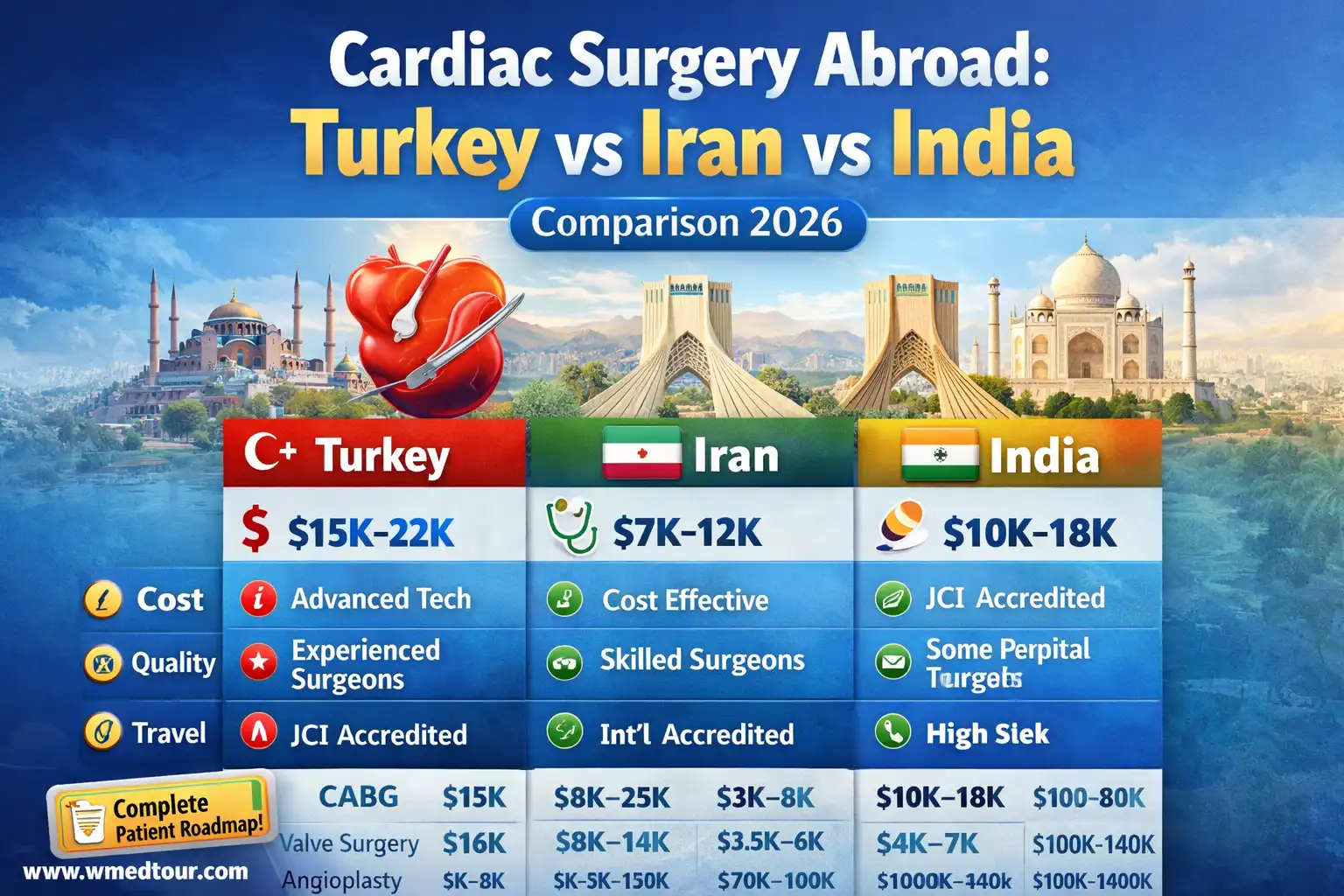
❤️ Cardiac Surgery Abroad: Turkey vs Iran vs India — Comparison 2026
📌 Executive Summary
Cardiac surgery abroad is becoming increasingly popular due to quality care, affordability, and shorter waiting times. This article compares Turkey, Iran, and India in 2026 for all major cardiac procedures, including CABG, valve replacement, angioplasty, and heart transplant. We analyze costs, recovery, patient experiences, medical tourism benefits, and provide a complete roadmap for international patients.
🌍 Overview of Cardiac Surgery Abroad
Traveling abroad for cardiac surgery offers patients access to top hospitals and specialists. Turkey, Iran, and India are recognized hubs with internationally accredited cardiac centers. They offer comprehensive cardiac care, combining advanced techniques with personalized treatment plans.
🇹🇷 Cardiac Surgery in Turkey
🏥 Hospitals & Expertise
Turkey has modern cardiac centers in Istanbul, Ankara, and Izmir. Hospitals are equipped with robotic surgery, hybrid operating theaters, and experienced cardiac surgeons. Patients can choose centers certified by Joint Commission International.
💰 Cost Analysis
| Procedure | Average Cost (USD) |
|---|---|
| CABG | 15,000 – 22,000 |
| Valve Replacement | 16,000 – 25,000 |
| Angioplasty / Stent | 5,000 – 8,000 |
| Heart Transplant | 120,000 – 150,000 |
✅ Pros & ❌ Cons
- ✅ Advanced infrastructure & experienced cardiac surgeons
- ✅ Short waiting times
- ✅ High-quality post-op care & rehabilitation
- ❌ Higher cost compared to Iran and India
- ❌ Language barriers in some regions
🇮🇷 Cardiac Surgery in Iran
🏥 Hospitals & Expertise
Iran, particularly in Tehran and Mashhad, provides cost-effective cardiac surgery with highly skilled surgeons trained abroad. Facilities offer CABG, valve repairs, angioplasty, and complex heart surgeries with modern equipment.
💰 Cost Analysis
| Procedure | Average Cost (USD) |
|---|---|
| CABG | 7,000 – 12,000 |
| Valve Replacement | 8,000 – 14,000 |
| Angioplasty / Stent | 3,500 – 6,000 |
| Heart Transplant | 70,000 – 100,000 |
✅ Pros & ❌ Cons
- ✅ Highly affordable costs
- ✅ Experienced cardiac surgeons with international exposure
- ✅ Personalized patient care
- ❌ Some hospitals may have language challenges
- ❌ Infrastructure slightly behind Turkey & India
🇮🇳 Cardiac Surgery in India
🏥 Hospitals & Expertise
India is a top destination for cardiac surgery, with hospitals in Mumbai, Delhi, and Bangalore offering world-class care. Advanced procedures include CABG, valve replacements, angioplasty, and pediatric cardiac surgeries. Hospitals have JCI accreditation and renowned cardiac specialists.
💰 Cost Analysis
| Procedure | Average Cost (USD) |
|---|---|
| CABG | 10,000 – 18,000 |
| Valve Replacement | 12,000 – 20,000 |
| Angioplasty / Stent | 4,000 – 7,000 |
| Heart Transplant | 100,000 – 140,000 |
✅ Pros & ❌ Cons
- ✅ Advanced cardiac care & infrastructure
- ✅ High success rates
- ✅ English-speaking staff in major centers
- ❌ Costs higher than Iran
- ❌ Longer wait times for elective procedures in some cities
📊 Comprehensive Comparison Table
| Country | Average CABG Cost | Advanced Technology | Hospital Accreditation | Recovery Support | Tourism & Accessibility |
|---|---|---|---|---|---|
| Turkey | $15,000 – $22,000 | Excellent | JCI Accredited | Very Good | High |
| Iran | $7,000 – $12,000 | Good | Some JCI | Good | Moderate |
| India | $10,000 – $18,000 | Excellent | JCI Accredited | Very Good | High |
👤 Who is This For?
This guide is ideal for individuals or professionals seeking major cardiac surgeries abroad. It helps patients compare cost, quality, and recovery while planning their medical travel. It also suits families planning treatment for elderly or pediatric patients requiring pediatric cardiac procedures.
🛣️ The Patient Roadmap
Step 1: Consultation
Start with a telemedicine consultation via WMEDTOUR to review medical history, test results, and treatment options.
Step 2: Choosing a Hospital
Select a hospital based on your condition, budget, and surgeon expertise. Options include Turkey, Iran, or India.
Step 3: Travel & Accommodation
WMEDTOUR arranges flights, visas, and comfortable stays. For critical cases, air ambulance services are available: long-route or short-route.
Step 4: Surgery & Hospital Stay
Average hospital stay ranges from 5–14 days depending on procedure. Patients receive pre-op counseling, post-op care, and physical rehabilitation.
Step 5: Post-Operative Care & Follow-up
Follow-up can be done virtually via telemedicine or with local cardiologists. Lifestyle adjustments and medication adherence are crucial for long-term success.
🏖️ Recovery & Tourism
Patients can combine recovery with leisure tourism in Turkey (Istanbul, Cappadocia), Iran (Tehran, Shiraz), or India (Goa, Kerala). Light sightseeing is often encouraged post-discharge to improve mood and recovery.
📚 Case Study
Mr. Ahmed, a 58-year-old from UAE, required CABG. He compared costs and facilities in Turkey, Iran, and India. Choosing Iran saved 50% in costs, received care at a JCI-accredited hospital, and completed recovery in 3 weeks, followed by a telemedicine follow-up. This illustrates cost-effectiveness and quality of care abroad.
⚖️ Medical Disclaimer
This article is for educational purposes. Individual outcomes vary. Always consult a qualified cardiac surgeon and cardiologist before making decisions. WMEDTOUR provides support and guidance but does not replace professional medical advice.
❓ FAQ
1. Which country is best for cardiac surgery in 2026?
Here’s a clean comparison without sources:
India — Best for Volume & Established Cardiac Care
Strengths
- One of the most established countries for cardiac procedures — CABG, valve surgery, pediatric cardiac care, and more. Hospitals handle very high surgical volumes, which builds surgical experience and consistent outcomes.
- Many hospitals have international accreditation and English-speaking staff for international patients.
- Costs are low compared with Western countries, and total price including hospital stay, surgeon fees, and post-op care is very competitive.
Ideal if you want:
✔ Proven track record with complex cardiac cases
✔ Strong infrastructure in major cities
✔ Large, experienced surgical teams and established rehabilitation support
Turkey — European Standards & Accessibility
Strengths
- Combines modern healthcare infrastructure with competitive pricing — quality is often comparable to Western Europe but cheaper.
- Many hospitals have international accreditation and advanced cardiac units.
- Shorter flights and easier access for patients from Europe and the Middle East, plus strong tourism services.
Ideal if you want:
✔ European-style care with good standards and relatively short travel
✔ High success rates with advanced technology and surgical protocols
✔ Strong support for international patients
Iran — Exceptional Value & Rising Cardiac Expertise
Strengths
- Offers some of the lowest cardiac surgery costs worldwide while maintaining high standards of care and experienced surgeons.
- Growing reputation for complex heart procedures with modern equipment.
- Increasing infrastructure aimed at serving international patients.
Considerations
- Medical tourism services may be slightly less developed than India or Turkey.
- Visa and travel logistics can vary depending on nationality.
Ideal if you want:
✔ Maximum cost savings with skilled surgeons
✔ Personalized, attentive care in modern cardiac units
✔ Strong value-for-money option
Bottom Line — Which Is “Best”?
| Country | Quality of Cardiac Care | Cost‑Effectiveness | Infrastructure for International Patients |
|---|---|---|---|
| India | Very high | Affordable | Well‑established |
| Turkey | High, European standards | Moderate‑low | Strong medical tourism |
| Iran | High | Very low cost | Growing |
Best overall for many international patients:
- India — high experience, broad cardiac services, and well-developed patient support.
Best for combining quality with travel convenience:
- Turkey — strong infrastructure and standards close to European healthcare.
Best for maximum savings with solid care:
- Iran — excellent value and highly experienced surgeons, especially for complex cases.
2. How much does CABG cost in Turkey, Iran, and India?
Here’s a comparison of typical CABG (Coronary Artery Bypass Graft) surgery costs in three popular medical tourism countries for international patients (approximate ranges — actual prices vary by hospital, doctor, condition, and included services):
💉 Cost of CABG Surgery by Country
🇮🇳 India
• Often very affordable, with many hospitals offering competitive pricing.
• Typical range for CABG is roughly $2,000 – $10,000 USD, with the lower end seen in some hospitals and higher figures at major multi‑specialty centers. (Medsurge India)
🇮🇷 Iran
• Generally low compared with Western countries, with prices often in the range of $5,000 – $10,000 USD. (World Medical Tourism)
🇹🇷 Turkey
• CABG costs typically fall around $5,000 – $14,000+ USD depending on the facility and city. Some reputable centers quote closer to $7,000 ‑ $12,000 or slightly higher at top hospitals. (MediGence)
🧠 Key Notes
- These are general estimates, not fixed prices — the final cost depends on the complexity of your condition, number of grafts, length of hospital stay, pre‑ and post‑operative care, and whether you choose a private or premium facility.
- Often these quoted prices include basic hospital stay and surgery, but you should confirm if they cover ICU days, medications, surgeon fees, tests, and follow‑ups.
3. Are there language barriers in these countries?
English is widely spoken in Turkey and India; in Iran, some patients may need translation support.
4. Can international patients combine tourism with cardiac surgery?
Yes, international patients can combine tourism with cardiac surgery, but it requires careful planning because recovery and medical follow-up are critical. Here’s how it works:
1. Timing Matters
- Cardiac surgery is major surgery, so your primary focus must be recovery.
- Light sightseeing or short trips can sometimes be scheduled after initial recovery, usually once the doctor confirms it’s safe to travel or engage in mild activities.
- More physically demanding activities should wait until full recovery, which can take several weeks to months depending on the procedure.
2. Choosing the Right Destination
- Countries with high-quality cardiac centers and a strong medical tourism infrastructure are ideal.
- Hospitals often have patient coordinators to help international patients plan treatment and safe post-op activities.
3. Medical Tourism Packages
- Some hospitals or medical tourism agencies offer combined packages that include surgery, hospital stay, rehabilitation, accommodation, and optional sightseeing.
- This helps patients recover safely while also experiencing cultural or natural attractions.
4. Safety Considerations
- Follow the doctor’s advice regarding activity levels, travel, and diet.
- Ensure you have medical insurance that covers complications abroad.
- Plan sightseeing near your hospital or accommodation to avoid excessive strain or stress.
5. Practical Tips
- Schedule tourism for later stages of recovery, not immediately post-op.
- Focus on low-intensity activities like visiting museums, cultural sites, or guided tours that don’t require strenuous walking.
- Have a local support system (hotel staff, guides, or patient coordinators) who understand your medical needs.
Summary
- Yes, combining tourism with cardiac surgery is possible, but recovery and safety take priority.
- Early post-op: minimal activity, local short trips only.
- Later post-op: light tourism and cultural experiences can be added, gradually increasing activity as advised by your doctor.
5. What is the recovery time for major cardiac surgery?
The recovery time for major cardiac surgery depends on the type of procedure, the patient’s age, overall health, and any complications. Here’s a detailed breakdown:
1. Immediate Hospital Recovery
- Most major cardiac surgeries (like bypass surgery, valve replacement, or heart transplant) require 5–10 days in the hospital, including 2–3 days in ICU immediately after surgery.
- During this period, doctors monitor heart function, manage pain, prevent infections, and ensure proper wound healing.
2. Initial Home Recovery
- After discharge, patients typically need 4–8 weeks at home to regain basic strength, walk short distances, and resume light daily activities.
- Physical activity is limited, and lifting heavy objects is usually restricted.
3. Cardiac Rehabilitation
- Most patients are recommended to enroll in cardiac rehab programs, which may last 6–12 weeks.
- Rehab includes monitored exercise, diet counseling, lifestyle modification, and stress management to improve long-term outcomes.
4. Full Recovery
- Returning to work or normal routines can take anywhere from 6 weeks to 3 months, depending on the procedure and patient condition.
- Full physical and cardiovascular recovery may take 3–6 months, and heart function continues improving over this time.
5. Factors That Affect Recovery
- Age and overall health
- Type and complexity of surgery
- Presence of complications (infection, arrhythmia, bleeding)
- Adherence to rehabilitation, diet, and medications
Summary
- Hospital stay: 5–10 days
- Initial home recovery: 4–8 weeks
- Cardiac rehab: 6–12 weeks
- Full recovery: 3–6 months
With careful follow-up and rehab, most patients gradually return to normal life while maintaining heart health.
6. Are hospitals abroad JCI accredited?
Yes, many hospitals abroad are JCI-accredited, but it depends on the country and the hospital. Here’s what you need to know:
1. What JCI Accreditation Means
- JCI (Joint Commission International) is a global standard for healthcare quality and patient safety.
- Hospitals with JCI accreditation meet strict requirements for clinical care, patient safety, infection control, and administrative processes.
2. Where JCI Hospitals Are Common
- Many countries that are popular for medical tourism have JCI-accredited hospitals, including parts of Asia, the Middle East, Europe, and Latin America.
- Larger cities and hospitals catering to international patients are more likely to have JCI accreditation.
3. Benefits for International Patients
- Provides reassurance that the hospital maintains high international standards.
- Often includes better communication, standardized procedures, and patient safety measures.
- JCI-accredited hospitals are more experienced with international patients, medical tourism logistics, and language support.
4. Things to Consider
- Not every hospital in a country will be JCI-accredited, so verify accreditation before choosing a facility.
- Accreditation does not guarantee perfect outcomes but indicates adherence to global best practices.
Summary
- JCI-accredited hospitals abroad exist and are common in countries with advanced medical tourism industries.
- Choosing a JCI-accredited hospital can increase safety and quality assurance, especially for complex procedures like cardiac surgery or organ transplants.
7. Can I have telemedicine follow-up after surgery?
Yes, WMEDTOUR provides telemedicine for post-op care.
8. How do I arrange travel for surgery?
WMEDTOUR manages visas, flights, and accommodation.
9. Are pediatric cardiac surgeries available abroad?
Yes, pediatric cardiac surgeries are available abroad, but there are some important considerations to keep in mind:
1. Availability
- Many countries with advanced healthcare systems have specialized pediatric cardiology and cardiac surgery centers.
- Surgeries include congenital heart defect repairs, valve replacements, heart bypass for children, and sometimes pediatric heart transplants.
2. Specialized Care
- Pediatric heart surgery requires a team experienced in treating infants and children, including pediatric cardiac surgeons, anesthesiologists, nurses, and ICU staff.
- Children have different anatomical and physiological needs than adults, so specialized expertise is crucial for safety and success.
3. Pre-Operative Evaluation
- Children require thorough evaluations, including imaging, blood tests, and sometimes genetic or developmental assessments.
- International patients may need to send detailed medical records before travel to allow the hospital to plan care.
4. Post-Operative Care
- Recovery in children often requires longer ICU monitoring and follow-up care.
- Hospitals usually provide pediatric rehabilitation programs and guidance for parents on home care.
5. Travel Considerations
- Traveling with a child for heart surgery requires careful planning: visas, travel insurance, accommodation near the hospital, and support for the family during recovery.
Summary
- Pediatric cardiac surgeries can be performed abroad, provided the hospital has a specialized pediatric cardiac team.
- Families should prioritize hospital quality, surgeon expertise, and post-operative support over cost alone.
- Careful planning is essential for a smooth experience and safe recovery for the child.
10. What is included in the patient roadmap?
A patient roadmap for a heart transplant is essentially a step-by-step guide that outlines everything an international patient needs to do before, during, and after the procedure. Here’s what it typically includes:
1. Initial Assessment & Eligibility
- Comprehensive medical evaluation to determine if you are a candidate for a heart transplant.
- Tests may include echocardiograms, heart catheterization, blood tests, imaging, and other diagnostic assessments.
- Assessment of overall health and suitability for surgery.
2. Pre-Transplant Preparation
- Medical optimization: Managing other health conditions (diabetes, hypertension, infections).
- Lifestyle adjustments: Diet, exercise, and medications to improve surgical outcomes.
- Documentation: Gathering medical records, consent forms, and insurance or financial approval.
3. Listing & Donor Matching
- Placement on the transplant list according to urgency, blood type, and body size.
- Regular monitoring while waiting for a compatible donor heart.
- Coordination with organ banks or transplant networks for donor availability.
4. Hospital Admission & Surgery
- Admission to the hospital when a donor heart is available.
- Pre-operative preparation, anesthesia, and the transplant surgery itself.
- Immediate post-operative care in ICU with close monitoring of vital signs and heart function.
5. Post-Operative Care
- Medications to prevent rejection (immunosuppressants).
- Monitoring for complications such as infection, rejection, or organ dysfunction.
- Physical rehabilitation and gradual return to daily activity.
6. Follow-Up & Long-Term Management
- Regular check-ups at the transplant center for heart function, medication levels, and overall health.
- Lifestyle and diet guidance to maintain heart health.
- Mental health support to cope with stress, recovery, and medication adherence.
7. Support Services
- Patient coordinators: Assist with appointments, communication, and logistics.
- Travel and accommodation: For international patients, arranging lodging and transport.
- Family guidance: Education for caregivers on how to support recovery.
In short: A patient roadmap for a heart transplant ensures you are fully prepared medically, logistically, and mentally, guiding you from evaluation and donor matching to surgery, recovery, and long-term care.
11. Is heart transplant possible abroad?
Yes, heart transplants are possible abroad, but there are important factors to consider:
1. Availability
- Heart transplants are highly specialized procedures performed in advanced medical centers with transplant programs.
- Not all countries or hospitals can perform them; only centers with experienced transplant teams, ICU facilities, and organ-sharing networks are suitable.
2. Organ Matching and Waitlists
- Unlike elective surgeries, heart transplants depend on the availability of a suitable donor heart.
- International patients may face longer wait times because donor hearts are often prioritized for local residents due to legal and logistical reasons.
3. Costs
- Heart transplants are extremely expensive, often tens or hundreds of thousands of dollars, even in countries with lower medical costs.
- Costs include pre-op evaluation, surgery, post-op care, immunosuppressive medication, and long-term follow-up.
4. Post-Operative Care
- After a heart transplant, intensive follow-up and monitoring are required for life.
- Patients often need to stay close to the transplant center for months and have reliable access to medications.
5. Legal and Logistical Considerations
- Organ donation and transplant laws vary by country. Some countries do not allow transplants for non-residents.
- Travel logistics, insurance, and medical visas are additional challenges.
Summary
- Heart transplants abroad are possible, but they are not like elective procedures such as cosmetic surgery or hair transplants.
- They require specialized centers, donor availability, long-term follow-up, and careful legal and logistical planning.
- Most international patients opt for countries with well-established transplant programs and clear organ-sharing protocols.
12. How do I choose the right country?
Choosing the right country for cardiac surgery is a major decision that requires balancing quality, cost, safety, and post-operative care. Here’s a structured approach to help you make an informed choice:
1. Assess the Quality of Healthcare
- Hospital accreditation: Look for internationally recognized accreditations (like JCI) or certifications for cardiac care.
- Surgeon expertise: Research surgeons’ experience, number of procedures performed, and outcomes.
- Success rates: Check reported survival rates, complication rates, and patient reviews for specific cardiac procedures.
2. Consider Treatment Costs
- Compare costs across countries: Cardiac surgery costs vary greatly — some countries offer high-quality surgery at a fraction of the cost of Western Europe or the US.
- Package deals: Some medical tourism providers include surgery, hospital stay, transfers, and follow-ups in a single cost.
3. Evaluate Post-Operative Care
- Follow-up availability: Cardiac surgery requires careful follow-up. Check if the hospital provides remote consultation or coordinated care once you return home.
- Rehabilitation services: Availability of cardiac rehab programs, physiotherapy, and nursing support is important for recovery.
4. Review Travel and Safety
- Visa and travel regulations: Ensure the country is accessible and you can travel safely before and after surgery.
- Political and social stability: A safe environment is important for recovery.
5. Language and Communication
- Bilingual staff: Hospitals that speak your language or provide translation services reduce misunderstandings.
- Patient support: Check if they offer patient coordinators for international patients.
6. Consider Additional Benefits
- Medical tourism services: Some countries provide concierge services, accommodation, and sightseeing opportunities for recovering patients.
- Reputation: Countries with strong medical tourism industries may have better infrastructure and support for international patients.
Summary Checklist
When choosing a country for cardiac surgery, ask yourself:
- Does it have top-quality hospitals and cardiac surgeons?
- Are costs affordable without compromising care?
- Can I get proper follow-up and rehabilitation?
- Is it safe and accessible for travel?
- Will communication be smooth and supported?
- Are there convenient medical tourism services if I want them?
🔗 Internal & External Links Integration
- Departments Overview
- Cardiac Surgery Department
- Find Doctors
- About WMEDTOUR
- FAQs
- Contact WMEDTOUR
- Telemedicine Consultation
- Long Route Air Ambulance
- Short Route Air Ambulance
- Iran Medical Tours
- Oman Medical Tours
- India Medical Tours
- Hospitals in Iran
- Hospitals in Turkey
- CABG Surgery
- Valve Surgery
- Angioplasty & Stent
- Heart Transplant