CO2 Laser Resurfacing Cost in 2026: A Complete Guide
CO2 Laser Resurfacing Cost in 2026: A Complete Guide
Table of Contents
CO2 Laser Resurfacing Cost in 2026: A Complete Guide
Published on September 11, 2026 by WMedtour Team
Executive Summary
Thinking about CO2 laser resurfacing but concerned about the cost? This comprehensive guide breaks down the financial aspects of this powerful skin rejuvenation treatment for 2026. We explore the factors that influence pricing, such as treatment area, practitioner expertise, and geographic location. Moreover, we provide a detailed look into the procedure, recovery, and results, helping you understand the full value of your investment. Our goal is to empower you with the knowledge needed to make a confident and informed decision about your skin health journey. Ultimately, understanding the CO2 laser resurfacing cost in 2026 is the first step toward achieving your aesthetic goals.
Seeking smooth, youthful skin often leads people to consider powerful treatments like CO2 laser resurfacing. Before committing, you must understand the CO2 laser resurfacing cost in 2026 and the factors that influence it. This guide provides clarity, helping you navigate your options and confidently plan your skin rejuvenation journey.
Understanding the Price Tag: What Affects CO2 Laser Cost?
A combination of factors influences the price of CO2 laser resurfacing, making it not a one-size-fits-all number. First and foremost, your provider’s expertise and reputation play a significant role. You should expect a board-certified dermatologist or plastic surgeon with years of experience and a history of successful outcomes to have higher fees than a less experienced practitioner. Furthermore, the clinic’s location can greatly affect the total cost. Major metropolitan areas tend to have higher prices compared to smaller, rural cities due to increased overhead costs.
The size and number of areas you wish to treat also directly impact the final price. A full-face treatment is naturally more expensive than a targeted treatment on a smaller area, such as crow’s feet or smoker’s lines. The intensity of the treatment also matters. A deeper, more aggressive resurfacing session that treats severe scars will cost more than a lighter, fractional treatment aimed at improving skin texture. When you visit wmedtour.com, you can learn more about how different cosmetic procedures and their costs are handled. Learn more about our commitment to transparent plastic surgery pricing.
A Breakdown of Typical CO2 Laser Resurfacing Costs in 2026
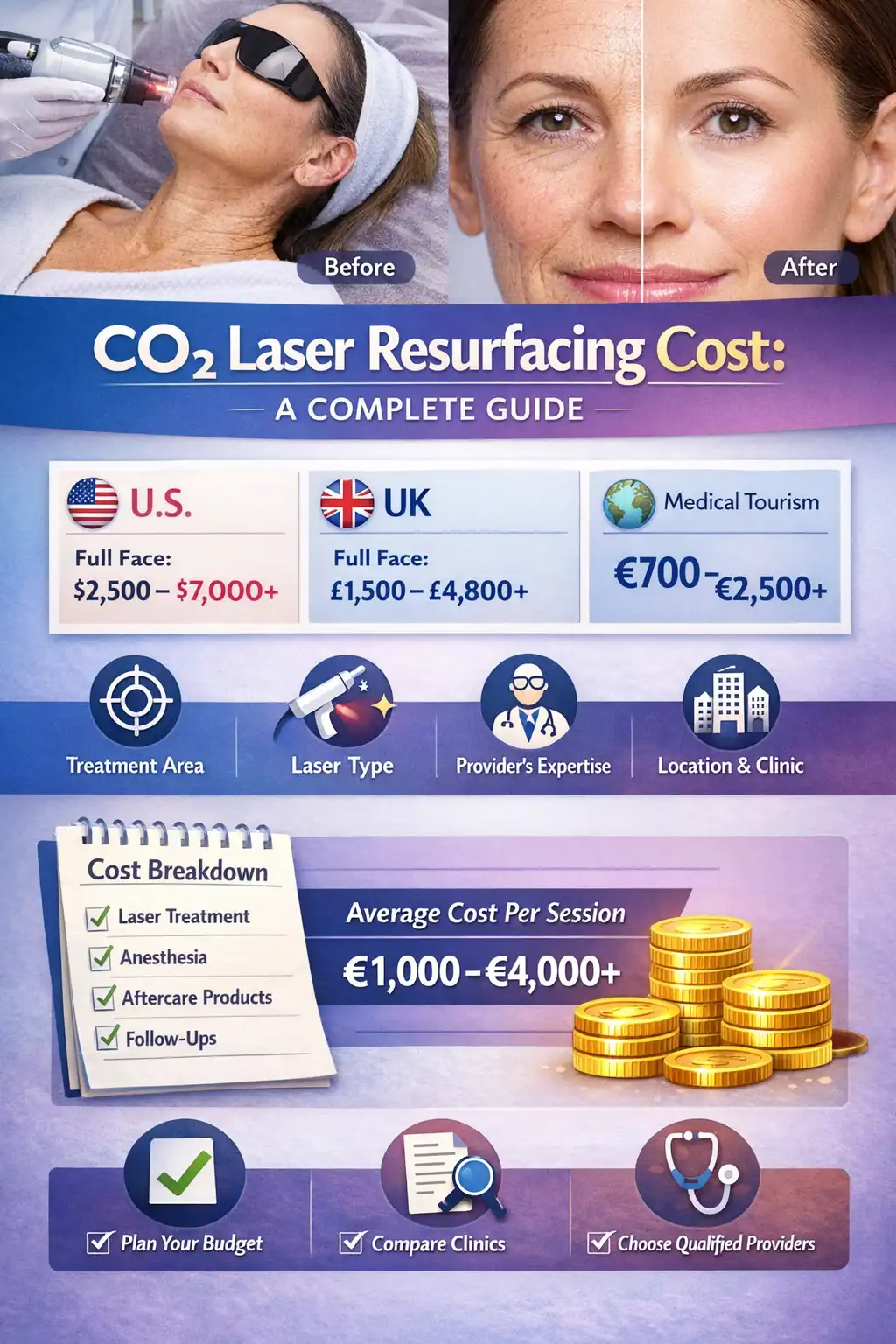
Based on our research, the average CO2 laser re
surfacing cost in 2026 falls within a specific range. For a full-face procedure, patients can expect to pay anywhere from $2,000 to $7,000. For smaller, more targeted areas around the eyes or mouth, the price can be significantly lower, often ranging from $500 to $1,500. These figures generally include the surgeon’s fee, facility fees, and anesthesia. For a deeper understanding of what is involved in the overall CO2 laser resurfacing cost in 2026, please refer to this detailed article on laser resurfacing costs.
You should also ask about any additional fees that may apply, such as pre-treatment consultations, post-procedure skincare products, or follow-up appointments. Some clinics offer package deals for multiple sessions, which may reduce the overall cost per treatment. For those seeking even better results, some providers offer add-on services like Platelet-Rich Plasma (PRP) therapy, which can add another $500 to $1,000 to the total cost. Exploring these options can greatly influence your final investment. This is often a consideration for those also looking at hair transplant solutions and other cosmetic treatments.
Patient Journey: A Case Study in CO2 Laser Resurfacing
Let’s follow the journey of a hypothetical patient named Sarah, a 45-year-old marketing executive who wanted to address fine lines, sun spots, and uneven texture. After a thorough consultation, her doctor recommended a full-face fractional CO2 laser resurfacing cost in 2026 treatment. Her doctor educated Sarah on the recovery process and the expected results. The procedure itself took about 90 minutes. Immediately after, her skin felt like a severe sunburn, but she managed this discomfort with cold packs and the provided soothing ointment. For an article on patient experiences, a good source is this review on CO2 laser resurfacing.
Over the next 10 days, Sarah’s skin went through a peeling process, revealing a fresh, pink layer underneath. She followed her doctor’s aftercare instructions religiously, using a gentle cleanser and moisturizer and avoiding direct sun exposure. By the two-week mark, she could wear makeup, and her skin looked noticeably smoother and more even. Over the next few months, as new collagen formed, she saw even more dramatic improvements in the firmness and tone of her skin. Sarah was thrilled with the results and felt that the CO2 laser resurfacing cost in 2026 was a worthwhile investment for her confidence and appearance.
CO2 vs. Erbium: A Comparison for Informed Decisions
When you decide on a laser treatment, you often weigh different options. While many people choose CO2, the Erbium YAG laser is another effective alternative. Knowing the differences helps you make a more informed decision tailored to your specific needs. Here’s a quick comparison to highlight the key contrasts between the two technologies. You can also read more about this on a credible source like this article comparing Erbium and CO2 lasers. This is similar to how you would choose between different cosmetic procedures like a rhinoplasty or other types of facial surgery.
Feature
CO2 Laser
Erbium Laser
Depth of Penetration
Deeper, reaching into the dermis.
More superficial, targeting the epidermis.
Downtime
Longer, typically 10-21 days for full recovery.
Shorter, generally 5-10 days.
Target Concerns
Deep wrinkles, severe acne scars, significant sun damage.
Fine lines, superficial wrinkles, mild scars.
Skin Tightening
Excellent due to significant collagen stimulation.
Good, but less dramatic than CO2.
Suitability for Skin Tones
Best for lighter skin tones (Fitzpatrick I-III).
Safer for a wider range of skin tones, including darker complexions.
Who is This Treatment For?
CO2 laser resurfacing effectively helps a specific group of individuals. It is an ideal treatment for patients with a variety of skin concerns, including deep-set wrinkles, textural issues, and severe acne scarring. It is particularly well-suited for those with lighter skin tones who seek significant improvement with just one or two sessions. Importantly, candidates should be in good overall health and have realistic expectations about the results and the recovery process. This is a powerful treatment, and you must commit to post-care because it’s just as important as the procedure itself.
The treatment is also a great option for individuals who have tried less invasive methods, such as chemical peels or microdermabrasion, without achieving their desired results. Moreover, while the CO2 laser resurfacing cost in 2026 is a significant investment, its long-lasting and transformative effects often make it a cost-effective choice compared to repeated, less effective treatments. You can also explore options like dental implant services for a complete smile makeover.
FAQs: Answering Your Most Pressing Questions
In 2026, the cost of CO2 laser resurfacing can vary significantly. A full-face treatment can range from $2,000 to $7,000, while smaller, targeted areas may cost between $500 and $1,500. The final price depends on factors like the clinic’s location, the surgeon’s expertise, and the complexity of your treatment.
The typical recovery time for CO₂ laser resurfacing depends on whether the procedure is fully ablative (deep) or fractional (less intense). Here’s a detailed breakdown:
1. Fully Ablative CO₂ Laser
Downtime / Visible Healing: 7–14 days
Redness / Swelling: 1–3 weeks (may persist longer for fair or sensitive skin)
Peeling / Flaking: Usually 5–10 days
Makeup / Public Appearance: Often recommended to wait at least 10–14 days until skin looks acceptable
Full Skin Recovery: 1–3 months for redness to fade completely and collagen remodeling to show benefits
2. Fractional CO₂ Laser
Downtime / Visible Healing: 3–7 days
Redness / Swelling: Usually mild, 3–5 days
Peeling / Flaking: Light flaking, 2–5 days
Makeup / Public Appearance: Often can resume in 3–5 days
Full Skin Recovery: 4–6 weeks for maximum effect and collagen remodeling
Treatment Area: Larger areas like full face or neck take longer.
Skin Type: Fairer skin may stay red longer; sensitive skin can swell more.
Post-Care Compliance: Using proper healing creams, SPF, and avoiding sun speeds recovery.
Age & Health: Younger, healthier skin tends to heal faster.
💡 Tip: Many patients combine fractional CO₂ for shorter downtime with periodic maintenance sessions to minimize long recovery while still improving wrinkles, scars, and texture.
The number of CO₂ laser resurfacing sessions needed depends on your skin condition, treatment depth, and desired results. Here’s a detailed breakdown:
Fully Ablative CO₂ Laser
Typical Sessions: 1 session is often sufficient for most patients.
Reasons: This laser removes a significant layer of skin, promoting dramatic collagen remodeling and long-lasting results.
Additional Sessions: Rarely needed, but some people with deep scars or severe wrinkles may benefit from 1–2 follow-up sessions, spaced 3–6 months apart.
Fractional CO₂ Laser
Typical Sessions: 2–5 sessions are commonly recommended.
Reasons: Fractional CO₂ targets small columns of skin, leaving surrounding tissue intact, so results are gradual.
Session Spacing: Usually 4–6 weeks apart to allow skin to heal and collagen to remodel.
Advantages: Shorter downtime per session and lower risk of complications compared to fully ablative lasers.
Factors Affecting Number of Sessions
Severity of Skin Issues: Deep wrinkles, acne scars, or sun damage may require more sessions.
Skin Type: Darker skin may need more conservative settings, sometimes requiring extra treatments.
Treatment Goals: If the goal is subtle rejuvenation, fewer sessions may suffice; for dramatic resurfacing, more sessions may be needed.
Age & Healing Response: Younger patients may see results faster, reducing the number of sessions.
💡 Tip: Many clinics offer a customized plan, starting with 1–2 sessions and assessing results before committing to additional treatments.
CO₂ laser resurfacing can be uncomfortable, but the level of pain depends on the type of laser, treatment depth, and pain management used. Here’s a detailed breakdown:
1. Fully Ablative CO₂ Laser
Pain Level: Moderate to high if no anesthesia is used. Patients often describe a burning, stinging, or prickling sensation during treatment.
Pain Management Options:
Topical numbing cream (applied 30–60 minutes before treatment)
Local anesthesia for more sensitive areas
Oral sedatives or anti-anxiety medication in some cases
During Procedure: Most patients tolerate it well with proper numbing and cooling techniques.
2. Fractional CO₂ Laser
Pain Level: Usually mild to moderate. Patients report a warm prickling or tingling sensation rather than intense pain.
Pain Management:
Topical numbing cream is usually sufficient
Cooling devices may be applied during the procedure to reduce discomfort
3. Post-Treatment Discomfort
After CO₂ laser resurfacing, some temporary discomfort is normal:
Redness, swelling, and warmth for several days
Mild burning or tightness while skin heals
Peeling or flaking may feel itchy or tender
Tip: Over-the-counter pain relievers (like acetaminophen) and prescribed post-care ointments help reduce discomfort.
✅ Summary
Fully Ablative CO₂: Moderate to high discomfort during treatment; numbing and anesthesia usually needed.
Fractional CO₂: Mild to moderate discomfort; topical numbing usually enough.
Recovery Discomfort: Usually manageable with creams and pain relievers.
CO₂ lasers can be used on many skin types, but they are not ideal for all, and the risk of complications varies depending on skin tone, sensitivity, and healing response. Here’s a detailed breakdown:
Light to Medium Skin (Fitzpatrick I–III)
Safety: Generally safest and most predictable results.
Risk of Complications: Low risk of hyperpigmentation (dark spots) or hypopigmentation (light spots).
Recommendation: Both fully ablative and fractional CO₂ are commonly used for wrinkles, scars, sun damage, and texture improvement.
Medium to Olive Skin (Fitzpatrick IV–V)
Safety: Can still be treated, but higher risk of pigmentation changes.
Precautions:
Use fractional CO₂ with conservative settings rather than deep ablative treatments.
Pre-treatment skincare (e.g., topical lightening agents) may be recommended.
Sun protection after treatment is critical.
Dark Skin (Fitzpatrick VI)
Safety: More challenging due to high risk of hyperpigmentation, hypopigmentation, or scarring.
Recommendations:
Fractional CO₂ lasers only, with very conservative settings.
Test spots are often done first to assess skin reaction.
Alternative treatments (like non-ablative lasers or chemical peels) may sometimes be safer.
General Considerations
Skin Sensitivity & History: Skin with active acne, eczema, or recent sunburn may need to heal before CO₂ treatment.
Post-Care Is Crucial: Strict sun protection, gentle skincare, and following post-laser instructions reduce risks of pigmentation issues.
Professional Assessment: Only a qualified dermatologist or laser specialist should decide if your skin type is safe for CO₂ resurfacing.
✅ Summary Table
Skin Type (Fitzpatrick)
CO₂ Laser Safety
Notes & Precautions
I–III (Light–Medium)
High
Both fully ablative & fractional safe
IV–V (Medium–Olive)
Moderate
Fractional preferred, conservative settings
VI (Dark)
Low–Moderate
High risk of pigmentation; test spots recommended
The results of CO₂ laser resurfacing can be long-lasting, but the exact duration depends on treatment depth, skin type, age, lifestyle, and maintenance. Here’s a detailed breakdown:
Fully Ablative CO₂ Laser
Results Duration: 5–10 years or longer for wrinkles, fine lines, and texture improvements.
Why Long-Lasting: Deep resurfacing removes significant layers of damaged skin and stimulates robust collagen remodeling.
Considerations: Natural aging, sun exposure, and lifestyle factors (like smoking) can gradually reduce visible improvements over time.
Fractional CO₂ Laser
Results Duration: 1–5 years, depending on the number of sessions and skin condition.
Why Shorter: Fractional treatments target columns of skin rather than the full layer, so results are gradual and less dramatic per session.
Enhancement: Periodic maintenance sessions (once every 12–18 months) can extend results.
Factors Affecting Longevity
Sun Exposure: UV damage can reverse improvements; daily SPF is essential.
Age & Skin Type: Younger, healthier skin often retains results longer.
Lifestyle Choices: Smoking, poor diet, and lack of hydration can accelerate skin aging.
Skin Care Routine: Using quality moisturizers, retinoids, and antioxidants supports long-term results.
Realistic Expectations
Immediate Results: Smoother texture, reduced fine lines, and improved tone after healing (~1–3 months).
Optimal Results: Peak collagen remodeling typically occurs 3–6 months post-treatment.
Longevity: With good care, fully ablative results can last up to a decade, while fractional results usually need maintenance sessions every few years.
💡 Tip: Combining CO₂ laser resurfacing with non-invasive treatments (like chemical peels, microneedling, or PRP therapy) can help maintain results longer and reduce the need for frequent retreatment.
Common side effects include redness, swelling, peeling, and a feeling of warmth. In some cases, patients may experience milia (tiny white bumps) or a brief acne flare-up. Serious side effects like scarring or infection are rare when the procedure is performed by an experienced professional and proper aftercare instructions are followed.
The difference between fractional CO₂ laser and traditional (fully ablative) CO₂ laser comes down to treatment depth, downtime, safety, and results. Here’s a detailed comparison:
Traditional (Fully Ablative) CO₂ Laser
How It Works: Removes the entire top layer of skin (epidermis) and heats the underlying dermis to stimulate collagen.
Depth: Deep; treats severe wrinkles, scars, and extensive sun damage.
Downtime: Long — usually 7–14 days of visible healing.
Pain Level: Moderate to high during treatment; anesthesia often required.
Results: Dramatic, long-lasting improvements in wrinkles, scars, and texture.
Risks: Higher chance of hyperpigmentation, infection, and prolonged redness, especially in darker skin types.
Ideal For: Patients seeking significant, transformative results in one session, and willing to accept longer recovery.
Fractional CO₂ Laser
How It Works: Treats tiny columns (microzones) of skin, leaving surrounding tissue intact to accelerate healing.
Depth: Adjustable; less deep than fully ablative, but still effective for wrinkles, scars, and texture.
Downtime: Shorter — typically 3–7 days.
Pain Level: Mild to moderate; topical numbing cream usually sufficient.
Results: Gradual improvements over multiple sessions; less dramatic than full ablative but safer for most skin types.
Risks: Lower than fully ablative; suitable for lighter and medium skin, sometimes safe for darker skin with conservative settings.
Ideal For: Patients wanting rejuvenation with shorter recovery, lower risk, or maintenance treatments.
You should not wear makeup on the treated area until it is completely healed. This typically takes about 10-14 days. Wearing makeup too early can increase the risk of infection and irritate the sensitive new skin. Your provider will give you specific instructions on when it is safe to resume your makeup routine.
CO₂ lasers are generally not used to treat active acne itself, but they can be very effective for acne scars and post-acne skin damage. Here’s a detailed explanation:
CO₂ Laser & Active Acne
Not Recommended for Active Lesions:
CO₂ laser works by removing or resurfacing the skin’s top layers. Treating inflamed, active acne can irritate the lesions, spread bacteria, and worsen inflammation.
Goal of CO₂ Laser: Focuses on healed skin to improve texture, reduce scars, and stimulate collagen—not to treat current pimples.
CO₂ Laser for Acne Scars
Effective Treatment: CO₂ lasers (especially fractional CO₂) are excellent for:
Ice pick scars
Boxcar scars
Rolling scars
Textural irregularities from previous acne
Mechanism: Ablative or fractional CO₂ removes damaged skin layers and stimulates collagen remodeling, smoothing out scars.
Sessions Needed: Usually 1–3 fractional sessions, spaced 4–6 weeks apart, depending on scar severity.
Recommended Approach for Active Acne
Clear Active Acne First:
Dermatologists typically treat active acne with topical retinoids, antibiotics, oral medications, or light-based therapies.
Wait Until Skin is Calm:
CO₂ laser resurfacing is then done after acne is under control to minimize risks and maximize results.
Alternative Laser Options for Active Acne
Non-ablative lasers or photodynamic therapy (PDT) can target active acne by reducing oil production and bacteria without removing skin layers.
CO₂ is reserved for post-acne resurfacing, not active treatment.
✅ Summary Table
Skin Concern
CO₂ Laser Use
Notes
Active inflammatory acne
❌ Not recommended
Can worsen inflammation and spread bacteria
Acne scars & texture
✅ Effective
Fractional CO₂ preferred; multiple sessions may be needed
Skin tone & hyperpigmentation post-acne
✅ Can help
Works best after acne clears and skin is healed
💡 Tip: Many clinics recommend combining acne control first, then fractional CO₂ resurfacing a few months later for optimal scar reduction and smoother skin.
Platelet-Rich Plasma (PRP) is often combined with CO₂ laser treatment to enhance healing, reduce downtime, and improve results. Here’s a detailed explanation of its role:
What is PRP?
PRP is a concentrated solution of platelets derived from your own blood.
Platelets contain growth factors that stimulate collagen production, tissue repair, and skin regeneration.
How PRP Works with CO₂ Laser
CO₂ Laser Effect: Ablative or fractional CO₂ removes or heats layers of skin, creating micro-injuries that stimulate collagen remodeling.
PRP Enhancement: Applying PRP to the treated skin (topically or via injection) accelerates the body’s natural healing process.
Benefits Include:
Faster re-epithelialization (skin regrowth)
Reduced redness, swelling, and discomfort
Improved skin texture and tone
Enhanced collagen remodeling for better results
Typical Protocol
CO₂ Laser Session: Fully ablative or fractional treatment is performed.
PRP Application:
PRP is drawn from the patient’s blood, processed, and applied immediately to the treated area.
Sometimes it is injected superficially into the dermis (mesotherapy).
Recovery: PRP speeds up healing and may reduce visible downtime by 1–2 days compared to CO₂ laser alone.
Ideal Candidates
Patients seeking faster recovery
Those with thin, sensitive, or mature skin
Individuals wanting maximized collagen stimulation and improved results
Advantages of CO₂ Laser + PRP
Feature
CO₂ Laser Alone
CO₂ Laser + PRP
Healing Speed
Moderate
Faster
Downtime
7–14 days (ablative)
Slightly reduced
Redness & Swelling
Moderate
Often milder
Collagen Production
Good
Enhanced
Overall Skin Rejuvenation
High
Very High
💡 Tip: Many dermatologists use PRP immediately after fractional CO₂ laser to boost healing and collagen, especially for patients with acne scars, wrinkles, or thin/delicate skin.
To find a qualified provider, look for a board-certified dermatologist or plastic surgeon with extensive experience in laser treatments. Check their credentials, read patient reviews, and ask to see before-and-after photos of their work to ensure they are the right choice for you.
Yes — CO₂ laser resurfacing is not suitable for everyone. Certain medical conditions, medications, or skin types can increase the risk of complications. Here’s a detailed breakdown of contraindications and precautions:
1. Absolute Contraindications
These conditions generally prevent the procedure altogether:
Contraindication
Reason
Active skin infections (bacterial, viral, fungal)
Laser can spread infection or worsen inflammation
Active cold sores (HSV)
Laser can trigger flare-ups
Recent isotretinoin (Accutane) use
Increases risk of poor wound healing; typically wait 6–12 months after treatment
Keloid-prone skin or hypertrophic scars
Higher risk of abnormal scarring
Pregnancy or breastfeeding
Safety not well established
2. Relative Contraindications / Caution
These require extra care or modification of treatment:
Condition / Factor
Notes
Darker skin tones (Fitzpatrick V–VI)
Higher risk of hyperpigmentation or hypopigmentation; fractional CO₂ with conservative settings preferred
History of poor wound healing
May increase downtime or complications
Autoimmune diseases or immunosuppression
Healing may be delayed; infection risk higher
Radiation therapy or recent chemical peels
Skin may be too sensitive or fragile
Certain medications (e.g., blood thinners, photosensitizing drugs)
Increased risk of bruising, bleeding, or pigmentation changes
3. Lifestyle and Skin Factors
Recent tanning / sunburn: Increases risk of post-inflammatory hyperpigmentation.
Uncontrolled diabetes: Slower healing and higher risk of infection.
Smoking: Impairs collagen formation and prolongs recovery.
4. Pre-Treatment Recommendations
Full medical history and skin assessment by a dermatologist or certified laser specialist.
Pre-treatment antiviral therapy if prone to cold sores.
Stop certain medications or supplements as advised (e.g., blood thinners).
Use sun protection for 2–4 weeks before treatment.
✅ Summary Table
Patient Factor
Can CO₂ Laser Be Performed?
Notes
Active acne or infection
❌ No
Treat first, laser only after skin is calm
Pregnancy / breastfeeding
❌ No
Safety not established
Recent Accutane
❌ No
Wait 6–12 months
Darker skin
⚠️ Caution
Use fractional with low energy settings
Keloid history
❌ No
High risk of abnormal scarring
Smoking / diabetes
⚠️ Caution
Slower healing; may need modified settings
💡 Tip: Even if you don’t fall under absolute contraindications, a consultation with a certified laser dermatologist is essential to determine safe settings, minimize risks, and decide whether fractional CO₂ or alternative treatments are better for your skin type.
CO2 laser resurfacing can be used on the neck and chest, but the skin in these areas is often thinner and more delicate than on the face. Therefore, a less aggressive approach or different laser settings may be used to minimize the risk of complications and ensure a safe treatment.
Post-treatment care is vital for optimal results. You should use a gentle, fragrance-free cleanser, a healing ointment (like Vaseline or Aquaphor), and a broad-spectrum mineral sunscreen with an SPF of at least 30. Avoid harsh products like retinoids or glycolic acid for several weeks, as directed by your physician.
Yes, CO2 laser resurfacing is highly effective at treating sun damage, including age spots and uneven skin tone. The laser helps to break up pigmented cells and stimulate new skin growth, revealing a clearer, more radiant complexion.
A full-face CO2 laser resurfacing procedure typically takes between 30 minutes to 2 hours, depending on the size of the area being treated and the intensity of the treatment. The process may be shorter for smaller, targeted areas like around the eyes or mouth.
Yes, a significant benefit of CO2 laser resurfacing is skin tightening. The heat from the laser causes existing collagen fibers to contract immediately, and the healing process stimulates the production of new collagen, leading to improved skin firmness and elasticity over time.
CO2 lasers penetrate deeper into the skin and create more thermal damage, leading to more dramatic results but with a longer recovery time. Erbium lasers are more precise, cause less thermal damage, and have a shorter downtime, making them a good option for more superficial concerns.
When performed by a skilled professional, the results from CO2 laser resurfacing look very natural. The procedure works by improving your skin’s own regenerative processes, leading to a smoother, clearer complexion that is noticeably refreshed and rejuvenated without an ‘overdone’ look.
If you have a history of facial herpes (cold sores), you should inform your doctor before the procedure. They will likely prescribe an antiviral medication to take before and after the treatment to prevent an outbreak, as laser treatments can sometimes trigger them.
Introduction to Uro Oncology Treatment in India Uro-oncology, the branch of medicine focused on cancers affecting the urinary and male reproductive systems, is one of
Neuro Oncology deals with some of the most complex and challenging cancers affecting the brain and nervous system. For patients seeking advanced, compassionate, and affordable
Gynecological Oncology in Turkey Gynecological cancers such as ovarian, uterine, and cervical cancer affect millions of women worldwide every year. Choosing the right place for