✨ Corrective Leg Deformity Surgery Recovery: The Definitive Path to Restored Mobility
Executive Summary 📝
Successfully navigating Corrective Leg Deformity Surgery Recovery is a transformative journey. Key takeaways from patient experiences, like the one recently shared online, show that regaining full function is possible through diligent physical therapy and expert surgical planning. This comprehensive guide details the post-operative journey, highlights essential recovery steps, and offers a look at the incredible results achievable after joint and limb correction. Corrective Leg Deformity Surgery Recovery demands patience, but the return to a corrected gait and stable joints is the ultimate reward.
Watch the patient’s two-week post-op progress here. Video Source: https://www.youtube.com/shorts/x9lY0s–QPc
Understanding Corrective Leg Deformity Surgery 🦵
Leg deformities—which can range from simple angular issues to severe complex conditions—often lead to chronic pain and debilitating mobility problems. Corrective surgery is the primary treatment, fundamentally aiming to realign the bone structure, thereby restoring the proper mechanical axis of the limb. Consequently, this surgical approach dramatically reduces stress on adjacent joints and soft tissues. You can explore more about advanced Orthopedic Surgery procedures offered globally on our portal.
The Two-Week Post-Op Milestone
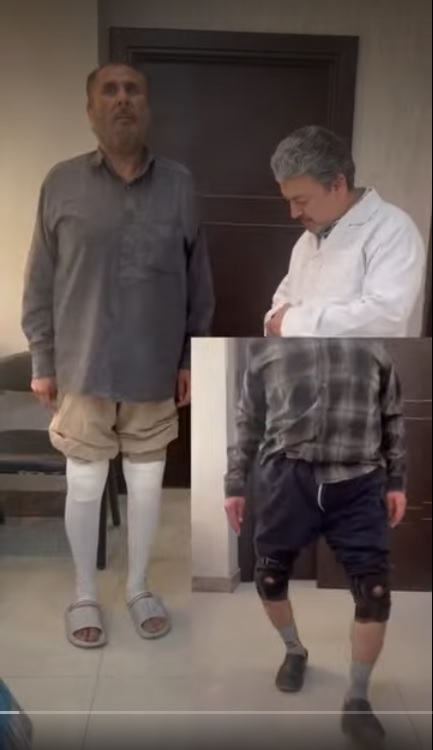
As demonstrated in the inspiring patient video, the two-week mark represents a critical milestone in Corrective Leg Deformity Surgery Recovery. At this stage, doctors look for initial wound healing, stability, and the start of independent movement. Furthermore, the patient’s ability to begin bearing weight and testing the corrected joint stability shows immense progress. This rapid improvement underscores the success of precise surgical techniques and early therapeutic movement.
Focus on Joint Stability and Gait Correction 🚶
The ultimate goal of Corrective Leg Deformity Surgery Recovery is achieving full, unassisted mobility with a natural gait. Therefore, the post-operative regimen focuses intensively on restoring the full, pain-free range of motion, specifically in the knees. The orthopedic team ensures that the ligaments provide complete, stable support, a vital step before the patient is cleared to walk without assistive devices.
Case Study: A Journey to Unassisted Walking 🌟
Consider the patient featured in the video, an individual who underwent staged bilateral leg surgery due to severe deformity. The surgeon, Dr. Hakimi, employed a strategy of two operations performed a couple of days apart. Consequently, the patient was able to leverage the slight head-start of the first operated leg for initial support. Just two weeks post-operation, the patient achieved a remarkable feat: walking completely unaided for the first time. This outcome exemplifies a highly successful Corrective Leg Deformity Surgery Recovery.
Pros and Cons of Corrective Orthopedic Surgery
Orthopedic correction offers life-changing benefits, but patients must understand the commitment required. The surgery provides a clear path to long-term joint health and mobility. Conversely, the recovery period can be challenging, necessitating strict adherence to physical therapy protocols. This commitment is the price of a successful Corrective Leg Deformity Surgery Recovery.
| Aspect | Pros ✅ | Cons ❌ |
|---|---|---|
| Long-Term Outcome | Permanent correction of limb alignment and function. | Full recovery can take 6 months to a year. |
| Mobility Gain | Elimination of pain, restored natural gait, and improved quality of life. | Initial reliance on assistive devices (crutches, walker). |
| Procedure Type | Often minimally invasive techniques are used to reduce trauma. | Risk of infection or hardware complications (low risk, but present). |
Who is This For? 🎯
This surgery and the subsequent intense Corrective Leg Deformity Surgery Recovery are designed for individuals with congenital, developmental, or trauma-induced leg deformities. These conditions often include bow legs (Genu Varum), knock knees (Genu Valgum), or complex rotational deformities. Moreover, it is ideal for patients seeking a permanent solution to pain and gait issues that non-surgical treatments have failed to address. If you are considering joint replacement surgery, corrective surgery might be a better alternative depending on the deformity’s nature.
For patients exploring options in regions known for advanced orthopedic care, understanding the full scope of Corrective Leg Deformity Surgery Recovery is essential. Furthermore, exploring medical travel to destinations with high-quality, affordable care is a popular choice for many. You can learn about the process and necessary steps in the Medical Visa Definitive Patient Handbook.
Frequently Asked Questions (FAQ) ❓
What is the typical timeframe for initial Corrective Leg Deformity Surgery Recovery milestones?
Initial milestones, such as walking with assistance or performing light range-of-motion exercises, often occur within the first 2-4 weeks. However, the exact timeline depends significantly on the specific procedure and the patient’s overall health.
Will I need to use a walker or crutches after the surgery?
Yes, nearly all patients require assistive devices like walkers or crutches immediately following surgery to protect the surgical site and safely practice weight-bearing. This support is temporary, gradually transitioning to independent walking.
Is physical therapy necessary for a successful recovery?
Physical therapy is non-negotiable and absolutely critical. It helps restore muscle strength, joint flexibility, and a corrected gait pattern, which are essential for long-term success.
How soon can I return to work after corrective leg surgery?
For desk jobs, you might return within 2 to 4 weeks, often with modifications. However, if your job involves heavy lifting or standing, a return may take 3 to 6 months, pending your surgeon’s approval.
What kind of permanent stability can be expected in the joints?
Successful corrective surgery aims to establish long-term, complete stability in the treated joints by correcting alignment and ensuring proper ligamentous tension. This stability is key to a pain-free life.
Are there different types of leg deformity surgeries?
Yes, common types include osteotomies (cutting and reshaping bone), guided growth surgeries, and joint replacements, depending on the patient’s age and the severity of the deformity.
How long will the pain last during Corrective Leg Deformity Surgery Recovery?
Significant surgical pain is managed with medication for the first few weeks. Mild discomfort or soreness during physical therapy can persist for several months as muscles and soft tissues heal and adjust.
Can I travel abroad for this surgery and recover?
Yes, many choose medical travel for specialized care. You should plan for an extended stay of several weeks post-op before being cleared for air travel. We offer guides on Global Medical Treatment Regulations.
What is the importance of a ‘staged’ bilateral surgery approach?
Performing surgery on both legs in separate, spaced-out stages (e.g., a few days apart) allows the patient to use the first operated leg for stability while the second is healing, which can improve immediate post-op comfort and safety.
Will I have visible scarring?
All surgical procedures result in some scarring. Surgeons strive to minimize visibility by placing incisions strategically. Scars typically fade significantly over 12 to 18 months.
What activities should I avoid during recovery?
Avoid high-impact sports, running, heavy lifting, and any movement that puts sudden twisting pressure on the joints for the duration recommended by your orthopedic surgeon and physical therapist.
How do I choose the right clinic for orthopedic surgery abroad?
Choosing the right clinic involves vetting the surgeon’s experience, checking facility accreditation, and understanding the complete post-operative care package. Use our pre-travel resources and checklists for patients to guide your decision.
Conclusion: Your Path to a Corrected Life 🚀
The video provides compelling evidence of a successful Corrective Leg Deformity Surgery Recovery. It highlights that dedication to the post-op process, especially physical therapy, is crucial. If you or a loved one are facing mobility challenges due to a leg deformity, remember that advanced orthopedic solutions are available. To begin your own journey, visit our WMEDTOUR website for consultation and planning.