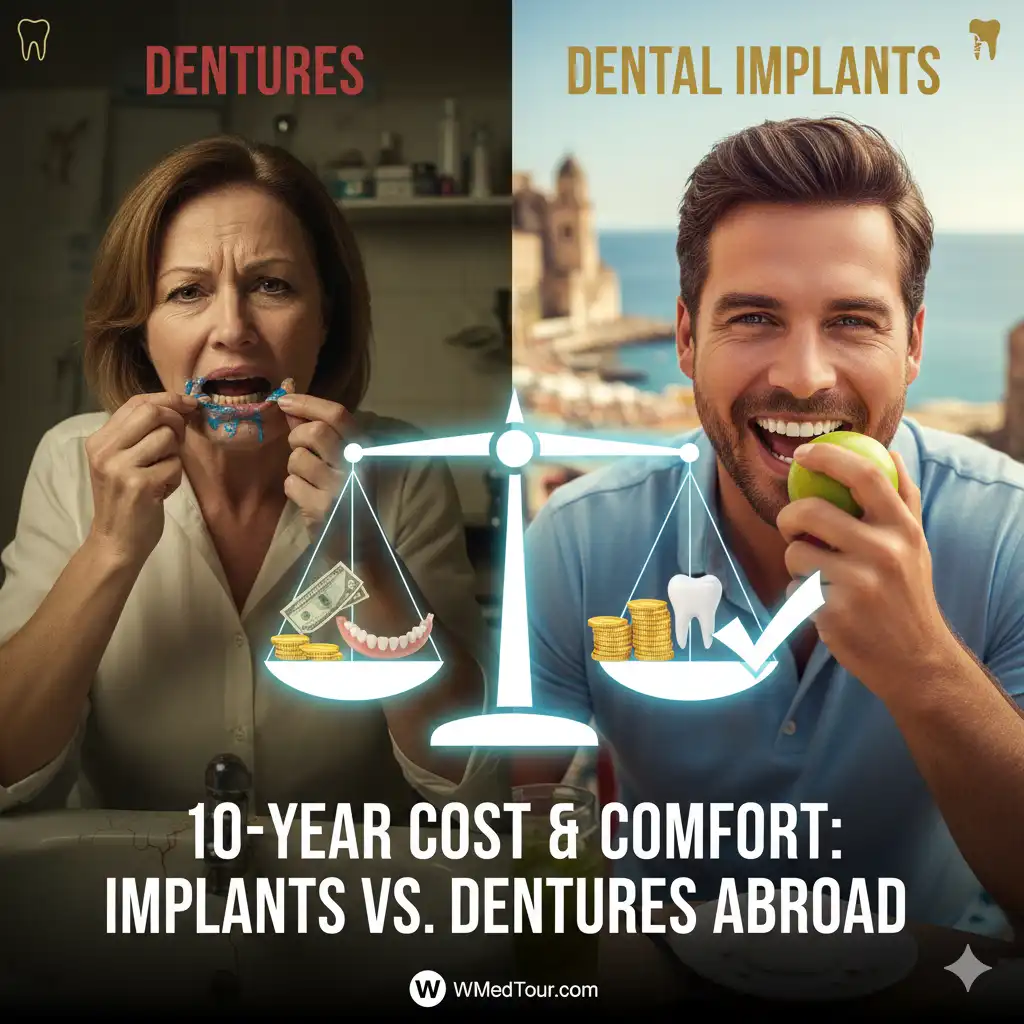
🦷 Dental Implants vs. Dentures Abroad: A 10-Year Cost-Benefit Analysis 💸
📋 Executive Summary
Deciding between dental implants and dentures is a pivotal health choice. This 10-year analysis explores the financial and functional realities of both options when seeking care abroad. While dentures have a lower initial price, dental implants offer superior long-term value. Over a decade, dentures often require relining, adhesives, and eventually replacement. In contrast, implants prevent bone loss and provide a permanent solution. Key findings include:
- Initial Costs: Dentures are 60-70% cheaper upfront than full-arch implants.
- Maintenance: Implants have negligible recurring costs compared to denture maintenance.
- Quality of Life: Implants restore 95% of chewing power; dentures restore roughly 25-30%.
- Bone Health: Only implants stimulate the jawbone to prevent facial collapse.
🌟 Introduction: The Smile Dilemma in 2026
Are you struggling with missing teeth? You are certainly not alone. Many adults face this challenge due to age, injury, or health conditions. Consequently, the choice between Dental Implants vs. Dentures Abroad becomes a significant crossroads. In 2026, medical tourism has made premium dental care more accessible than ever. However, the true cost of a smile isn’t just the price on the tag today. It is the cumulative expense and comfort over the next decade.
At WMedTour, we help patients navigate these complex decisions. We see many individuals who prioritize low initial costs. Yet, they later regret the lifestyle limitations of traditional prosthetics. Therefore, we developed this 10-year cost-benefit analysis. We aim to show you the hidden factors that influence your satisfaction and bank account. Understanding these nuances helps you make a choice that lasts a lifetime.
🦷 Understanding Dental Implants
Dental implants are essentially artificial tooth roots. Surgeons place small titanium or zirconia posts into the jawbone. Over time, these posts fuse with the bone through a process called osseointegration. This creates a rock-solid foundation for crowns or bridges. Because they mimic natural roots, they are the gold standard for tooth replacement in our medical departments.
From a technical standpoint, implants are sophisticated. They require a healthy jawbone and a skilled oral surgeon. If you lack bone density, you might need additional procedures like a sinus lift. However, the result is a tooth that looks, feels, and functions exactly like the one you lost. This high level of integration is why many professionals choose implants for their long-term health.
✅ The Pros of Dental Implants
- Bone Preservation: They prevent the jawbone from shrinking.
- Durability: With proper care, they can last 25 years or even a lifetime.
- Functionality: You can eat steak, apples, and nuts without fear.
- Aesthetics: They provide a natural look that boosts self-confidence.
❌ The Cons of Dental Implants
- High Initial Cost: The upfront investment is significant.
- Surgery Required: It involves a minor surgical procedure and recovery time.
- Time-Consuming: The process can take 3 to 6 months to complete.
👄 Understanding Traditional Dentures
Dentures are removable replacements for missing teeth. They consist of prosthetic teeth attached to a pink acrylic base that mimics gum tissue. For decades, dentures were the only option for those with total tooth loss. They are still widely used because they provide a quick and affordable way to restore a smile. You can find various options in our denture department.
However, dentures rely on suction or adhesives to stay in place. Since they sit on top of the gums, they do not stimulate the jawbone. Over time, the bone begins to resorb or “melt away.” This change in bone structure causes the dentures to become loose. Consequently, the wearer often experiences discomfort and difficulty speaking. While modern materials have improved, the underlying mechanics remain the same as they were decades ago.
✅ The Pros of Dentures
- Affordability: They are the most budget-friendly option initially.
- Non-Invasive: No surgery is required for standard removable dentures.
- Speed: You can receive your final dentures in just a few weeks.
❌ The Cons of Dentures
- Bone Loss: They do nothing to stop the degeneration of the jawbone.
- Instability: They may slip or click while talking or eating.
- Maintenance: They require daily removal and specialized cleaning.
- Replacement: Most dentures need replacement every 5 to 7 years.
📊 The 10-Year Cost Analysis: Real Numbers
When we look at the 10-year horizon, the financial gap narrows. Let’s compare a full-mouth restoration abroad (e.g., in Turkey or India). Prices are based on 2026 market averages for medical tourists. For more localized pricing, check our all locations guide.
| Expense Item | Traditional Dentures (Full Set) | All-on-4 Dental Implants |
|---|---|---|
| Initial Procedure Cost | $1,800 – $2,500 | $8,000 – $12,000 |
| Adhesives & Cleaners (10 Years) | $1,200 – $1,500 | $0 |
| Professional Relining (Every 2 Years) | $1,500 – $2,000 | $0 |
| Replacement Set (Year 7) | $2,000 – $2,800 | $0 |
| Total 10-Year Estimated Cost | $6,500 – $8,800 | $8,000 – $12,000 |
As the table demonstrates, the “savings” from dentures decrease significantly over time. By year ten, you have spent almost as much on maintaining a plastic prosthetic as you would have on permanent titanium implants. Furthermore, this table does not account for the “soft costs.” These include the frustration of loose teeth or the social anxiety of denture slips.
👤 Who is This For?
Our analysis is tailored for a diverse group of patients looking for global medical tourism solutions. Specifically, this guide is for:
- The “Long-Term Value” Seeker: Individuals who want to pay once and never worry about their teeth again.
- Active Seniors: People who enjoy traveling, dining out, and staying socially active.
- Professionals: Those whose careers require clear speech and a confident presentation.
- Budget-Minded Patients: People who need to understand why “cheap” options often cost more in the long run.
🛣️ The Patient Roadmap: Your Journey to a New Smile
Navigating dental care abroad requires a clear plan. We recommend following these six steps to ensure a safe and successful outcome. If you are starting from scratch, view our process overview.
Step 1: Virtual Assessment
Upload your recent X-rays or CT scans for a remote evaluation. Our experts can then determine if your bone density is sufficient for implants. You can book a telemedicine consultation to speak directly with a specialist.
Step 2: Destination Selection
Decide on a location that fits your budget and travel preferences. Popular hubs in 2026 include Turkey and India. Each offers high-tech clinics with board-certified dentists.
Step 3: Initial Surgery (For Implants)
Travel for your first visit. The surgeon will place the implant posts. If you choose dentures, this is when your impressions are taken. During this phase, you might need a pre-operative consultation to ensure you are fit for sedation.
Step 4: Healing Period
For implants, you must wait 3 to 6 months for the bone to heal. You will wear a temporary bridge during this time. This is a great period to explore recovery tours in nearby regions.
Step 5: Final Restoration
Return to the clinic to receive your permanent porcelain or zirconia teeth. These are custom-made using CAD/CAM technology for a perfect fit. Visit our smile design section to see how we customize your look.
Step 6: Annual Maintenance
Whether you choose implants or dentures, annual checkups are vital. We can help you find checkup packages to monitor your oral health and ensure your investment stays protected.
🩺 Medical Safety: Why Choice Matters
When considering Dental Implants vs. Dentures Abroad, safety must be your top priority. Dental implants are a surgical procedure. Therefore, you must select clinics that follow strict sterilization protocols. We recommend looking for providers in our verified doctor list. These professionals use high-grade titanium and follow international guidelines to prevent infection.
Conversely, while dentures are non-surgical, they can still impact your health. Poorly fitted dentures can cause chronic mouth sores and fungal infections. They may even lead to nutritional deficiencies if you cannot chew healthy foods. Consequently, the “safety” of dentures is linked to the quality of the fit. Never settle for “one-size-fits-all” prosthetics.
🌟 Case Study: Robert’s 10-Year Transition
Robert, a 58-year-old from the UK, initially chose dentures in 2016 because of the $2,000 price point. By 2021, he had spent an additional $3,000 on relines, specialized creams, and a replacement set after his original ones cracked. More importantly, he stopped eating his favorite foods and avoided smiling in photos. In 2023, he traveled to a high-end clinic in Iran for All-on-4 implants. Robert now says, “I spent more on the struggle with dentures than I did on the final solution. The implants gave me my life back.”
🏝️ Recovery and Tourism: Turning Treatment into a Vacation
One of the biggest advantages of seeking dental care abroad is the opportunity for tourism. Many patients combine their visits with luxury experiences. For instance, while waiting for your permanent crowns in Turkey, you can enjoy the Mediterranean coast. If you are in India, you can visit the Taj Mahal. At WMedTour, we offer comprehensive tours that include transportation, accommodation, and guided sightseeing. This turns a medical necessity into a memorable adventure.
⚠️ Medical Disclaimer
The information provided in this article is for educational purposes only. It does not constitute medical advice or a formal diagnosis. Dental procedures carry inherent risks, including but not limited to infection, implant failure, or nerve damage. Always consult with a qualified dental professional before undergoing any treatment. WMedTour is a facilitator and does not provide medical services directly.
❓ Frequently Asked Questions
1. Which is more cost-effective over a lifetime: implants or dentures?
When comparing lifetime cost-effectiveness, dentures are cheaper up front but implants are often more cost-effective over the long term—especially when you consider maintenance, replacements, and quality of life.
Here’s a breakdown to help you decide:
🧾 Upfront Costs
- Dentures: Lower initial cost
- Dental Implants: Higher initial cost (surgery, materials, healing time)
👉 If your budget is limited in the short term, dentures are easier to afford.
🔁 Long-Term Costs
🦷 Dentures
- Need regular relining, adjustments, and replacements (every 5–10 years on average)
- Additional costs for adhesives, cleaners, repairs
- Possible bone loss over time can require future treatments
🦷 Dental Implants
- Once placed and integrated, they rarely need replacement
- Minimal routine maintenance beyond good oral hygiene
- Help preserve jawbone and facial structure, reducing future dental costs
💡 Although implants cost more initially, they don’t carry ongoing replacement costs the way dentures do, which often makes them more affordable over decades.
😊 Quality of Life & Hidden Value
Although not always counted in a straight cost comparison, consider:
- Clearer speech
- Better chewing efficiency
- Fewer future dental problems
- Improved confidence and comfort
These benefits can translate into better nutrition, fewer doctor visits, and less need for corrective work — which saves money indirectly.
🆚 Lifetime Cost Comparison (General Pattern)
| Factor | Dentures | Implants |
|---|---|---|
| Initial cost | Low | High |
| Replacement frequency | High | Very low |
| Maintenance costs | Moderate to high | Low |
| Longevity | Years | Decades |
| Long-term value | Lower | Higher |
📌 Bottom Line
- Dentures — more cost-effective only if you need the lowest upfront cost and expect limited long-term use.
- Implants — usually more cost-effective over a lifetime due to durability, fewer replacements, and better overall oral health outcomes.
2. How much can I really save by getting dental implants abroad in 2026?
In 2026, patients can save between 50% and 70% by choosing top-tier dental destinations like Turkey, India, or Iran. For example, an All-on-4 procedure that costs $25,000 in the US or UK might cost only $8,000 to $10,000 in a premium international clinic. These savings often include the cost of travel and a luxury stay. However, the true “saving” is in the quality of materials. Abroad, you can often afford premium brands like Straumann or Nobel Biocare for the same price as generic brands in your home country, ensuring better long-term outcomes.
3. Is the 10-year success rate of implants higher than dentures?
Yes, the 10-year success rate for dental implants is remarkably high, typically exceeding 95-98% when performed by experienced surgeons. Dentures do not “fail” in the same biological sense, but they do fail to provide consistent function. Within 10 years, almost 100% of denture wearers will experience significant bone resorption, leading to a poorer fit and reduced chewing efficiency. Implants actually improve the health of the surrounding bone. Therefore, in terms of biological success and functional longevity, implants are the superior medical choice for tooth replacement.
4. Can I get dental implants if I already wear dentures?
Absolutely. In fact, many of our patients are “denture converts.” If you have been wearing dentures for many years, you may have experienced some bone loss. In these cases, our oral surgeons might suggest a bone graft or a sinus lift to prepare the site. Alternatively, techniques like “Zygomatic implants” can be used for patients with extreme bone loss. Transitioning from dentures to implants is one of the most transformative experiences for our patients, as it restores the ability to eat and speak naturally.
5. What are the hidden costs of dental tourism for implants?
While the procedure is cheaper, you must budget for travel-related expenses. These include flights, hotel stays for two separate trips (the placement and the final fitting), and local transportation. Some patients also choose to purchase “complication insurance.” However, even with these additions, the total cost remains significantly lower than domestic prices. At WMedTour, we provide transparent package pricing to ensure there are no surprises, covering everything from your airport pickup to your final post-op checkup.
6. How does bone loss affect the choice between implants and dentures?
Bone loss is the most critical factor in this decision. When a tooth is missing, the jawbone no longer receives the stimulation it needs to stay healthy, so it begins to shrink. Dentures actually accelerate this process by putting pressure on the gums and underlying bone. Only dental implants act like natural roots, stimulating the bone and preserving your facial structure. If you choose dentures, you must accept that your jaw will change shape over the next 10 years, which can lead to a “sunken” facial appearance and a more difficult time fitting future prosthetics.
7. Are dental implants painful compared to getting dentures?
The dental implant process is a surgery, so it involves some discomfort during the recovery phase (usually 3-5 days). However, modern anesthesia techniques ensure that you feel no pain during the actual procedure. Dentures are non-surgical, so there is no recovery pain, but many wearers suffer from chronic pain due to ill-fitting acrylic rubbing against their gums. In the long run, many patients find implants to be much more comfortable because they don’t cause the sores or irritations that are common with daily denture use.
8. How do I maintain my implants vs. my dentures abroad?
Implants are maintained just like natural teeth: you brush them twice a day and floss. You also need professional cleanings once or twice a year. Dentures require a much more intensive routine. They must be removed every night, cleaned with special tablets, and kept in water. You also have to clean your gums separately. For many travelers, the ease of maintaining implants is a major benefit, as it fits seamlessly into a normal daily routine without the need for carrying around cleaning kits or adhesive tubes.
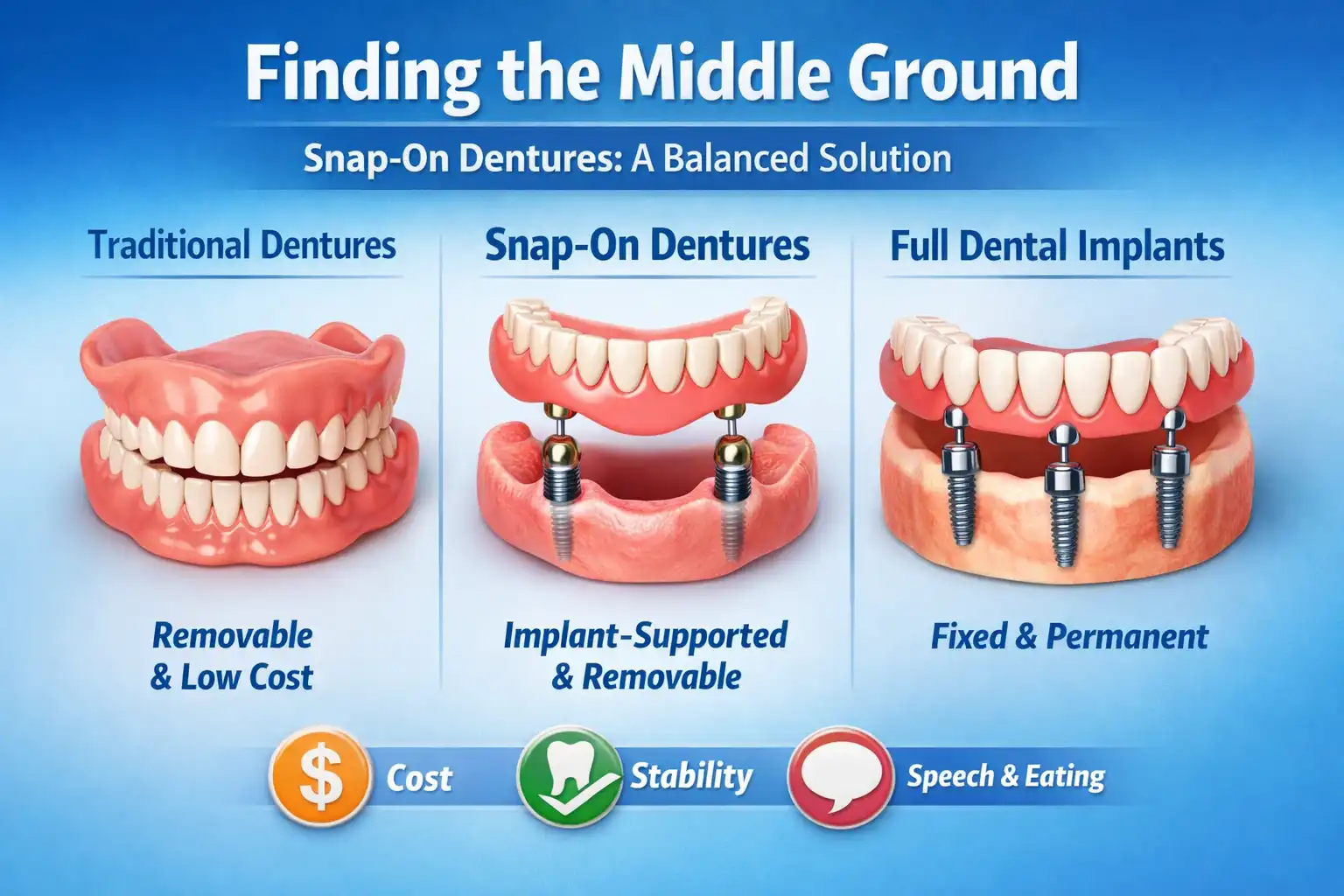
9. Can I get “Snap-On” dentures as a middle-ground option?
Yes — “Snap-On” dentures (also called implant-retained dentures or overdentures) are a very popular middle-ground option between traditional dentures and full dental implants.
🦷 What Are Snap-On Dentures?
Snap-On dentures are removable dentures that attach to dental implants placed in your jaw.
They “snap” onto small connectors (often called locators) on top of the implants — giving much more stability than regular dentures without needing a full arch of individual implants.
They’re sometimes called:
- Implant-retained overdentures
- Snap-in or snap-on dentures
- Locator dentures
🤔 How They Compare
🦷 Stability & Comfort
✅ Much more stable than traditional dentures
✅ Less movement means easier eating and speaking
✅ Feels more secure and confident in social situations
But ❌ they’re not as permanent or natural-feeling as full individual implants.
💰 Cost
💸 Higher than traditional dentures due to implants
💸 Lower than full fixed implant bridges (like All-on-4 or individual crowns)
This makes them a great cost-effective compromise.
🪥 Maintenance
- You still remove them to clean daily
- The attachments (locators) may wear and require replacement every few years
- Implants themselves, once healed, usually last decades with good care
🧠 Who They’re Best For
Snap-On dentures are ideal if you want:
✔ Better stability than traditional dentures
✔ Less cost and invasiveness than full fixed implants
✔ Improved chewing and clearer speech
✔ A removable option for hygiene ease
They’re often recommended for people who:
- Don’t have the bone volume or budget for full fixed implants
- Want a noticeably improved denture experience
- Prefer a removable solution
🆚 Quick Comparison
| Feature | Traditional Dentures | Snap-On Dentures | Full Implants |
| Stability | Low | Medium-High | Highest |
| Cost | Lowest | Middle | Highest |
| Speech | Affected | Better | Best |
| Chewing Efficiency | Lower | Better | Best |
| Removable | Yes | Yes | No (typically) |
| Bone Preservation | Minimal | Moderate | Best |
🧩 Bottom Line
✔ Yes, Snap-On dentures exist and are a solid middle-ground option.
✔ They combine the ease and lower cost of dentures with added stability and comfort from implants.
✔ They’re often the best choice if you want a significant upgrade without the full cost/complexity of fixed implants.
10. Will implants or dentures affect my speech more?
In most cases, dentures affect speech more than dental implants, especially in the short term. Here’s a clear comparison to help you understand why:
🦷 Dentures and Speech
- More likely to affect speech at first, particularly pronunciation of sounds like s, f, t, and th
- Can feel bulky and may move slightly while talking
- Require an adjustment period (days to weeks, sometimes longer)
- Ill-fitting dentures may cause lisping or clicking sounds
- Speech usually improves with practice and proper adjustment
🦷 Dental Implants and Speech
- Minimal to no long-term effect on speech
- Implants are fixed in the jawbone and feel more like natural teeth
- No movement while talking, which supports normal pronunciation
- Short, mild adjustment period after placement or restoration
- Once healed, most people speak exactly as they did with natural teeth
🔍 Why Implants Are Better for Speech
Dental implants preserve jawbone structure and don’t rely on the tongue or cheeks for stability. This helps maintain natural airflow and tongue positioning, both of which are essential for clear speech.
✅ Bottom Line
- Dentures: More noticeable impact on speech, especially early on
- Dental implants: Much less impact and more natural speech over time
If speech clarity is a major concern for you, dental implants are usually the better option—provided you’re a suitable candidate.
11. How do I check the quality of clinics for dental implants abroad?
Look for international accreditations such as JCI (Joint Commission International) or ISO. Check if the doctors are members of the ITI (International Team for Implantology). At WMedTour, we do this vetting for you. We visit clinics, check their sterilization equipment, and verify the credentials of every doctor in our directory. You should also read patient reviews and ask for “before and after” photos of similar cases. A reputable clinic will always be happy to provide this information and offer a detailed treatment plan before you fly.
12. What happens if an implant fails after I return home?
While rare, implant failure can happen. This is why we recommend choosing clinics that offer a long-term guarantee on their work (often 10 years to a lifetime). Before you travel, ask about their “redo” policy. Some clinics will cover the cost of the replacement surgery if you return. We also suggest having a local dentist who is comfortable with the specific brand of implant used (like Straumann) for your regular cleanings. Most issues can be caught early during your annual health checkup, making them easy to manage.