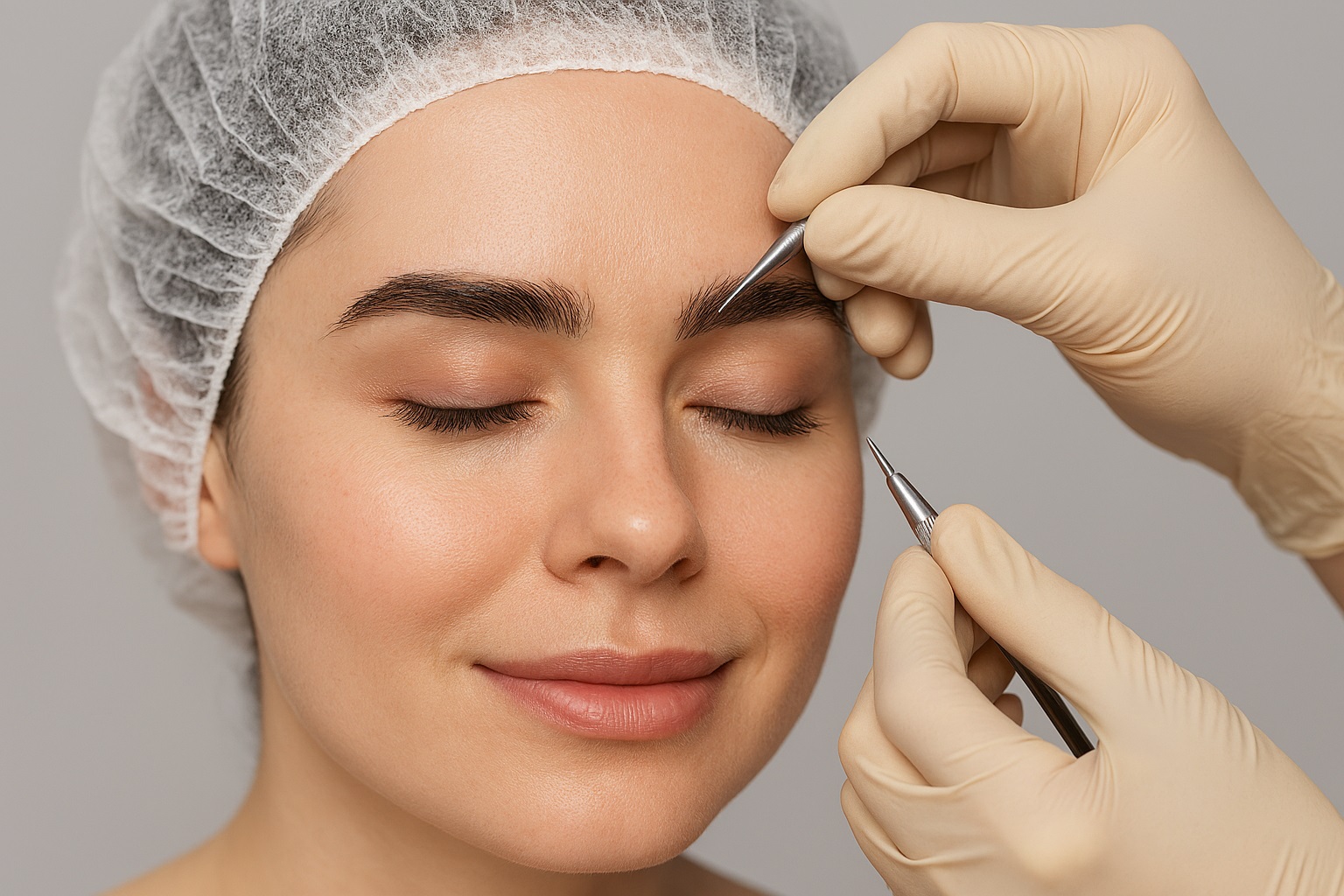
Eyebrow Transplant: Your Guide to Fuller, Natural Brows
They say our eyebrows are the most defining feature of the face—they frame our eyes and do most of the heavy lifting when we express emotion. However, for many of us, things like years of over-plucking, physical trauma, or medical conditions can leave brows looking thin, sparse, or even completely absent. If you’re tired of the daily ritual of eyebrow pencils or find that temporary fixes like microblading just aren’t enough anymore, an eyebrow transplant offers a remarkable, permanent way back to confidence. This guide covers everything you need to know about the procedure, from the first day of recovery to long-term care and, most importantly, how to ensure your new look is beautifully natural.
Executive Summary: The Essentials
If you’re considering permanent eyebrow restoration but are short on time, here are the key takeaways you need to know:
- The Process: Surgeons move individual hair follicles—usually via the FUE (Follicular Unit Extraction) method—from the back of your scalp to your brow line.
- It’s Permanent: Because the donor hair is genetically resistant to balding, your new brows are here to stay.
- Artistry is Key: Success isn’t just about medical skill; it’s about the surgeon’s ability to mimic the natural angle and direction of real brow hair.
- A Little Maintenance: Since the new hair comes from your scalp, it will grow like scalp hair. You’ll need to give it a quick trim about once a week.
- Global Access: High-quality care is more accessible than ever. Many people choose medical travel to find world-class expertise at more competitive prices.
The Art and Science of the Procedure
Technically, an eyebrow transplant is a specialized form of hair restoration. While it shares the same core principles as a traditional hair transplant, it requires a much higher level of precision. Because your eyebrows are right at eye level, there is no room for error. Your surgeon must act as both a doctor and an artist, meticulously placing every single graft.
Why Do Brows Thin? (And Is a Transplant Right for You?)
There are many reasons why we lose brow hair. Often, it’s simply down to genetics or “traction alopecia”—the result of repetitive plucking that eventually kills the follicle. According to The American Academy of Dermatology (AAD), conditions like thyroid disorders or alopecia areata can also play a role. While treating the underlying health issue is the first step, a surgical eyebrow transplant is usually the only way to bring hair back once a follicle has been permanently scarred or lost. (Internal Link: Hair Transplant Side Effects Guide)
FUE: The Gold Standard for Natural Results
In the world of modern hair restoration, FUE (Follicular Unit Extraction) is the preferred method for brows. Why? Because it allows the surgeon to harvest individual units containing just one or two hairs. Since natural brow hairs grow individually (rather than in groups of three or four like scalp hair), this precision is what makes the final result look authentic rather than “pluggy.” (Internal Link: FUE Hair Transplant Iran Guide & Cost)
The Secret to Success: Angle and Direction
The most critical part of the surgery isn’t moving the hair—it’s how the hair is placed. Unlike the hair on your head, brow hair grows at very sharp, flat angles against the skin. Hairs at the bridge of your nose grow upward, while those at the arch and tail shift horizontally and downward. If a surgeon doesn’t perfectly mimic these complex angles, the hair will grow straight out, looking stiff and unnatural. This is why choosing a specialist with specific facial experience is so important.
Is It Worth It? Analyzing the Pros and Cons
Before making a commitment, it’s helpful to look at the full picture. Here is a balanced look at what to expect.
The Benefits
- A Lifetime Solution: This isn’t a tattoo; it’s real, living hair that grows permanently.
- Total Authenticity: In the hands of an expert, the results are virtually impossible to distinguish from natural brows.
- Confidence: It restores facial symmetry and can be a huge boost to self-esteem.
- Simplified Beauty: No more drawing on brows every single morning.
- Discrete Healing: FUE leaves tiny, nearly invisible dots in the donor area that are easily hidden.
The Considerations
- Trimming: You will need to trim the hairs every 1–2 weeks to keep them the right length.
- Initial Cost: It is an upfront investment compared to temporary options.
- Downtime: You should expect about a week of redness and minor swelling.
- Wait Time: You won’t see the full “wow” factor for 6 to 12 months.
- Skill Dependent: If the surgeon lacks an artistic eye, the hair direction can look “off.”
Permanent Restoration vs. Temporary Fixes
While there are plenty of ways to enhance your brows, it’s important to understand the difference between “makeup-style” fixes and actual hair growth.
| Method | How Long It Lasts | What to Watch For | Best For |
|---|---|---|---|
| Eyebrow Transplant | Permanent | Requires routine trimming | Complete reconstruction or filling gaps. |
| Microblading/Shading | 1–3 years | Fades or shifts color over time. | Adding shape or shade to existing hair. |
| Topical Serums | Only while using | Results vary and stop if you stop. | Mild thinning or keeping current hair healthy. |
| Eyebrow Tattooing | Permanent | Can look flat, blocky, or blue-ish. | Old-school, low-cost shaping. |
The Bottom Line: Microblading is great for a temporary boost, but only a transplant can give you real, three-dimensional hair texture where it’s been lost.
Mark’s Story: A Journey to Better Brows
Mark, a 42-year-old marketing professional, spent years feeling self-conscious about his patchy eyebrows. He tried microblading, but the ink faded quickly and lacked the “real” look he wanted.
The Procedure Day
Mark’s surgeon used the FUE technique to transplant 500 grafts (250 per side). The procedure took about four hours under local anesthesia. Immediately after, Mark noticed some mild redness and tiny scabs—perfectly normal for the first few days. He followed his aftercare plan strictly, sleeping with his head propped up and using his saline spray religiously.
The Road to Results
By the end of the first week, the scabs had cleared. Then came “shock loss”—a normal phase where the new hairs fall out temporarily. Mark didn’t panic because he knew the roots were still there. By month four, the real growth started peeking through. A year later, Mark has full, thick brows that look exactly like his own. His only “chore” is a two-minute trim with small scissors every weekend. (Internal Link: Hair Transplant Long-Term Results)
Is This Procedure For You?
An eyebrow transplant is a versatile solution that helps many different people:
- The Over-Plucker: For those whose hair simply stopped growing back after the trends of the 90s and 2000s.
- Scars and Trauma: If you have a scar from an injury or burn, a transplant can beautifully camouflage the area.
- Alopecia Patients: For those with stable, non-progressive hair loss.
- Aesthetic Seekers: For anyone who simply wants a fuller, bolder look that makeup can’t replicate.
- Gender Affirmation: A powerful tool for those looking to soften or define their facial features through brow shaping.
The Path to Healing: Your Recovery Timeline
The surgery is only half the battle; the rest is up to you. Following your aftercare instructions is the best way to ensure those new grafts take root. (Internal Link: Global Hair Transplant FAQ Guide)
What to Expect Week-by-Week
- Days 1-3: Focus on rest. You’ll have some redness and maybe a bit of swelling. Use your saline spray and keep your head elevated while you sleep.
- Days 4-7: You can start very gentle washing (dabbing, not rubbing). Tiny scabs will form; let them fall off on their own—no picking!
- Weeks 2-4: Most people are back to their normal social lives. Avoid heavy workouts or anything that makes you sweat excessively.
- Month 1-3: Don’t be alarmed when the new hairs fall out. This is “shock loss,” and it’s just part of the follicle’s cycle.
- Month 4-12: This is where the magic happens. New hair begins to grow. It might be a little thin at first, but it will thicken and settle into its permanent look over the year.
Scientific data, such as that found in studies from PMC, confirms that careful handling and patient compliance are the biggest factors in a successful result.
The Art of the Trim
Since your new brow hairs come from your scalp, they still “think” they are scalp hairs. This means they will grow long if you let them! Most patients find that a quick trim every 7–14 days with curved scissors keeps them looking perfect. Pro tip: Brushing them daily with a brow brush helps “train” them to lay flat and blend in with your existing hair. (Internal Link: Skin and Hair Department)
Global Access and Eyebrow Transplant Cost
The cost depends on where you are and how much work you need done. Usually, you’ll need between 200 and 700 grafts per brow. While clinics in the US or UK might charge $4,000 to $8,000, medical tourism has made this life-changing procedure much more affordable. Countries like Turkey and Iran offer world-class surgeons and modern facilities for a fraction of the price, largely due to lower local living and operating costs. (Internal Link: Eyebrow Transplants Cost 2025)
If you’re looking abroad, just make sure to do your homework. Check for accredited clinics and certified surgeons. The Medical Tourism Association (MTA) is a great place to start your research. (Internal Link: Global Medical Tourism Guide 2025)
Finding Your Specialist
This is the most important decision you’ll make. You aren’t just looking for a doctor; you’re looking for someone with an eye for facial design.
- See the Proof: Ask for a portfolio of brow-specific photos. Look at the angles of the hair.
- Check Experience: You want someone who does this every week, not every few months.
- Ask About Grafts: Ensure they use single-hair grafts for the most natural look.
- The Design: A good surgeon will spend time drawing your new brow shape and getting your input before any surgery begins.
Common Questions (FAQ)
Is it painful?
We use local anesthesia, so the procedure itself is painless. You might feel a little “tightness” or soreness afterward, but standard over-the-counter pain relief usually does the trick.
How long is the surgery?
It’s relatively quick—usually 2 to 4 hours. You’ll be in and out in a single afternoon.
When can I go back to work?
Most people take about 3 to 7 days off. While you’ll feel fine almost immediately, the first week is when the redness and scabs are most visible.
Will I have scars?
With FUE, the donor sites are so small they are virtually invisible. There is no visible scarring on the eyebrows themselves.
What if I don’t trim them?
They will grow long! If left alone, they will eventually look like scalp hair, so regular trimming is a must for a clean look.
Your Next Step Towards a New Look
An eyebrow transplant is more than a simple cosmetic change—it’s about restoring a part of your face that helps you feel like *you*. Whether you’re looking to fix years of over-plucking or simply want to frame your eyes more beautifully, the results are permanent and life-changing. Do your research, choose a surgeon you trust, and get ready to love what you see in the mirror. (Internal Link: Ultimate Guide to Medical Tourism Surgery)
Connect with our expert medical team today. We specialize in FUE eyebrow restoration and can connect you with certified, world-class surgeons to create a personalized plan just for you.
Get Your Free Consultation Now (Internal Link: Contact Us Page)