Fertility Preservation Abroad: Egg & Sperm Bank Guide 2026 ❄️
Executive Summary 📋
Fertility preservation abroad has become a primary choice for thousands seeking high-quality reproductive care without the high price tags or restrictive local laws. In 2026, technologies like vitrification and advanced genetic screening have reached new heights. Key takeaways from this guide include:
- Global options allow for significant cost savings of up to 60% compared to Western prices.
- Advanced cryopreservation techniques ensure high survival rates for eggs and sperm.
- Legal frameworks vary by country, making professional guidance essential.
- Medical tourism for fertility often combines top-tier clinical care with stress-reducing travel experiences.
Who is This For? 👥
This guide serves a diverse range of individuals who are planning for their future families. Consequently, we have tailored this information for several key groups. First, it is for professional women who wish to delay motherhood for career reasons. Second, individuals facing medical treatments, such as chemotherapy, often need to preserve their genetic material quickly. Additionally, members of the LGBTQ+ community find that fertility preservation abroad offers more inclusive legal environments. Finally, any individual seeking fertility check-up services before making a long-term decision will find this guide invaluable.
Understanding Fertility Preservation Abroad in 2026 🌏
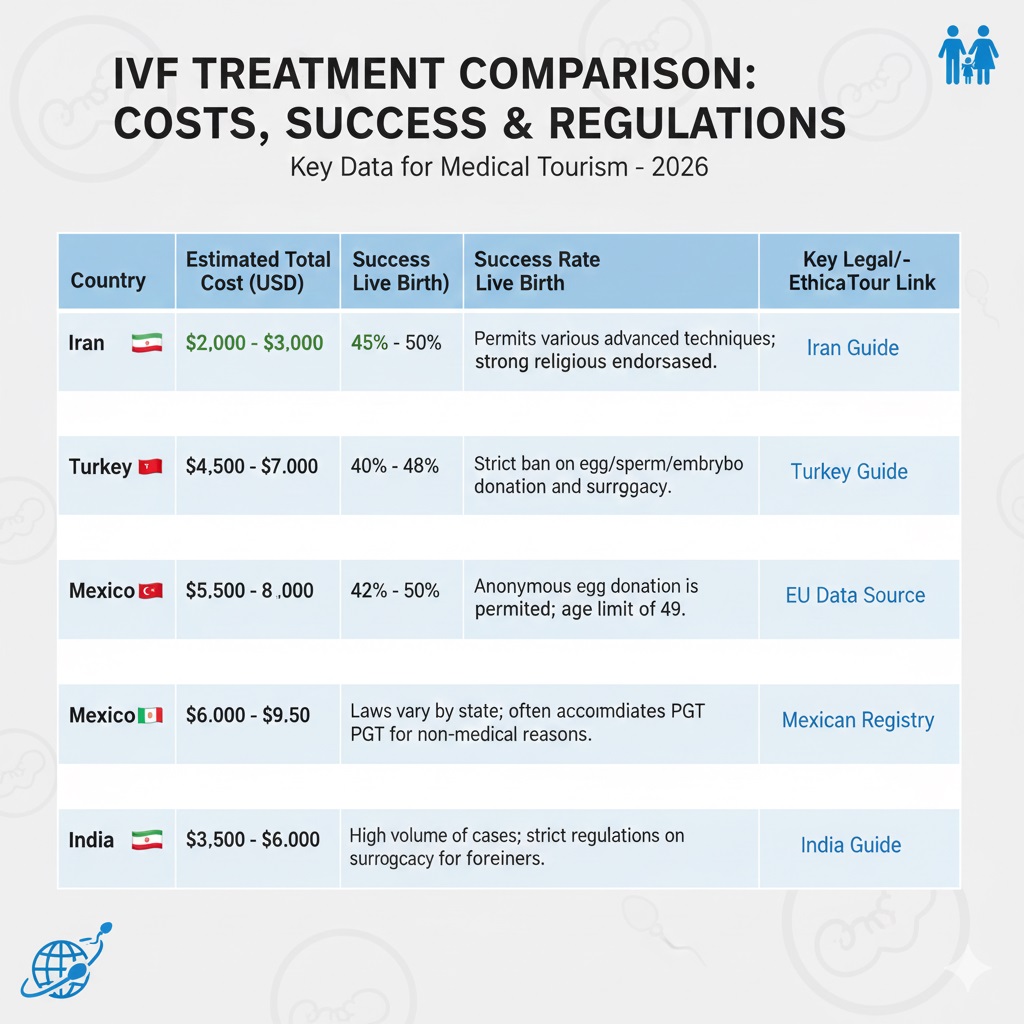
The landscape of reproductive medicine is changing rapidly. Therefore, the concept of Fertility Preservation Abroad: Egg & Sperm Bank Guide 2026 is more relevant than ever. While many people once felt limited by their local clinics, they now look across borders. This shift happens because international centers often provide more advanced technologies. Furthermore, they offer these services at a fraction of the cost found in countries like the USA or UK.
When you choose to travel for egg or sperm banking, you are not just looking for a deal. Instead, you are looking for a high-success environment. Modern labs in leading medical tourism hubs now use AI-driven monitoring for cryo-tanks. This ensures that your biological assets remain safe for decades. Because the stakes are so high, choosing the right partner is vital. You can explore our medical departments to understand the scale of international healthcare excellence.
The Science and Success of Egg Banking 🥚
Egg freezing, or oocyte cryopreservation, has moved from experimental to mainstream. Nowadays, clinics use a flash-freezing method called vitrification. This technique prevents the formation of ice crystals, which could damage the cell. Consequently, the survival rate of eggs upon thawing is now consistently above 90% in top-tier international labs.
Moreover, the stimulation process has become much more patient-friendly. Doctors now use “mild stimulation” protocols in some cases to reduce the risk of Ovarian Hyperstimulation Syndrome (OHSS). If you are considering this path, you might want to consult with experts in our gynecological surgery department to discuss your specific needs. Understanding your body is the first step toward successful preservation.
Pros of Egg Banking Abroad
- Access to world-renowned fertility specialists and top doctors.
- Significant cost reduction for medication and laboratory fees.
- No waiting lists for initial consultations or procedures.
Cons of Egg Banking Abroad
- The need for international travel during the stimulation phase.
- Potential language barriers in smaller clinics.
- Complexity of transporting frozen eggs back to your home country later.
Sperm Banking: A Simple Yet Vital Step 🧬
Sperm banking remains one of the most effective ways for men to safeguard their future. Whether due to age, lifestyle choices, or medical necessity, preserving sperm is a straightforward process. In 2026, many men choose Fertility Preservation Abroad: Egg & Sperm Bank Guide 2026 destinations because they offer anonymous or non-anonymous donor options that might be restricted at home.
The process involves a simple collection and subsequent freezing. However, the quality of the lab makes a massive difference. High-end international labs perform advanced sperm DNA fragmentation tests. This ensures that only the healthiest samples are stored. If you have concerns about your reproductive health, visiting a specialist in the urological surgery department can provide clarity before you travel.
Pros of Sperm Banking Abroad
- Highly affordable storage rates for long-term preservation.
- Privacy and confidentiality in world-class facilities.
- Integration with comprehensive check-up packages.
Cons of Sperm Banking Abroad
- Logistical challenges if you need to use the samples for IUI in a different country.
- Legal variations regarding who “owns” the samples in case of disputes.
Comparison of Global Fertility Hubs 2026 📊
Choosing a destination is a critical decision. Below, we compare some of the most popular regions for fertility preservation based on our extensive research and patient feedback.
| Feature | Middle East (e.g., Iran/Oman) | Europe (e.g., Spain/Greece) | Asia (e.g., India) |
|---|---|---|---|
| Average Cost (Egg) | Low ($2,000 – $3,500) | Moderate ($4,000 – $6,000) | Low ($2,500 – $4,000) |
| Technology Level | High (Vitrification) | Very High | High |
| Legal Openness | Regulated/Conservative | Liberal | Regulated |
| Ease of Travel | Moderate | Easy | Moderate |
For more details on specific regional offerings, you can view our all locations guide.
The Patient Roadmap 🗺️
Navigating the journey of Fertility Preservation Abroad: Egg & Sperm Bank Guide 2026 requires a clear plan. Thus, we have developed this roadmap to help you stay organized.
Step 1: Research and Consultation
Start by identifying clinics that align with your values. In addition, you should book a telemedicine consultation to discuss your medical history without leaving your home. This saves time and helps build trust with the medical team.
Step 2: Local Testing
Before flying, perform basic hormone level tests and ultrasounds locally. Because clinics abroad need these results to design your stimulation protocol, getting them early is essential. Furthermore, it ensures you are a good candidate for the procedure.
Step 3: Travel and Procedure
You will typically spend 10 to 14 days at your destination for egg freezing. For sperm banking, a 2-day trip is often sufficient. During this time, you can also explore medical tours to enjoy the local culture while you wait for your clinical appointments.
Step 4: Long-Term Storage
Once preserved, your samples are stored in specialized banks. Consequently, you will pay an annual storage fee. Ensure you keep your contact information updated with the clinic so they can reach you regarding your samples.
Cost Analysis Table 💰
Budgeting is often the deciding factor for medical travelers. Here is a breakdown of the estimated costs involved in fertility preservation abroad for 2026.
| Service Item | Estimated International Cost | Estimated Western Cost (US/UK) |
|---|---|---|
| Egg Retrieval & Freezing | $2,500 – $4,500 | $10,000 – $15,000 |
| Stimulation Medications | $800 – $1,500 | $3,000 – $6,000 |
| Sperm Banking (Collection) | $200 – $500 | $800 – $1,200 |
| Annual Storage Fee | $150 – $300 | $500 – $1,000 |
Keep in mind that combining treatments with a comprehensive check-up can often save you even more money in the long run.
Case Study: Sarah’s Journey to Peace of Mind 🌟
Sarah, a 32-year-old marketing executive from London, wanted to focus on her career but knew she wanted children later. However, the costs in the UK were prohibitive. After researching the Fertility Preservation Abroad: Egg & Sperm Bank Guide 2026, she chose a renowned clinic in Mashhad due to its advanced tech and affordable prices.
She completed her initial tests via a local GP and sent them to the clinic. Subsequently, she spent two weeks abroad. During the first week, she visited local heritage sites. In the second week, she underwent the retrieval. In total, she saved over £8,000. Sarah now feels a sense of relief, knowing her “younger” eggs are safely stored for when she is ready.
Recovery & Tourism: The Silver Lining ✈️
One of the unique benefits of fertility preservation abroad is the opportunity for a “medical vacation.” Because the process can be emotionally taxing, a change of scenery is often helpful. For instance, many patients choose tours in India or Oman to relax after their procedures.
Recovery from egg retrieval is generally quick. Most women feel slightly bloated for a few days but can enjoy light sightseeing. Walking through historic markets or relaxing by a hotel pool can significantly lower cortisol levels. High cortisol is known to negatively affect reproductive health. Therefore, a relaxing environment is not just a luxury; it is a clinical benefit.
Legal and Ethical Considerations ⚖️
Before you commit, you must understand the legal landscape of your chosen destination. Some countries have strict laws about how long eggs can be stored. Others may require you to be married to access certain fertility services. According to research from Harvard University, cross-border reproductive care requires careful navigation of international law.
Similarly, the status of unused embryos or eggs varies. If you decide you no longer need your stored material, can you donate it to science? Or must it be destroyed? These are questions you should ask during your FAQ session with the clinic. Being informed prevents legal headaches years down the road.
Frequently Asked Questions ❓
1. What is the best age for egg freezing?
Ideally, women should freeze their eggs in their late 20s or early 30s. This is because egg quality and quantity are at their peak during this time.
2. How long can eggs and sperm stay frozen?
Technically, biological material can remain frozen indefinitely. Most clinics have successful cases using samples stored for over 20 years.
3. Is the quality of care abroad equal to my home country?
Yes, many international clinics are JCI accredited. They often use the same equipment and medications found in the US or Europe.
4. Can I move my frozen samples to another country later?
Yes, specialized medical couriers can transport frozen material globally. However, this process involves significant paperwork and costs.
5. What are the risks of egg retrieval?
The main risks include mild cramping, bloating, and rarely, Ovarian Hyperstimulation Syndrome (OHSS). Modern protocols have made these risks very low.
6. Do I need a special visa for medical travel?
Many countries offer specific medical visas. You should check the requirements for your destination, such as Turkey or Iran, well in advance.
7. Is sperm banking effective for men over 50?
Yes, while sperm quality can decline with age, banking still preserves the best possible sample for future use in IVF.
8. How do I choose a reputable clinic?
Look for clinics with high success rates, transparent pricing, and positive patient testimonials. Consulting our about us page can help you understand our vetting process.
9. What happens if the clinic closes?
Reputable clinics have “disaster recovery” plans. They usually have agreements with other banks to transfer all stored material safely.
10. Can I travel alone for these procedures?
While you can travel alone, having a companion is recommended for the day of retrieval. Alternatively, many medical tour packages include personal assistants.
11. Does insurance cover fertility preservation abroad?
Most standard insurance plans do not cover elective preservation. However, some corporate “fertility benefits” may provide partial reimbursement.
12. How much time should I take off work?
For egg freezing, plan for 2 weeks. For sperm banking, a long weekend is usually enough. Many patients work remotely during the stimulation phase.