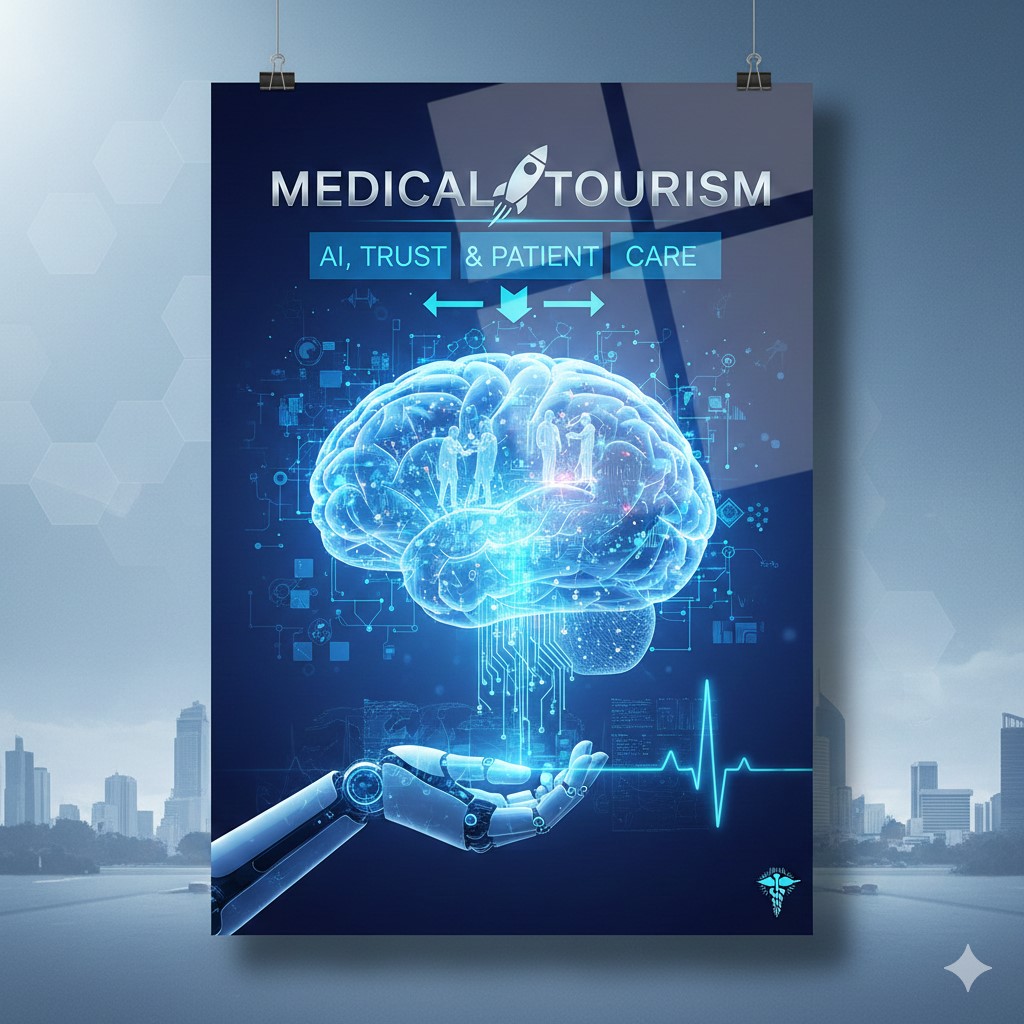
🚀 The Future of Medical Tourism in 2026: AI, Trust, and the Evolving Patient Experience
📋 Executive Summary
In 2026, the landscape of global healthcare has undergone a massive shift. This guide explores how The Future of Medical Tourism in 2026: AI, Trust, and the Evolving Patient Experience is being redefined by hyper-personalization. We examine the integration of artificial intelligence in surgical planning and the renewed focus on digital trust. Key takeaways include the rise of remote pre-operative care, the importance of blockchain-verified credentials, and why patient-centricity is now the primary competitive advantage for destinations like Turkey and Iran. This article provides a roadmap for patients and professionals navigating this high-tech, high-touch era.
🤖 The AI Revolution in Global Healthcare
As we navigate through 2026, artificial intelligence is no longer a futuristic concept. It is a core pillar of The Future of Medical Tourism in 2026: AI, Trust, and the Evolving Patient Experience. AI now assists surgeons in various departments, especially in complex cardiac surgery and precision-based neurosurgery. These tools analyze thousands of similar cases to predict outcomes with incredible accuracy.
Furthermore, AI-driven chatbots have evolved into sophisticated medical assistants. These assistants guide patients through their initial inquiries. They help individuals select the right doctors based on historical success rates rather than just marketing. Because of this, the initial “information gathering” phase is now shorter and more reliable than ever before.
Pre-operative planning has also seen a radical change. Surgeons now use AI to create 3D digital twins of a patient’s anatomy. This is particularly useful for orthopedic surgery where joint alignment is critical. By practicing on a digital model, the surgical team reduces time in the operating room. Consequently, patients experience fewer complications and faster recovery times.
🛡️ Building Trust in a Digital-First World
Trust remains the currency of the medical travel industry. In 2026, The Future of Medical Tourism in 2026: AI, Trust, and the Evolving Patient Experience hinges on transparency. Patients now demand blockchain-verified credentials for every hospital and surgeon. They want to see immutable records of a clinic’s success rates and infection controls.
Peer reviews have moved beyond simple star ratings. Modern platforms now use verified video testimonials and integrated post-op tracking data. When a patient considers plastic surgery, they can see long-term results from others with similar biological profiles. This shift has forced lower-quality clinics out of the market, leaving only those who prioritize genuine care.
🌐 Global Standards and Local Expertise
While technology is vital, the human element in about us sections proves that empathy is irreplaceable. High-performing medical hubs are blending their local hospitality with international safety protocols. This hybrid approach ensures that while the technology is global, the care remains personal and culturally sensitive.
👣 The Patient Roadmap: Navigating 2026
The journey from a home country to a foreign operating theater is now more structured. Following a clear roadmap helps mitigate the risks and challenges often associated with medical travel.
Phase 1: Digital Discovery
The journey starts with a telemedicine consultation. Patients upload their molecular diagnostics and imaging to a secure cloud. AI then matches the patient with the most suitable specialist in the oncology department or other relevant fields.
Phase 2: Virtual Pre-Hab
Before flying, patients engage in “Pre-Hab.” This involves AI-monitored exercises and nutritional optimization. For someone undergoing total knee replacement, this step ensures the muscles are strong enough for post-op physical therapy. This proactive approach significantly improves the patient experience.
Phase 3: The Surgical Event
Upon arrival, the patient’s digital file is already integrated into the hospital’s system. Every detail from the anesthesia consultation is known by the entire medical team. This seamless data flow reduces administrative errors and enhances safety.
Phase 4: Remote Recovery
Post-discharge does not mean the end of care. Wearable devices track vitals and wound healing. If a patient returns home after dental work or minor surgery, their foreign surgeon can monitor their progress via real-time data. This creates a “hospital without walls” environment.
👥 Who is This For?
This deep dive into The Future of Medical Tourism in 2026: AI, Trust, and the Evolving Patient Experience is designed for:
- Tech-Savvy Patients: Those comfortable using digital tools to manage their health journeys.
- Medical Professionals: Surgeons and administrators looking to adapt to the new global standards.
- Health Insurance Providers: Companies seeking to integrate international care into their policy offerings.
- Facilitators: Agencies that want to provide high-value, trust-based services to their clients.
⚖️ Pros and Cons of the 2026 Era
Every technological leap brings both benefits and new challenges. Understanding these is vital for any stakeholder in the industry.
✅ The Pros
- Precision Medicine: Treatments like corneal transplant surgery are now more successful due to better donor matching.
- Reduced Costs: Automation in administrative tasks has lowered the overall price for the patient.
- Continuous Monitoring: Wearables ensure that complications are caught before they become emergencies.
- Global Expertise: Access to the world’s best ophthalmology experts is just a click away.
❌ The Cons
- Data Privacy Concerns: Increased data sharing requires robust cybersecurity to prevent leaks.
- The Digital Divide: Patients who are not tech-literate may find the new systems overwhelming.
- Over-Reliance on AI: There is a risk of losing the “human touch” if hospitals automate too much of the patient interaction.
- Insurance Gaps: Many traditional insurers are still catching up to the realities of 2026 medical travel.
📈 Comparison: Traditional vs. 2026 Medical Tourism
| Feature | Traditional Model | 2026 AI-Enhanced Model |
|---|---|---|
| Doctor Selection | Based on ads and brochures. | Based on AI-verified outcome data. |
| Communication | Emails and phone calls. | Real-time translation and telemedicine. |
| Patient Records | Paper-based or fragmented PDFs. | Blockchain-secured universal health IDs. |
| Follow-up | Localized and disconnected. | Remote monitoring with the surgical team. |
💡 Case Study: A Heart for Technology
Consider the journey of “Mark,” a 58-year-old requiring coronary artery bypass grafting (CABG). In the past, Mark would have spent weeks flying back and forth for tests. In 2026, he used a specialized medical tourism platform. He started by connecting his local smartwatch data to a hospital in Tehran. The AI analyzed his arrhythmia patterns over 30 days.
The surgeon then performed a virtual walk-through of the procedure using Mark’s 3D heart model. This built immense trust. Mark flew for the surgery knowing exactly what to expect. After the operation, he stayed in a specialized recovery suite. His progress was tracked by an cardiac checkup AI that adjusted his medication in real-time. Mark returned home ahead of schedule, with his local doctor receiving all data via a secure link.
💸 Cost Analysis Table: Investing in Innovation
While technology adds value, it also changes the cost structure of medical travel. Here is a breakdown of how budgets are allocated in 2026.
| Investment Area | Traditional Cost Contribution | 2026 Cost Contribution | Value Added |
|---|---|---|---|
| Consultations | High (Travel required) | Low (Remote sessions) | Saves time and travel stress. |
| Diagnostics | Standard imaging | AI-Enhanced 3D mapping | Higher surgical precision. |
| Recovery Support | Basic nursing | Biometric monitoring | Prevents emergency readmission. |
🏖️ Recovery & Tourism: The Holistic Blend
In 2026, the “tourism” aspect is about healing, not just sightseeing. Patients now seek “Medical Wellness Retreats.” These facilities combine surgical recovery with skin and hair rejuvenation or stress management. For instance, after liposuction, a patient might spend a week in a climate-controlled wellness resort in Oman.
These retreats focus on anti-inflammatory diets and light, AI-guided movements. This approach acknowledges that a positive environment is essential for healing. By integrating tourism with medical care, destinations provide a more comprehensive and satisfying patient experience. This holistic view is a key driver for The Future of Medical Tourism in 2026: AI, Trust, and the Evolving Patient Experience.
❓ FAQ: Your Questions Answered
1. Is AI taking over the role of surgeons in 2026?
Absolutely not. AI acts as a sophisticated tool that enhances a surgeon’s capabilities. It assists in planning and real-time monitoring, but the final decisions and delicate maneuvers remain with the human expert. Most top-tier surgeons use AI to reduce fatigue and increase precision, especially during long operations like brain tumor surgery. This partnership between human and machine ensures the highest safety standards for every patient. It is about augmenting human skill, not replacing the empathetic touch of a doctor.
2. How can I be sure my medical data is safe abroad?
Data security is a top priority in The Future of Medical Tourism in 2026: AI, Trust, and the Evolving Patient Experience. Most reputable international hospitals now use end-to-end encryption and blockchain technology. This means your clinical chemistry results and imaging are only accessible to authorized personnel. Before booking, you should always ask if the clinic is compliant with international standards like GDPR or its local equivalent. Choosing a facilitator like WMedTour adds another layer of security, as we vet the digital infrastructure of our partners.
3. Will medical tourism become more expensive because of AI?
Paradoxically, AI often helps lower costs in the long run. By streamlining administration and reducing the length of hospital stays, the operational costs for clinics go down. While high-tech diagnostics might have an upfront cost, the reduction in surgical errors and faster recovery saves the patient money on long-term care. In 2026, you can find very competitive pricing for cardiac procedures that would have cost twice as much a decade ago. It is an investment in a “right-first-time” surgical approach.
4. Can I get a remote second opinion through AI?
Yes, this is one of the most popular services today. Many patients use telemedicine platforms to get an AI-assisted second opinion. The AI can quickly scan your pathology tests and compare them to global databases. This provides a data-driven perspective that your local doctor might not have. It gives you the confidence to either proceed with treatment or explore alternative options. This level of accessibility is a hallmark of the evolving patient experience in the current year.
5. What happens if the AI makes a mistake?
This is why human oversight is mandatory. Every AI suggestion must be verified by a board-certified specialist in the relevant department. Legally, the responsibility still lies with the medical professional and the hospital. 2026 regulations require that all AI tools used in surgery go through rigorous clinical trials and continuous auditing. Patients are encouraged to ask about the specific AI tools a hospital uses and how their human doctors validate those findings. Transparency is the key to managing this risk effectively.
6. Is 2026 medical tourism safe for older patients?
It is safer than ever before. With senior citizen health check-ups integrated into the travel process, risks are identified much earlier. Remote monitoring allows older patients to recover in a comfortable resort while still being under the watchful eye of a medical team. For major surgeries like hip replacement, the combination of minimally invasive techniques and AI-guided rehab has significantly reduced the strain on the body. We ensure that every older patient has a dedicated coordinator for the entire journey.
7. How do I verify the success rates of foreign hospitals?
In 2026, we look for “Third-Party Verification.” Don’t just trust the hospital’s own website. Look for data on international accreditation platforms. Many countries now have central databases for medical outcomes. You can check the all locations section on our site to find hospitals that have been independently audited. Verified success rates are usually broken down by procedure type, so you can see specifically how well they handle gynecological surgery or other specialized treatments.
8. Does AI help with post-operative hair transplant care?
AI is revolutionizing hair transplant procedures. From robotic extraction that ensures maximum graft survival to apps that track the growth phase of each follicle, technology is everywhere. After the procedure, patients use AI-powered apps to take daily photos. The software detects any signs of inflammation or infection before the patient even notices. This ensures that the recovery is on track and any issues are addressed immediately. This is a perfect example of how the evolving patient experience is becoming more proactive.
9. Are language barriers still an issue in 2026?
Real-time AI translation has almost eliminated the language barrier. Doctors and patients can speak their native languages and understand each other perfectly through earpieces or tablets. However, for complex medical discussions, we still recommend having a professional human translator present. This ensures that the nuance and empathy of the conversation aren’t lost in translation. At WMedTour, we provide multi-lingual support to bridge any remaining gaps during your contact us interactions and clinical visits.
10. How do I choose between different medical tourism destinations?
The choice should be based on a combination of surgical expertise, technology, and recovery environment. For angiography and heart care, India and Iran are world leaders. For cosmetic procedures, Turkey and Dubai offer cutting-edge facilities. Use our articles to compare different locations. In 2026, the best destination is the one that offers a seamless digital integration with your home country’s healthcare system, ensuring a safe transition back home after treatment.
11. What is the role of blockchain in 2026 medical tourism?
Blockchain is used to verify the authenticity of medical records and surgeon credentials. It prevents the falsification of certificates or surgical logs. When you see a “Blockchain-Verified” badge on a hospital profile, you know that their data hasn’t been tampered with. This is fundamental to building trust in The Future of Medical Tourism in 2026: AI, Trust, and the Evolving Patient Experience. It also allows for the secure and instant transfer of your records between international and local hospitals, ensuring you always have your full medical history.
12. Can AI predict the total cost of my medical trip?
Yes — AI can predict the total cost of a medical trip, but with conditions. It’s very good at estimating and planning, though it’s not 100% exact yet. Here’s a clear, honest explanation:
✅ What AI Can Accurately Predict
AI works by analyzing thousands of similar medical trips and cost patterns. It can estimate:
🏥 Medical costs
- Procedure or surgery fees
- Surgeon and hospital charges
- Anesthesia and operating room costs
- Typical post-op care and medications
✈️ Travel & logistics
- Flights (based on season and booking patterns)
- Accommodation (hotel or recovery center)
- Local transportation
- Visa and insurance costs
🕒 Recovery-related expenses
- Length of stay
- Follow-up visits
- Basic rehabilitation or nursing care
👉 For standard procedures with predictable recovery (hair transplant, dental work, cosmetic surgery, many orthopedic procedures), AI estimates are usually very accurate.
⚠️ Where AI Has Limitations
AI predictions become less precise when:
- Complications occur
- Extra procedures are needed
- Recovery time is longer than average
- Patient has complex medical history
- Prices vary due to surgeon choice or hospital upgrades
These variables are hard to fully predict in advance.
🧠 How AI Improves Accuracy
Modern AI platforms reduce surprises by:
- Using patient-specific data (age, health, diagnosis)
- Comparing multiple hospitals and countries
- Updating estimates in real time
- Flagging risk factors that may increase costs
- Building cost ranges instead of single numbers
Example:
Instead of “$8,000”, AI may predict
$7,500–$9,200, with reasons for the range.
🤝 Best Practice: AI + Human Oversight
The most reliable cost planning combines:
- AI-based prediction for speed and comparison
- Medical coordinators for validation
- Confirmed hospital quotes before travel
AI helps patients plan confidently, while humans handle exceptions and final verification.
✅ Final Answer
✔️ Yes, AI can predict the total cost of your medical trip with high accuracy for most standard cases
⚠️ It works best as a smart estimator, not a legal guarantee
⭐ The most trustworthy approach is AI prediction + verified hospital pricing
🏁 Conclusion: The Path Forward
As we have seen, The Future of Medical Tourism in 2026: AI, Trust, and the Evolving Patient Experience is bright. It is characterized by a marriage of high-tech precision and high-touch care. While AI and blockchain provide the framework for safety and efficiency, it is trust and empathy that truly define the success of a medical journey. Whether you are looking for neurosurgery or a simple teeth whitening, the global healthcare market is now more accessible and transparent than ever.
The patient of 2026 is an empowered decision-maker. By using the tools and roadmaps outlined in this guide, you can navigate the global healthcare landscape with confidence. The world is your hospital, and the future of care is here. We invite you to be a part of this revolution and experience healthcare that truly puts you at the center.
Medical Disclaimer: This article is for informational purposes only and does not constitute medical advice. Always seek the advice of your physician or other qualified health providers with any questions you may have regarding a medical condition. For more information on international medical standards, please visit university-affiliated medical centers such as Johns Hopkins Medicine or Stanford Health Care.