Definitive Guide: Average Cost of Cancer Therapy in Germany 2026 💰
Navigating the Estimated Financial Landscape for International Patients
📋 Executive Summary: The 2026 Cost Projection
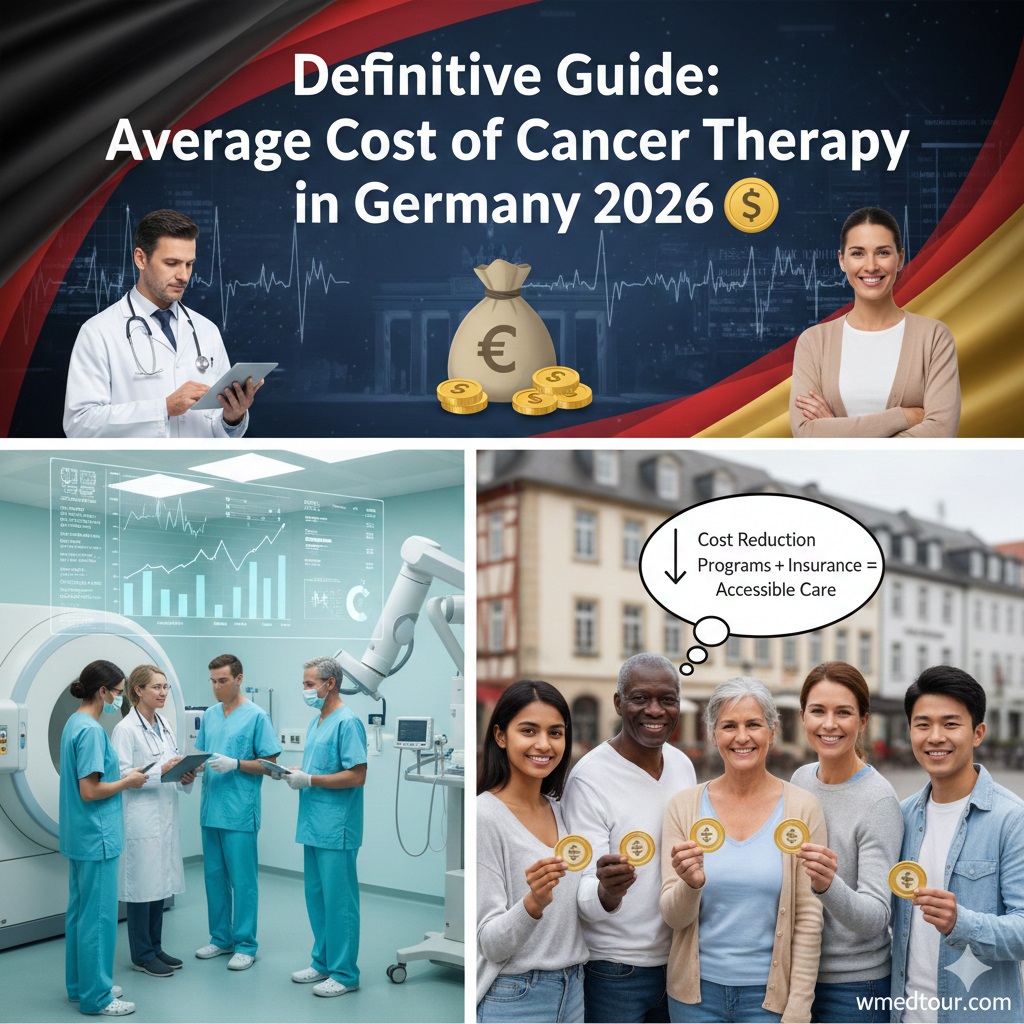
In the first place, the Average Cost of Cancer Therapy in Germany 2026 remains highly variable. Therefore, based on 2025 data, we project a 5-8% annual increase in costs, primarily driven by expensive, advanced therapeutic agents like immunotherapies and cellular treatments. While an ‘average’ full course of treatment (excluding highly specialized therapies) for common cancers like Stage I-III Breast Cancer Treatment Options will likely range from €45,000 to €85,000, advanced, late-stage, or complex therapies can easily exceed €300,000. Consequently, for international patients, a comprehensive diagnostic workup starts around €5,000, and initial treatment packages (such as short-course chemotherapy) are estimated to start from €8,000 per cycle. Prospective patients must budget for diagnostic precision, hospital fees, physician services, and particularly for innovative drug costs.
(Note: Exact 2026 costs are speculative. All figures are projections based on 2025 data and inflation trends in German healthcare.)
🇩🇪 1. Understanding the Cost Drivers in German Oncology
Germany is internationally renowned for its precision medicine and high success rates. When examining the Average Cost of Cancer Therapy in Germany 2026, it is crucial to understand that the price reflects this quality. Furthermore, the country utilizes a sophisticated Diagnosis-Related Group (DRG) system, but international patients typically receive itemized bills based on anticipated procedures and the complexity of the case.
Ultimately, the primary drivers contributing to the high-quality, though significant, costs include:
- Advanced Diagnostics: Access to cutting-edge imaging (PET-CT, 3T MRI) and molecular tumor profiling is standard.
- Innovative Drug Therapies: This includes the rapid adoption of new, expensive drugs, particularly in Immunotherapy Breakthroughs.
- Specialist Fees: Consultation and procedure fees from world-class specialists, often working within a The Role of Multidisciplinary Tumor Boards.
- Hospital Infrastructure: High-tech equipment, stringent hygiene, and low patient-to-nurse ratios.
2. Detailed Cost Breakdown by Therapy Type (Projected 2026)
2.1. Chemotherapy and Targeted Therapy Costs 💉
To begin with, chemotherapy costs are highly dependent on the drug regimen and number of cycles. As we approach 2026, the cost of chemotherapy itself is relatively stable; however, the inclusion of targeted therapies (monoclonal antibodies, kinase inhibitors) significantly escalates the overall price.
Estimated 2026 Range:
- Standard Chemotherapy (Per Cycle): €6,000 – €15,000
- Targeted Therapy (Full Course): €35,000 – €120,000 (depending on drug acquisition cost)
For cancers requiring aggressive, multi-drug regimens, consequently, patients should prepare for costs at the upper end of this spectrum. Therefore, transparency in Financing Cancer Treatment Abroad is essential, as drug rebates for international patients vary.
2.2. Radiation and Advanced Radiotherapy ⚡
In addition, Germany is a global leader in high-precision radiation oncology. Conventional Intensity-Modulated Radiation Therapy (IMRT) and Stereotactic Body Radiation Therapy (SBRT) offer excellent precision. For this reason, the Average Cost of Cancer Therapy in Germany 2026 for these methods will reflect the significant investment in linear accelerators and planning software.
- Standard Radiotherapy Course (30 sessions): €14,000 – €25,000
- Stereotactic Radiosurgery (SRS/SBRT): €18,000 – €35,000
- Proton Therapy: This highly specialized treatment, often sought after for pediatric or critical-area tumors, has dedicated facilities. The total cost is substantial. For further information, learn more about the leading Proton Therapy Centers in Germany.
2.3. Surgical Interventions and Robotics 🔪
Subsequently, surgical costs are determined by the complexity of the operation, the use of Robotic Surgery in Germany (like the Da Vinci system), and the length of the hospital stay. Therefore, a partial resection is far less costly than a complex multi-organ procedure.
| Procedure Type | Estimated 2026 Cost (€) |
|---|---|
| Minor Surgery (e.g., Simple Biopsy, Lumpectomy) | €4,500 – €12,000 |
| Major Surgery (e.g., Lung Lobectomy, Prostatectomy) | €22,000 – €45,000 |
| Complex/Robotic Surgery (e.g., Whipple procedure) | €35,000 – €70,000 |
3. Innovative Therapies: The Costliest Segment of Care
On the other hand, the true cost variability in the Average Cost of Cancer Therapy in Germany 2026 comes from next-generation treatments. Although these therapies offer revolutionary outcomes, they carry steep price tags primarily due to research, manufacturing, and personalized patient logistics.
3.1. CAR T-Cell and Immunotherapies
For instance, cellular therapies like CAR T-Cell Therapy Explained represent the pinnacle of oncology expenditure. The procedure involves collecting a patient’s T-cells, genetically modifying them in a lab, and reinfusing them. As a result, the price is overwhelmingly driven by the manufacturing process.
⚠️ CAR T-Cell Therapy (Projected 2026): €380,000 – €600,000+
This figure is highly sensitive to exchange rates and drug company pricing.
3.2. Specialized Procedures (HIPEC, PSMA, TACE)
These regional treatments are specialized tools for advanced or metastatic disease. They are often used in German Hospitals for Liver Cancer or peritoneal carcinomatosis.
- HIPEC (Hyperthermic Intraperitoneal Chemotherapy): This complex surgery often ranges from €60,000 to €85,000.
- Lu-177 PSMA Therapy (Prostate Cancer): This is a highly targeted nuclear medicine approach. Costs usually fall between €15,000 and €35,000 per cycle, and naturally, multiple cycles are often required.

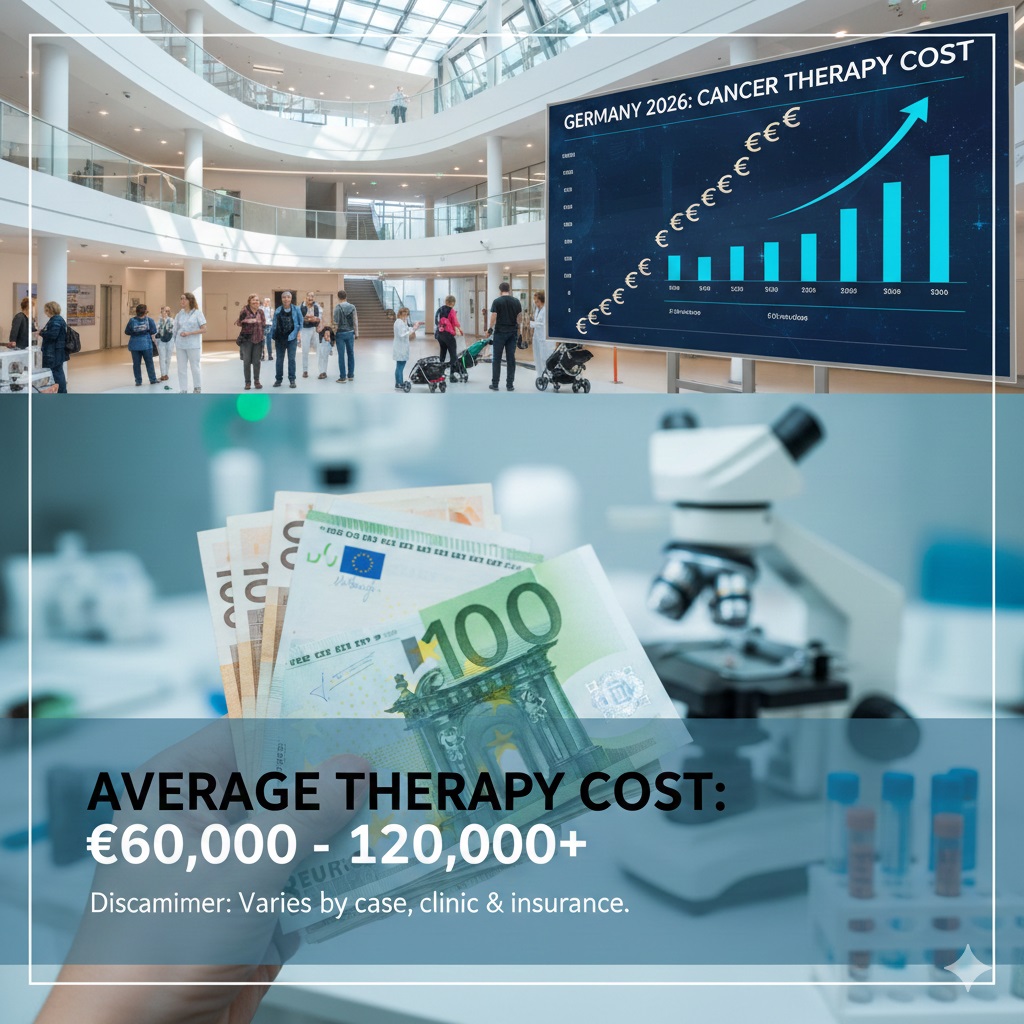
4. Cost Comparison: Germany vs. Global Competitors (Projected 2026)
In summary, Germany’s costs are positioned between the lower-cost nations of Asia and the high-cost systems of the USA. You pay a premium for the certainty of quality and adherence to strict protocols.
| Treatment Type | Germany (€) | USA (USD) | India (USD) |
|---|---|---|---|
| Standard Chemotherapy (1 cycle) | €6,500 – €16,000 | $15,000 – $40,000 | $2,500 – $5,000 |
| Major Oncological Surgery | €25,000 – €50,000 | $50,000 – $120,000 | $10,000 – $25,000 |
| Standard Radiation Course | €15,000 – €28,000 | $35,000 – $80,000 | $6,000 – $15,000 |
| Full Immunotherapy Course (1 year) | €100,000 – €200,000 | $150,000 – $350,000 | $50,000 – $120,000 |
5. Pros and Cons of German Cancer Treatment Costs
✅ Advantages (The Value Proposition)
- Superior Quality: Strict medical protocols and mandatory certification (e.g., German Cancer Society – DKG).
- Access to Innovation: Faster adoption of drugs and technology, including proton therapy and advanced cellular treatments.
- Transparent Pricing: Costs are typically quoted upfront as comprehensive packages, especially for international patients, thereby aiding in Navigating German Healthcare finance.
- Multidisciplinary Approach: Furthermore, every case is reviewed by a tumor board, optimizing efficacy and reducing unnecessary procedures.
❌ Disadvantages (The Financial Burden)
- High Initial Cost: The lump sum prepayment required for international patients is substantial.
- Visa Complexity: Securing the necessary Medical Visa Requirements for Germany and arranging travel adds to the cost.
- Accommodation & Living Expenses: Because of high living costs in major medical hubs like Munich or Berlin, the total Patient Accommodation in Munich budget is affected.
- Language Barrier: While staff are often multilingual, non-medical costs (taxis, groceries) can be complicated without a German speaker.
6. Case Study: Estimated Cost of Complex Care (2026 Projection)
6.1. The Advanced Lung Cancer Patient (Stage IV)
Consider a patient diagnosed with Stage IV non-small cell lung cancer (NSCLC) requiring a combination of advanced treatments over a projected 12-month period in 2026. This, consequently, exemplifies the true Average Cost of Cancer Therapy in Germany 2026 for a complex, non-surgical case.
Estimated Budget Breakdown:
- Initial Diagnostics & Staging: €6,500 (PET-CT, Molecular Profiling)
- 12 Cycles of Immunotherapy/Chemotherapy Combo: €135,000 (Highly variable based on drug)
- 2 Cycles of Targeted Radiation (SBRT for small metastases): €40,000
- Hospital Fees/Administration/Oncologist Consults: €18,000
- Follow-up & Monitoring (6 months): €10,000 (Detailed Post-Treatment Follow-up Care)
- Total Estimated Cost (12 Months): €209,500
It is important to note that this estimate does not include non-medical costs (flights, accommodation, daily living), which must be factored into the overall financial plan.
7. Who Is This German Cost Analysis For?
Therefore, this detailed breakdown of the Average Cost of Cancer Therapy in Germany 2026 is specifically valuable for several key groups:
- Medical Tourists: Patients from countries with limited access to innovative treatments or facing excessive waiting times.
- Insurance Brokers/Third-Party Payers: Professionals seeking verifiable cost benchmarks for high-value treatments to structure medical coverage plans.
- Expats/Non-Resident Workers: Individuals living in Germany without statutory health insurance needing to understand out-of-pocket expenses.
- Researchers/Academics: Those studying international healthcare economics and the impact of the Understanding DRG Systems on global pricing.
- Families of Cancer Patients: Loved ones seeking clarity and transparency on the financial commitment required to choose a top Choosing a German Oncology Specialist.
8. The Decisive Factor: How Cancer Type Changes the Average Cost
Generally speaking, the term Average Cost of Cancer Therapy in Germany 2026 is often misleading because the complexity of the disease dictates the cost. For example, a simple basal cell carcinoma removal is incomparable to a bone marrow transplant for leukemia. Moreover, the site of the tumor is critical; for instance, the required precision for Pediatric Oncology in Berlin often drives costs up due to specialized equipment and longer stays.
8.1. Low-Complexity Cancers (e.g., Early-Stage Prostate, Thyroid)
These typically involve standard surgery and/or a short course of external radiation. Consequently, the costs are relatively predictable and fall within the €20,000 to €45,000 range for the primary treatment course, excluding follow-up. This predictability is due to well-established German treatment guidelines and protocols.
8.2. High-Complexity Cancers (e.g., Pancreatic, Advanced Ovarian)
Cancers requiring highly invasive surgical procedures, such as those performed at centers specializing in gastrointestinal oncology, require multi-week hospital stays, intensive care, and extensive post-operative monitoring. Furthermore, the necessary targeted drug combinations are often among the newest and priciest on the market. As a result, these cases often push the total cost above €150,000 for a full year of active treatment.
10. Strategies for Mitigating the Financial Impact
Although the cost of oncology in Germany is substantial, numerous strategies exist to help manage and minimize the financial shock. Therefore, understanding how to navigate the system is key to making the Average Cost of Cancer Therapy in Germany 2026 feasible.
10.1. Leveraging International Insurance
Initially, patients should meticulously review their private international health insurance policies. Many policies cover treatment in Europe but may have caps or specific exclusions, especially for experimental treatments like certain Immunotherapy Breakthroughs. Consequently, early communication with the insurer is vital to getting pre-approval for the German treatment plan.
10.2. Medical Loans and Fundraising
In addition, specialized medical financing companies offer loans tailored to international treatment. Furthermore, crowd-funding platforms are an increasingly popular and necessary route for patients seeking specialized care that is not covered by insurance. This, in turn, ties directly into the general challenge of Financing Cancer Treatment Abroad.
10.3. Choosing the Right Center
While university hospitals often represent the highest quality (e.g., Charité, Heidelberg), smaller, specialized clinics may offer competitive prices for standardized procedures. For example, some centers focus exclusively on German Hospitals for Liver Cancer, achieving efficiency that can sometimes reduce administrative costs. It is essential to always choose a center certified by the German Cancer Society (DKG).
Ultimately, the financial commitment to cancer care in Germany reflects a choice for quality, precision, and innovation. The figures, whether for a standard course of Breast Cancer Treatment Options or a complex CAR T-Cell Therapy Explained, are substantial; yet, they deliver some of the best survival outcomes globally. As the system evolves toward 2026, driven by genetic and molecular precision, costs will continue to climb modestly. Nevertheless, the value proposition—a combination of expertise, cutting-edge technology, and compassionate care—remains unmatched for many international patients seeking a second chance.
Patients must engage proactively with the chosen clinic’s international patient office, asking for itemized cost estimates that adhere to the *Gebührenordnung für Ärzte (GOÄ)* or the DRG framework if applicable. This, consequently, ensures transparency and prevents unexpected charges. The journey starts with a definitive diagnosis and a tailored treatment plan from a reputable Choosing a German Oncology Specialist. This proactive approach is, moreover, the best defense against ‘financial toxicity,’ a concept increasingly studied even in robust healthcare systems. (Research Link).
In conclusion, securing world-class treatment in Germany requires meticulous financial planning. While the Average Cost of Cancer Therapy in Germany 2026 is high by international standards, the investment secures access to innovative treatments like Proton Therapy Centers in Germany and specialists dedicated to the most favorable long-term prognosis.
11. Frequently Asked Questions (FAQ)
Q: Why is German cancer treatment generally more expensive than in Eastern Europe?
A: The higher cost reflects the mandatory use of the latest European-approved drugs, high hospital operational standards, specialized staff salaries, and the requirement for continuous DKG certification. Therefore, it is a premium for quality and regulatory adherence.
Q: Do German hospitals accept health insurance from my home country?
A: It depends entirely on your specific policy. German hospitals primarily work with major international insurers. Nevertheless, they almost always require a guarantee of payment or a substantial prepayment/deposit before commencing therapy.
Q: What is included in the initial diagnostic package?
A: Typically, the package includes specialist consultation, review of existing records, necessary blood work, and imaging (CT/MRI/PET-CT). Furthermore, molecular profiling (genetic testing of the tumor) may be added if the treatment plan requires it.
Q: Can I save money by choosing a non-university hospital?
A: Yes, for standard procedures, a specialized private clinic might be slightly less expensive. However, for complex, innovative, or rare cancers (like those requiring advanced Pediatric Oncology in Berlin), university centers are usually required and offer superior expertise.
Q: What is the estimated cost for long-term monitoring or remission follow-up?
A: A routine follow-up visit, including consultation, lab tests, and a basic scan, typically costs between €1,500 and €3,500 per instance. This, as a rule, happens every 3 to 6 months in the first few years after treatment.
Q: What is the cost difference between traditional radiation and Proton Therapy?
A: Proton therapy is significantly more expensive, with a total cost often starting around €75,000 to €85,000, compared to €14,000 to €25,000 for standard IMRT. The higher cost is, of course, due to the specialized equipment and facility requirements.
Q: Are innovative drugs like checkpoint inhibitors (Immunotherapy) included in standard packages?
A: Often not fully. Since these drugs are extremely high-cost and the regimen can change based on patient response, hospitals usually provide a separate, variable quote for the drug portion of the therapy.
Quick Cost Reference
- Diagnostics: €5,000+
- Chemo Cycle: €6,500 – €16,000
- Radiation Course: €14,000 – €25,000
- Major Surgery: €22,000 – €45,000
- CAR T-Cell: €380,000+