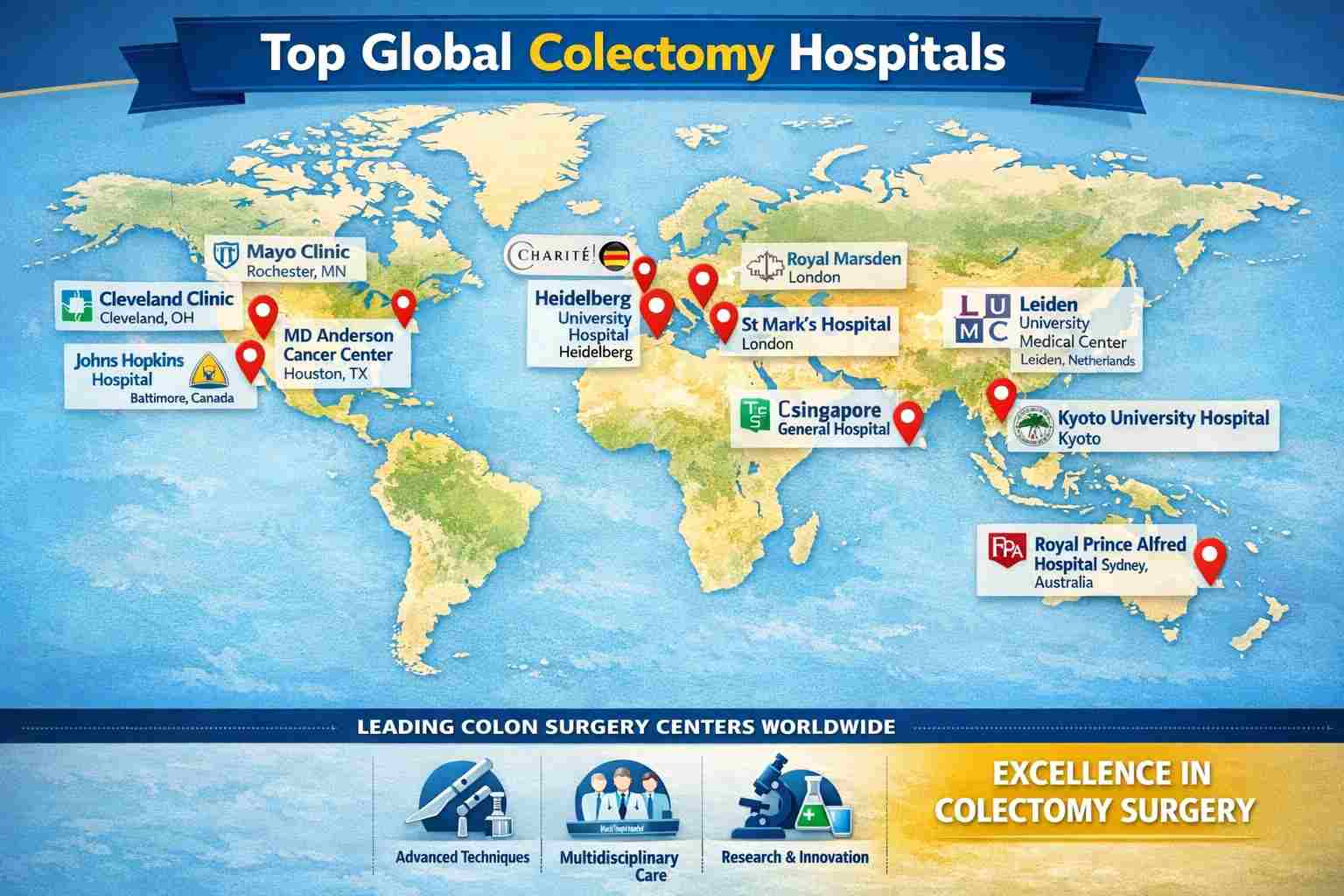
Top global hospitals and prices of Total Colectomy 2026 🌍💰
Executive Summary: Navigating Global Colectomy Care 📝
The landscape of surgical care changes rapidly. In 2026, finding the top global hospitals and prices of total colectomy requires a look beyond local borders. Patients now prioritize high-tech robotic options alongside affordability. Countries like India, Turkey, and Iran have emerged as leaders. They offer world-class medical infrastructure at a fraction of Western costs. Consequently, medical tourism provides a viable path for those facing chronic bowel diseases or cancer. This guide provides a detailed roadmap for your surgical journey. We analyze costs, hospital quality, and recovery expectations.
Who is This For? 👥
This resource serves individuals diagnosed with conditions requiring the removal of the entire colon. If you suffer from severe Ulcerative Colitis or Familial Adenomatous Polyposis (FAP), this guide is for you. Furthermore, it helps families researching affordable yet high-quality surgical options. Professionals in the medical travel industry will also find the 2026 price benchmarks invaluable. We focus on clarity for those who need to balance clinical excellence with financial reality.
Understanding the Total Colectomy Procedure 🏥
A total colectomy involves the surgical removal of the entire large intestine. Surgeons perform this to treat life-threatening diseases or chronic inflammation. In 2026, minimally invasive techniques dominate the field. However, the choice between laparoscopic and open surgery remains critical. You can learn more about these methods in our general surgery department.
What is Total Colectomy?
A total colectomy is a surgical procedure where the entire colon (large intestine) is removed. This is done to treat widespread colon disease, multiple tumors, severe inflammatory bowel disease, or genetic conditions that put a patient at high risk of cancer.
How the Procedure Works
Anesthesia: The patient is given general anesthesia.
Incision: The surgeon makes a large abdominal incision (open surgery) or several small incisions (minimally invasive/robotic).
Colon Removal: The entire colon is carefully detached from surrounding tissues, preserving vital blood vessels and structures.
Reconnection Options:
Ileorectal anastomosis: The small intestine is connected to the rectum if it’s healthy.
Ileostomy: Sometimes, a temporary or permanent stoma (opening for waste) is created if reconnection isn’t safe immediately.
Closure: Incisions are closed, and drains may be placed to remove excess fluid.
Recovery
Hospital stay: Typically 7–10 days for open surgery, shorter for minimally invasive methods.
Pain management: Pain is controlled with medications; minimally invasive approaches usually cause less pain.
Diet & activity: Patients start with liquids and gradually return to solid foods; walking is encouraged to prevent complications.
Lifestyle changes: Bowel movements may become more frequent; adjustments in diet and hydration are important.
Risks & Considerations
Infection at the incision site
Bleeding
Leakage if reconnection is performed
Temporary or permanent colostomy
Nutrient absorption issues due to reduced colon length
Why it’s Done
Total colectomy is performed when disease affects the entire colon or there’s a high risk of cancer that cannot be managed with partial removal. It can be life-saving and significantly improve quality of life for patients with
The Evolution of Surgical Techniques in 2026 🔬
Robotic-assisted surgery has become the gold standard in many top-tier facilities. This technology allows for extreme precision. Therefore, patients experience less blood loss and faster discharge times. While the tech is advanced, the primary goal remains the same. The surgeon ensures all diseased tissue is removed while preserving as much function as possible.
Many patients often require additional consultations before such a major step. We recommend a telemedicine consultation to discuss your specific case with an expert. This helps in aligning your expectations with the surgical reality.
Top Global Hospitals for Total Colectomy in 2026 🌟
Selecting a hospital is the most significant decision in your journey. In 2026, the best facilities combine JCI accreditation with specialized colorectal units. These hospitals often host international patients through dedicated medical tours in India and other hubs.
Leading Facilities in Turkey 🇹🇷
Turkey has solidified its position as a medical powerhouse. Hospitals in Istanbul and Ankara offer cutting-edge oncology departments. They specialize in complex bowel resections. The integration of luxury hospitality with clinical care makes it a top choice.
🌎 Top Global Hospitals for Total Colectomy in 2026
🇺🇸 United States
- Cleveland Clinic – Colorectal Surgery
- World‑renowned for complex gastrointestinal surgery.
- Strong multidisciplinary cancer and colorectal teams.
- MD Anderson Cancer Center (Texas)
- Leading center for colorectal cancer and advanced surgical oncology.
- Mayo Clinic (Rochester)
- High volume of colectomy cases with excellent recovery protocols.
Rising Standards in Iran and Oman 🇮🇷 🇴🇲
Iran offers highly skilled surgeons at the lowest price points globally. For those looking for specialized care in the Middle East, Oman is also expanding its surgical capacity. Many patients choose Iran for its surgical expertise and affordability.
Iran has a growing reputation for advanced colorectal surgery and total colectomy, combining high-quality care with cost advantages.
In Shiraz
Namazi Hospital – major tertiary care center with strong surgical and oncology services
Shiraz Central Hospital – advanced general and GI surgery services
Ordibehesht Hospital – surgical care including colorectal procedures
Kowsar Hospital – equipped for general and colorectal surgery
In Tehran and Other Cities
Milad Hospital – large hospital with comprehensive surgical departments
Arman Hospital – highly rated private hospital
Khatam Al-Anbiya Hospital – government hospital with broad surgical specialties
Tehran Clinic Hospital – private facility with modern surgical care
Day General Hospital and Laleh Hospital – private hospitals with advanced surgical care
Rasoul Akram Hospital – university hospital with multidisciplinary treatment options
🇩🇪 Germany
- Charité – Universitätsmedizin Berlin
- Europe’s largest university hospital with cutting‑edge minimally invasive and robotic colorectal programs.
- University Hospital Heidelberg
- Specialized colorectal cancer surgery and comprehensive cancer care.
🇸🇬 Singapore
- Singapore General Hospital
- Combines high‑tech care with patient‑centered recovery planning.
- Strong reputation in gastrointestinal surgery for international patients.
- National University Hospital (NUH)
- Advanced minimally invasive and robotic colectomy expertise.
🇰🇷 South Korea
- Asan Medical Center (Seoul)
- High procedural volume with excellent outcomes in complex bowel surgery.
- Samsung Medical Center
- Known for precision surgical techniques and robotic platforms.
🇮🇳 India
- Apollo Hospitals (Multiple Cities)
- Large colorectal teams; combines excellent clinical outcomes with cost advantages.
- Fortis Memorial Research Institute
- High‑volume bowel surgery programs with modern minimally invasive options.
🇮🇱 Israel
- Sheba Medical Center (Tel Hashomer)
- Leading surgical programs; strong support for complex and advanced cases.
- Rabin Medical Center
- Experienced colorectal specialists and multidisciplinary care teams.
🇦🇪 United Arab Emirates
- Cleveland Clinic Abu Dhabi
- International quality standard with streamlined care for global patients.
- American Hospital Dubai
- Well‑equipped surgical units with comprehensive recovery services.
🇯🇵 Japan
- Keio University Hospital (Tokyo)
- Precise, technology‑driven surgery with strong research and clinical support.
- Osaka University Hospital
- Advanced robotic and laparoscopic bowel procedures.
🌟 Why These Hospitals Are Highly Rated
✅ High procedural volume – more experience → better outcomes
✅ Multidisciplinary teams – surgeons, oncologists, nutritionists, pain specialists
✅ Modern surgical tech – robotic/laparoscopic platforms, enhanced recovery
✅ International patient services – language support, tailored travel plans
✅ Accreditations – JCI and other quality certifications
🧭 Tips for Choosing the Right Hospital
✔ Look for colorectal specialists with extensive total colectomy experience
✔ Ask about robotic & minimally invasive options
✔ Check infection & complication rates
✔ Confirm support services (nutrition, rehab, pain control)
✔ Discuss post‑discharge care options
If you’d like, I can help you compare these hospitals by cost, recovery timelines, and medical tourism logistics to plan your trip step by step!
2026 Global Price Analysis: Total Colectomy 💸
Cost remains a major driver for medical travel. The top global hospitals and prices of total colectomy 2026 vary significantly by region. These prices typically include the hospital stay, surgeon fees, and anesthesia. However, always verify if pre-op tests like clinical chemistry are included.
| Country | Estimated Price (USD) | Wait Time | Standard of Care |
|---|---|---|---|
| USA | $45,000 – $80,000 | 2-4 Weeks | High / Very High |
| Turkey | $8,500 – $14,000 | 1-2 Weeks | JCI Accredited |
| India | $5,500 – $9,500 | Immediate | High / Multi-Specialty |
| Iran | $3,500 – $6,000 | Immediate | Specialized Units |
| Thailand | $12,000 – $18,000 | 1-2 Weeks | Excellent Hospitality |
Pros and Cons of Global Surgery ⚖️
Choosing Top International Hospitals
Pros:
- Massive cost savings (up to 80% compared to the US).
- No waiting lists for urgent procedures.
- Access to surgeons with high volume experience.
- Opportunity for comprehensive health checkups simultaneously.
Cons:
- Travel stress and long flights post-surgery.
- Potential language barriers in smaller clinics.
- Difficulty in long-term local follow-up care.
The Patient Roadmap: Your Journey Step-by-Step 🗺️
A successful surgery requires a clear plan. We help patients navigate this through our about us page resources.
- Inquiry & Records: Submit your medical history and recent pathology tests.
- Virtual Consultation: Meet your surgeon via telemedicine.
- Travel Arrangements: Coordinate flights and visas. If you require specialized transport, consider air ambulance services.
- Arrival & Pre-Op: Undergo final physical exams at the checkup department.
- Surgery: The total colectomy is performed.
- Recovery: Stay in the hospital for 5-7 days.
- Follow-up: Final check before flying home.
Case Study: A Journey to Health in 2026 📖
Consider Sarah, a 34-year-old teacher from London. She struggled with severe Crohn’s Disease. The local wait time for surgery was over six months. Sarah researched the top global hospitals and prices of total colectomy 2026. She chose a JCI-accredited hospital in Istanbul.
By selecting specialized colectomy care, she saved over £20,000. Her surgery was robotic-assisted. She stayed in Turkey for three weeks. During her recovery, she enjoyed light walks along the Bosphorus. Today, Sarah is pain-free and back in the classroom. Her story illustrates the power of informed global healthcare choices.
Recovery & Medical Tourism 🏖️
Recovery after a total colectomy is a gradual process. The first few weeks are vital for bowel adaptation. Fortunately, many patients combine their trip with a relaxing stay. For instance, those visiting Mashhad find peaceful environments conducive to healing.
In 2026, the concept of “Convalescence Tourism” is popular. This involves staying in a medical hotel after discharge. Nurses provide daily wound care. Meanwhile, the patient enjoys a stress-free environment. For more information on travel logistics, visit our FAQ section.
Important Considerations for 2026 ⚠️
While searching for the top global hospitals and prices of total colectomy 2026, do not ignore logistics. Ensure your insurance covers international complications. Check the contact us page to speak with a coordinator about medical visas.
Medical technology is also advancing in neurosurgery and orthopedics. These advancements often cross-pollinate into general surgery. This ensures that colorectal procedures in 2026 are safer than ever.
Comparison of Surgical Approaches 🔄
| Feature | Open Surgery | Laparoscopic | Robotic (2026 Standard) |
|---|---|---|---|
| Incision Size | Large (15-20 cm) | Small Ports | Tiny Ports |
| Recovery Time | 6-8 Weeks | 3-4 Weeks | 2-3 Weeks |
| Precision | Manual | High | Ultra-High |
Frequently Asked Questions ❓
How long is the hospital stay for a total colectomy in 2026?
Most patients spend between 5 and 9 days in the hospital. The duration depends heavily on how quickly your bowels regain function. In 2026, hospitals use Enhanced Recovery After Surgery (ERAS) protocols to speed up discharge. These protocols involve early walking and specific nutrition. If complications arise, the stay might extend. Surgeons monitor your ability to tolerate solid food before you leave. For international patients, we recommend staying near the hospital for an additional week. This ensures you are stable for a long-distance flight. Our global locations offer excellent post-discharge support.
Are the prices of total colectomy in 2026 inclusive of follow-up care?
Most international packages include immediate post-operative follow-ups within the first 30 days. However, long-term care usually happens in your home country. You should budget for local visits to a gastroenterologist. Some top global hospitals offer remote monitoring via apps. This allows your surgeon to track your progress after you fly home. Always clarify if medications and medical supplies are included in the initial quote. Comprehensive transparency is key to avoiding hidden costs. You can check our articles for tips on budgeting for medical travel.
What are the main risks of a total colectomy?
Like any major surgery, risks include infection, bleeding, and blood clots. A specific risk for colectomy is an anastomotic leak, where the connection fails. In 2026, advanced stapling technology has significantly reduced these incidents. Some patients may also face temporary bowel obstructions. Surgeons use minimally invasive techniques to lower these risks. Proper pre-operative preparation is essential. This might include a pre-operative anesthesia consultation. Following the “Patient Roadmap” strictly reduces the likelihood of complications.
How does robotic surgery affect the price in 2026?
Robotic surgery typically adds $2,000 to $4,000 to the total bill. This covers the use of the robotic system and specialized instruments. While more expensive, the benefits often outweigh the cost. Patients usually experience less pain and a faster return to work. In the long run, shorter hospital stays can offset the initial high cost. Some hospitals include robotic options in their “premium” packages. You can compare these through our colectomy product category.
What should I eat after my surgery?
Initially, you will follow a low-residue (low fiber) diet. This gives the small intestine time to adapt to its new role. Over several months, you will slowly reintroduce different foods. Hydration is the most critical factor during this time. You may need to take specific supplements as the colon used to absorb water and salts. Your hospital’s nutrition team will provide a detailed plan. For long-term health, we recommend regular checkups in our checkup department.
Can I fly home immediately after discharge?
We strongly advise against flying immediately. You should wait at least 10 to 14 days after surgery before a long flight. This reduces the risk of deep vein thrombosis (DVT) and allows for wound stability. If you must travel sooner, an air ambulance is the safest option. During the flight, you must walk frequently and stay hydrated. Your surgeon will provide a “fit to fly” certificate once you are ready.
Do global hospitals treat Stage IV colon cancer?
Yes, top facilities have multidisciplinary teams for advanced cases. This often involves a combination of surgery and oncology treatments. Surgeons in Turkey and India are particularly skilled in complex resections for metastatic disease. You may need additional tests like molecular diagnostics to tailor your treatment. Early inquiry is vital for Stage IV cases.
Yes, many global hospitals treat Stage IV colon cancer, but the approach depends on the patient’s condition, tumor spread, and available expertise.
Key points:
- Multidisciplinary care: Stage IV often requires a combination of surgery, chemotherapy, targeted therapy, and sometimes radiation.
- Surgery options: In some cases, surgery may remove the primary tumor, metastatic lesions (like in the liver or lungs), or relieve blockages.
- Specialized centers: Top hospitals with colorectal oncology and hepatobiliary expertise are preferred for complex Stage IV cases.
- Supportive care: Advanced hospitals provide palliative care, symptom management, and personalized treatment plans.
- Medical tourism: Patients often travel to countries with accredited hospitals offering high-level expertise and access to advanced therapies at lower costs.
Even at Stage IV, treatment aims to extend survival, improve quality of life, and sometimes achieve remission in selected cases.
How do I pay for surgery abroad?
Most hospitals accept international credit cards, bank transfers, or cash. Some also work with international insurance providers. It is important to get a formal “Proforma Invoice” before you travel. This helps you manage your finances without surprises. We can assist with financial coordination through our support team.
What is the success rate of total colectomy in 2026?
Success rates in top global hospitals exceed 95% for the procedure itself. Long-term quality of life improves significantly for most patients. Those with chronic conditions like Ulcerative Colitis often feel “cured.” Success depends on the surgeon’s skill and the patient’s adherence to recovery rules. You can find highly rated specialists in our doctors directory.
How do I start my medical tourism journey with WMedTour?
The first step is visiting our contact page. Submit your medical reports and preferences. Our coordinators will provide you with options from the top global hospitals. We handle the logistics so you can focus on healing. Start your path to a healthier life today.