How Much Do Intersex Surgeries Cost in 2026: Global Price Guide, Ethical & Financial Deep Dive
Executive Summary: Key Financial & Ethical Takeaways
This authoritative guide meticulously explores the complex question: How Much Do Intersex Surgeries Cost in 2026? First, we recognize that the financial burden significantly impacts the patient journey. Consequently, understanding costs is critical for informed decision-making. Generally, the total expense for major Intersex-related procedures, often referred to as Differences in Sex Development (DSD) interventions, ranges widely. Specifically, expect costs from $10,000 to over $150,000 globally. This monumental variation depends on the surgical type (e.g., gonadectomy, genitoplasty), geographic location, and whether the procedure is performed in a single or multi-stage approach. Furthermore, high-cost regions like the United States and Western Europe drive up the global average. However, the cost dramatically decreases in specialized medical tourism destinations, including Iran and Turkey. Therefore, these regions offer advanced care at a fraction of the price. Critically, ethical considerations, especially ensuring the patient’s counseling and informed consent, must precede any discussion of cost. This detailed post provides projected 2026 prices, examines hidden fees, and outlines strategic financial planning for individuals and families navigating this sensitive area of care.
Decoding the Cost Drivers: What Determines the Price Tag?
To begin with, when assessing How Much Do Intersex Surgeries Cost in 2026, we must look beyond the initial quote. Several interconnected factors influence the final expenditure. Therefore, understanding these components is essential for creating a realistic budget.
The Influence of Procedure Complexity
The type of surgery required is the foremost cost determinant. Simple, prophylactic surgeries are naturally less expensive than complex reconstructive procedures. For example, a laparoscopic gonadectomy is a single-stage, lower-cost procedure. In contrast, multi-stage phalloplasty or intricate vaginoplasty demands extensive operating room time, specialized microsurgery equipment, and a highly skilled surgical team. Therefore, complexity directly correlates with cost. You can learn more about specific procedures in our guide to Intersex Surgeries: Genitoplasty, Gonadectomy, Vaginoplasty, and Phalloplasty.
- Prophylactic Surgeries: These primarily focus on removing at-risk gonads to prevent cancer, common in conditions like 46,XY DSD. Generally, these procedures are relatively straightforward and less costly.
- Reconstructive Surgeries: These aim at modifying external or internal anatomy for functional and aesthetic outcomes. This involves procedures like genitoplasty. Hence, they are inherently high-cost due to the precision and length of the operation.
Geographic Location and Hospital Overhead
The operational environment plays a monumental role in pricing. Hospitals in the United States and Western Europe face astronomical labor costs, insurance premiums, and regulatory compliance expenses. Conversely, countries with lower costs of living, like Iran and Turkey, pass significant savings directly to the patient. This structural difference accounts for the dramatic price gap seen globally. Consequently, many patients investigate options in highly regarded medical tourism centers. Furthermore, guidance on global travel and regulations is available in our global medical treatment regulations guide. To illustrate the cost savings, compare the general medical pricing in countries like Germany, explored in our medical travel Germany 2025 ultimate guide, with more affordable destinations like Iran, detailed in our medical tourism Iran 2025 ultimate guide.
Pre-operative Assessment and Post-operative Care
The surgical fee never represents the complete cost. A responsible care plan must include crucial non-surgical elements. Indeed, these are often overlooked in initial budget planning.
Required Non-Surgical Components
First, mandatory counseling and psychological assessments ensure the patient is fully prepared. This crucial step is non-negotiable, particularly when addressing the ethical complexities outlined in the pediatric vs. adult intersex surgery ethics consensus. Second, most DSD surgeries necessitate long-term, sometimes lifelong, Hormone Replacement Therapy (HRT). This is an ongoing financial commitment that accumulates over many years. Third, physical and dilator therapy is often required for feminizing surgeries, involving specialized follow-up sessions and necessary supplies. Finally, complex reconstruction, such as phalloplasty, often requires one or more revision surgeries. This significantly increases the total financial lifetime cost; therefore, planning for revisions is critical.
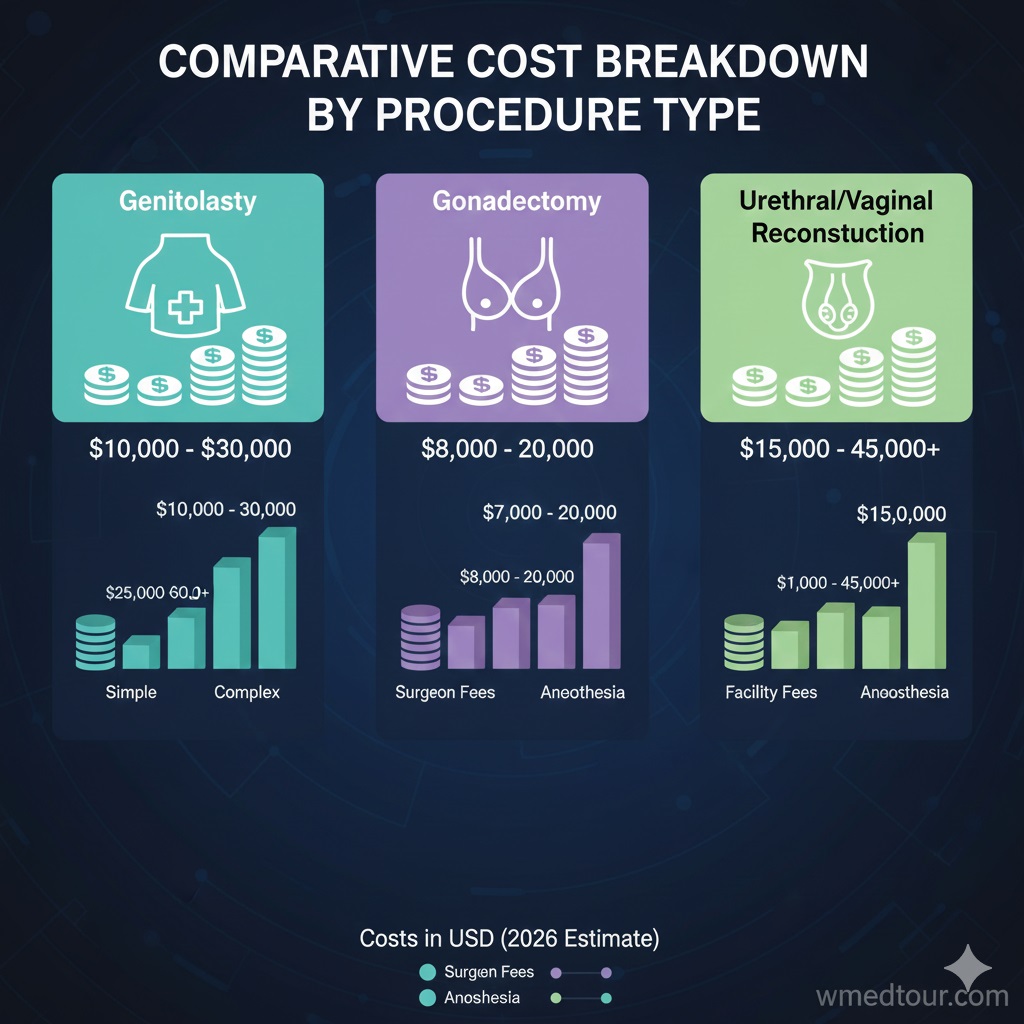
Comparative Cost Breakdown by Procedure Type (2026 Estimates)
Ultimately, to directly answer How Much Do Intersex Surgeries Cost in 2026, we must categorize costs based on the procedure. These projections incorporate an anticipated annual medical inflation rate of 3-5% for 2026. Therefore, the prices reflect a realistic future cost.
1. Gonadectomy (Prophylactic Gonad Removal)
This procedure is often performed for individuals with high-risk gonads to reduce cancer risk. It is generally the least expensive surgical intervention. Moreover, the procedure is often straightforward.
| Location Type | Estimated 2026 Price Range (USD) | Pros | Cons |
|---|---|---|---|
| USA/Western Europe | $10,000 – $25,000 | Highest regulatory standards; often covered if medically necessary. | Highest overall price; bureaucratic insurance hurdles. |
| Iran/Turkey/India | $4,500 – $10,000 | Significant cost savings; high volume of experienced surgeons. | Requires medical travel planning; post-op follow-up may be difficult. |
The cost typically covers the surgeon’s fee, anesthesia, and up to one night of hospitalization. However, remember to factor in the future cost of HRT, which is almost always needed post-gonadectomy. Consequently, the long-term cost is important. See our guide on fertility preservation options for intersex people if tissue banking is a consideration.
2. Feminizing Genitoplasty (Vaginoplasty and Clitoral Reduction)
These procedures, crucial for many DSD individuals seeking female alignment, can be complex, especially if involving the creation of a neo-vagina. Furthermore, the skill required for clitoral reduction while preserving sensation impacts the fee. Therefore, meticulous surgical planning is key. You can find related information in our womanisation surgery and gender feminization guide.
| Location Type | Estimated 2026 Price Range (USD) | Pros | Cons |
|---|---|---|---|
| USA/Western Europe | $45,000 – $85,000 | Advanced surgical techniques readily available; strong legal protections. | Extremely high cost; long waiting lists for top surgeons. |
| Iran/Turkey/Thailand | $18,000 – $35,000 | World-renowned expertise, especially in Iran and Thailand; comprehensive packages. | Requires an extended recovery period abroad (3-4 weeks); potential language barriers. |
3. Masculinizing Genitoplasty (Phalloplasty)
Phalloplasty is a multi-stage, highly sophisticated procedure. It involves creating a penis, often using tissue from the arm or thigh. Notably, this procedure requires complex microsurgery. Consequently, it represents the most significant financial commitment. The cost provided below usually represents the initial, major stage. In the highest-cost regions, the total price for all stages of phalloplasty can reach $150,000 or more. However, budget for future revisions as well. This procedure is a core component of transition surgery guide and gender confirmation.
| Location Type | Estimated 2026 Price Range (USD) | Pros | Cons |
|---|---|---|---|
| USA/Western Europe | $75,000 – $160,000+ (Initial Stage Only) | Access to the most cutting-edge, experimental techniques. | The highest price point; total cost often exceeds $200,000 after all stages and revisions. |
| Iran/Serbia/Thailand | $30,000 – $65,000 (Initial Stage Only) | Significant cost reduction; established centers for these complex procedures. | Multi-stage nature demands multiple trips; meticulous vetting of surgeons is crucial. |
The Cost Advantage of Medical Tourism: Focusing on Iran
Medical tourism is a compelling option for those struggling with the costs in their home countries. Iran, in particular, has emerged as a globally competitive center, especially for complex reconstructive and urological surgeries. Therefore, when discussing How Much Do Intersex Surgeries Cost in 2026, Iran provides a crucial point of reference for affordability and quality. This destination is often chosen for procedures like rhinoplasty, as detailed in rhinoplasty Iran price 2025, showcasing its general affordability in specialized surgery.
Why Iran Offers Exceptional Value
Iran maintains exceptionally high standards for specialist surgical care. Generally, this is due to significant governmental investment in medical education and infrastructure. At the same time, the local currency exchange rate and lower overhead costs translate to unparalleled affordability for international patients. Furthermore, Iranian surgeons often possess extensive experience in complex genitoplasty and related urological reconstruction. For example, our resources on medical tourism in Iran detail the specific advantages of seeking treatment there. Clearly, this expertise is a major factor.
Iran vs. Western Clinics: A Financial Comparison
A complex genitoplasty that might cost $75,000 in a major European city can often be secured for $15,000 to $25,000 in Iran. This price frequently includes the hospital stay and local coordination. Evidently, this represents a potential saving of over 65%. Moreover, the cost of post-operative recovery—including quality lodging and nursing care—remains low in cities like Tehran and Mashhad. However, patients must ensure they secure the correct medical travel Iran 2025 visa guide before planning their trip. Consequently, careful preparation is required.
Pros and Cons of Surgery in Iran
Pros of Surgery in Iran
| Cons of Surgery in Iran
|
When comparing different medical tourism destinations, always assess the country’s regulatory environment. For instance, details are provided in our complete legal medical travel guide for Iran and the guide for Turkey regulations. Therefore, verify all legal requirements beforehand. Turkey, a comparable medical tourism destination, is explored further in the medical travel Turkey 2025 ultimate guide.
Comprehensive Financial Planning: Accounting for Hidden Costs and Aid
Calculating the true cost of Intersex surgery means looking beyond the single invoice from the hospital. Therefore, we emphasize a holistic financial view when determining How Much Do Intersex Surgeries Cost in 2026 fully. Neglecting these ancillary costs can derail a patient’s budget and recovery. Consequently, we recommend a structured approach to budgeting, integrating both immediate and future expenses. Indeed, this is a critical step.
Immediate Non-Surgical Costs
- Travel and Lodging: Factor in flights, transportation, and dedicated recovery housing. In fact, for complex surgeries, this period can last 4-6 weeks abroad, so plan accordingly. See our pre-travel resources and checklists for patients for logistical help.
- Medical Supplies: This includes specific medications, pain management prescriptions, dilation kits, and specialized wound care items. Naturally, these add up quickly.
- Translator/Facilitator Fees: If traveling, a medical tourism agency fee or dedicated translator service ensures clear communication, a vital safety measure. This is why we recommend it.
- Unexpected Hospital Stay Extensions: Always reserve funds for an unexpected complication that might require a longer stay than initially planned. Furthermore, keep emergency funds ready.
Long-Term and Ongoing Costs
This category is often the most significant but overlooked. A key part of understanding How Much Do Intersex Surgeries Cost in 2026 is recognizing the expenses that extend years into the future.
- Hormone Replacement Therapy (HRT): This is perhaps the largest long-term financial commitment. The cost of HRT, which is essential for health and gender expression post-gonadectomy, can total thousands of dollars per year.
- Psychological Support: Ongoing therapy helps manage the psychosocial aspects of the transition and recovery. Furthermore, this support should continue for several years.
- Revision Surgeries: As noted, many reconstructive procedures have high revision rates. Budgeting for future, lower-cost procedures is a smart financial strategy.
- Fertility Preservation: If the surgery impacts fertility, procedures like cryopreservation of tissue are necessary. This includes the initial cost and the annual storage fees. Look for related fertility services in our fertility treatments abroad guide.
Financial Aid Resources & Grants
For those facing financial hardship, several non-profit organizations offer grants for gender-affirming and DSD-related care. Therefore, it is highly recommended to investigate these options early in the planning process.
- Point of Pride: Offers the Annual Trans Surgery Fund and the Thrive Fund for small grants covering medical/wellness needs. Similarly, other groups offer grants.
- GenderBands: Provides medical/surgical, social, and travel grants for transition-related procedures. In addition, check local organizations.
- Trans Lifeline: Maintains a resource list for grants and funding. Finally, this list is frequently updated.
Cons of Cost-Cutting
- Choosing a lower-cost, inexperienced surgeon risks poor outcomes and costly revisions. This means greater long-term expenditure. For vetting advice, check the choosing a surgeon clinic abroad checklist.
- Skipping mandatory psychological assessments compromises patient readiness. Consequently, this risks mental health.
- Cutting corners on post-op supplies can severely affect the healing process and final result. Therefore, buy quality supplies.
Patient Financial Journey: The Story of Sam (Hypothetical)
Sam, an individual with a complex DSD, resided in Canada and required a multi-stage masculinizing genitoplasty (phalloplasty). Insurance coverage was ambiguous, meaning a large out-of-pocket payment was likely, even if approved. The estimated total out-of-pocket cost in a Canadian specialized center was approximately $120,000 USD for the initial stage. Consequently, Sam chose to travel to Iran for the initial major stage due to its proven expertise and competitive pricing.
Sam’s Decision and Financial Outcome
Sam consulted with a highly recommended clinic in Tehran. The procedure was scheduled, and Sam used a specialized medical travel service for coordination. The key phrase, How Much Do Intersex Surgeries Cost in 2026, guided Sam’s research toward the most cost-effective yet reputable options. Indeed, Sam used resources on quality assessment to ensure the standard of care remained high. Furthermore, Sam was very careful with the vetting process, seeking out a surgeon with high volume experience in complex genital cosmetic surgery.
| Expense Category | Canada Cost (Out-of-Pocket Est.) | Iran Cost (Total Package Est.) | Difference |
|---|---|---|---|
| Initial Major Surgery Fee (Phalloplasty) | $100,000 | $45,000 | $55,000 Saved |
| Anesthesia, Hospital Stay (10 days) | $15,000 | $5,000 | $10,000 Saved |
| Travel & Local Accommodation (4 weeks) | $2,000 | $4,500 | $2,500 Extra |
| Total Initial Cost | $117,000 | $54,500 | $62,500 Saved |
Sam’s decision to pursue the first major stage in Iran resulted in an immediate saving of over $60,000. Sam allocated these savings to cover future revision surgeries, lifelong HRT costs, and extended recovery time. This journey highlights how a significant portion of the cost of care, particularly when considering How Much Do Intersex Surgeries Cost in 2026, can be mitigated through intelligent medical travel. Clearly, strategic planning makes a huge difference. For context on cost-vs-quality in medical tourism, see our cost vs. quality global price comparison.

Who is This For? Navigating the Intersex Surgical Landscape
This detailed cost analysis caters specifically to a multifaceted audience deeply involved in DSD care and planning. Therefore, this information is vital for several groups.
- Patients with DSDs and their families: Those directly confronting the financial and ethical dilemmas of surgical intervention, especially when comparing the intersex variations surgery ethical guide with cost implications.
- Medical Tourists: Individuals seeking the highest quality care at competitive prices abroad, considering destinations like Iran, Turkey, and Thailand. In other words, this group benefits from knowing How Much Do Intersex Surgeries Cost in 2026 in different global markets. Turkey is a major competitor, and you can learn more about its offerings in medical tourism Turkey ultimate guide 2025.
- Healthcare Providers and Advocates: Professionals who counsel patients on the financial realities of DSD care, helping them navigate complex insurance and international care options.
- Researchers and Policymakers: Individuals interested in the economic disparities in DSD care and the global market dynamics that determine surgical pricing. As a result, this data is crucial for policy.
We emphasize that the decision to undergo surgery for DSDs is profoundly personal. Furthermore, it must prioritize the patient’s long-term health, psychological well-being, and autonomy. Critically, cost should never compromise care quality or ethical standards. Hence, a balance must be struck.
Ethical Consensus and Patient Autonomy in DSD Care
The history of DSD surgeries, particularly those performed in infancy without the individual’s consent, remains a sensitive and crucial ethical topic. Consequently, the current medical consensus overwhelmingly favors delaying non-medically necessary procedures until the patient can provide full, informed consent, aligning with a “full-consent policy.” This ethical shift affects the timing and planning for when and How Much Do Intersex Surgeries Cost in 2026.
Shared Decision-Making (SDM) and the Moratorium
The contemporary ethical framework centers on Shared Decision-Making (SDM). SDM involves a multidisciplinary team, parents, and the child as they mature. Furthermore, medical societies and ethical working groups now widely advocate for a moratorium on non-emergency, feminizing, or masculinizing operations before the age of consent. This position upholds the rights of the future adult to bodily integrity and self-determination. However, intervention is still required in cases of immediate health threats, such as potential malignancy from dysgenetic gonads. Even so, this shift fundamentally impacts the surgical journey and its timing. This is especially relevant to complex procedures covered in our gender confirmation surgery guide.
The Role of Psychological Assessment
Before any major reconstructive surgery, a thorough psychological assessment confirms the individual’s readiness and understanding of the procedure’s finality. This essential step, although adding to the pre-operative cost, safeguards the patient’s long-term mental health. Specialized centers often integrate this assessment with fertility discussions. This includes planning for services such as those found in our PGT-A and IVF gender selection guide for family planning. Therefore, this assessment is non-negotiable.
The ethical landscape demands that patients, not parents or surgeons, hold the final decision-making power over non-urgent genital surgery. Consequently, patients should seek out clinics that strictly adhere to these modern ethical standards, regardless of the price point. How Much Do Intersex Surgeries Cost in 2026 should not be the sole driving factor. The ultimate guide to ethical DSD surgery can be found in our deep dive on intersex variations surgery ethical guide.
For further academic perspective on the medical and ethical standards in this field, consult these authoritative sources:
Looking Ahead: Future Cost Trends for Intersex Surgeries in 2026
Several emerging trends will likely influence How Much Do Intersex Surgeries Cost in 2026 and beyond. We project continued price divergence between high-cost and medical tourism destinations. Clearly, the gap is widening.
Technology and Innovation
The increasing use of minimally invasive techniques, such as laparoscopy for gonadectomy and robotic assistance for complex pelvic reconstruction, is a key trend. While initial investment in robotic systems is high, the reduced patient recovery time and decreased risk of complication can lead to lower total costs of care in the long run. Learn more about cancer robotic surgery guide and its financial implications, which often overlap with complex DSD reconstruction. The use of advanced technology also impacts the cost of related urological procedures, like those discussed in our prostatectomy cost guide.
The Impact of Demand and Regulation
As awareness and acceptance grow, demand for adult-consented DSD surgery will increase. Consequently, this heightened demand may drive up prices for top, specialized surgeons globally, particularly in non-tourist countries. Furthermore, evolving insurance mandates in the US and Europe may shift more costs onto third-party payers, potentially easing the financial strain on individuals. However, this remains highly uncertain. To manage this increased demand, medical tourism centers like Iran and Turkey are poised to absorb it, keeping their prices highly competitive through efficiency and volume. Refer to the medical tourism Iran 2025 ultimate guide for comprehensive cost management strategies.
- Projected Growth: We anticipate a moderate increase in demand for genitoplasty among adults with DSDs who are now able to consent. In fact, this is a growing demographic.
- Cost Management: Medical tourism centers are expected to maintain affordability. This is similar to how they manage competitive pricing for complex services like fertility treatments abroad.
The conversation about cost is intrinsically linked to the ethical conversation surrounding DSD care. Informed and patient-centered care should be the primary goal, and sound financial planning supports this objective. We aim to help every patient access necessary and ethical care, regardless of geographical location. Consider a general resource like the global medical tourism guide 2025 for broader context.
FAQ Section: Your Essential Questions on Intersex Surgery Costs
We provide straightforward answers to the most common inquiries related to the topic: How Much Do Intersex Surgeries Cost in 2026?
1. Is intersex surgery typically covered by health insurance?
Insurance coverage is highly variable. Procedures considered medically necessary, such as cancer-risk gonadectomies, have a higher rate of coverage. Conversely, elective reconstructive genitoplasties often require extensive pre-authorization or may be denied, forcing patients to pay out-of-pocket.
2. How much does lifelong Hormone Replacement Therapy (HRT) add to the total cost?
HRT is a significant long-term cost. Depending on the regimen, brand, and country, it can cost between $500 and $6,000 per year. Over a lifetime, this can total over $200,000, which is crucial to factor into the overall financial plan. Therefore, budget carefully for this.
3. Why are costs so much lower in Iran and Turkey?
The lower costs in countries like Iran and Turkey are primarily due to lower costs of living, lower wages for non-surgical staff, reduced administrative overhead, and favorable currency exchange rates. Importantly, this does not imply lower surgical quality. They follow the same high standards seen in procedures like those discussed in the rhinoplasty Iran 2025 guide.
4. What is the average cost for a revision surgery after genitoplasty?
Revision surgeries vary significantly in scope. A minor revision might cost $5,000 to $15,000. Meanwhile, a major revision could cost 50% to 75% of the original procedure price. Patients should budget for at least one revision to be safe.
5. What specific DSD types are most often associated with high-cost, multi-stage surgeries?
Complex DSD types, such as severe Congenital Adrenal Hyperplasia (CAH), Mayer-Rokitansky-Küster-Hauser (MRKH) syndrome, and conditions requiring phallic construction (e.g., 46,XY DSD with microphallus), often require multi-stage, high-cost surgical interventions. These procedures demand highly specialized surgeons, which increases the total cost.
6. How does the cost of non-genital Intersex-related surgery (e.g., breast augmentation) compare?
Non-genital surgeries are priced similarly to cosmetic procedures. For example, breast augmentation costs can range from $5,000 to $15,000 globally. This is generally separate from the DSD-specific genitoplasty costs. View comparable costs in our breast augmentation cost Iran 2025 guide.
7. If I am considering fertility preservation, how does that affect the budget?
Fertility preservation is an entirely separate medical process. Costs include the procedure itself (often $5,000–$15,000) and ongoing annual storage fees, typically $500–$1,000 per year. Accordingly, factor in these recurring fees. For comparison, see costs associated with ICSI treatment global cost 2025.
8. Does the type of surgeon (Urologist vs. Plastic Surgeon) affect the price?
Yes, highly specialized reconstructive plastic surgeons or microsurgeons, particularly those with specific experience in phalloplasty, often command higher fees than general urologists performing less complex procedures. Therefore, expect a higher quote from specialists. Find qualified experts in our Genital Cosmetic Surgery department.
9. What is the price difference between inpatient and outpatient gonadectomy?
An outpatient (same-day) laparoscopic gonadectomy is significantly cheaper because it eliminates the overnight hospital stay cost. In fact, this can save $1,500 to $5,000 depending on the facility, so inquire about the option.
10. Do all-inclusive medical tourism packages cover complications?
Most packages cover immediate, short-term complications during the initial hospital stay. However, patients must clarify the extent of coverage for complications that arise weeks or months later. These issues usually require a separate financial agreement or insurance. Read the ultimate guide to medical tourism surgery for more details.
11. How much should I budget for recovery travel and lodging if I go abroad?
Budget an additional $4,000 to $8,000 for complex surgeries requiring a 4-6 week recovery period abroad. This covers flights, quality accommodation, local transport, and food for both the patient and a necessary caregiver. That is to say, plan for all costs.
12. Is the cost of implants, like testicular prostheses, included in the surgical fee?
No, the cost of specialized medical devices, such as testicular or penile prostheses, is typically invoiced separately from the surgeon’s fee. These can range from $2,000 to over $15,000 depending on the material and type. Thus, confirm this cost separately.
13. Do all Intersex surgeries require lifelong hormone therapy?
Not all do, but most DSD surgeries, particularly those involving gonadectomy (removal of gonads), require lifelong Hormone Replacement Therapy (HRT) for essential health and bone density maintenance, regardless of gender identity. Consult your endocrinologist regarding the necessity of HRT in your specific case.
14. Is the cost of genetic testing (DSD diagnosis) included in the surgical cost?
No, the cost of specialized genetic testing (e.g., karyotyping, gene sequencing) used for DSD diagnosis is separate from the surgical cost and is usually completed long before the surgery. This testing can cost several thousand dollars, depending on the complexity and location. See similar testing in our preimplantation genetic testing guide.