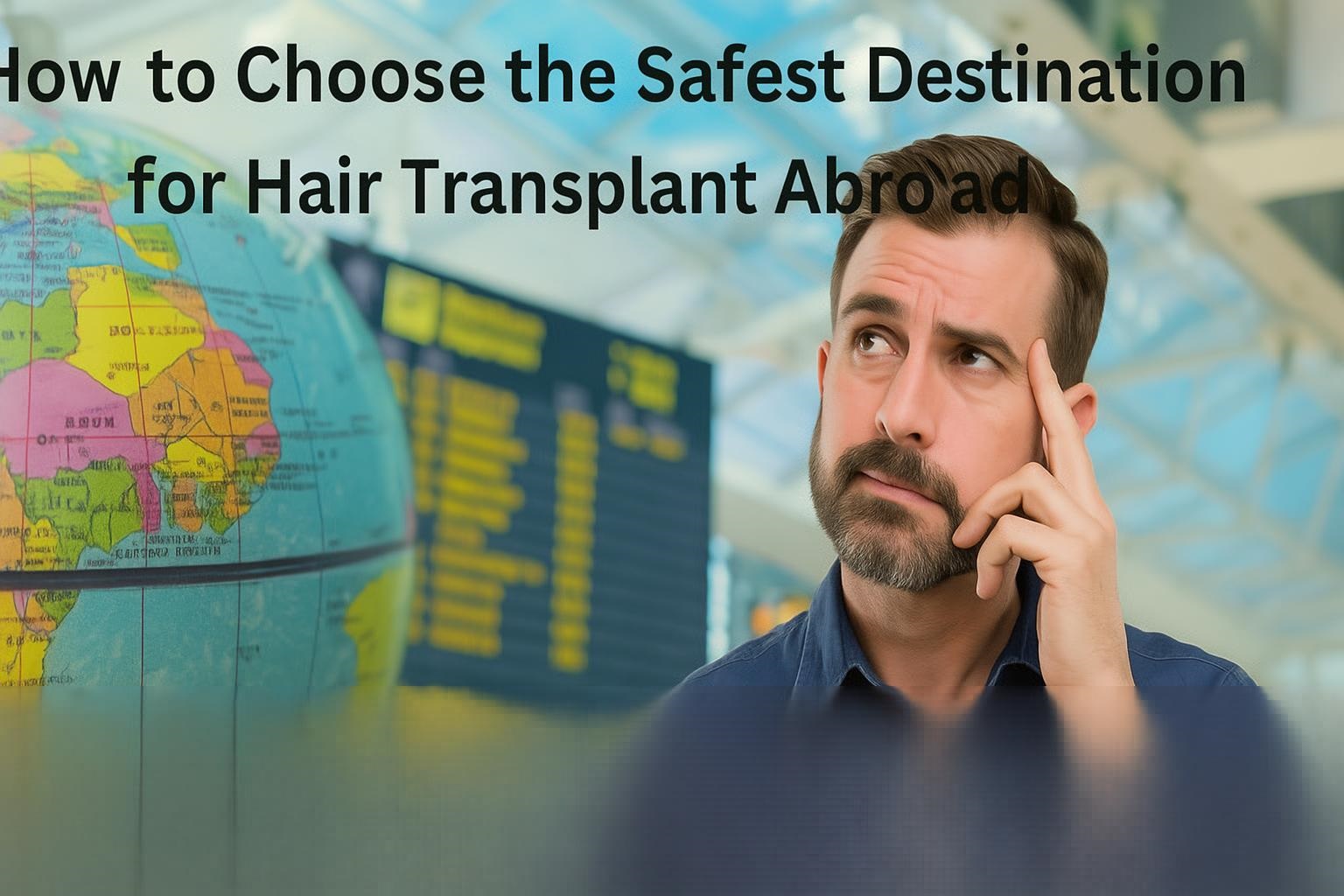
How to Choose the Safest Destination for Hair Transplant Abroad: Pre-Travel Resources & Checklists for Patients 🛡️✈️
📋 Executive Summary
Traveling for medical care requires meticulous planning. This guide simplifies the complex process of identifying the safest global hubs for hair restoration. We focus on accreditation standards, surgeon credentials, and post-operative safety protocols. Key takeaways include our proprietary safety checklist, a breakdown of top-tier destinations like Turkey and Iran, and a roadmap to ensure your journey is both successful and secure.
👥 Who is This For?
This resource is specifically designed for individuals struggling with hair loss who are considering international options to balance quality and cost. It is equally valuable for medical consultants and professionals in the skin and hair sector who need to advise clients on safety. Whether you are a first-time medical tourist or a seasoned traveler, this guide provides the technical and logistical foundation needed for a risk-free experience.
🌍 Navigating the Global Landscape of Hair Restoration
The decision to go abroad for a hair transplant is often driven by the pursuit of expertise. Many countries have built entire ecosystems around medical tourism. However, safety must remain the primary metric for any patient. Because regulations vary significantly across borders, you must act as your own advocate. You should look beyond glossy brochures and focus on clinical outcomes.
International clinics often offer advanced techniques like FUE (Follicular Unit Extraction) and DHI (Direct Hair Implantation). These methods are highly effective when performed by qualified professionals. To ensure your safety, you need to verify that the facility adheres to international hygiene standards. For example, checking for JCI (Joint Commission International) accreditation is an excellent starting point for any international location.
🔍 Defining Medical Safety in Hair Care
Safety is not just about the surgery itself. It encompasses the entire journey from the initial telemedicine consultation to long-term recovery. A safe destination is one where the legal framework protects the patient. This includes transparency in pricing and clear communication regarding potential risks.
⚖️ Pros and Cons of Leading Destinations
1. Turkey: The Global Hub 🇹🇷
Turkey is currently the most popular destination for hair restoration. You can find world-class facilities in cities like Istanbul. Many Turkish hospitals specialize exclusively in hair health.
✅ Advantages
- High volume of experienced surgeons.
- Competitive all-inclusive packages.
- State-of-the-art specialized clinics.
❌ Potential Risks
- Market saturation makes vetting difficult.
- Over-commercialization in some low-cost clinics.
2. Iran: High Expertise, Low Cost 🇮🇷
Iran offers a unique combination of highly trained medical doctors and very affordable rates. The medical schools in Iran are renowned for their rigorous surgical training. Patients often choose hospitals in Iran for complex cases that require high precision.
✅ Advantages
- Extremely high graft success rates.
- Personalized care from board-certified surgeons.
- Very low cost of living for recovery.
❌ Potential Risks
- Limited international banking options.
- Requires specialized visa arrangements.
📊 Destination Comparison Matrix
| Feature | Turkey | Iran | India |
|---|---|---|---|
| Average Cost | $1,800 – $3,500 | $800 – $1,500 | $1,500 – $3,000 |
| Surgeon Expertise | Excellent (High Volume) | Superior (Academic Rigor) | Very Good |
| Safety Regulation | Strong (Ministry of Health) | Strong (Medical Council) | Moderate (Variable) |
| Best For | Full Packages & Tourism | Value & Quality Precision | English Speakers |
🛣️ The Patient Roadmap to a Safe Transplant
Following a structured path reduces anxiety and increases the likelihood of a positive outcome. We recommend starting your journey at least three months before your planned travel date. This allows for ample research and health optimization.
Step 1: The Research Phase
Begin by consulting with specialists in plastic surgery. You should read verified patient reviews on independent platforms. Avoid relying solely on a clinic’s own website for testimonials.
Step 2: Virtual Consultation
Schedule a telemedicine consultation. During this meeting, ask specifically about who will perform the graft extraction. In some budget clinics, technicians perform the majority of the work. For maximum safety, ensure a board-certified surgeon leads the procedure.
Step 3: Document Verification
Request copies of the surgeon’s certifications. You can verify these with national medical boards, such as the International Society of Hair Restoration Surgery (ISHRS).
📝 The Ultimate Safety Checklist for Patients
✅ Pre-Travel Safety Points
- Is the clinic registered with the National Health Authority?
- Does the surgeon have at least 10 years of specialized experience?
- Can they provide a high-resolution portfolio of “Before and After” photos?
- Is there a clear emergency protocol in case of surgical complications?
- Does the quote include post-operative medications and follow-up care?
- Have you performed a comprehensive health checkup recently?
💼 Case Study: Mark’s Journey to Istanbul
Mark, a 42-year-old engineer from London, spent six months researching destinations. He initially looked at prices but pivoted to safety after reading about “hair mills.” He eventually chose a boutique clinic in Turkey. By prioritizing a clinic that only performed two surgeries per day, he ensured the lead surgeon was present throughout. Mark utilized an air ambulance service for his return as a precaution, though his recovery was flawless. His results at the 12-month mark show 95% graft survival.
💰 Detailed Cost Analysis Table
Understanding the financial landscape helps you avoid hidden fees that often compromise safety.
| Expense Item | Economy Clinic | Premium Safety Clinic |
|---|---|---|
| Procedure (3000 Grafts) | $1,200 | $2,800 |
| Anesthesia Support | Included (Basic) | $200 (Specialist) |
| PRP Therapy | Not Included | Included |
| Post-Op Care Kit | $50 | Included |
🏖️ Recovery & Medical Tourism
One major advantage of traveling abroad is the ability to recover in a stress-free environment. For instance, after a procedure in Oman, patients can enjoy the serene landscapes. Check out our tours in Oman for peaceful recovery options. However, you must avoid direct sunlight and strenuous activity for at least 10 days. Proper rest is essential for graft anchoring.
💡 Frequently Asked Questions
1. What is the single most important factor in a safe hair transplant?
The expertise and involvement of the lead surgeon during the graft extraction and site creation phases is paramount.
2. Is it safe to travel alone for a hair transplant abroad?
While many do, it is safer to have a companion or use a medical tourism agency that provides on-ground assistance.
3. How do I verify a clinic’s safety record?
Check international accreditation databases and look for clinics that provide transparent complication rates upon request.
4. Can I fly immediately after the procedure?
It is recommended to wait at least 48 to 72 hours to ensure blood pressure stabilizes and initial healing begins.
5. What are the signs of an unsafe clinic?
Extremely low prices, “unlimited graft” promises, and lack of a direct consultation with the surgeon are major red flags.
6. Does insurance cover complications abroad?
Most standard health insurance does not. You should purchase specific medical complications insurance for international travel.
7. Are there specific health tests I need before traveling?
Yes, standard blood work including CBC and infectious disease screening is usually required for patient safety.
8. How does the weather affect post-op safety?
Extreme heat can cause sweating, which may lead to infection. Choose a destination with a mild climate or stay in climate-controlled environments.
9. Is the FUE technique safer than FUT?
FUE is less invasive and has a lower risk of major scarring, but both are safe when performed by experts.
10. What role does the anesthesia consultation play?
It ensures you are not at risk for allergic reactions or complications related to local sedation used during the surgery.
11. Can I use local transport safely after surgery?
It is better to use private clinic transfers to avoid bumping your head or exposing the scalp to crowded, unsanitary areas.
12. Where can I find the most affordable yet safe options?
Iran currently offers some of the highest quality-to-cost ratios globally, provided you use a reputable agency.
Medical Disclaimer: The information provided in this article is for educational purposes only and does not constitute medical advice. Always consult with a qualified healthcare professional before undergoing any surgical procedure. WMedTour does not endorse specific clinics and encourages thorough independent research. For more info, visit our FAQ page.