


Neuro Oncology deals with some of the most complex and challenging cancers affecting the brain and nervous system. For patients seeking advanced, compassionate, and affordable
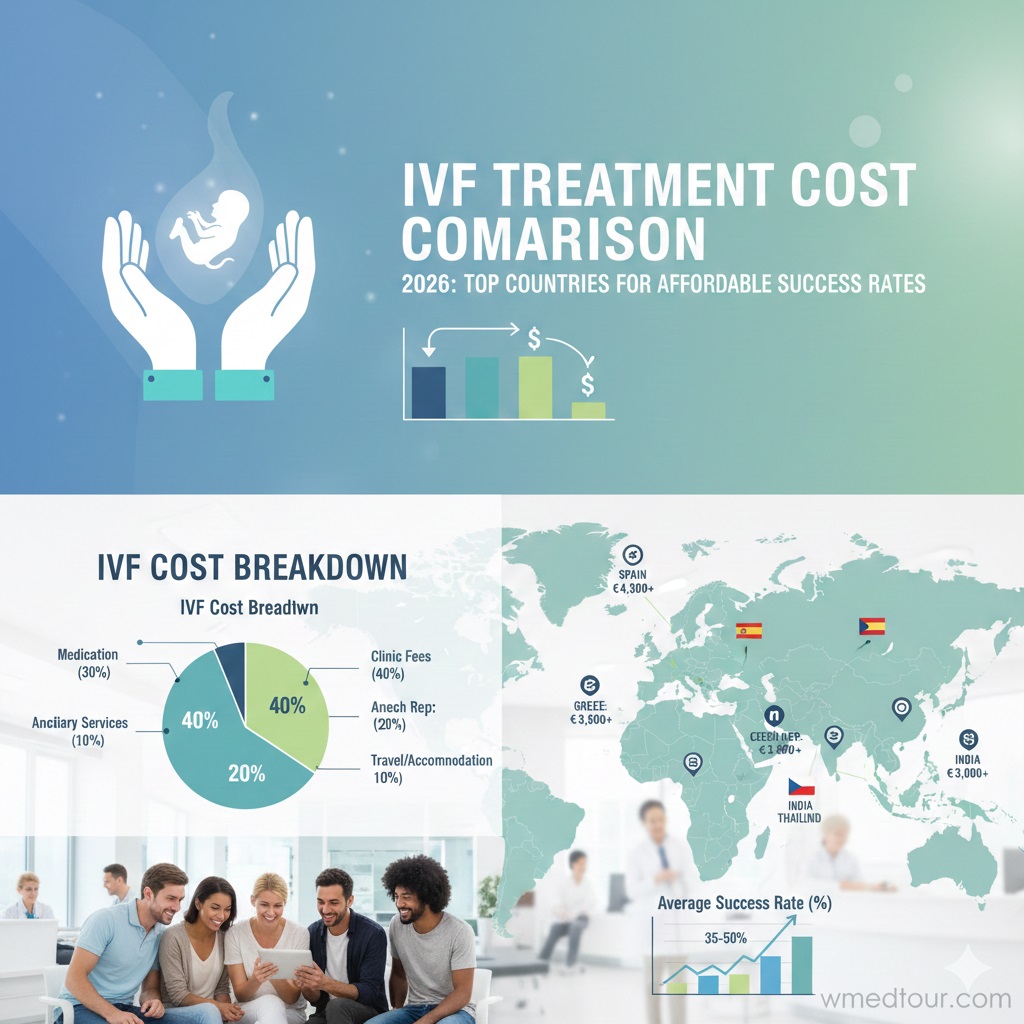
Fertility Tourism Guide 2026
Navigating the global fertility landscape for financial relief and high-quality care.
By WMedTour Editorial Team | wmedtour.com
The global pursuit of parenthood often involves significant financial strain, prompting a massive increase in fertility tourism. Our comprehensive IVF Treatment Cost Comparison 2026 reveals that cost-effectiveness and clinical success are not mutually exclusive. Indeed, many countries offer world-class treatment at a fraction of Western prices. Key findings indicate that destinations like Iran, Turkey, and the Czech Republic consistently top the charts. They combine advanced technology with affordable pricing structures. Furthermore, selecting a destination must move beyond just the price tag; patients must critically evaluate reported success rates, the local legal environment, and the clinic’s specialization in procedures such as ICSI or PGT. Ultimately, a successful journey depends on a thorough comparison, balancing the financial investment with proven clinical excellence.
In vitro fertilization (IVF) represents a beacon of hope for countless families worldwide. However, the procedure’s escalating cost in high-income nations creates a profound barrier. Consequently, patients are increasingly looking toward international medical tourism. This trend is not merely about finding a cheaper price. Conversely, it is a strategic search for high-quality care that respects both the emotional and financial investment of the patient. Therefore, understanding the nuances of the IVF Treatment Cost Comparison 2026 across borders is absolutely essential for proactive planning.
The financial burden is substantial, especially since many patients require multiple cycles to achieve a successful pregnancy. For this reason, affordability becomes a primary factor in a patient’s decision-making process. Moreover, the global market has responded, leading to the rise of specialized clinics in countries that blend world-class medical training with significantly lower operational costs. As a result, the search for the top countries for affordable success rates has intensified in 2026, driving the need for reliable, up-to-date data. Fertility problems and IVF abroad is now a mainstream solution.
Medical tourism for fertility services thrives for several compelling reasons. First and foremost, the cost savings are undeniable. Secondly, many patients seek destinations with shorter waiting times for procedures, particularly those involving donor services, which can be restricted or involve long queues in their home countries. Access to gamete donation, for instance, varies greatly worldwide. Ultimately, some patients need access to specific treatments, such as certain types of PGT or legal fetal gender selection, which may be prohibited in their country of residence.
Furthermore, the desire for privacy plays a major role. Choosing to undergo treatment in another country provides a degree of anonymity and distance from daily stressors, which can positively impact the psychological state during the intensive IVF process. Therefore, the combination of economic necessity, regulatory flexibility, and the potential for higher success rates makes the global IVF market a dynamic and critical area for prospective parents to investigate. We urge patients to also consider the holistic experience, which includes the ease of travel and local support.
Creating a meaningful IVF Treatment Cost Comparison 2026 demands a rigorous methodology. We cannot simply compare the base price of an IVF cycle. Instead, we must look at the total expected investment relative to the chance of a successful outcome. This requires normalizing the data across different regulatory and reporting environments. For this article, we prioritize the clinical success rate per embryo transfer for patients under 35, as this is the most common benchmark for comparing clinic performance globally. We also carefully vet the data, cross-referencing published figures from national registers and academic research. A pre-travel checklist for fertility treatments is crucial before making a final decision.
The term “affordable success” represents the sweet spot where the investment per live birth is minimized. It is a metric that factors in not only the cost of a single cycle but also the probability of requiring fewer cycles overall due to high initial success rates. Conversely, a very cheap cycle with a low success rate may require three or four attempts, ultimately costing more than a slightly more expensive but highly successful cycle. Consequently, prospective parents must scrutinize the cost of bundled services, including critical procedures like ICSI and PGT, alongside the base IVF price. This comprehensive view ensures a true picture of the economic viability of the medical travel destination.
In order to gauge true value, we must also account for local laws and ethical guidelines. For instance, some countries permit advanced genetic testing or embryo storage limits that can drastically affect the long-term cost-effectiveness of treatment. Therefore, the legal context is inseparable from the financial and medical comparison. We consulted recent academic papers on global fertility trends to establish a credible basis for our 2026 projections, ensuring the data is as reliable as possible. Academic Study on Fertility Cost-Effectiveness.
A standard IVF cycle generally includes ovarian stimulation, egg retrieval, fertilization, and embryo transfer. However, the price often excludes medication, which can add thousands of dollars to the total. Therefore, our cost figures reflect the base treatment plus an estimated average medication cost, providing a more realistic total for the IVF Treatment Cost Comparison 2026. Furthermore, supplementary services such as Intracytoplasmic Sperm Injection (ICSI), freezing of supernumerary embryos, and consultation fees must be explicitly accounted for in any financial projection.
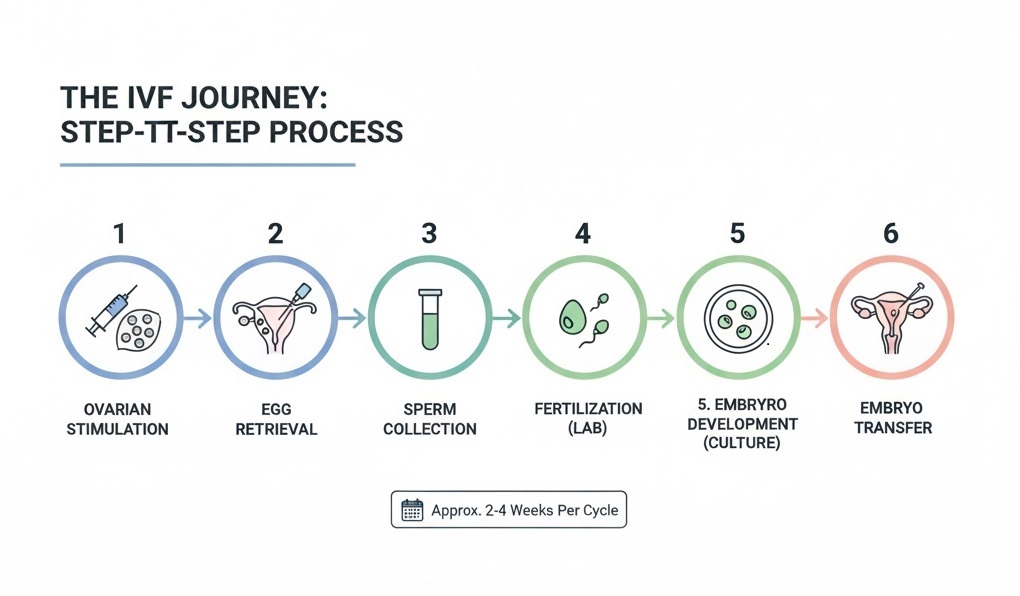
Based on our rigorous analysis, several countries stand out globally for delivering an optimal blend of low cost and high clinical efficacy. These nations have invested heavily in reproductive medicine, attracting top talent and providing state-of-the-art facilities. Consequently, they offer genuinely competitive options for international patients seeking the best outcome for their investment. This strategic focus makes them central to the global IVF Treatment Cost Comparison 2026.
Iran has rapidly become a global leader in medical tourism, especially in complex procedures like IVF. The nation’s dedication to reproductive healthcare is evident in its highly specialized medical professionals and its advanced fertility centers. Iran offers some of the most competitive prices in the world without compromising quality. Moreover, the local legal and ethical framework is clear and supports various fertility treatments, providing a secure environment for patients. Patients interested in the full scope of treatment options should consult our guide on fertility treatments abroad.
The cost-to-success ratio in Iran is unparalleled. The high standards stem from mandatory, continuous medical education and state investment in modern equipment. Navigating medical travel in Iran is also streamlined for international patients. Therefore, Iran represents a compelling choice for anyone conducting an IVF Treatment Cost Comparison 2026.
Turkey has cemented its position as a major European medical tourism destination. It offers a unique combination of high-tech facilities and geographical accessibility, particularly for patients coming from Europe, the Middle East, and North Africa. In fact, many Turkish IVF centers boast JCI accreditation, signifying their adherence to stringent international quality standards. The ultimate guide to medical travel in Turkey confirms its reputation for quality. Consequently, the quality of care is exceptionally high, making it a strong contender in our IVF Treatment Cost Comparison 2026.
The costs in Turkey are significantly lower than in Western Europe, yet the success rates often mirror those of London or Paris clinics. Furthermore, package deals frequently cover accommodation and transfers, simplifying the logistics for the patient. However, strict regulations regarding certain fertility procedures, such as anonymous gamete donation, must be considered by prospective patients. It is vital to confirm that the desired treatment is fully compliant with local laws before planning the trip.
The Czech Republic, particularly cities like Prague and Brno, is often dubbed the “IVF capital of Europe.” This designation is well-earned. The country offers advanced fertility services that adhere to the rigorous standards of the European Union. Furthermore, the cost of treatment remains substantially lower than in its Western European neighbors. The country is a preferred destination for patients seeking anonymous and compensated egg donation IVF.
Czech clinics are renowned for their high-quality egg banks and transparent reporting standards. Nevertheless, treatment is legally capped for women at age 49. Therefore, patients over this age limit must seek alternative destinations. This legal limitation, while specific, is a necessary factor in a comprehensive IVF Treatment Cost Comparison 2026. The overall clinical excellence, coupled with its central location, makes it a top choice for European and international patients alike.
Mexico serves as a highly popular destination, especially for patients traveling from the United States and Canada. This is because of its geographical proximity and the significant cost savings, which can reach 50-70% compared to North American prices. Furthermore, Mexican clinics are known for offering a wide array of advanced services, including those that may be legally restricted elsewhere, such as comprehensive PGT-A and gender selection, provided they are legally available in the jurisdiction.
Many centers near the border or in major cities like Mexico City or Guadalajara have specialized international departments. These departments cater specifically to foreign patients, offering seamless coordination and English-speaking staff. Consequently, the combination of excellent value, comprehensive service offerings, and ease of access makes Mexico a compelling entry in the IVF Treatment Cost Comparison 2026. Patients must, however, research individual clinic accreditation carefully, since standards can vary more widely than in highly regulated markets.
India offers IVF services at some of the world’s lowest prices, making it highly attractive for cost-sensitive patients. Major metro areas like Mumbai and Delhi house highly developed private hospitals with cutting-edge technology and internationally trained specialists. These facilities contribute significantly to the affordability aspect of the IVF Treatment Cost Comparison 2026. Furthermore, the country’s medical professionals often have vast experience due to the high volume of procedures performed, ensuring a wealth of clinical expertise is readily available.
Despite the low cost, it is crucial to understand that fertility laws in India have evolved, especially regarding commercial surrogacy for foreigners. However, for standard IVF, the value proposition remains immense. We always recommend that patients utilize resources like our medical tourism guide for India to navigate the legal and logistical landscape effectively. The key to successful treatment here lies in choosing one of the large, accredited centers known for their high ethical standards and transparent reporting.
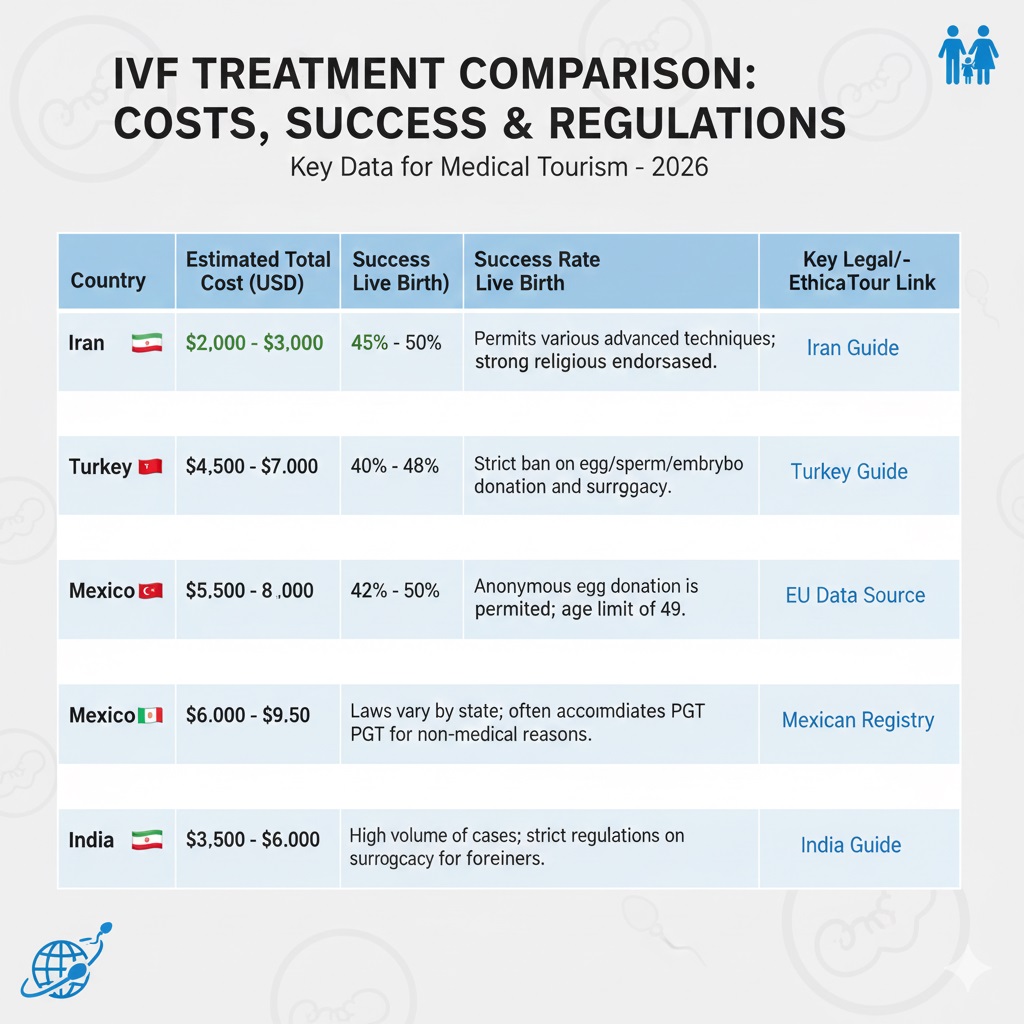
Note: Costs are estimates for a standard, non-donor IVF cycle, including estimated medication, and are subject to change. Success rates represent the live birth rate per embryo transfer for women under 35 at top-tier clinics.
| Country | Estimated Total Cost (USD) | Success Rate (Live Birth) | Key Legal/Ethical Notes | WMedTour Link |
|---|---|---|---|---|
| Iran 🇮🇷 | $2,000 – $3,000 | 45% – 50% | Permits various advanced techniques; strong religious endorsement. | Iran Guide |
| Turkey 🇹🇷 | $4,500 – $7,000 | 40% – 48% | Strict ban on egg/sperm/embryo donation and surrogacy. | Turkey Guide |
| Czech Republic 🇨🇿 | $5,500 – $8,000 | 42% – 50% | Anonymous egg donation is permitted; age limit of 49. | EU Data Source |
| Mexico 🇲🇽 | $6,000 – $9,500 | 38% – 45% | Laws vary by state; often accommodates PGT for non-medical reasons. | Mexican Registry |
| India 🇮🇳 | $3,500 – $6,000 | 35% – 42% | High volume of cases; strict regulations on surrogacy for foreigners. | India Guide |
The most challenging aspect of any IVF Treatment Cost Comparison 2026 is moving past the sticker price. Truly, patients should focus on the cost per live birth. This metric accounts for the clinical success rate, providing a more honest measure of affordability. For instance, a cycle costing $5,000 with a 50% success rate is mathematically superior to a cycle costing $4,000 with only a 20% success rate, since the latter will likely require multiple, more expensive attempts. Hence, this calculation should be the cornerstone of your decision.
Moreover, the quality of the embryology lab significantly influences the final outcome. Advanced labs in countries like Iran or the Czech Republic utilize cutting-edge techniques. These include ICSI, laser-assisted hatching, and time-lapse monitoring. These innovations, precision fertility with AI and NIPGT, maximize the chance of a successful transfer. Therefore, you must inquire about the lab’s specific technology and success metrics.
Preimplantation Genetic Testing (PGT/PGD embryo screening) is an invaluable tool for improving success rates, particularly for women over 35 or those with a history of recurrent miscarriage. This technology allows embryologists to screen embryos for chromosomal abnormalities (PGT-A) before implantation. Consequently, transferring only euploid (chromosomally normal) embryos drastically reduces the risk of miscarriage and increases the likelihood of a live birth.
Although PGT adds a supplementary cost to the IVF Treatment Cost Comparison 2026, it is often a financially wise decision. By minimizing failed transfers, PGT potentially saves the patient the emotional toll and financial cost of repeated full IVF cycles. In this context, the initial outlay for PGT functions as an insurance policy for future success. Make sure your chosen clinic specializes in this advanced technique. University Report on PGT Efficacy.
Success rate reporting is not standardized worldwide. Therefore, when reviewing clinic data, you must ask for the live birth rate per embryo transfer, not just the clinical pregnancy rate (which includes pregnancies that end early). IVF success rates by age are also critical. Furthermore, consider the average age of the clinic’s patient base. Clinics treating a younger population will naturally have higher reported success rates. A reputable clinic will always provide age-stratified data for transparency. Always verify the data source before committing to treatment.
Maria, a 40-year-old software engineer from Canada, faced two failed IVF cycles in Toronto, each costing approximately $22,000 (excluding PGT). Upon consulting our IVF Treatment Cost Comparison 2026 data, she decided to explore options in Iran. Her primary concerns were quality and affordability, especially since she required PGT-A due to her age.
Maria traveled to Tehran after reading our detailed guide on medical travel in Iran. The clinic offered a cycle package, including ICSI and PGT-A for five embryos, for a total cost of $6,500 USD, plus approximately $1,500 for the necessary medication. In total, the full treatment, including advanced testing, was $8,000. This represented a substantial saving of over 60% compared to a single Canadian cycle without PGT-A.
Following her retrieval, Maria had three embryos deemed suitable after PGT-A. On her first frozen embryo transfer (FET), she achieved a clinical pregnancy. Nine months later, she welcomed a healthy baby boy. Her total cost per live birth was $8,000, contrasted with the estimated $44,000+ she spent on her two failed cycles back home. This hypothetical journey underscores the power of informed medical tourism and the excellent value available in top destinations like Iran.
This comprehensive guide and IVF Treatment Cost Comparison 2026 are intended for specific groups of individuals who are actively navigating their fertility options internationally. Indeed, the information is designed to empower patients to make financially intelligent and clinically sound decisions.
This comparison is primarily for couples and individuals residing in countries where IVF is prohibitively expensive or not covered by insurance. This includes a significant portion of the North American market. Furthermore, if you anticipate needing multiple cycles, a service like ICSI treatment global cost 2025 can dramatically change your total budget. Therefore, traveling to a destination with a lower cost base offers essential financial sustainability for the entire treatment journey. This helps to alleviate the stress of budgeting for such an emotional process.
Patients who require specific services, such as anonymous egg donation, sperm donation, or particular advanced PGT screenings for fetal gender selection or family balancing, will find this guide useful. These treatments are often subject to highly varied legal restrictions globally. Consequently, traveling internationally becomes a necessity, not just an option, to access legally permissible and ethically comfortable care. You must investigate the local laws and ensure they align with your needs.
Choosing a country from our IVF Treatment Cost Comparison 2026 is only the first step. Patients must then meticulously plan the logistical aspects of their medical travel. Successfully managing this part of the journey reduces stress and maximizes the chances of a positive outcome. Remember to prioritize your peace of mind throughout the process.

A thorough pre-travel checklist is non-negotiable. Before you book a flight, you must have all your medical records translated and sent to the international clinic for review. Furthermore, you should confirm the precise duration of the stay required, which is typically between 14 and 21 days for a fresh cycle. Also, make sure to secure all necessary prescriptions and understand the storage and administration instructions for your medications. Consulting our guide on choosing a surgeon and clinic abroad checklist can provide further clarity.
Patients must verify the visa requirements for their chosen destination. For instance, some countries offer specific medical visas, while others require a standard tourist visa for short stays. It is always best to check the medical visa definitive patient handbook well in advance. Moreover, securing accommodation close to the clinic is essential to minimize travel-related stress during daily monitoring appointments. Many leading clinics offer specialized patient coordinators who assist with these logistics, including language interpretation and airport transfers. This comprehensive support network is a key factor when evaluating an international clinic.
We also advise having a detailed understanding of the country’s local healthcare regulations. This is particularly relevant if complications arise, ensuring you know how to access emergency care. The global medical tourism guide 2025 offers general advice on international healthcare regulations and patient rights. You are embarking on a medical journey, so preparedness is your strongest ally.
1. What is the average cost of IVF globally in 2026?
The average cost of a standard IVF cycle varies significantly. In high-cost countries like the US, it can exceed $20,000. Conversely, in the top affordable destinations, the cost typically ranges from $3,000 to $7,000 per cycle. This variation is why an IVF Treatment Cost Comparison 2026 is so critical for planning.
2. Do lower costs mean lower IVF success rates?
Not necessarily. A lower cost primarily reflects lower operational overhead, reduced doctor fees, and differences in insurance models. Many affordable countries maintain high success rates, which are often comparable to Western standards, due to investment in advanced technology and highly trained specialists.
3. How important is the PGT-A screening in global IVF treatment?
Preimplantation Genetic Testing for Aneuploidy (PGT-A) is crucial. It screens embryos for chromosomal abnormalities before transfer. While PGT-A adds to the total IVF Treatment Cost Comparison 2026, it significantly increases the success rate per embryo transfer, thereby potentially reducing the number of overall cycles needed.
4. What are the common hidden costs in international IVF packages?
Common hidden costs can include medication (which is often separate), travel and accommodation for the duration of the cycle, cryopreservation of remaining embryos, and fees for ancillary services like ICSI, hatching, or sperm/egg donor fees. Always request an itemized quote.
5. Is travel time a significant factor when choosing an international IVF clinic?
Yes, travel time is important. An IVF cycle typically requires a stay of 14 to 21 days for the monitoring, retrieval, and transfer phases. Therefore, choosing a country with accessible flights and a patient-friendly visa process, as detailed in our guide on the medical visa definitive patient handbook, simplifies the logistics and reduces stress.
6. Why is Iran consistently mentioned in the top affordable IVF destinations?
Iran stands out because of its highly advanced medical infrastructure, specialist training, and extremely competitive pricing due to favorable exchange rates and subsidized healthcare costs. The ethical and legal framework for fertility treatments is robust, making it a compelling component of any IVF Treatment Cost Comparison 2026.
7. What is the difference between clinical success rate and live birth rate in IVF statistics?
The clinical success rate usually refers to the percentage of cycles resulting in a confirmed pregnancy (a visible heartbeat). The live birth rate, however, is the percentage of cycles resulting in a live birth. The live birth rate is the more accurate measure of true success, though many clinics advertise the higher clinical success rate.
8. How does age impact the cost-effectiveness of an IVF cycle?
Age is the single biggest determinant of success. As age increases, the success rate per cycle decreases, meaning more cycles are often required, which dramatically increases the total IVF Treatment Cost Comparison 2026. Therefore, investing in advanced techniques like PGT-A early on may be more cost-effective for older patients.
9. Are medication costs included in typical international IVF package prices?
Generally, no. Fertility medication (stimulation drugs) is frequently the most significant add-on cost, sometimes exceeding the base price of the cycle itself in Western countries. Many international packages, however, offer the medication at a significantly lower, near-wholesale price, but it is rarely included in the base fee.
10. What legal differences should I be aware of when traveling for IVF?
Legal frameworks differ widely, affecting services like egg and sperm donation, surrogacy, and fetal gender selection. For instance, some countries permit anonymous donation, while others do not. You must investigate the regulations in detail; for example, you can explore guides on fertility treatments abroad.
11. What accreditation should an international IVF clinic possess?
While local accreditation is essential, international patients should look for clinics that hold certifications from recognized bodies such as JCI (Joint Commission International) or meet standards equivalent to the European Society of Human Reproduction and Embryology (ESHRE) guidelines. This assures quality regardless of the low IVF Treatment Cost Comparison 2026.
12. Can I use frozen embryos from my home country in an international clinic?
Transporting embryos is possible but complex. It involves legal paperwork, coordination between clinics, and specialized cryogenic shipping services. While feasible, it is often simpler and more cost-effective to undergo a fresh cycle abroad unless you have a substantial number of embryos already banked.
13. How does the cost of ICSI compare across these top countries?
ICSI (Intracytoplasmic Sperm Injection) is an essential part of IVF for many patients and is often priced as an add-on. In the countries highlighted here—especially Iran and Turkey—the ICSI add-on fee is typically a fraction of the cost found in Western clinics, contributing significantly to the overall affordability outlined in this IVF Treatment Cost Comparison 2026. You should check the current global cost of ICSI treatment.
14. What logistical preparation is most critical before leaving?
The most critical preparation is medical record translation and comprehensive communication with the chosen clinic. You must ensure the clinic has a complete, up-to-date picture of your fertility history. This prevents delays and ensures the protocol is tailored correctly. Furthermore, securing travel insurance that covers medical complications is a wise preparatory step. For comprehensive guidance, utilize the resources in our pre-travel resources and checklists for patients.
The journey to parenthood is profoundly personal. Finding the right balance between clinical excellence and financial sustainability is paramount. This extensive IVF Treatment Cost Comparison 2026 clearly demonstrates that affordable success is a tangible reality in the global fertility market. Destinations like Iran, Turkey, and the Czech Republic have established themselves as leaders by prioritizing advanced medical care alongside accessible pricing structures.
Therefore, we urge prospective parents to leverage this data, perform their due diligence on clinic accreditations, and prioritize the live birth rate over the base cost. By combining the wealth of information provided here with personalized medical advice, you can confidently navigate the medical tourism landscape and dramatically increase your chances of a successful outcome without incurring unnecessary debt. Your successful fertility journey starts with a smart, informed decision.
Neuro Oncology deals with some of the most complex and challenging cancers affecting the brain and nervous system. For patients seeking advanced, compassionate, and affordable

Gynecological Oncology in Turkey Gynecological cancers such as ovarian, uterine, and cervical cancer affect millions of women worldwide every year. Choosing the right place for

Seeking effective, affordable treatment for Gastrointestinal Cancer in Turkey? Look no further! Turkey, a global leader in medical tourism, offers state-of-the-art hospitals and internationally trained

Why Choose Turkey for Breast Cancer Treatment? A breast cancer diagnosis can be overwhelming, but you don’t have to face it alone. Turkey has become