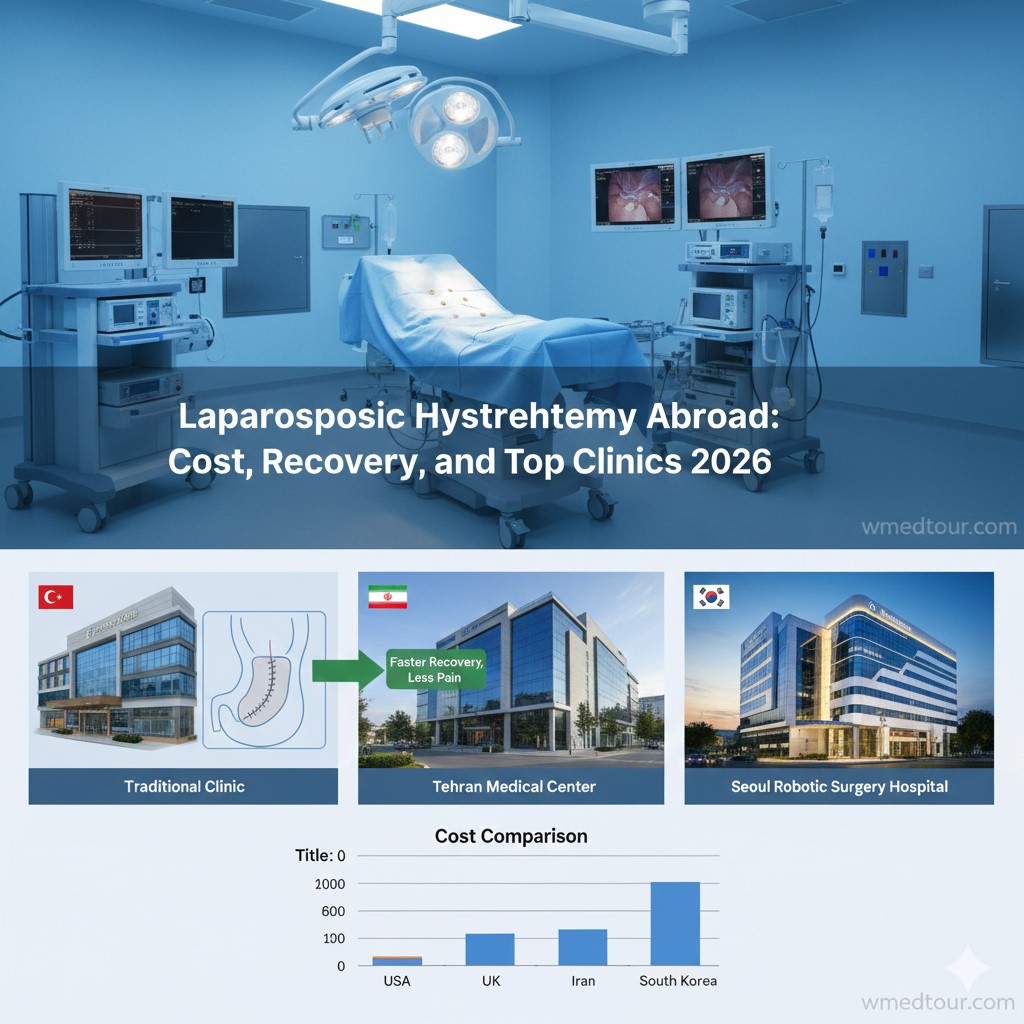
🌎 Laparoscopic Hysterectomy Abroad: Cost, Recovery, and Top Clinics 2026
✅ Executive Summary: Key Takeaways
A hysterectomy represents a major decision for any woman. However, choosing a Laparoscopic Hysterectomy Abroad offers several distinct advantages. Patients can access high-quality care at a significantly reduced cost.
- 💲 Cost Savings: You can save 50% to 70% compared to Western countries. Iran and Turkey offer the most competitive prices for the procedure.
- ⏱️ Recovery Advantage: The laparoscopic approach is minimally invasive. Therefore, it leads to a much shorter hospital stay and a faster return to normal activities.
- 📍 Top Destinations: Iran and Turkey stand out due to their specialized gynecological centers. These countries also boast experienced surgeons and modern technology.
- 🔍 Vetting is Crucial: Always choose a surgeon with specific, high-volume experience in advanced laparoscopy.
- ✈️ Medical Tourism Benefits: Traveling abroad facilitates immediate treatment access, avoiding long waiting lists common in public healthcare systems.
A hysterectomy, which involves the surgical removal of the uterus, is a common gynecological procedure. It is often necessary for conditions like fibroids, endometriosis, or pelvic organ prolapse. Historically, this surgery involved large abdominal incisions. Nowadays, the Laparoscopic Hysterectomy Abroad has become the preferred choice. This minimally invasive technique uses small keyhole incisions. Consequently, it minimizes trauma, reduces pain, and accelerates healing. Many women globally are now looking abroad for this procedure. They seek a perfect balance of advanced medical quality and affordability. This comprehensive guide covers the essentials of pursuing a Laparoscopic Hysterectomy Abroad in 2026. We specifically focus on costs, the recovery journey, and identifying the world’s best clinics.
The global medical tourism market continues to expand. Several countries have emerged as leaders in gynecological surgery. They combine cutting-edge technology with highly experienced surgical teams. Therefore, traveling for care offers significant financial and logistical benefits. Patients can often schedule surgery much faster than in their home country. Before making any decisions, however, patients should understand the general requirements for major surgery abroad, including necessary preparation, as outlined in our guide on Fertility Treatments Pre-Travel Checklist. Understanding the procedure’s advantages is the first critical step.

🔬 Understanding Laparoscopic Hysterectomy
Laparoscopic Hysterectomy (LH) represents a revolution in gynecological surgery. It utilizes a laparoscope, which is a thin, lighted instrument with a tiny camera. This device allows the surgeon to view the pelvic organs on a monitor. As a result, the entire procedure is performed through small incisions. This contrasts sharply with traditional open surgery. Consequently, the patient experiences less blood loss and reduced scarring.
✨ Key Advantages of the Minimally Invasive Approach
The benefits of choosing LH over traditional methods are compelling. They directly influence a patient’s comfort and recovery timeline. Therefore, these advantages are a primary reason patients seek a Laparoscopic Hysterectomy Abroad.
- ✅ Smaller Incisions: Surgeons use tiny incisions, usually between 0.5 cm and 1 cm. This leads to minimal scarring and a better cosmetic outcome.
- ✅ Reduced Pain: Less surgical trauma results in significantly less post-operative pain. Consequently, patients require fewer potent pain medications during recovery.
- ✅ Shorter Hospital Stay: Most patients are discharged within 24 to 48 hours. This is a considerable reduction compared to the 3-5 days needed for open surgery.
- ✅ Faster Recovery: Return to light duty and normal non-strenuous activities is often possible within two weeks. This expedites the overall healing process.
- ✅ Lower Infection Risk: The small incisions significantly decrease the risk of wound infection.
⚠️ Potential Considerations
While highly advantageous, LH is still major surgery. Therefore, patients must be aware of certain considerations. Moreover, not every gynecological condition is suitable for the laparoscopic approach.
- ❌ Surgeon Skill: The technique requires highly specialized training and sophisticated equipment. Hence, selecting a high-volume, experienced surgeon is essential.
- ❌ Operating Time: Complex laparoscopic cases may take longer than open surgery.
- ❌ Not for All Cases: Very large uteri, severe pelvic adhesions, or advanced cancers may necessitate an open approach.
Patients should always discuss their medical history thoroughly with the surgeon. This ensures the laparoscopic route is the safest and most appropriate choice. Furthermore, understanding complications is crucial, similar to learning about the risks of Cystocele Surgery.
✈️ Global Cost Comparison: Laparoscopic Hysterectomy Abroad 2026
The primary motivation for seeking a Laparoscopic Hysterectomy Abroad is often the dramatic cost reduction. The price difference between Western nations and leading medical tourism hubs can be startling. These hubs offer identical quality of care. However, they achieve this without the high insurance and overhead costs prevalent in places like the US or Western Europe. Therefore, the cost savings are substantial.
🇮🇷 Iran: Quality and Unbeatable Value
Iran has firmly established itself as a global leader in gynecological surgery, including advanced laparoscopy. Consequently, it offers an outstanding combination of world-class surgeon expertise and highly competitive pricing. Iranian surgeons often perform a high volume of complex procedures. This experience ensures excellent clinical outcomes. Furthermore, the favorable exchange rate and low cost of operation translate directly into significant savings for international patients. Iran is often the most cost-effective option for a Laparoscopic Hysterectomy Abroad without compromising safety or care quality. Moreover, the government actively supports the medical tourism sector, leading to state-of-the-art facilities. You can find essential travel information in our Medical Travel Iran 2025 Visa Guide.
🇹🇷 Turkey: Accessibility and Comprehensive Packages
Turkey, especially Istanbul, is another premier destination for a Laparoscopic Hysterectomy Abroad. The country boasts numerous JCI-accredited hospitals and surgeons with extensive international training. Turkey’s packages are often all-inclusive. They cover the procedure, hospital stay, local transfers, and even accommodation. This streamlined approach makes the medical journey straightforward for the patient. While slightly higher in price than Iran, Turkey still offers tremendous value compared to the West. This makes it a popular choice for those seeking a balance of high-quality care and tourism-friendly infrastructure. Details on logistics are available in our Medical Travel Turkey 2025 Ultimate Guide.
Comparative Cost Breakdown (Estimated 2026)
The following table provides a clear comparison of the average total cost for a Laparoscopic Hysterectomy across different global hubs. This includes the surgeon’s fee, facility charges, and typical anesthesia costs.
| Country | Estimated Cost Range (USD) | Savings vs. US/UK |
|---|---|---|
| Iran 🇮🇷 | $2,500 – $5,000 | Up to 80% |
| Turkey 🇹🇷 | $4,000 – $8,000 | Up to 70% |
| Mexico | $6,000 – $10,000 | Up to 60% |
| India | $3,500 – $7,000 | Up to 75% |
| United States 🇺🇸 | $15,000 – $30,000+ | Reference Cost |
| United Kingdom 🇬🇧 | $12,000 – $20,000 | Reference Cost |
Clearly, choosing a Laparoscopic Hysterectomy Abroad significantly mitigates the financial burden. Therefore, quality becomes highly accessible. Always verify that the quoted price is all-inclusive, covering fees, post-op care, and necessary supplies.
🏥 Vetting Top Clinics and Surgeons for Laparoscopic Hysterectomy
While cost is a factor, surgical expertise must remain the priority. The success of a Laparoscopic Hysterectomy Abroad depends entirely on the surgeon’s skill and the facility’s quality. Patients should adopt a structured vetting process. This process ensures they select a specialist, not just a general surgeon. This is vital for complex procedures like this one.
🎓 Credentials and Specialization
A surgeon should ideally be a board-certified gynecological oncologist or a general gynecologist with fellowship training in Minimally Invasive Gynecologic Surgery (MIGS). Look for documented expertise in laparoscopy. Furthermore, inquire about the surgeon’s annual volume of hysterectomies. A high-volume surgeon performs the procedure frequently, which directly correlates with better outcomes and lower complication rates. Always verify their training and certifications. This due diligence is similar to the vetting process for finding the Best Robotic Cancer Surgeons.
⭐ Hospital Accreditation and Technology
The facility where the Laparoscopic Hysterectomy Abroad takes place is equally important. Search for hospitals with international accreditations, such as Joint Commission International (JCI) or an equivalent. Accreditation confirms adherence to global patient safety and care standards. Moreover, ensure the hospital is equipped with the latest laparoscopic towers and instrumentation. Some top centers even offer robotic-assisted laparoscopic hysterectomy, providing enhanced precision. The facility should have a dedicated Intensive Care Unit (ICU) and a comprehensive blood bank, just in case of unexpected complications. This focus on infrastructure is paramount for patient safety.
💬 The Consultation Process
A virtual or in-person consultation is non-negotiable. This meeting tests the surgeon’s communication skills and empathy. The surgeon must clearly explain the procedure, including the type of hysterectomy recommended (total, subtotal, or radical). They must also discuss potential complications and the recovery trajectory. A top surgeon will offer realistic expectations, not guarantees. Additionally, they should be able to answer specific questions about managing blood loss and dealing with conditions like Gynecological Oncology, if applicable. Effective communication is a cornerstone of safe and successful international surgery. You should also ensure you have proper travel documentation, as detailed in the Medical Visa Definitive Patient Handbook.

🛌 Recovery Timeline for Laparoscopic Hysterectomy
One of the strongest arguments for choosing a Laparoscopic Hysterectomy Abroad is the significantly accelerated recovery. While recovery is faster than open surgery, it still requires patience and adherence to post-operative instructions. Understanding the recovery timeline helps patients plan their trip and return to daily life effectively.
🗓️ Immediate Post-Operative Period (Day 1 – 7)
Patients typically spend 1 to 2 nights in the hospital for pain management and monitoring. During the first few days, rest is essential. There will be mild pain and discomfort at the incision sites. Patients are encouraged to take short walks soon after the surgery. This helps prevent blood clots. It is common to experience shoulder pain due to the carbon dioxide gas used during the laparoscopy. This gas irritates the diaphragm. Furthermore, light spotting or vaginal discharge may occur. This period is crucial for managing initial pain and ensuring the small incisions are healing properly. Therefore, the patient must remain close to the surgical center.
🚶♀️ Intermediate Recovery (Week 2 – 6)
Most women feel significantly better by the end of the second week. They can often resume most non-strenuous daily activities. Returning to work, especially desk jobs, is often possible after 10 to 14 days. However, patients must strictly avoid heavy lifting, vigorous exercise, and sexual activity during this entire period. The internal stitches take the longest to heal. Full healing of the vaginal cuff (if the cervix was removed) can take up to six weeks. Consequently, rushing this stage can lead to severe complications. Patients should gradually increase their activity levels under their doctor’s guidance. The recovery process is similar in principle to other abdominal procedures like a Tummy Tuck.
✅ Full Recovery and Long-Term Outlook (Month 3+)
By three months, most women feel completely recovered. They can resume all previous activities, including intense exercise. The small external incisions typically fade quickly, leaving minimal scarring. The overall recovery from a Laparoscopic Hysterectomy Abroad is generally excellent. Most patients report significant relief from their original symptoms. However, it is important to remember that the total internal healing process takes longer. Patients should attend all follow-up appointments, even if virtual, to ensure a smooth long-term outcome. Always discuss any specific concerns regarding long-term health, as discussed in our Health Checkup 2025 guide.
👩⚕️ Who is This For? Identifying the Ideal Candidate
A Laparoscopic Hysterectomy Abroad is an excellent option for a wide range of patients. However, the ideal candidate meets specific medical and logistical criteria. Understanding candidacy helps women make an informed and safe choice.
🎯 Medical Indications
The procedure is typically recommended for non-cancerous conditions when other treatments fail. This includes:
- ✅ Uterine Fibroids: Benign growths causing heavy bleeding, pain, or pressure.
- ✅ Endometriosis: Tissue similar to the uterine lining growing outside the uterus, causing severe pain.
- ✅ Adenomyosis: Endometrial tissue growing into the muscular wall of the uterus.
- ✅ Chronic Pelvic Pain: Pain not relieved by medication or conservative therapies.
- ✅ Uterine Prolapse: The uterus slips down into the vagina. This condition is sometimes discussed alongside procedures for conditions like Cystocele.
🌍 Ideal Medical Traveler Profile
Patients who benefit most from a Laparoscopic Hysterectomy Abroad often share these characteristics:
- ✅ Budget-Conscious: Individuals seeking significant cost savings without sacrificing quality.
- ✅ Time-Constrained: Those facing long waiting lists in their home country and requiring faster treatment.
- ✅ Logistically Prepared: People who can commit to the required 7 to 10 days post-operative stay abroad. They also need to manage necessary travel and visa logistics, as detailed in our Medical Tourism Iran 2025 Ultimate Guide.
- ✅ Generally Healthy: Candidates who are fit for general anesthesia and do not have severe, uncontrolled chronic health issues.
Therefore, a thorough medical evaluation by both local and foreign surgeons is mandatory before booking the trip. The patient’s safety and well-being must always take precedence over convenience or cost.
💼 Case Study: Maria’s Laparoscopic Hysterectomy Journey to Iran
The journey of ‘Maria’, a 45-year-old marketing executive from Australia, illustrates the value of choosing a Laparoscopic Hysterectomy Abroad.
The Challenge: Maria suffered from debilitating uterine fibroids that caused heavy, painful bleeding. Her gynecologist in Sydney recommended a hysterectomy. However, the procedure came with a six-month waiting list and a projected cost exceeding AUD 25,000 (approx. USD 17,000). This cost was largely out-of-pocket. Therefore, Maria began exploring international options.
The Decision: Maria considered Turkey and Iran. She found a highly-rated, US-trained laparoscopic surgeon in Tehran, Dr. Karimi, through a reputable medical tourism facilitator. Dr. Karimi’s clinic offered a comprehensive package, including the Laparoscopic Hysterectomy, a two-night hospital stay, and 7 days of hotel recovery support, all for USD 4,800. This represented a massive saving. Furthermore, Dr. Karimi had a specialization in minimally invasive surgery. She also successfully vetted the hospital’s international accreditations. Maria carefully reviewed the logistics, using guides like the Medical Tourism Turkey Ultimate Guide 2025 for comparison and planning.
The Procedure and Outcome: Maria traveled to Iran with her partner. The procedure was smooth and minimally invasive, lasting approximately 90 minutes. She walked the hospital halls the next morning. She was discharged within 40 hours. The small incisions healed quickly. She spent the following week recovering comfortably in a hotel, managed by her dedicated medical facilitator. Two weeks after the surgery, Maria flew home. She was back to light work a few days later, reporting only minimal discomfort. Ultimately, she saved over USD 12,000 and received immediate, high-quality care. This affirmed that the Laparoscopic Hysterectomy Abroad was the right choice for her.
🔗 Navigating Medical Tourism Logistics and Safety
Choosing a Laparoscopic Hysterectomy Abroad involves more than selecting a surgeon. It requires careful navigation of international travel, legal, and logistical considerations. Utilizing a dedicated medical tourism facilitator simplifies this complex process. They are experts in ensuring a safe and seamless experience.
🤝 The Role of a Medical Tourism Facilitator
A good facilitator acts as the patient’s local advocate. They manage communication, appointments, and ground logistics. Their services should include pre-trip planning, airport transfers, post-operative care coordination, and translation. This is particularly crucial in countries where English is not the primary language. A trustworthy facilitator ensures you are dealing only with highly vetted, credentialed surgeons and internationally-standardized facilities. This level of support is essential for peace of mind, especially for critical care like what is discussed in our Lung and Thoracic Surgery Department information.
🚨 Legal and Regulatory Due Diligence
Before undergoing a Laparoscopic Hysterectomy Abroad, patients must understand the legal protections available. Inquire about the country’s medical malpractice laws and how they apply to foreign patients. Reputable clinics will have comprehensive insurance and transparent consent forms. Furthermore, confirm that the surgeon has a clear policy regarding potential follow-up care or revision surgery, even after you return home. Researching country-specific regulations is wise. For example, understanding the rules in a country like Iran is key, which you can do with our Complete Legal Medical Travel Guide Iran Regulations.
💉 Aftercare and Follow-up Planning
Your recovery abroad should include dedicated nursing staff checking your incision sites and vital signs. Before flying home, you must have a clear follow-up plan. This usually involves virtual appointments with your overseas surgeon. Furthermore, coordinate with your primary care physician at home to manage long-term recovery. Ensure you receive copies of all medical records, imaging results, and the detailed operative report. This comprehensive documentation guarantees continuity of care upon your return. This kind of thorough planning is as important as the pre-travel resources found on our Pre-Travel Resources page.

💡 Future Trends in Laparoscopic Hysterectomy 2026
The field of gynecological surgery constantly evolves. Advancements make a Laparoscopic Hysterectomy Abroad safer and more efficient. Future trends are largely focused on enhancing precision, reducing trauma, and improving long-term outcomes for patients.
🤖 Robotics and Enhanced Visualization
Robotic-assisted laparoscopic surgery is becoming increasingly common. The robot provides the surgeon with a stable, 3D high-definition view. It also offers a greater range of motion and dexterity than traditional laparoscopy. This technology is particularly beneficial for complex cases or for women with higher body mass indexes (BMIs). Many top clinics abroad, especially in Turkey and major centers in Iran, have adopted this technology. While slightly increasing the cost, robotics can enhance surgical precision and further minimize trauma. Patients can inquire about these options when selecting a top clinic. This trend mirrors the adoption of robotics in other fields, such as in Cancer Robotic Surgery.
🧵 Single-Port Laparoscopy (SPL)
Single-Port Laparoscopy is an advanced technique. The surgeon makes only one incision, usually hidden within the belly button. This technique offers an even better cosmetic result than the standard four or five ports. It requires exceptional surgical skill and specialized instruments. Surgeons performing SPL are highly specialized. Therefore, they represent the cutting edge of minimally invasive gynecological surgery. Patients seeking minimal scarring should specifically look for surgeons proficient in this technique when researching a Laparoscopic Hysterectomy Abroad. This focus on minimal scarring is also a key concern in cosmetic procedures like a Thigh Lift Surgery.
📊 AI-Driven Pre-operative Planning
Artificial Intelligence (AI) is beginning to play a role in surgical planning. AI-driven imaging analysis can help surgeons better predict the size of fibroids, the density of adhesions, and the optimal surgical path. This advanced planning minimizes surprises during the operation. Consequently, it contributes to better patient safety and efficiency. Although still in the early stages, AI integration will become a benchmark for elite facilities offering a Laparoscopic Hysterectomy Abroad by 2026. This is consistent with technology trends across all medical fields, including New Methods in IVF.
❓ Laparoscopic Hysterectomy Abroad: Frequently Asked Questions (FAQ)
Yes, the results of a hysterectomy are permanent. Removing the uterus means that menstruation ceases and pregnancy is no longer possible. The procedure provides a definitive solution for various gynecological issues.
• Will a Laparoscopic Hysterectomy put me into menopause?
No, a hysterectomy (removal of the uterus) alone does not cause menopause, provided the ovaries are left intact. Menopause only occurs if the ovaries (which produce estrogen) are also removed in a procedure called oophorectomy. However, sometimes the surgeon removes the ovaries during the hysterectomy to prevent future risks. Patients should discuss this possibility with their surgeon.
• How soon after the procedure can I travel by plane?
Most surgeons recommend waiting 7 to 10 days post-surgery before taking a long-haul flight. The primary risk is blood clots (Deep Vein Thrombosis or DVT). Taking short walks during the flight and wearing compression stockings are highly recommended to mitigate this risk. You must obtain medical clearance from your operating surgeon before traveling.
• What type of anesthesia is used for Laparoscopic Hysterectomy?
Laparoscopic Hysterectomy is performed under general anesthesia. This means the patient is completely asleep and pain-free for the duration of the surgery. A board-certified anesthesiologist monitors all vital signs throughout the entire procedure. This is the standard for major abdominal surgeries.
• Is a Laparoscopic Hysterectomy covered by international health insurance?
Coverage varies widely depending on your specific policy and the country where the procedure is performed. Most standard policies may cover the procedure if medically necessary, but out-of-network limits or travel exclusions might apply. Patients must contact their insurance provider directly before planning a Laparoscopic Hysterectomy Abroad.
• How is the uterus removed through small incisions?
The surgeon detaches the uterus inside the abdomen using the laparoscopic instruments. Then, they morcellate (cut into small pieces) the uterus or remove it whole through the vagina or one of the small abdominal incisions. The method depends on the size of the uterus and the surgeon’s preference. This is a key technical aspect of the procedure.
• What are the signs of a complication after returning home?
Patients should seek immediate medical attention if they experience severe symptoms. These include excessive vaginal bleeding (more than a menstrual period), foul-smelling discharge, increasing abdominal pain (not relieved by medication), fever over $38^{\circ}\text{C}$ ($100.4^{\circ}\text{F}$), or redness/pus at the incision sites. These are standard post-operative warnings.
• What happens to the cervix if I have a Total Laparoscopic Hysterectomy?
In a Total Laparoscopic Hysterectomy (TLH), the surgeon removes both the uterus and the cervix. If the cervix is left behind (Subtotal or Supracervical Hysterectomy), the patient still requires periodic Pap smears. The patient’s underlying condition and risk factors determine this choice.
• Can I have a Laparoscopic Hysterectomy if I have very large fibroids?
Surgeons generally prefer the laparoscopic approach. However, extremely large uteri or fibroids may necessitate an open abdominal incision or a robotic-assisted approach. The surgeon will determine the feasibility based on pre-operative imaging (ultrasound or MRI) and the size of the uterus. They will make the safest choice.
• How long will I need to be off work after the procedure?
Most patients need 2 to 4 weeks off work, depending on the job’s physical demands. Desk-based work can usually be resumed after 10 to 14 days. However, jobs involving heavy lifting or strenuous activity require a full six weeks of recovery. Adhering to the rest guidelines is crucial for internal healing.
• Will the surgeon remove my tubes and cervix, or just the uterus?
The extent of the surgery is personalized. A Total Hysterectomy removes the uterus and cervix. A Subtotal Hysterectomy removes only the uterus. The surgeon often removes the fallopian tubes (salpingectomy) because it reduces the lifetime risk of ovarian cancer. Discussing all options beforehand with your surgeon is mandatory.
• Is Laparoscopic Hysterectomy safe in a country with high obesity rates like Turkey?
Laparoscopic Hysterectomy is often preferred over open surgery for higher weight patients because the minimal incisions reduce the risk of wound complications. Turkey’s top clinics are highly experienced in procedures for patients with high BMI, including bariatric and gynecological surgeries. Therefore, high-quality care is readily available in well-vetted facilities in Turkey.
📘 Conclusion: Making an Informed Choice for Laparoscopic Hysterectomy Abroad 2026
Choosing a Laparoscopic Hysterectomy Abroad offers a compelling value proposition. Patients receive minimally invasive, world-class care, resulting in fast recovery and remarkable cost savings. Destinations like Iran and Turkey have distinguished themselves as global leaders in this field. They provide a high-volume of specialized surgical expertise and modern hospital infrastructure. However, an educated approach to vetting your surgeon, understanding the recovery process, and utilizing transparent medical tourism facilitators is essential. By prioritizing quality over merely the lowest price, you ensure a safe and successful surgical journey. You can confidently achieve a definitive solution to your gynecological health concerns.
📚 Related Resources and Internal Links
For further reading and comprehensive planning for your medical journey, explore these resources:
- Detailed guide on general medical travel: Global Medical Tourism Guide 2025.
- Understanding pre-surgical planning: Pre-Travel Resources & Checklists for Patients.
- Financial comparisons for other major procedures: Affordable Hip Replacement Surgery 2025.
- Information on gynecological surgery in our department: Gynecological Surgery Department.
- Guidance on selecting a surgeon abroad: Choosing a Surgeon Clinic Abroad Checklist.
- Legal aspects of medical travel: Complete Legal Medical Travel Guide Global Regulations.
- Information on other surgical options for benign conditions: Myomectomy Procedures.
- Exploring robotic surgery in other specialties: Best Robotic Cancer Surgeons Vetting Guide.
- A guide to surgical tours in a top destination: Surgical Tours in Iran.
- Understanding cancer treatment options: Cancer Treatment Cost by Country 2025.
- Post-operative care for other abdominal surgeries: Tummy Tuck Before & Aftercare.
- Comparing health checkup options: Check-Up Package Price Turkey 2025.
- General guide to medical travel in the region: Medical Tourism India 2025 Guide.
- Detailed information on uterine cancer surgery (for complex cases): Uterine Cancer Surgery.
- Pre-conception and fertility treatments abroad: Fertility Treatments Abroad.
- General medical travel in Turkey: Medical Tourism Turkey Ultimate Guide 2025.
- Finding doctors in various specialties: Find a Doctor.
📋 References and Further Reading
We rely on authoritative sources for our medical information. For further academic research on Laparoscopic Hysterectomy, consider the following sources:
- American College of Obstetricians and Gynecologists (ACOG) on Minimally Invasive Hysterectomy. (Source 1 – Nofollow)
- National Library of Medicine (NIH) study on Laparoscopic vs. Abdominal Hysterectomy Outcomes. (Source 2 – Nofollow)
- Journal of Pelvic Organ and Gynecological Surgery on Laparoscopic Hysterectomy. (Source 3 – Nofollow)
- FDA Safety Communication on Morcellation (important surgical consideration). (Source 4 – Nofollow)