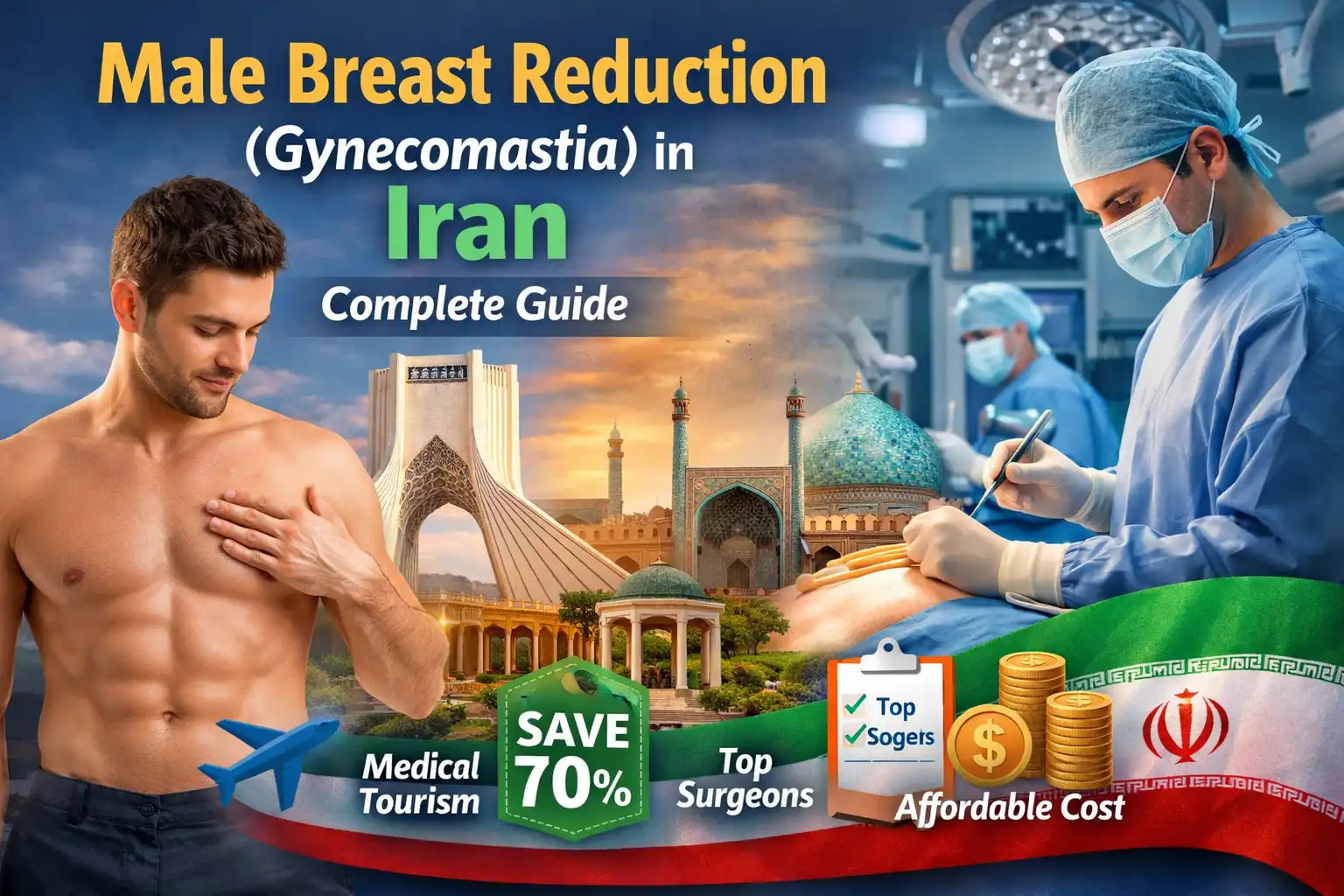
💪 Male Breast Reduction (Gynecomastia) in Iran: Why It’s the Unspoken Capital of Male Surgery
📄 Executive Summary
Gynecomastia, or male breast enlargement, affects millions worldwide. Iran has emerged as a hidden hub for male breast reduction surgeries, combining highly skilled surgeons, affordable costs, and personalized care for international patients. This guide explores why Iran is the go-to destination, outlines the patient roadmap, cost analysis, recovery expectations, and provides practical tips for medical tourists.
🌟 Understanding Male Breast Reduction (Gynecomastia)
Gynecomastia is a condition where men develop excess glandular tissue or fat in the chest, leading to psychological discomfort and social anxiety. Surgery is often the most effective solution when lifestyle changes fail.
🔹 Causes of Gynecomastia
- Hormonal imbalances during puberty or aging
- Obesity and excess chest fat
- Medication side effects (steroids, anti-androgens)
- Genetic predisposition
🔹 Who is This For?
Ideal candidates for male breast reduction include:
- Men with persistent breast enlargement affecting confidence
- Adults with stable weight and good overall health
- Patients seeking minimal scars and natural chest contour
- Individuals open to short-term medical travel for surgery
🩺 Surgical Techniques & Options
Gynecomastia surgery varies depending on severity:
1. Liposuction-Only Technique
Removes excess fat via small incisions. Less invasive, minimal scarring, ideal for mild cases.
2. Excision Technique
Direct removal of glandular tissue through a small incision around the areola. Best for moderate to severe gynecomastia.
3. Combination Approach
Uses liposuction plus excision for optimal contour in larger or fibrous breasts.
✅ Pros & ❌ Cons
| Technique | Pros | Cons |
|---|---|---|
| Liposuction Only | Minimally invasive, fast recovery | Not effective for glandular tissue |
| Excision Only | Complete tissue removal, precise contour | Longer recovery, small scar |
| Combination | Best aesthetic results | Most invasive, slightly longer downtime |
🌐 Why Iran is the Hidden Capital for Male Breast Reduction
- Expert Surgeons: Board-certified plastic surgeons with international training.
- Affordable Costs: 50–70% lower than in the US or Europe.
- Modern Facilities: Accredited hospitals and private clinics.
- Privacy & Comfort: Patient-focused care and discretion.
- Medical Tourism Infrastructure: Streamlined services via WMEDTour Iran Packages.
💰 Cost Analysis Table
| Country | Average Cost | Notes |
|---|---|---|
| USA | $5,000–$8,000 | Private hospitals, insurance may cover partial cost |
| UK | £3,500–£6,500 | High surgeon demand, NHS limited coverage |
| Iran | $1,200–$2,500 | Includes surgeon, hospital, and post-op care |
| Turkey | $2,000–$3,500 | Popular for medical tourism |
🛣️ The Patient Roadmap
- Initial Online Consultation via WMEDTour Telemedicine
- Medical Documentation Review
- Selection of Surgeon & Hospital
- Travel Planning & Accommodation Booking
- Pre-Operative Assessment at hospital
- Surgery & Recovery Guidance
- Follow-Up Consultation (remote or in-person)
WMEDTour assists at each step for a smooth international experience.
🏥 Patient Journey Case Study
Ali, a 32-year-old businessman from Oman, struggled with gynecomastia for 10 years. After online consultation via WMEDTour, he traveled to Tehran. A combination liposuction and excision surgery reshaped his chest. Within 2 weeks, Ali returned to work with improved confidence, minimal scars, and full post-op support from WMEDTour.
🛌 Recovery & Medical Tourism
- Recovery Time: 1–2 weeks for light activity, 4–6 weeks for full activity
- Post-Op Care: Compression garments, pain management, limited exercise
- Tourism: Explore cultural sites in Tehran, Shiraz, or Isfahan during recovery
- Follow-Up: Surgeons provide remote follow-up for international patients
WMEDTour coordinates accommodation and transfers: Air Ambulance and local transport are available.
📊 Comparison Table: Iran vs Other Destinations
| Factor | Iran | USA | Turkey |
|---|---|---|---|
| Cost | Low | High | Medium |
| Surgeon Expertise | High | High | High |
| Hospital Infrastructure | Modern & accredited | Top-tier | Modern |
| Recovery Support | Integrated with tourism | Limited | Moderate |
| Privacy | High | Moderate | High |
⚖️ Medical Disclaimer
All content is for informational purposes only and does not replace professional medical advice. Consult a qualified surgeon before making decisions. Individual results may vary.
❓ Frequently Asked Questions (FAQ)
1. What is gynecomastia surgery?
🩺 What is Gynecomastia Surgery?
Gynecomastia surgery, also called male breast reduction, is a cosmetic procedure designed to remove excess breast tissue in men. It addresses enlarged or uneven male breasts, restoring a flatter, firmer, and more masculine chest.
🔹 Why It’s Done:
Hormonal changes
Weight fluctuations
Genetic predisposition
Certain medications or medical conditions
🔹 Surgical Techniques:
Liposuction: Removes excess fat from the chest.
Excision: Removes firm glandular tissue that liposuction can’t target.
Combination: Many patients benefit from both methods for optimal results.
🔹 Benefits:
Improved chest contour and symmetry
Boosted self-confidence
More comfortable physical activity and clothing fit
✅ Bottom Line:
Gynecomastia surgery is a safe, effective, and often life-changing procedure for men struggling with enlarged breasts, giving a natural and masculine chest appearance.
2. Is Iran safe for this surgery?
Yes. Iran offers accredited hospitals, board-certified surgeons, and patient-oriented services tailored for international patients.
3. How long does the surgery take?
⏱ How Long Does Gynecomastia Surgery Take?
Gynecomastia surgery is generally a straightforward procedure, but the exact duration depends on the technique used and the complexity of the case.
🔹 Typical Surgery Time:
Liposuction-only cases: About 45–90 minutes.
Combined liposuction + gland excision: Usually 1.5–2 hours.
More complex or asymmetrical cases: May take up to 2.5 hours.
🔹 Factors Affecting Duration:
Extent of breast tissue to remove.
Need for skin tightening in older patients.
Surgeon’s technique and experience.
Anesthesia type (local vs. general).
🔹 Efficiency Tip:
Iranian clinics specializing in male breast reduction are known for efficient procedures with high precision, minimizing time under anesthesia and ensuring a smooth recovery.
4. Will I have visible scars?
✂️ Will I Have Visible Scars After Gynecomastia Surgery?
Most men considering gynecomastia surgery are understandably concerned about scarring. The good news is that modern techniques are designed to minimize visible marks.
🔹 Incision Locations:
- Surgeons typically make small incisions around the areola (the dark area around the nipple) or under the chest fold.
- These strategic placements help hide scars naturally in the chest’s contours.
🔹 Appearance Over Time:
- Initially, scars may appear red or slightly raised, which is normal.
- Over 6–12 months, most scars fade to a thin, light line.
- Skin type, healing ability, and post-operative care can affect scar visibility.
🔹 Techniques to Reduce Scars:
- Liposuction-assisted removal leaves only tiny puncture marks.
- Minimal excision techniques reduce the size of incisions.
- Proper post-op care — including compression garments, scar creams, and sun protection — can significantly improve appearance.
✅ Bottom Line:
While gynecomastia surgery does involve incisions, visible scarring is minimal with experienced surgeons in Iran. Most men find that scars are hardly noticeable, especially once fully healed.
5. How much does gynecomastia surgery cost in Iran?
Here’s the same information without any external sources:
💸 Typical Cost of Gynecomastia Surgery in Iran
Male breast reduction (gynecomastia) surgery in Iran is known for being significantly more affordable compared with many Western and Middle‑Eastern countries, while still performed by highly experienced plastic surgeons.
🔹 Cost Range:
• The cost in Iran typically ranges from about $1,000 to $3,000 USD for standard gynecomastia procedures.
• A commonly cited average is around $1,400 – $3,000 USD depending on surgeon, technique, and hospital.
• Some packages that include accommodations, tests, and follow‑up support range up to $2,250 USD or more.
• Prices may be slightly lower or higher in different cities (like Tehran or Shiraz), based on surgeon reputation and hospital fees.
📌 What’s Typically Included:
This price often includes:
✔ Surgeon and hospital fees
✔ Anesthesia
✔ Pre‑operative consultations and tests
✔ Post‑operative care and follow‑up
✔ Compression garments and medications
However, it does not always include travel costs, accommodation, visa fees, or personal expenses — so overall medical tourism budgeting should factor those in.
📉 Why Costs Are Lower in Iran
Iran’s pricing for gynecomastia surgery is generally lower than in the United States, Europe, or the UAE due to:
• Lower cost of living and labor costs
• Competitive private clinic pricing
• A well‑established medical tourism industry that streamlines care for international patients
• Favorable exchange rates for foreign currency users
In comparison:
• The same procedure can cost $6,000 – $10,000+ in the U.S. and $3,000 – $6,000+ in many Western countries, making Iran a cost‑effective option.
Bottom Line:
Iran offers high-quality gynecomastia surgery at a fraction of the cost in many other countries, with typical overall surgical fees starting around $1,000 – $3,000 USD — depending on surgeon experience, hospital choice, and additional services selected.
6. What is the recovery period?
Light activities resume in 1–2 weeks; full activity in 4–6 weeks.
7. Is the surgery painful?
Mild discomfort is normal. Pain is controlled with prescribed medication.
8. Are results permanent?
Yes, the results of Male Breast Reduction (Gynecomastia) surgery are generally permanent—but with some important considerations:
💪 Permanence of Gynecomastia Surgery Results
- Permanent Tissue Removal
- The surgery removes excess glandular tissue and/or fat from the chest.
- Once removed, this tissue does not grow back under normal circumstances.
- Weight and Lifestyle Impact
- Significant weight gain after surgery can cause fat accumulation in the chest area, potentially altering your results.
- Maintaining a healthy lifestyle, diet, and regular exercise is key to long-term results.
- Hormonal Factors
- Gynecomastia caused by hormonal imbalances, medications, or certain medical conditions may recur if the underlying cause is not addressed.
- Regular check-ups and hormone monitoring are recommended for at-risk individuals.
- Age-Related Changes
- Natural aging may slightly affect chest appearance, but the surgical improvement remains largely stable over time.
- Follow-Up Care
- Using compression garments as advised and following post-op care instructions helps maximize permanence.
- Scarring typically fades over months, and chest contouring remains noticeable.
9. Can I travel soon after surgery?
✈️ Traveling After Gynecomastia Surgery
Immediate Post-Op Period (First 1–2 Weeks)
Flying or long-distance travel is not recommended during the first week.
Risk of swelling, discomfort, and complications like blood clots is higher.
You will need rest and close monitoring by your surgeon.
Short Trips After 2 Weeks
Light travel is generally possible after 2 weeks if your surgeon approves.
You may still need to wear your compression garment.
Avoid lifting luggage or engaging in strenuous activity.
Long-Distance or International Travel
Usually safe after 3–4 weeks, depending on your recovery.
Take measures to reduce swelling:
Walk and stretch legs frequently on flights
Stay hydrated
Wear compression garments
Tips for Comfortable Travel
Pack medications, dressings, and a spare compression vest.
Schedule follow-up visits either before or after travel.
Have a plan for local medical care at your destination in case of emergencies.
Consult Your Surgeon
Clearance for travel should always come from your surgeon.
Healing speed varies by individual, type of surgery, and age.
10. How do I choose a surgeon in Iran?
WMEDTour provides verified surgeon profiles and hospital information to help patients select safely.
11. Will insurance cover Male Breast Reduction (Gynecomastia) ?
- Medical necessity: If gynecomastia causes pain, infection, or functional problems, some insurance plans may cover part of the procedure. Documentation from a physician confirming these issues is usually required.
- Cosmetic surgery: If the surgery is purely for aesthetic reasons (to improve chest appearance), most insurance companies do not cover it.
In Iran, as with most countries, gynecomastia surgery is generally considered elective, so patients usually pay out-of-pocket.
It’s recommended to:
- Check your insurance policy for coverage specifics.
- Obtain a physician’s note detailing the medical necessity if applicable.
- Contact your hospital or clinic in advance to understand billing options.
12. What should I expect in post-op care?
After gynecomastia surgery, proper post-operative care is crucial for a smooth recovery and optimal results. Here’s what patients typically experience and should do:
Compression Garments:
You will need to wear a compression vest or band for 4–6 weeks.
This helps reduce swelling, supports the chest contour, and improves healing.
Pain Management:
Mild to moderate discomfort is normal.
Surgeons usually prescribe pain relievers for the first few days.
Over-the-counter medication may be recommended afterward.
Activity Restrictions:
Avoid heavy lifting, intense exercise, or chest strain for 4–6 weeks.
Light walking is encouraged immediately to improve circulation.
Incision Care:
Keep surgical sites clean and dry.
Follow your surgeon’s instructions for dressing changes.
Watch for signs of infection such as redness, warmth, or unusual discharge.
Swelling and Bruising:
Swelling is common for the first 2–3 weeks.
Bruising usually resolves within 1–2 weeks.
Cold compresses may help in the initial days.
Follow-Up Visits:
Attend all scheduled post-op appointments, either in-person or via telemedicine.
Your surgeon will monitor healing and remove any sutures if necessary.
Lifestyle Considerations:
Maintain a stable weight for long-lasting results.
Avoid smoking and alcohol, as they can impair healing.
Expect Gradual Results:
Final chest contour may take 2–3 months to fully settle.
Minor asymmetry or swelling is normal initially.
Emergency Signs:
Seek immediate medical attention if you notice severe pain, excessive bleeding, or signs of infection.
Support Services:
WMEDTour assists international patients with recovery guidance, accommodations, and remote follow-up to ensure comfort and safety during the post-op period.
🔗 Internal & External Resources
- Plastic Surgery Department
- Find Doctors
- Iran Medical Tours
- Contact WMEDTour
- Mayo Clinic – Gynecomastia
- UpToDate – Gynecomastia
- WMEDTour Articles
- WMEDTour FAQ
- About Us
- Hospitals in Iran
- Telemedicine Consultation
- Air Ambulance Short Route
- Plastic Surgery Services
- Body Surgeries
- Breast Surgeries
- Breast Reduction Procedures
- All Locations