❤️ Medical Travel for Heart Patients: The Complete Guide to Planning Your Cardiac Journey 🫀
Navigating the complex world of international cardiac care can feel overwhelming. This guide simplifies every step, from initial consultation to recovery.
📋 Executive Summary: Key Takeaways
Choosing **medical travel for heart patients** is a major decision, but it offers access to specialized care, reduced wait times, and often significant cost savings. Importantly, the process requires meticulous planning, especially regarding documentation and authentication of medical facility credentials. This detailed guide covers key decision points, including selecting the right procedure—such as a Coronary Artery Bypass Grafting (CABG)—understanding associated costs, and managing the post-operative journey. Furthermore, we emphasize the necessity of verifying surgeon expertise and navigating visa requirements early. Patients must focus on securing continuity of care both abroad and upon returning home.
🙋♂️ Who is This For?
This comprehensive guide is written for several key groups. Specifically, it targets individuals recently diagnosed with a serious cardiac condition who are seeking alternative, high-quality, or affordable treatment options globally. This includes patients requiring procedures like valve replacement or complex electrophysiology. Additionally, medical professionals, case managers, and family members supporting a heart patient’s treatment decisions will find this information valuable. Moreover, individuals living in regions with long surgical waitlists or limited access to advanced techniques (like TAVR or robotic surgery) should consider this guide essential reading for effective planning of medical travel for heart patients.
🌍 1. The Landscape of Cardiac Medical Tourism
Cardiac care represents one of the largest segments of the global medical tourism market. Consequently, this growth is driven by rising healthcare costs in Western nations and the simultaneous advancement of medical technology in emerging global health hubs. Medical travel for heart patients is no longer a niche service; it is a critical pathway for thousands seeking timely intervention. Indeed, patients often discover destinations that offer specialized cardiac procedures, such as complex pediatric surgery, that might be unavailable locally. The focus remains squarely on ensuring quality and safety.
1.1. Why Choose to Travel for Heart Treatment?
Several compelling factors motivate heart patients to look abroad for care. Firstly, cost reduction is a primary driver. Procedures like Coronary Artery Bypass Grafting (CABG) or heart valve replacement can cost 50% to 75% less in countries like India, Turkey, and Iran, without compromising standards. Secondly, immediate access to care is vital. Lengthy waiting periods for elective or even necessary surgeries can seriously impact a patient’s prognosis. Therefore, traveling ensures rapid treatment. Thirdly, access to specialized expertise—including highly skilled surgeons trained in minimally invasive techniques—is a significant advantage. For instance, some international centers specialize exclusively in specific, complex procedures, offering superior outcomes.
Sub-Section: The Cost-Quality Equation
The affordability of medical travel for heart patients does not equate to lower quality. In fact, many global hospitals hold prestigious international accreditations, such as those from the Joint Commission International (JCI). This accreditation ensures adherence to rigorous safety and quality standards. Furthermore, these leading hospitals invest heavily in the latest diagnostic and surgical equipment, matching or exceeding the technology found in top Western institutions. The lower cost is typically a reflection of different economic structures, lower operational expenses, and competitive market pricing.
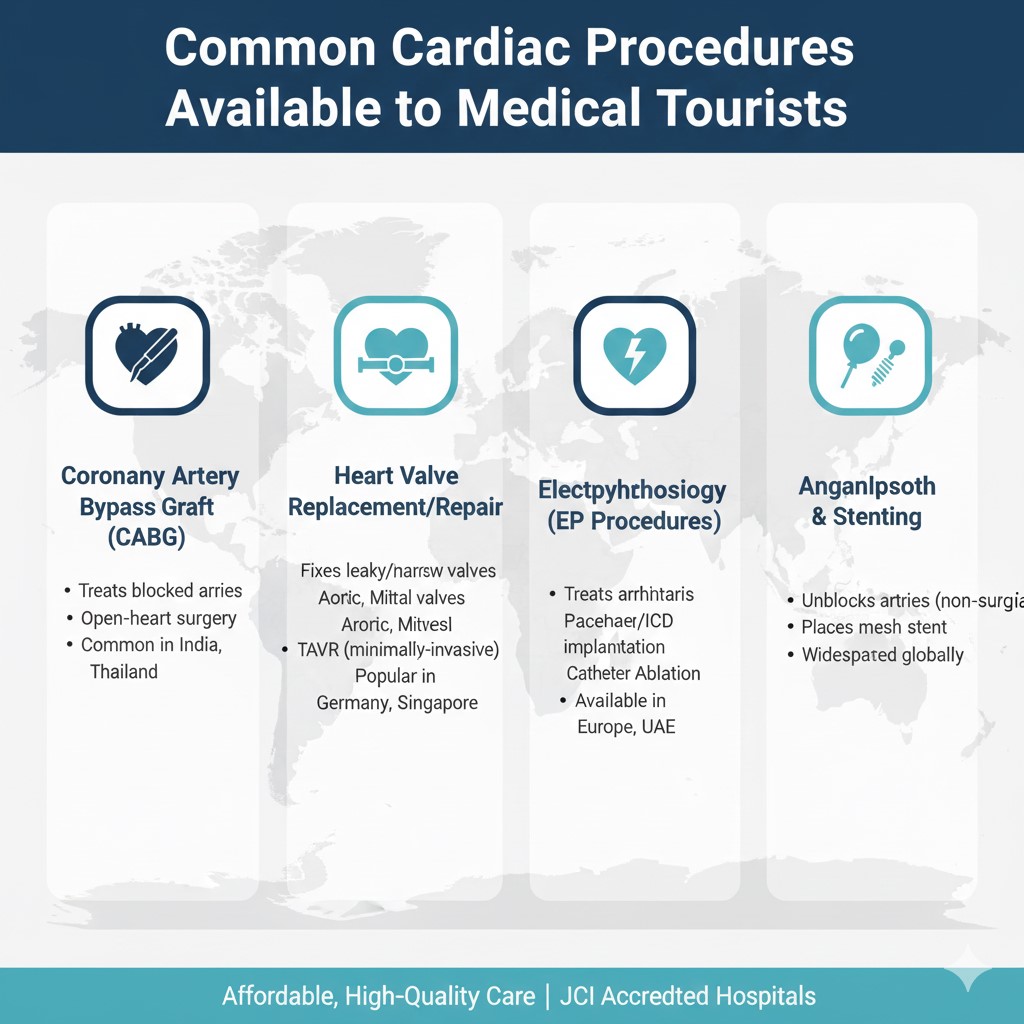
🩺 2. Common Cardiac Procedures Available to Medical Tourists
A wide spectrum of cardiac surgeries and interventions are routinely performed through medical tourism. Indeed, virtually any procedure available locally can be sought overseas. Understanding the options is the next essential step. Patients often seek specialized treatment, reviewing available options on our departments page.
2.1. Open-Heart Surgery vs. Minimally Invasive Procedures
Open-heart surgery remains the gold standard for many complex issues, including severe valve disease and extensive coronary artery disease. However, advancements have paved the way for minimally invasive techniques. Cardiovascular surgery departments globally prioritize techniques that reduce recovery time and minimize scarring.
Coronary Artery Bypass Grafting (CABG) bypass
CABG remains one of the most frequently requested cardiac surgeries by medical tourists. Significantly, the procedure restores blood flow to the heart muscle. Patients often compare costs and expertise across global centers before committing to this critical operation. For more information on the specific process, see our heart bypass surgery guide.
Heart Valve Replacement and Repair ⚙️
This category includes mitral, aortic, and tricuspid valve procedures. Patients may need repair or replacement with mechanical or biological valves. Therefore, deciding between repair and replacement requires careful consultation with experienced surgeons. We provide extensive details on heart valve replacement abroad to assist with informed choices.
Electrophysiology Procedures ⚡
For arrhythmia management, procedures like Catheter Ablation, Pacemaker Placement, and ICD (Implantable Cardioverter-Defibrillator) insertion are common. These interventions are highly effective for correcting irregular heart rhythms, which enhances long-term health. Learn more about these specific methods in our electrophysiology guide.
2.2. Pros and Cons of Cardiac Procedures Abroad
Making a balanced decision for **medical travel for heart patients** involves weighing the potential benefits against the necessary risks and logistical challenges. Consequently, patients should review all factors before proceeding.
| Procedure | Pros of Traveling | Cons/Considerations |
|---|---|---|
| CABG (Bypass) | Significant cost savings (often 50%+). Access to off-pump surgery techniques. Immediate scheduling. | Long recovery period requiring extended stay. Requires comprehensive post-operative care planning. |
| Valve Replacement | Access to specialized minimally invasive valve repair (MIVR). Centers of excellence with high volume. | The need for post-operative anticoagulation monitoring upon return. Selection of valve type (mechanical vs. biological). |
| Angioplasty/Stenting | Quick procedure, minimal recovery time abroad (often days). Highly competitive pricing. | Requires rapid, high-quality follow-up and access to specific drug-eluting stents. |
| Pacemaker/ICD Implant | Expert electrophysiologists. Lower device costs. | Device follow-up and remote monitoring capabilities must be compatible with home healthcare systems. |
🗺️ 3. Navigating the Cardiac Medical Travel Journey
The journey for **medical travel for heart patients** follows a predictable sequence. Initially, patients collect their local medical records. Subsequently, they submit these for international review and get a cost estimate.
3.1. Phase 1: Pre-Departure Planning 📝
Initial Documentation and Consultation
Crucially, start by compiling all medical documents. This includes diagnostic reports, angiography results, and prior treatment summaries. Then, the medical tourism facilitator translates and sends these to potential foreign hospitals. For example, if you require a heart surgery cost estimate, the hospital needs recent test results.
Choosing Your Destination and Provider
Research is paramount. Indeed, look for countries with strong cardiac specialties. Excellent choices include Turkey and India, offering high-volume centers and competitive prices. We offer guidance on finding the best country for open heart surgery. Furthermore, always use our checklist for choosing a surgeon or clinic to vet the provider’s credentials carefully.
Logistics and Visa Requirements
Arranging travel logistics and securing the correct travel documents is time-sensitive. Specifically, patients often require a medical visa. Consult our definitive patient handbook on medical visas for detailed requirements. Additionally, book accommodation for both the procedure and the mandatory local recovery period.
3.2. Phase 2: Treatment and Recovery Abroad 🏨
Upon arrival, the patient typically undergoes a thorough pre-operative check-up. This confirms the suitability for the planned cardiac procedure. Subsequently, the surgery takes place, followed by a critical period in the ICU and then a transition to a standard room. This entire process is closely monitored by the dedicated medical team.
Immediate Post-Operative Care
Hospital stays for major cardiac surgery, such as CABG, usually last between seven to ten days. Crucially, the immediate post-operative phase focuses on stabilizing the patient, managing pain, and starting early mobilization. Moreover, patient education about incision care and warning signs is initiated during this phase.
Local Rehabilitation and Monitoring
After hospital discharge, the patient must remain in the medical destination for an additional one to three weeks. This period allows for essential follow-up appointments and the start of phase one cardiac rehabilitation. For example, a patient recovering from a heart attack and subsequent surgery benefits immensely from localized rehabilitation services. This local stay ensures that the surgeon is readily available for any immediate concerns. Medical travel for heart patients must always include this buffer period.
3.3. Phase 3: Return and Long-Term Follow-up ✈️
The successful completion of the trip hinges on seamless transition of care. Therefore, before leaving the foreign country, obtain a complete set of medical records. This documentation must clearly detail the procedure, any discharge medications, and specific instructions for ongoing care.
Bridging the Care Gap
Importantly, schedule an appointment with your local cardiologist immediately upon returning home. They must review the foreign records and assume responsibility for long-term monitoring and cardiac rehabilitation. Consequently, patients must ensure their foreign hospital provides copies of all post-operative imaging, laboratory results, and a discharge summary. This prevents continuity-of-care issues.
The Importance of Check-ups
Even after successful surgery, regular health checks are mandatory. Consider reviewing our checkup department options for preventative screenings. Indeed, post-surgical life requires adherence to medication and lifestyle changes. Patients must fully commit to their recovery plan for the best long-term outcomes.
📍 4. Top Destinations for Cardiac Medical Tourism
Selecting the right country is fundamental to the success of **medical travel for heart patients**. While many options exist, a few countries consistently stand out due to their advanced infrastructure, renowned specialists, and high-quality outcomes. Patients should explore country-specific guides to make an informed choice.
4.1. Turkey: A European-Standard Hub 🇹🇷
Turkey has positioned itself as a global leader, particularly in cardiac surgery. Specifically, Istanbul and Ankara boast numerous JCI-accredited hospitals with state-of-the-art cardiovascular departments. Consequently, patients benefit from highly skilled surgeons and competitive pricing for procedures like valve repair and heart transplants. We provide a comprehensive ultimate guide to medical travel in Turkey. The robust infrastructure supports the entire medical tourism ecosystem effectively.
4.2. India: The Cost-Effectiveness Champion 🇮🇳
India remains the benchmark for affordable, high-quality cardiac care, offering significant cost savings. Moreover, Indian hospitals frequently handle enormous volumes of complex cases, including pediatric cardiac surgery and CABG. Additionally, the widespread use of English facilitates easier communication between patients and medical staff. Patients can learn more in-depth by reviewing specific offerings, such as our cardio-thoracic surgery packages in India.
4.3. Iran: Emerging Excellence and Affordability 🇮🇷
Iran is quickly gaining recognition for complex, low-cost cardiac procedures, including heart bypass and angiography. Indeed, Iranian surgeons are highly experienced in various cardiac specialties, offering world-class care at highly competitive rates. For more detailed information, consult the medical travel Iran visa guide. Therefore, Iran presents a compelling option for those seeking both quality and exceptional value. Specific cost details, like those for heart bypass surgery in Iran, highlight the substantial savings available.
👨🦳 5. Hypothetical Patient Journey: David’s CABG Experience
David, a 62-year-old patient from Canada, required urgent CABG surgery but faced a ten-month waiting list locally. He was concerned about the delay and his increasing symptoms. Consequently, he decided to pursue **medical travel for heart patients** through a facilitator.
5.1. The Pre-Travel Phase: Speed and Clarity
David submitted his angiography reports and medical history via our platform. Within 48 hours, he received three confirmed quotes and treatment plans from JCI-accredited hospitals in Turkey. The quoted cost, including travel and accommodation, was less than one-third of the estimated private cost in Canada. Furthermore, a virtual consultation with the cardiologist and surgeon confirmed his need for immediate intervention. David secured his medical visa swiftly using the hospital’s invitation letter.
5.2. Treatment and Recovery: World-Class Care
Upon arrival, David and his wife were met by a patient coordinator. The CABG surgery was performed three days later by a surgeon with over 5,000 successful procedures. Subsequently, David spent eight days recovering in the hospital. The nursing care and rehabilitation support were exceptional, offering personalized attention. He remained in a serviced apartment in Istanbul for two additional weeks to attend follow-up scans and commence physical therapy.
5.3. Transition Home: Continuity Ensured
Before departing, David received a sealed dossier of all his clinical data, including video footage of the bypass procedure and a detailed summary for his Canadian physician. Therefore, when he returned home, his local cardiologist seamlessly transitioned his care plan. David’s experience demonstrated the high-quality, expedited, and cost-effective nature of planned **medical travel for heart patients**.
💰 6. Financial Planning, Costs, and Quality Assurance
Cost is a primary motivator, yet patients must prioritize quality assurance and transparency above all. Consequently, request an itemized quote that clearly separates the hospital fee, surgeon fee, device costs (e.g., stents, valves), and accommodation. Reviewing the global medical tourism guide helps set realistic budget expectations.
6.1. Analyzing Cardiac Surgery Costs 💲
Cardiac surgery costs vary wildly. For instance, a simple angiography might cost $5,000 in one country and $500 in another. Heart surgery costs are often the most unpredictable locally. Therefore, always negotiate a package price that includes pre-operative tests, the surgery itself, ICU stay, medications, and primary recovery accommodation. This package approach minimizes unexpected fees.
Nofollow Authority Links
The global standard for cardiac care relies on evidence-based medicine. Furthermore, recent studies from academic institutions emphasize the importance of high-volume centers for superior outcomes in complex cardiac interventions. (Source: Harvard University Cardiology Research). Additionally, research confirms that mortality rates for CABG decline significantly when performed by surgeons completing a high annual number of procedures. (Source: Stanford Medicine Cardiac Outcomes).
Normal Authority Links
Choosing the right destination for **medical travel for heart patients** should involve a detailed look at governmental regulation and patient safety data. Importantly, patients should be aware of the international protocols that govern complex procedures, such as those related to heart valve replacement. (Refer: Oxford University International Health Standards).
6.2. The Role of the Facilitator
A medical tourism facilitator, like Wmedtour, acts as a crucial liaison. They handle initial consultations, price negotiation, translation services, and the organization of travel and accommodation. Moreover, their expertise minimizes risks by directing you towards accredited, trusted providers. Thus, they streamline the entire process, making medical travel for heart patients significantly less stressful. Patients should check our FAQ page for common questions about our services.
Final Pre-Departure Checklist
- Final Confirmation: Obtain a signed treatment plan and cost breakdown from the foreign hospital.
- Insurance: Confirm that travel and/or medical complications insurance is valid for the destination country.
- Emergency Contacts: Have the foreign hospital and facilitator’s contact information readily available.
- Medications: Carry sufficient supplies of all current heart medications in original packaging, along with a doctor’s prescription.
❓ 7. Frequently Asked Questions (FAQ)
These are some of the most common questions regarding **medical travel for heart patients** that are not covered in the main body of our portal documentation.
Q1: How long is the typical total stay abroad for major cardiac surgery, like open-heart bypass?
A: The total time required is generally three to four weeks. This includes about seven to ten days in the hospital for the surgery and initial recovery, followed by two to three weeks locally for mandatory check-ups and early rehabilitation before it is safe to fly home.
Q2: What medical documents are most important to share initially?
A: The most critical documents are recent angiography or CT scan reports, detailed discharge summaries from any prior hospitalizations, and a comprehensive list of all current medications, including dosages. These allow for accurate diagnosis and tailored treatment planning.
Q3: Can a patient travel alone for cardiac treatment?
A: It is strongly advised that patients undergoing major cardiac surgery or intervention travel with a companion. The post-operative period requires assistance with mobility, medication management, and general support, especially during the first two weeks of recovery outside the hospital.
Q4: What are the main risks associated with flying after heart surgery?
A: The primary risks associated with flying too soon are deep vein thrombosis (DVT) due to immobility and potential wound complications due to pressure changes. Patients must wait at least 10 to 14 days post-surgery, with the surgeon’s explicit clearance, and wear compression stockings for protection.
Q5: How can I verify the accreditation of the foreign hospital?
A: You should verify the hospital’s status directly on the Joint Commission International (JCI) website. If they hold other international certifications, check those registries as well. Furthermore, facilitators should provide official documentation of the hospital’s current accredited status.
Q6: Are my local health insurance benefits usable when traveling abroad for cardiac surgery?
A: Typically, standard local health insurance (like governmental programs or HMOs) does not cover elective care sought outside the home country. You generally need to arrange specialized medical tourism or travel insurance that explicitly covers medical complications abroad.
Q7: What non-surgical services should be included in the medical travel package?
A: Essential non-surgical services include airport transfers, ground transportation for all hospital appointments, professional medical translation services, and the arrangement of high-quality, long-term recovery accommodation (like a serviced apartment).
Q8: How does the quality of cardiac implants (stents, valves) compare internationally?
A: Top international hospitals typically use implants and devices from the same globally recognized brands (e.g., Medtronic, St. Jude Medical) used in Western countries. Patients should confirm the specific brand and model being used before the procedure.
Q9: What is the estimated cost difference for a simple angiography abroad compared to the US or UK?
A: An angiography can cost between $15,000 and $30,000 in the US/UK. The same procedure in high-value medical tourism destinations like Turkey or India often ranges from $1,500 to $4,000, representing substantial savings.
Q10: Should I use a different local pharmacy abroad for filling prescriptions?
A: You should only use the hospital’s in-house pharmacy or a reputable pharmacy recommended by the hospital coordinator. This ensures the correct, authentic version of critical cardiac medications, such as blood thinners, is dispensed.
Q11: What is the optimal time frame for planning medical travel for heart patients?
A: For elective but urgent surgery, planning should ideally begin 4 to 8 weeks before the intended travel date. This allows sufficient time for physician consultation, visa processing, and detailed logistic arrangements.
Q12: Does the foreign hospital assist with rehabilitation scheduling upon return home?
A: While the foreign hospital manages the initial rehabilitation phase, they typically provide a detailed prescription for Phase II/III cardiac rehab. Patients are responsible for scheduling and executing that plan with their local cardiologist and physical therapy providers.
Planning your cardiac care journey abroad requires a trusted partner. Explore our full list of doctors and global locations to begin your secure, high-quality treatment plan today.