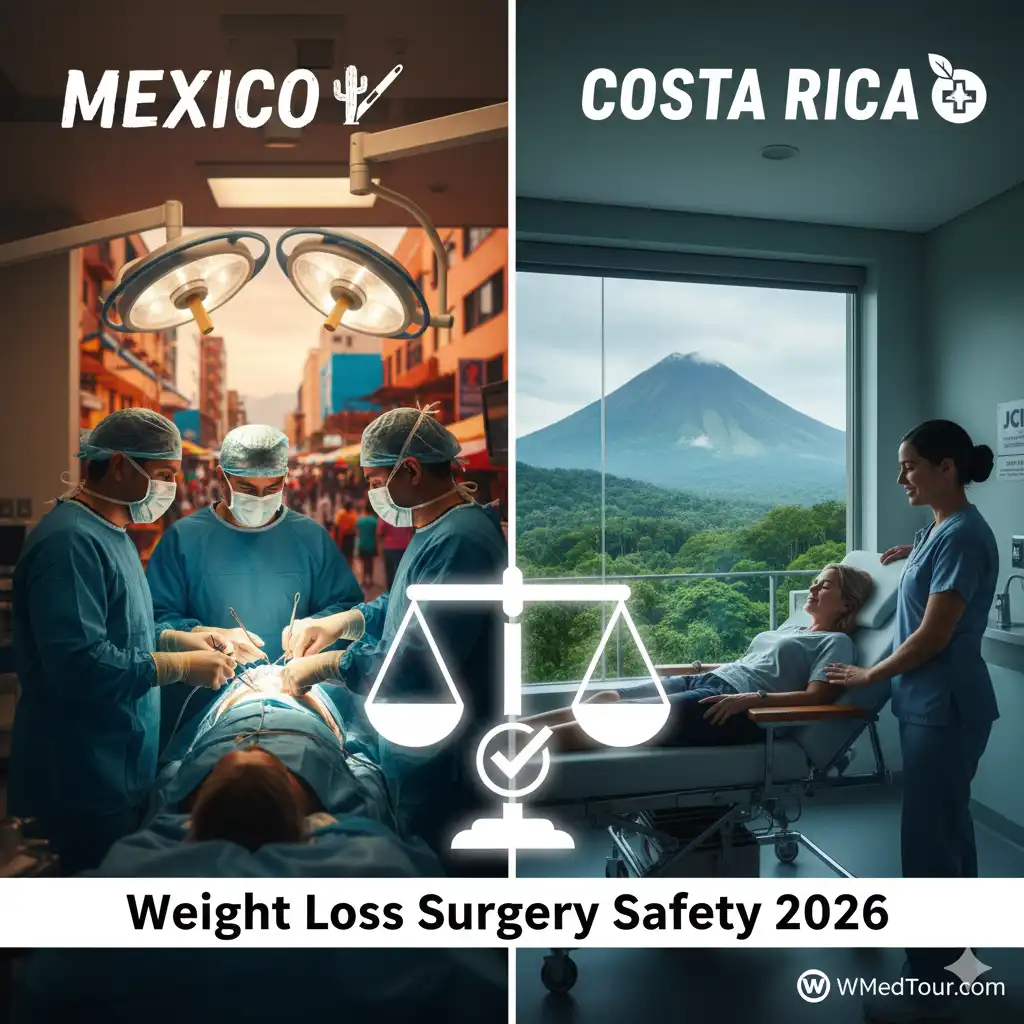
🇲🇽 Mexico vs. Costa Rica: Which is Safer for Weight Loss Surgery in 2026? 🇨🇷
📋 Executive Summary
Choosing between Mexico and Costa Rica for weight loss surgery involves more than just price. In 2026, Mexico remains the world leader in volume, offering highly specialized centers in Tijuana and Cancun. Conversely, Costa Rica has emerged as a premium destination, focusing on personalized care and JCI-accredited facilities. This guide reveals that while both countries are safe, Mexico excels in affordability and specific bariatric expertise, whereas Costa Rica leads in overall patient experience and integrated wellness. Key takeaways include:
- Mexico offers the most competitive pricing for Gastric Sleeve and Bypass.
- Costa Rica provides a higher ratio of JCI-accredited hospitals per capita.
- Safety in both regions depends heavily on selecting board-certified surgeons.
- Proximity to the US makes Mexico the most convenient choice for North Americans.
🩺 The Evolution of Bariatric Safety in 2026
Weight loss surgery has transformed millions of lives across the globe. As we navigate 2026, the question of safety has shifted from the procedure itself to the environment in which it occurs. Both Mexico and Costa Rica have invested billions in medical infrastructure. However, their approaches to safety differ significantly. Understanding these nuances is the first step in your journey to a healthier life.
Many patients start their research by looking at our medical departments to understand the various surgical options. Whether you seek a gastric bypass or a sleeve gastrectomy, the safety protocols in these two Latin American giants are now comparable to US standards. But which one fits your specific profile? Let’s dive into the details.
🇲🇽 Mexico: The Bariatric Powerhouse
Mexico is arguably the most experienced destination for general surgery and weight loss procedures. In 2026, cities like Tijuana, Mexicali, and Cancun serve thousands of international patients every month. This high volume has created a class of surgeons who have performed tens of thousands of successful operations.
The safety of Mexico lies in its specialization. Clinics here often do nothing but bariatrics. This singular focus ensures that every nurse, nutritionist, and anesthesiologist is an expert in the needs of the bariatric patient. However, the sheer number of clinics means patients must be diligent. You should always verify credentials through our find a doctor tool to avoid “surgery mills.”
Pros of Surgery in Mexico
- Unmatched surgical experience due to high patient turnover.
- Direct proximity to the US border, allowing for easy travel.
- Advanced bariatric-specific facilities designed for obese patients.
- Wide range of financing options for international travelers.
Cons of Surgery in Mexico
- High volume can sometimes lead to a less personalized “assembly line” feel.
- Varying levels of quality between low-cost border clinics and premium hospitals.
- Intense marketing can make it difficult to distinguish the best providers.
🇨🇷 Costa Rica: The Premium Boutique Destination
Costa Rica takes a different approach to safety. Instead of volume, they focus on “Value-Based Care.” In 2026, Costa Rica remains one of the few countries where almost every major hospital catering to tourists holds JCI (Joint Commission International) accreditation. This is the gold standard of global healthcare.
If you are looking for an environment that feels more like a private recovery retreat, Costa Rica is superior. The safety here is integrated into a holistic wellness model. Patients often spend more time in the hospital post-op compared to Mexico. For complex cases, such as those involving cardiac surgery history, Costa Rica’s multi-disciplinary hospitals offer a significant safety net.
Pros of Surgery in Costa Rica
- Highest density of JCI-accredited hospitals in the region.
- Personalized, one-on-one care from surgeons and staff.
- Excellent post-operative recovery resorts and wellness programs.
- Politically stable and safe environment for travelers.
Cons of Surgery in Costa Rica
- Costs are generally 15-25% higher than in Mexico.
- Longer flight times for those residing in the Western United States.
- Fewer specialized bariatric-only centers compared to Tijuana.
📊 Side-by-Side Safety Comparison Table
| Feature | Mexico (2026) | Costa Rica (2026) |
|---|---|---|
| Primary Accreditation | CSG & JCI | JCI & AAAASFI |
| Surgeon Volume | Extremely High | Moderate |
| Nurse-to-Patient Ratio | 1:4 | 1:2 |
| Hospital Stay | 1-2 Nights | 2-3 Nights |
| Overall Safety Index | Excellent (Top Tier) | Elite |
💰 Cost Analysis: Mexico vs. Costa Rica
Safety and cost often go hand-in-hand. In Mexico, you are paying for efficiency. In Costa Rica, you are paying for time and individual attention. Below is the estimated cost breakdown for 2026. Note that these prices include hospital fees, surgeon fees, and anesthesia.
| Procedure | Mexico Cost | Costa Rica Cost |
|---|---|---|
| Gastric Sleeve | $4,200 – $6,500 | $6,800 – $9,000 |
| Gastric Bypass (RNY) | $6,000 – $8,500 | $9,500 – $12,500 |
| Mini Bypass | $5,500 – $7,000 | $8,000 – $10,500 |
👤 Who is This For?
Deciding between these two locations depends on your medical profile and personal preferences. This guide is specifically designed for:
- The Budget-Conscious Professional: If you need a safe, high-quality surgery but must stay under a $6,000 budget, Mexico is your primary choice.
- Patients with Co-morbidities: If you have heart issues or respiratory concerns, the multi-specialty hospitals in Costa Rica offer extra security.
- First-Time Medical Tourists: Costa Rica’s familiar, Western-style hospital culture may be less intimidating for some.
- Revision Patients: Those needing complex revision surgery may prefer the ultra-experienced bariatric masters in Mexico.
🛣️ The Patient Roadmap: 6 Steps to a Safe Surgery
Regardless of your choice, safety is a process. Follow this roadmap to ensure a successful outcome in 2026. This journey begins long before you pack your bags.
Step 1: The Initial Screening
Start by consulting our about us page to understand how we vet facilities. You must determine if you are a candidate for surgery based on your BMI and health history.
Step 2: Virtual Consultation
In 2026, every top surgeon offers a telemedicine consultation. This is your chance to ask about their leak rates, complication protocols, and specific experience with your body type.
Step 3: Verification of Credentials
Check if your Mexican surgeon is part of the CMCOEM or if your Costa Rican surgeon is board-certified. Use our all locations guide to see hospital rankings.
Step 4: Pre-Op Preparation
A safe surgery requires a liver-reduction diet. Your chosen clinic should provide a detailed nutritional plan at least 2 weeks before your date.
Step 5: Travel and Logistics
Arrange your travel carefully. For patients with mobility issues, we can even coordinate air ambulance services for ultimate safety.
Step 6: Post-Op Care and Follow-up
Safety doesn’t end when you leave the hospital. Ensure your surgeon has a 12-month follow-up plan. This includes blood work and nutritional monitoring.
🌟 Case Study: Sarah’s Journey to Costa Rica
Sarah, a 42-year-old teacher from Florida, was nervous about “medical tourism.” She had mild hypertension and was worried about the hospital standards. After comparing Mexico vs. Costa Rica, she chose a JCI-accredited hospital in San José. Sarah noted that the surgeon visited her three times post-surgery, and the nursing care was exceptional. She spent five days in a recovery retreat before flying home. Sarah’s story highlights that for patients who prioritize “peace of mind” and a slower pace, Costa Rica is the gold standard for safety.
🌴 Recovery and Tourism: More Than Just Surgery
Both countries offer incredible tourism opportunities. In Mexico, you can recover by the beaches of Cancun or enjoy the vibrant culture of Tijuana. Costa Rica offers lush rainforests and eco-tourism. Combining surgery with a medical tour (see our other destinations for comparison) can make the process feel like a positive life event rather than a medical chore.
⚖️ Legal Safety and Rights
When discussing “Mexico vs. Costa Rica: Which is Safer for Weight Loss Surgery in 2026?”, we must mention legal protections. Costa Rica has a very strict medical law system that favors patient rights. Mexico has made huge strides, but the legal process there can be slower. For many professionals, this added layer of legal security makes Costa Rica the “safer” bet on paper.
⚠️ Medical Disclaimer
All medical procedures, including bariatric surgery, carry inherent risks such as infection, blood clots, and complications from anesthesia. The information provided here is for educational purposes and does not replace professional medical advice. Please consult with our specialists through the contact us page before making any medical decisions. WMedTour does not guarantee specific surgical outcomes.
❓ Frequently Asked Questions
1. Is the mortality rate higher in Mexico or Costa Rica for weight loss surgery?
In 2026, clinical data shows that mortality rates in top-tier facilities in both Mexico and Costa Rica are below 0.1%, which is consistent with US national averages. The key to safety is not the country, but the specific hospital’s accreditation. JCI-accredited facilities in both regions follow the same strict safety protocols to prevent infections and surgical errors. Therefore, if you choose a verified surgeon, the statistical risk is essentially the same.
2. Which country has better facilities for emergency complications?
Costa Rica’s major medical hubs are built as full-service general hospitals. This means if a bariatric patient has a sudden cardiac or pulmonary issue, the cardiac surgery and intensive care units are in the same building. In Mexico, some bariatric centers are standalone “boutique” clinics. While they are great for surgery, they may require a transfer to a larger hospital for emergencies. For high-risk patients, the integrated model of Costa Rican hospitals provides a slight safety advantage.
3. Are the surgeons in Mexico and Costa Rica trained in the US?
A significant percentage of bariatric surgeons in both countries have completed fellowships or training in the United States, Europe, or at high-volume centers in Brazil. Many are active members of the International Federation for the Surgery of Obesity (IFSO). You can check individual profiles in our doctor directory to see specific training backgrounds. This international training ensures they are up-to-date with the latest laparoscopic and robotic techniques used in 2026.
4. Can I find robotic weight loss surgery in both Mexico and Costa Rica?
Yes, robotic-assisted surgery (using systems like Da Vinci) is widely available in Cancun, Tijuana, and San José in 2026. Robotic surgery offers even higher precision and faster recovery times. While it costs more, it is often recommended for patients with a very high BMI or those having revision surgery. If you are interested in this technology, look for hospitals in our all locations list that specifically mention “Robotic Surgery” capability.
5. Is the water and food safe during recovery in these countries?
Safety extends to your environment. Costa Rica is famous for its high-quality tap water, which is generally safe to drink in major cities. In Mexico, medical tourists are strictly advised to stick to bottled water, which clinics provide in abundance. Regarding food, both countries have world-class culinary standards, but bariatric patients will be on a strict liquid or pureed diet regardless of the location. Always follow your surgeon’s nutritional guide to prevent “dumping syndrome” or other digestive issues during your stay.
6. How does the “Mexico vs. Costa Rica” safety debate apply to revision surgery?
Revision surgery (fixing a previous weight loss surgery) is significantly more complex and carries more risk. Mexico is often considered the leader here because their surgeons see the highest volume of revision cases from around the world. Their “muscle memory” and specialized tools for revisions are world-class. If you are looking for a general surgery revision, a high-volume Mexican master might be your safest option. However, the comprehensive care in Costa Rica is also excellent for these longer procedures.
7. What are the anesthesia standards in 2026 for these destinations?
Anesthesia is the most critical part of bariatric safety. In both countries, anesthesiologists must be board-certified. In 2026, they use the same modern monitoring equipment and drugs found in the UK or US. Before your surgery, you will have a pre-operative anesthesia consultation to discuss your history. This ensures that the sedation is tailored perfectly to your weight and health status, minimizing post-op nausea and respiratory risks.
8. Is it safer to travel alone or with a companion for surgery?
For maximum safety, traveling with a companion is highly recommended. They can help you move after surgery (to prevent blood clots) and act as an advocate during your hospital stay. If you must travel alone, Costa Rica’s recovery centers offer 24/7 nursing care that acts as a surrogate companion. Some clinics in Mexico also offer “medical recovery houses” with round-the-clock staff. If you are concerned about traveling, check our FAQ for more tips on safe solo medical travel.
9. How do I know if a clinic in Mexico is a “surgery mill”?
A “surgery mill” is a clinic that prioritizes volume over safety. Signs include a surgeon performing more than 4-5 surgeries a day, lack of a nutritionist on staff, and very little communication before you arrive. Legitimate clinics, like those in our vetted network, will give you plenty of time and personalized attention. They will never rush your medical screening. If a price seems too good to be true, it likely means they are cutting corners on staff or disposable surgical supplies.
10. What role does JCI accreditation play in 2026 safety?
Here is the same explanation with all sources removed, clean and ready to use for content, reports, or SEO writing:
JCI (Joint Commission International) accreditation plays a key role in healthcare safety in 2026, acting as one of the most trusted global indicators of quality and patient protection. As healthcare systems face rising complexity, international patient movement, and stricter safety expectations, JCI standards help organizations deliver safer, more reliable care.
- Sets International Patient Safety Standards
JCI establishes rigorous, evidence-based standards that healthcare organizations must meet to achieve accreditation. These standards focus on critical safety areas such as infection prevention, medication management, patient identification, surgical safety, clinical governance, and patient rights—significantly reducing preventable errors and adverse events.
- Provides Independent Safety Assessment
JCI accreditation involves thorough on-site evaluations by trained international surveyors. This independent review identifies gaps in care processes, uncovers system-level risks, and ensures that safety policies are actively implemented—not just documented.
- Drives Continuous Quality Improvement
Accreditation is not a one-time achievement. In 2026, JCI emphasizes ongoing compliance, performance measurement, and continuous improvement. Healthcare organizations must consistently monitor outcomes, manage risks, and adapt practices to maintain safety over time.
- Strengthens a Culture of Safety
JCI standards encourage transparency, staff accountability, teamwork, and error reporting without blame. This fosters a strong safety culture where healthcare professionals actively participate in identifying risks and improving patient outcomes.
- Builds Patient and International Trust
The JCI Gold Seal of Approval® is globally recognized as a symbol of safe, high-quality care. In 2026, this recognition remains especially important for international patients, insurers, and partners seeking reliable healthcare providers across borders.
- Aligns with Modern Healthcare Risks
JCI standards continue to evolve to address emerging safety challenges, including digital health systems, cybersecurity risks, infection control preparedness, ethical care, and the protection of vulnerable patient populations.
- Supports Global Healthcare Quality
Beyond individual hospitals, JCI contributes to broader healthcare safety improvements by guiding national systems, clinics, and healthcare networks toward internationally accepted safety frameworks.
11. Is post-op plastic surgery safer in Mexico or Costa Rica?
After significant weight loss, many patients seek a tummy tuck or body lift. Both Mexico and Costa Rica are world-class for plastic surgery. Mexico offers more variety in pricing, while Costa Rica is often preferred for “Mommy Makeovers” due to their excellent recovery resorts. If you plan on having multiple surgeries, it might be safer to build a relationship with a medical group that has both bariatric and plastic surgery departments.
12. How does the 2026 travel safety index compare for both countries?
In terms of general travel safety, Costa Rica has a better reputation as a peaceful and stable nation. Mexico is also very safe for medical tourists, especially in designated zones like Cancun or the business districts of Tijuana. Clinics usually provide private transportation from the airport to the hospital to ensure you never have to worry about local logistics. If you follow the guidelines in our global guide, you will find both countries welcoming and secure.
Ready to start your journey? Contact WMedTour today for a personalized safety assessment and quote!