✨ Minimally Invasive Cystocele Options: Faster Recovery and Less Scarring in Global Medical Centers
📝 Executive Summary
This comprehensive guide explores the best Minimally Invasive Cystocele Options available globally. Cystocele, a common pelvic organ prolapse, no longer demands extensive open surgery. Consequently, modern techniques prioritize smaller incisions, reduced post-operative pain, and significantly faster return to daily activities. We detail leading procedures like Laparoscopic and Robotic Sacral Colpopexy (LSC/RSC) and various transvaginal mesh-free repairs.
Importantly, leading medical tourism destinations like Iran and Turkey are excelling in these advanced procedures, often offering world-class care at a fraction of the cost found in Western nations. Understanding these options empowers you to make an informed decision for quicker, less invasive treatment.
A cystocele occurs when the supportive tissue between a woman’s bladder and vaginal wall weakens, allowing the bladder to prolapse or bulge into the vagina. This condition is also commonly called a prolapsed bladder. Historically, repair required large incisions, resulting in painful, lengthy recoveries. However, contemporary surgical advancements focus almost entirely on Minimally Invasive Cystocele Options. These techniques drastically improve patient outcomes. Therefore, it is crucial to understand the available procedures, especially when seeking treatment in global medical centers.
🔬 Understanding Cystocele and the Need for Minimally Invasive Options
Cystoceles vary in severity, ranging from mild (Grade 1) to severe (Grade 3 or 4). Symptoms often include a sensation of fullness or pressure in the pelvis, difficulty urinating, and sometimes urinary incontinence. For a detailed guide on the condition itself, you can explore our resource: Cystocele Ultimate Guide.
Significantly, surgery becomes necessary when non-surgical treatments, like lifestyle changes or the use of a pessary, fail to relieve bothersome symptoms. Consequently, the goal of modern surgery is to restore normal anatomy and function with the least amount of trauma to the patient. This emphasis explains the widespread adoption of Minimally Invasive Cystocele Options across global health systems.
The Shift to Smaller Incisions and Quicker Healing
Traditional open surgery, known as anterior colporrhaphy, often involved a larger abdominal or vaginal incision. Subsequently, this led to longer hospital stays, increased pain medication requirements, and extended time away from work. Conversely, minimally invasive approaches, particularly laparoscopic and robotic methods, utilize several tiny incisions. Consequently, this surgical evolution provides distinct advantages, including less blood loss, lower infection risk, and a far more aesthetically pleasing outcome due to minimal scarring. Therefore, patients actively seek out clinics specializing in these advanced, recovery-focused techniques.
⚙️ Core Minimally Invasive Cystocele Options
Globally, surgeons favor several key minimally invasive techniques for cystocele repair. Each method offers unique benefits based on the patient’s specific anatomy and overall health. We will examine the most prominent surgical avenues here.
1. Laparoscopic and Robotic Sacral Colpopexy (LSC/RSC)
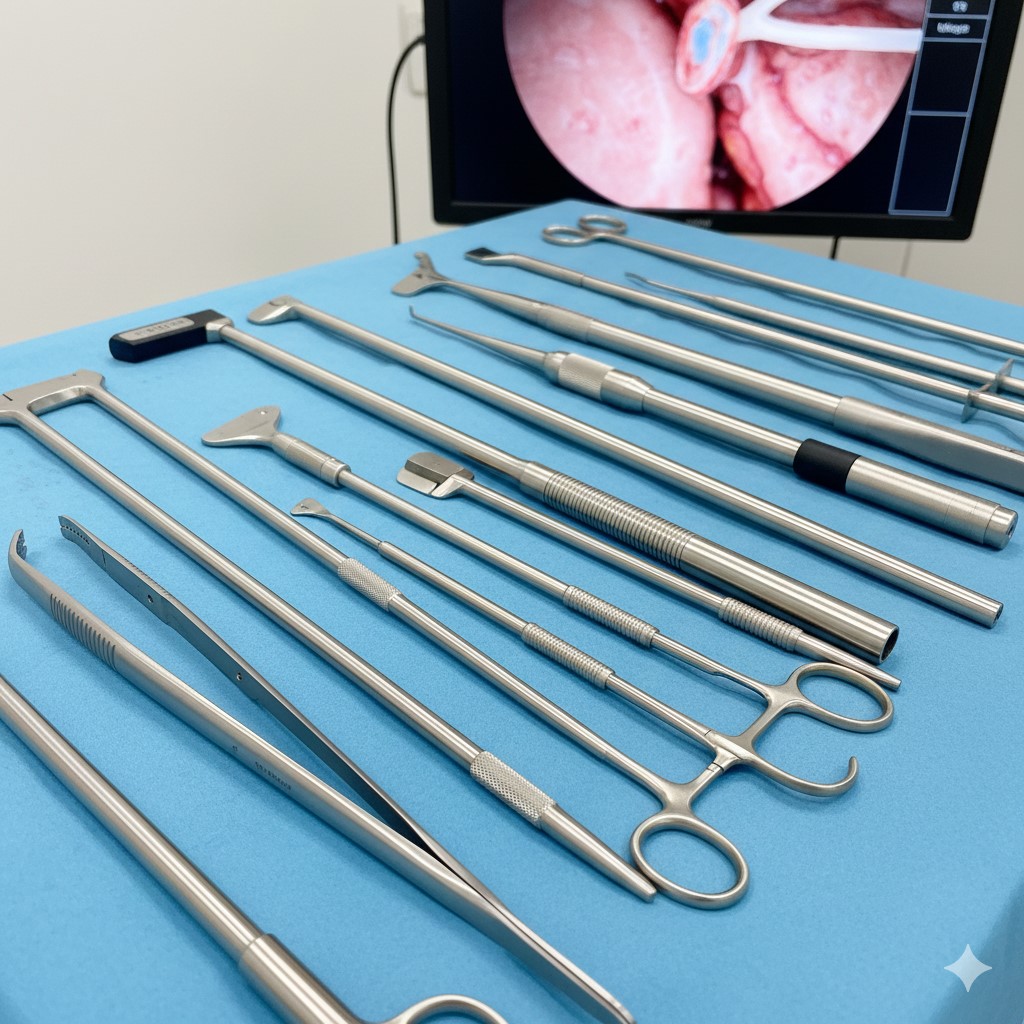
The sacrocolpopexy procedure is widely regarded as the gold standard for long-term prolapse repair. The minimally invasive versions, LSC and RSC, are performed through small abdominal incisions. Furthermore, surgeons use specialized instruments and often employ a surgical robot to attach a synthetic mesh to the front and back of the vaginal apex (top of the vagina), securing it to the sacrum (tailbone). This provides extremely strong, long-lasting support.
➕ Pros of Robotic/Laparoscopic Sacral Colpopexy
- ✅ Durability: Offers the highest anatomical success rates for long-term support.
- ✅ Precision: The robotic system provides a magnified, 3D view and greater dexterity for the surgeon.
- ✅ Minimal Scarring: The procedure uses small keyhole incisions.
- ✅ Function: Effectively preserves vaginal length and function.
➖ Cons of Robotic/Laparoscopic Sacral Colpopexy
- ❌ Complexity: Requires highly specialized training and expensive equipment.
- ❌ Mesh: Involves the use of surgical mesh, which carries a small, well-documented risk of erosion (though lower than transvaginal mesh).
- ❌ Cost: Generally more expensive than transvaginal approaches in many Western centers, though more affordable in countries like Iran.
2. Transvaginal Mesh-Free Repair (Native Tissue Repair)
This approach uses the patient’s own tissue (native tissue) to reinforce the weakened vaginal wall. Specifically, the surgeon accesses the area through a small incision within the vagina, thereby avoiding any abdominal incisions or external scarring. Moreover, this procedure avoids synthetic materials altogether, making it a viable option for patients concerned about mesh complications. Consequently, the recovery is often faster than abdominal approaches, though recurrence rates can sometimes be slightly higher. Therefore, many surgeons combine this repair with other supportive procedures, such as those related to urinary incontinence, which you can learn about here.
➕ Pros of Native Tissue Repair
- ✅ No Mesh: Eliminates the risk of mesh erosion or related complications.
- ✅ Faster Immediate Recovery: Generally results in a quicker return to light activities.
- ✅ Lower Cost: Typically less costly than robotic procedures.
- ✅ Natural Feel: Uses existing tissue for repair, which some patients prefer.
➖ Cons of Native Tissue Repair
- ❌ Recurrence Risk: Historically, success rates have been lower than mesh-augmented repairs, meaning the cystocele might return.
- ❌ Vaginal Healing: Requires more careful post-operative restrictions on sexual activity compared to abdominal approaches.
3. Minilaparotomy and Single-Incision Surgery
A minilaparotomy technique uses a small incision, often just above the pubic bone, to perform the repair without a full laparotomy. This method offers the benefit of direct visualization without the gases and port placements of standard laparoscopy. Additionally, single-incision surgery, where all instruments enter through one small incision (typically in the umbilicus), further minimizes scarring and is another emerging Minimally Invasive Cystocele Option that patients should investigate. However, single-incision surgery can be technically demanding, requiring highly skilled surgeons.

🌍 Global Medical Centers for Minimally Invasive Cystocele Options
Patients are increasingly looking beyond their borders for high-quality, specialized care that is also affordable. Hence, many global centers have made significant investments in gynecological surgery departments, focusing on advanced robotics and laparoscopic training. Consequently, this trend provides excellent opportunities for medical travelers seeking cost-effective treatment with proven outcomes.
Iran: A Top Destination for Gynecological Surgery
Iran stands out as a premier global medical destination, particularly for complex surgeries like those required for cystocele repair. Notably, Iranian surgeons are highly proficient in both laparoscopic and robotic techniques. Furthermore, the cost of advanced procedures, including robotic-assisted surgery, is significantly lower in Iran compared to North America or Europe, without compromising on quality. The hospitals often feature modern equipment and adhere to international standards. For example, many Iranian hospitals have excellent Gynecological Surgery Departments. Understanding the travel logistics is simple; we provide a complete guide to Medical Tourism in Iran.
Turkey: Excellence in High-Volume Procedures
Turkey is another global leader in medical tourism. It offers a vast network of accredited hospitals, many equipped with the latest robotic surgical systems. Turkey’s medical infrastructure is renowned for handling high volumes of international patients, guaranteeing streamlined service from consultation to recovery. Furthermore, Turkish surgeons have extensive experience with the latest Minimally Invasive Cystocele Options. You can find detailed information on travel logistics in our Medical Tourism Turkey Ultimate Guide.
Other Notable Global Centers
Other countries, such as Germany, are known for their rigid standards of medical excellence and state-of-the-art technology. While often more costly than Iran or Turkey, they provide a strong track record of successful outcomes. Similarly, South Korea has invested heavily in robotic surgery, establishing itself as a technological hub in Asia. Therefore, patients have diverse, high-quality choices worldwide.
📋 Comparison of Minimally Invasive Cystocele Options
To help you weigh your choices, the following table compares the three main minimally invasive approaches based on key patient considerations. Ultimately, the choice depends on surgeon expertise and individual health factors.
| Feature | Robotic Sacral Colpopexy (RSC) | Native Tissue Repair (Transvaginal) | Minilaparotomy Repair |
|---|---|---|---|
| Invasiveness Level | 🔑 Minimal (Keyhole incisions) | 🔪 Moderate (Vaginal incision) | ✂️ Moderate (Small abdominal incision) |
| Use of Mesh | Yes, typically synthetic mesh | No, uses native tissue | Optional (Can be native tissue or mesh) |
| Recurrence Rate | 🥇 Lowest (Highest durability) | ⚖️ Higher than RSC | ⚖️ Variable, dependent on technique |
| Recovery Time | 🏃 Fast (1-2 weeks for light activity) | ⏱️ Very Fast (A few days) | ⏱️ Fast (1-2 weeks) |
| Cost Factor (Relative) | 💰💰💰 Highest (Due to tech) | 💰 Lowest | 💰💰 Medium |
| Global Availability | 🌐 Excellent in specialist centers (e.g., Iran, Turkey) | 🏥 Widely available | ⚙️ Growing, highly surgeon-dependent |
👤 Who is This For?
The choice of a Minimally Invasive Cystocele Option is highly personalized. Therefore, this article targets several distinct patient groups.
- Individuals with Symptomatic Prolapse: Patients experiencing significant pelvic pressure, discomfort, or urinary issues that have failed conservative therapy are ideal candidates for surgical intervention.
- Health-Conscious Travelers: Patients seeking to minimize both surgical risk and recovery downtime are perfect for the minimally invasive approach. They prioritize a rapid return to their active lives.
- Cost-Sensitive Patients: People who require high-quality surgery but face financial barriers in their home country. Countries like Iran offer the exact same technology and expertise at a lower price point. You can also explore affordable options for other procedures, like an affordable hip replacement surgery.
- Patients Seeking Minimal Scarring: Individuals, particularly younger patients, for whom cosmetic results are important, will prefer the keyhole incisions of laparoscopic or robotic surgery.
Ultimately, a consultation with a urogynecological specialist is essential to determine the best procedure for your specific grade of cystocele and overall health profile. Consequently, we highly recommend consulting a specialist found in our directory of doctors.
🗺️ Patient Journey: Seeking Minimally Invasive Cystocele Options Abroad
Navigating the process of medical travel for a cystocele repair is straightforward with the right guidance. Here is a typical patient journey.
Phase 1: Research and Consultation
First, the patient researches Minimally Invasive Cystocele Options and potential destinations. For instance, Sarah, a 52-year-old from Canada, felt persistent pelvic pressure and decided against the long wait times at home. She reviewed the options on wmedtour.com. Consequently, she opted for a virtual consultation with a highly-rated urogynecologist in a top Iranian hospital, who specialized in Robotic Sacral Colpopexy. The doctor reviewed her MRI and recommended the RSC procedure due to its low recurrence rate.
Phase 2: Preparation and Travel
Sarah’s medical tourism facilitator handled the logistics. They assisted her in applying for the necessary medical visa for Iran. She then booked her flights, knowing that the cost savings on the surgery easily covered her travel expenses. Before leaving, she also reviewed our pre-travel checklist to ensure she had all required documents.
Phase 3: Surgery and Recovery
🏥 Case Study: Sarah’s Robotic Cystocele Repair
Sarah arrived in Mashhad, Iran, and was admitted to a private, internationally accredited hospital. The surgeon, utilizing a state-of-the-art robotic system, successfully performed the Robotic Sacral Colpopexy. The surgery took approximately two hours. Because the surgeon used only tiny keyhole incisions, Sarah was walking the following morning and felt surprisingly little pain. Therefore, she only required over-the-counter pain relievers by day two.
She was discharged after a three-day hospital stay. She spent the next seven days recovering in a comfortable, serviced apartment, monitored by a nurse from the hospital. Significantly, her total recovery time was dramatically shorter than the four to six weeks expected for open surgery.
Phase 4: Return Home and Follow-up
Ten days after her successful surgery, Sarah returned home to Canada with minimal scarring and greatly improved symptoms. She continued light activity for another two weeks and maintained contact with her Iranian surgeon via telemedicine. Sarah felt that choosing a Minimally Invasive Cystocele Option abroad gave her the best possible outcome: high quality, low invasiveness, and excellent value. Consequently, she recommends others look into medical travel for specialized procedures.
🛡️ Ensuring Quality and Safety Abroad
Choosing to undergo a cystocele repair outside of your home country requires due diligence. However, this process should not cause anxiety. We recommend focusing on accredited medical centers. Look for certifications from international bodies, such as Joint Commission International (JCI) JCI or equivalent national university-affiliated bodies National Institutes of Health. This helps ensure adherence to global safety and quality standards. Furthermore, verifying your surgeon’s experience specifically with minimally invasive techniques, such as the number of robotic sacral colpopexies performed, is vital. Utilize our guide on choosing a surgeon abroad.
❓ Frequently Asked Questions (FAQ) About Minimally Invasive Cystocele Options
1. Does a Minimally Invasive Cystocele Option mean I will never get another prolapse?
No, a successful surgery significantly reduces the risk of recurrence, especially with procedures like Robotic Sacral Colpopexy. However, future factors like heavy lifting, chronic coughing, or subsequent pregnancies can still contribute to a future prolapse. Maintaining a healthy weight is key.
2. How long do I need to stay in the medical tourism country after the surgery?
Typically, patients stay in the country for 7 to 10 days following a minimally invasive cystocele repair. This allows for the immediate post-operative checks and ensures you are fit for air travel. For example, read more about recovery after surgery in our gynecological surgery department section.
3. Is the mesh used in Robotic Sacral Colpopexy the same as the mesh that caused problems historically?
No. The mesh used in abdominal or laparoscopic sacral colpopexy is different from the transvaginal mesh that faced regulatory issues. The abdominal approach places the mesh outside the vaginal wall, reducing erosion risk. The use of mesh for this procedure is strongly supported by major medical societies.
4. What is the average recovery time for a Minimally Invasive Cystocele Option?
For laparoscopic or robotic repair, most patients return to light activities within 1 to 2 weeks. Full recovery, including resuming strenuous exercise and sexual activity, usually takes 6 to 8 weeks.
5. Are all grades of cystocele treatable with minimally invasive surgery?
Generally, yes. Minimally invasive techniques are highly versatile. However, very severe or complex recurrent prolapses might require a tailored approach that the surgeon discusses during the consultation.
6. What happens if I choose a native tissue repair and the prolapse recurs?
If the prolapse recurs after a native tissue repair, the surgeon may recommend a repeat surgery, often utilizing a mesh-augmented repair like Robotic Sacral Colpopexy for enhanced support. Alternatively, a pessary may be an option.
7. Will I need a urinary catheter after the minimally invasive cystocele surgery?
Yes, a temporary catheter is standard, typically for 24 to 48 hours post-surgery. It allows the bladder to rest and ensures proper drainage while initial swelling subsides. In some cases, patients may go home with a temporary catheter.
8. How soon after surgery can I resume sexual activity?
Most surgeons recommend abstaining from sexual intercourse for 6 to 8 weeks following any cystocele repair to allow complete healing of the surgical sites, especially for transvaginal procedures. Fertility treatments abroad have similar post-procedure guidelines.
9. Is robotic surgery always better than standard laparoscopy for cystocele repair?
The clinical outcomes (durability) are similar. However, the robotic platform offers the surgeon key advantages, including 3D visualization and superior instrument articulation, which can facilitate a more precise and less strenuous operation, often resulting in quicker surgeon time.
10. What preparation is required before a minimally invasive cystocele surgery abroad?
Preparation includes a detailed medical review, necessary blood tests, and imaging (ultrasound or MRI) sent to the surgeon beforehand. A bowel prep may be required the day before the procedure. Consult your specific pre-travel resources checklist for more details on this and other patient checklists.
11. How does the cost of Minimally Invasive Cystocele Options in Iran compare to the US?
The cost in Iran is often 50% to 70% less than in the US, depending on the complexity and hospital. This substantial difference includes the surgery, hospital stay, and essential post-operative care, making high-quality treatment highly accessible.
12. Can I combine my cystocele repair with other gynecological procedures?
Yes. Surgeons frequently perform cystocele repair alongside other procedures, such as uterine suspension, hysterectomy, or surgery for stress urinary incontinence. This allows for a comprehensive pelvic floor restoration in a single operative session.
✨ Conclusion: Choosing Your Best Path to Recovery
The evolution of surgical techniques has made Minimally Invasive Cystocele Options the preferred standard globally. Patients no longer face the prospect of a debilitating recovery. Instead, procedures like Robotic Sacral Colpopexy offer high durability combined with the benefits of a swift return to daily life and minimal scarring. The quality of these procedures is not limited by geography, as excellent, affordable options are available in global centers, notably in countries like Iran and Turkey.
We encourage you to use this information to start a dialogue with a specialist. You deserve a solution that restores your comfort and confidence without demanding months of downtime. Visit our articles section to explore more specialized guides and feel free to contact us directly for personalized guidance on your medical journey.
Further reading on medical regulations can be found at Complete Legal Medical Travel Guide: Iran Regulations.