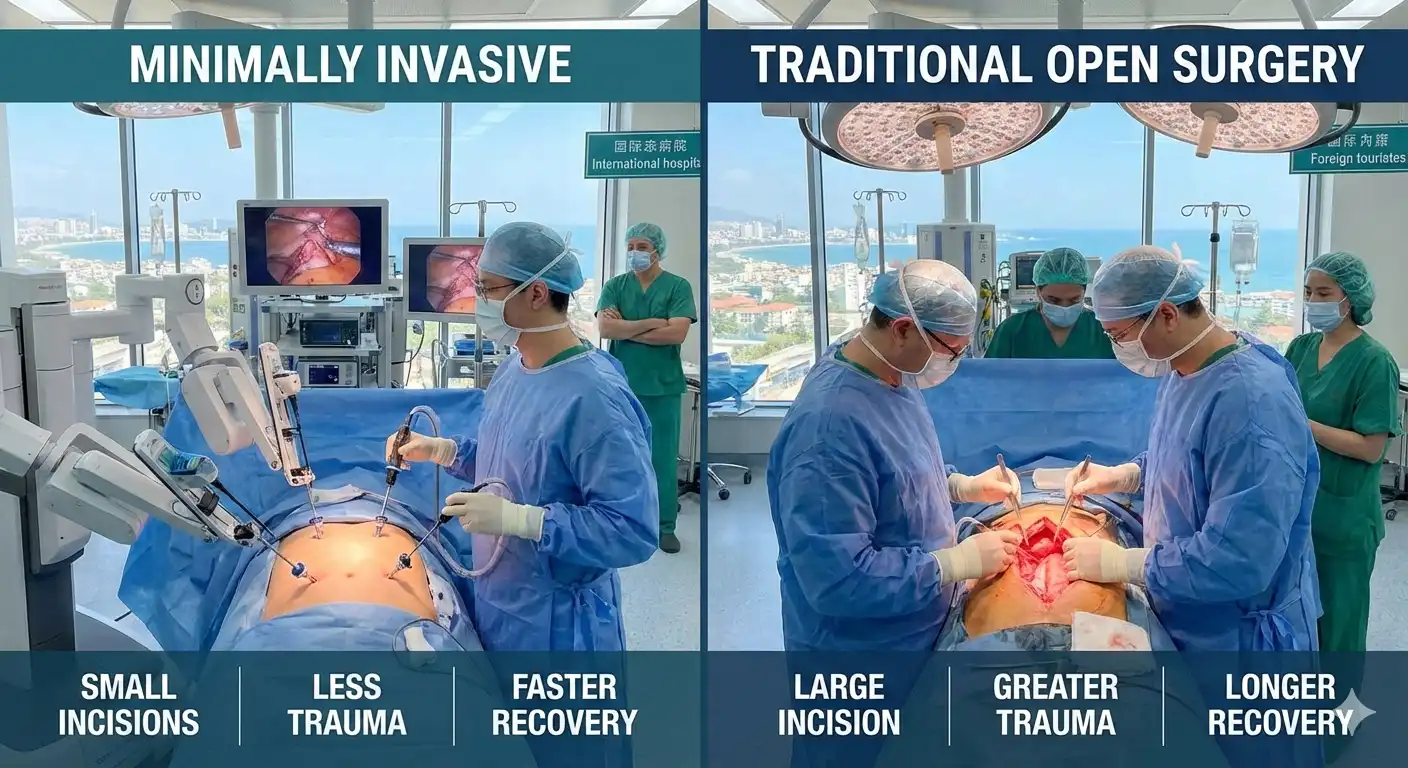
Minimally Invasive vs. Traditional Surgery Abroad: A Complete Patient Guide 🩺✈️
📋 Executive Summary
Choosing between Minimally Invasive vs. Traditional Surgery Abroad is a critical decision for any medical traveler. This guide provides an in-depth analysis of both methods to help you make an informed choice. Key takeaways include:
- Incision Size: Minimally invasive uses tiny “keyhole” incisions, while traditional involves one large opening.
- Recovery Time: Patients usually recover much faster with minimally invasive techniques.
- Surgical Precision: Modern robotic tools offer incredible accuracy in delicate procedures.
- Cost Factors: While technology-driven surgeries may cost more, shorter hospital stays often balance the budget.
- International Standards: Many global hospitals now specialize in advanced surgical technology.
Whether you seek cardiac surgery or orthopedic procedures, understanding these differences ensures a safer journey.
Modern medicine has evolved rapidly over the last few decades. Consequently, patients now have more choices than ever before. When you consider medical tourism, you must evaluate the surgical approach carefully. The debate over Minimally Invasive vs. Traditional Surgery Abroad often centers on safety and results. Therefore, this article explores every detail of these two methodologies. We aim to guide you through the complexities of international healthcare. Furthermore, we provide a roadmap for your medical journey with WMedTour.
🔬 Understanding Minimally Invasive Surgery (MIS)
Minimally invasive surgery represents the pinnacle of modern surgical innovation. Surgeons perform these operations through several small incisions. Usually, these openings are no larger than a half-inch. Through these gaps, doctors insert specialized instruments and a tiny camera. This camera, called a laparoscope or endoscope, sends high-definition images to a monitor. As a result, the surgeon views the internal organs with great clarity without opening the body wide.
In addition to laparoscopy, robotic-assisted surgery is becoming a standard. Many hospitals in Iran and India use these advanced systems. Specifically, the surgeon controls robotic arms from a console. This allows for tremors to be filtered out and provides a 3D view. Because of this precision, MIS is highly effective for sinus endoscopy and complex neurosurgery.
[Image of laparoscopic surgery procedure]✅ The Advantages of MIS
- Reduced Trauma: Small incisions mean less damage to skin and muscle tissue.
- Less Pain: Smaller wounds naturally result in less post-operative discomfort.
- Lower Infection Risk: Less exposure of internal organs reduces the chance of hospital-acquired infections.
- Brief Hospitalization: Many MIS patients return home within 24 to 48 hours.
- Minimal Scarring: The aesthetic results are far superior to traditional methods.
❌ The Potential Drawbacks of MIS
- Technical Complexity: These surgeries require highly specialized training for the doctors.
- Equipment Costs: The use of robotic systems can increase the initial price of the procedure.
- Limited Application: Not all conditions, such as extremely large tumors, are suitable for “keyhole” access.
🔪 Understanding Traditional (Open) Surgery
Traditional surgery, often called “open surgery,” is the conventional approach. It involves a single, large incision to allow the surgeon a direct view. This method has been the gold standard for over a century. Therefore, it remains highly reliable for complex cases. For instance, a coronary artery bypass grafting (CABG) often requires an open chest approach. Similarly, some proctectomy procedures might necessitate open access for better visibility.
Moreover, traditional surgery provides the surgeon with tactile feedback. They can physically feel the tissues and organs. In some emergency situations, this direct contact is life-saving. While the recovery is longer, the success rates for established open procedures are excellent. Patients often choose this route when MIS is not an option or when the surgeon recommends it for safety reasons.
✅ The Advantages of Traditional Surgery
- Excellent Visibility: The surgeon has an unobstructed view of the entire surgical site.
- Universal Availability: Every major hospital worldwide can perform traditional operations.
- Proven Track Record: There is decades of data supporting the long-term outcomes of open surgery.
- Suitability for Emergencies: Open surgery is often faster to start during a crisis.
❌ The Potential Drawbacks of Traditional Surgery
- Significant Recovery Time: Patients may stay in the hospital for a week or more.
- Higher Pain Levels: Large incisions require more intensive pain management.
- Increased Scarring: Open surgery leaves a noticeable permanent scar.
- Higher Blood Loss: Larger incisions generally involve more bleeding than keyhole methods.
📊 Side-by-Side Comparison
| Feature | Minimally Invasive Surgery | Traditional Open Surgery |
|---|---|---|
| Incision Size | 0.5 cm to 1.5 cm (Multiple) | 10 cm to 25 cm (Single) |
| Recovery Period | 1 to 3 weeks | 6 to 12 weeks |
| Pain Intensity | Mild to Moderate | Moderate to Severe |
| Hospital Stay | Short (1-2 days) | Long (5-10 days) |
| Risk of Infection | Very Low | Moderate |
🌍 Why Choose Surgery Abroad?
Many patients from the USA, UK, and Canada look for Minimally Invasive vs. Traditional Surgery Abroad. The primary driver is often the combination of quality and cost. For example, orthopedic surgery costs can be 70% lower in Asian or Middle Eastern hubs. Furthermore, wait times in many Western public health systems are staggering. By going abroad, you can access life-changing procedures like a total knee replacement almost immediately.
Additionally, the technology available internationally is often superior. Hospitals in regions like Oman invest heavily in the latest robotic platforms. Consequently, they attract top-tier surgeons trained in the world’s best institutions. When you book through a trusted partner like WMedTour, we verify these credentials for you. We ensure that you receive care in accredited facilities that follow international safety protocols.
🏥 Specialized Departments for Every Need
Different conditions require specific approaches. If you are dealing with heart issues, our cardiac surgery experts offer both options. They might suggest a robotic-assisted valve repair. Conversely, they might recommend a traditional bypass. For women, the gynecological surgery department provides laparoscopic solutions for fibroids. Those seeking aesthetic improvements can visit our plastic surgery section. Most importantly, the general surgery team handles routine yet essential operations like hernia repairs.
🙋 Who is This For?
Deciding between Minimally Invasive vs. Traditional Surgery Abroad is for a wide range of people. Specifically, this guide serves:
- Seniors: Those needing joint replacements like a total hip replacement but wanting faster recovery.
- Busy Professionals: Individuals who cannot afford months of downtime from work.
- Uninsured Patients: People facing high medical costs in their home country.
- Complex Cases: Patients who were told they are not candidates for surgery at home and seek a second opinion.
- Health Enthusiasts: Those who prioritize the latest technology for better surgical outcomes.
🛣️ The Patient Roadmap
Embarking on a medical journey requires careful planning. Follow these steps to ensure a smooth experience:
Step 1: Initial Inquiry and Consultation
First, you should contact us through our contact page. Share your medical records and current diagnosis. Subsequently, our medical consultants will review your case. We often facilitate a telemedicine consultation with a surgeon abroad. This helps determine if you are a candidate for MIS or traditional surgery.
Step 2: Choosing Your Destination
Next, we present you with various locations. You can choose based on budget, flight distance, or specific hospital reputation. For instance, Mashhad is famous for its advanced clinics. We provide a breakdown of costs and amenities for each option.
Step 3: Travel and Accommodation
Once you decide, we handle the logistics. This includes visa assistance, flight booking, and picking a hotel near the hospital. We ensure your stay is comfortable and stress-free. Furthermore, we arrange for local transport to all your appointments.
Step 4: The Procedure and Recovery
On the day of surgery, our team supports you. Whether it is a diagnostic angiography or major surgery, we are there. After the operation, you will spend time in the hospital. If you had MIS, this stay is short. Afterward, you move to your hotel for initial recuperation. Finally, you have follow-up visits before flying home.
💰 Cost Analysis: Minimally Invasive vs. Traditional
Understanding the financial aspect of Minimally Invasive vs. Traditional Surgery Abroad is vital. Below is a general estimate of costs for common procedures in popular medical tourism hubs.
| Procedure Type | Traditional (Avg. Cost) | Minimally Invasive (Avg. Cost) |
|---|---|---|
| Knee Replacement | $6,000 – $9,000 | $8,000 – $11,000 |
| Heart Valve Repair | $12,000 – $18,000 | $15,000 – $22,000 |
| Gallbladder Removal | $3,000 – $4,500 | $3,500 – $5,000 |
| Spine Fusion | $8,000 – $12,000 | $10,000 – $14,500 |
Note: Prices vary significantly based on the country and the specific hospital chosen.
📖 Case Study: Mark’s Journey to Pain-Free Life
Mark, a 55-year-old teacher from London, suffered from severe hip pain. His local health system estimated an 18-month wait for surgery. Consequently, his quality of life plummeted. Mark contacted WMedTour to discuss Minimally Invasive vs. Traditional Surgery Abroad. After reviewing his scans, our partner surgeons in Iran suggested a minimally invasive hip replacement.
Mark flew to Tehran in early 2025. He underwent the procedure using advanced robotic guidance. Amazingly, he was walking with a walker just four hours after the surgery. He stayed in a luxury hotel for 10 days of recovery. During this time, he enjoyed gentle sightseeing. Today, Mark is back to hiking and teaching without any pain. His story highlights how traveling for technology can change a life quickly.
🌴 Recovery and Tourism
One benefit of Minimally Invasive vs. Traditional Surgery Abroad is the “tourism” element. Since MIS involves less pain, patients are often mobile sooner. Therefore, you can explore beautiful regions while you heal. We offer various tours in Iran and other countries. Imagine visiting ancient historical sites or relaxing in a mountain resort during your recovery phase.
However, you must prioritize rest. Following the surgeon’s instructions is non-negotiable. Specifically, avoid heavy lifting and follow your physical therapy routine. We provide local therapists to help you during your stay. This ensures that when you return home, you are ready to resume your normal life.
❓ Frequently Asked Questions (FAQ)
1. What is the biggest difference in Minimally Invasive vs. Traditional Surgery Abroad?
The primary difference lies in the size of the incision and the tools used. Minimally invasive surgery utilizes tiny cuts and cameras. This leads to less blood loss and faster healing. Traditional surgery requires a larger opening to provide direct access to organs. Generally, doctors choose the method based on the complexity of your specific condition. You should discuss both options with your surgeon to understand which is safer for you. Ultimately, the goal is the best health outcome regardless of the technique used.
2. How long will I need to stay abroad after surgery?
For minimally invasive procedures, a stay of 7 to 10 days is usually sufficient. This allows for initial healing and a follow-up visit. However, traditional surgery might require you to stay for 14 to 21 days. This is because larger incisions take more time to stabilize before air travel is safe. We always recommend staying until your surgeon provides a clear “fit to fly” certificate. Therefore, you should plan your travel schedule with some flexibility in mind. Our team helps manage these timelines for you.
3. Are surgeons abroad as qualified as those in my home country?
Yes, many international surgeons are highly qualified and often trained in Western countries. In medical tourism hubs, surgeons perform a high volume of specific procedures. This high volume often leads to exceptional expertise and lower complication rates. We rigorously vet every doctor in our network to ensure they meet global standards. You can view detailed profiles on our doctors page. Furthermore, many hospitals we work with hold JCI accreditation. This is a gold standard for healthcare quality worldwide.
4. Will I have a scar after minimally invasive surgery?
Minimally invasive surgery results in very small scars that often fade significantly over time. Usually, these are just small dots or lines less than an inch long. In contrast, traditional surgery leaves a larger, more permanent scar. If aesthetic results are important to you, MIS is the preferred choice. However, surgeons prioritize your health over aesthetics in every case. Consequently, if an open approach is safer, they will explain the necessity of the scar. Advanced wound care techniques abroad also help minimize final scarring.
5. Can I travel alone for surgery abroad?
While you can travel alone, we usually recommend bringing a companion for emotional and physical support. Having someone to help you during the first few days of recovery is invaluable. If you must travel alone, WMedTour provides dedicated assistants to help you. These assistants manage your transport and hospital needs. Therefore, you are never truly alone during your medical journey. We ensure you have 24/7 access to support staff. This adds a layer of safety and comfort to your experience.
6. Does insurance cover surgery abroad?
Some private insurance plans offer international coverage, but many do not. You should check with your provider before making any plans. However, the costs abroad are often lower than a typical insurance deductible in the US. Many patients choose to pay out-of-pocket because the savings are so substantial. We provide detailed invoices that you can submit to your insurance for potential reimbursement. Moreover, specialized medical travel insurance is available to cover complications. We can guide you on where to find these specific policies.
7. What happens if there is a complication after I return home?
We provide a comprehensive post-operative care plan before you leave the hospital. This includes detailed reports to share with your local doctor. Furthermore, we facilitate follow-up calls with your surgeon via telemedicine. If a serious issue arises, we help coordinate with your local healthcare providers. Most complications are minor and manageable through local clinics. However, choosing a high-quality hospital abroad significantly reduces these risks. We prioritize facilities with the lowest reported complication rates.
8. Is robotic surgery safer than human-led traditional surgery
🤖 Robotic vs. Traditional “Open” Surgery
When comparing robotic-assisted procedures to traditional open surgery, the robotic approach is generally considered safer due to the reduction in physical trauma to the body.
Incision Size: Traditional surgery requires a large opening to allow a surgeon’s hands and tools inside. Robotic surgery uses “keyhole” incisions that are typically less than an inch long.
Blood Loss: Because the robotic tools are smaller and more precise, there is significantly less disruption to blood vessels, leading to minimal blood loss.
Infection Risk: Smaller wounds heal faster and provide less surface area for potential post-operative infections compared to a long surgical scar.
Recovery: Patients undergoing robotic surgery usually spend less time in the hospital and experience a faster return to normal activity because the internal muscles and tissues weren’t cut extensively.
🔬 Robotic vs. Standard Laparoscopic Surgery
In this case, both are “minimally invasive,” but the technology differs. Safety levels are often comparable, though the robot offers specific technical advantages.
Range of Motion: Standard laparoscopic tools are like “chopsticks”—they don’t bend. Robotic instruments have “wristed” joints that can rotate 360 degrees, allowing for safer movements around delicate organs.
Vision: The surgeon uses a 3D high-definition camera with the robot, providing better depth perception than the 2D screens used in many standard laparoscopic setups.
Steady Hands: The robotic system automatically filters out tiny hand tremors, ensuring that the instruments remain perfectly still even during the most delicate parts of the operation.
👤 The “Human” Variable
It is important to remember that the robot does not perform the surgery. It is a tool controlled entirely by a human surgeon.
The Pilot: The safety of the operation depends more on the surgeon’s experience with that specific machine than on the machine itself.
Manual Override: A primary safety feature of robotic surgery is the surgeon’s ability to “convert” to an open surgery instantly if a complication arises that requires direct physical intervention.
Comparison Summary
| Feature | Traditional Open Surgery | Robotic-Assisted Surgery |
| Safety Profile | Higher risk of infection/bleeding | Lower risk; precision-focused |
| Incision | Single large incision | Multiple tiny incisions |
| Blood Loss | Moderate to High | Minimal |
| Hospital Stay | Several days | Often overnight or outpatient |
| Pain Level | Significant (requires heavy meds) | Lower (manageable with mild meds) |
9. Can I get a second opinion through WMedTour?
Absolutely, getting a second opinion is a core part of our service. You can upload your records to our departments for review. Our experts will provide their perspective on whether you need surgery. They will also suggest if MIS or traditional methods are better for you. This service often gives patients the peace of mind they need. Sometimes, our doctors might even suggest non-surgical alternatives. We believe in providing honest and transparent medical advice at all times.
10. How do I pay for my surgery abroad?
Most international hospitals accept wire transfers, credit cards, or cash. We provide clear payment instructions once your surgery is scheduled. Usually, you pay a small deposit to secure the date. The balance is typically paid upon arrival at the hospital. We ensure there are no hidden fees in our quotes. Transparency in pricing is a fundamental value at WMedTour. Therefore, you will know the exact cost before you leave your home.
11. Are there specific risks with air travel after surgery?
The main risk with air travel after surgery is blood clots (Deep Vein Thrombosis). To prevent this, surgeons advise waiting a specific number of days. They also recommend wearing compression stockings and moving during the flight. For very long routes, we can arrange an air ambulance if necessary. However, for most patients, a standard flight is safe after the initial recovery period. We provide a full checklist of travel safety tips for your return journey.
12. What language will the medical staff speak?
In the top hospitals we partner with, the medical staff speaks English fluently. Many doctors have studied or worked in English-speaking countries. If there is a language barrier with support staff, we provide professional translators. We ensure that you can communicate your needs and understand all instructions clearly. Communication is vital for medical safety and your peace of mind. Therefore, we prioritize facilities with excellent English proficiency. You will never feel lost or misunderstood during your treatment.
⚠️ Medical Disclaimer
The information provided in this article is for educational purposes only. It does not constitute professional medical advice, diagnosis, or treatment. Always seek the advice of your physician or other qualified health providers with any questions you may have regarding a medical condition. Never disregard professional medical advice or delay in seeking it because of something you have read on this website. For more details, please visit our FAQ page.
Ready to explore your surgical options?
Contact WMedTour today for a personalized consultation and a detailed cost comparison.
External Resources for Further Reading:
- Johns Hopkins Medicine: Minimally Invasive Surgery Overview
- UCSF: Minimally Invasive Orthopaedic Surgery
- Mayo Clinic: Minimally Invasive Surgery Benefits