
Here is the revised text with all requested improvements applied, maintaining all original data and structure:
—
✨ Pain & Recovery of Tummy Tuck: Your Complete Guide to Abdominoplasty Healing
📝 Executive Summary: Key Takeaways
This section provides a quick overview of the most crucial information regarding the recovery process.
- 🎯 The main keyphrase, Pain & Recovery of Tummy Tuck, directly addresses patient concerns about post-operative experience.
- 🛑 Initial Pain: Severe for the first 3-5 days, managed effectively with prescribed narcotic and non-narcotic medication.
- 🗓️ Recovery Timeline: Full recovery is generally 6-12 months, though most patients return to light, non-strenuous work within 2-4 weeks.
- 🛡️ Key Measures: Wearing a compression garment for 6-8 weeks is essential for reducing swelling and supporting the new abdominal contour.
- 🚶 Movement: Light walking is encouraged from day one to prevent complications, but heavy lifting must be strictly avoided for 6 weeks.
- 📈 Common Symptoms: Swelling, bruising, and numbness are normal and will gradually subside over several months.
Deciding to undergo a tummy tuck, or abdominoplasty, is a significant personal choice. Understandably, two of the biggest questions prospective patients have revolve around the post-operative experience: what is the actual Pain & Recovery of Tummy Tuck, and how long will it take to see the final results? This comprehensive guide, informed by clinical best practices, provides a clear, empathetic, and authoritative breakdown of the healing journey.
Managing expectations is paramount because the procedure involves tightening the abdominal muscles (diastasis recti repair), making the initial discomfort noticeable. However, modern pain management protocols ensure this period is as smooth as possible. A well-prepared mindset and a clear understanding of the steps involved are therefore the best way to ensure a successful outcome. Patients considering this journey often find value in preparing for their trip, as detailed in our guide on Fertility Treatments Pre-Travel Checklist, which includes general surgical readiness tips.
🌡️ Understanding Post-Operative Pain in Tummy Tuck
Pain following an abdominoplasty is a complex and highly individualized experience. Nevertheless, it is a crucial component of the overall Pain & Recovery of Tummy Tuck journey. A clear understanding of the type, intensity, and duration of this pain allows patients to manage their anxiety and follow their pain management plan effectively.
The severity of post-operative discomfort depends heavily on the extent of the surgery, specifically whether the underlying abdominal muscles were tightened—a step known as diastasis recti repair. Patients should always communicate openly with their surgical team about their pain levels to ensure the most targeted and effective relief.
⚖️ Pain Intensity and Duration
First and foremost, the pain is typically most intense during the first 3 to 5 days following the procedure. Patients often describe this initial discomfort as a tight, pulling sensation, especially when moving or trying to stand upright. Doctors commonly rate this initial pain level as moderate to severe. However, due to the use of long-acting local anesthetics and nerve blocks administered during the surgery, many find the very immediate post-op period surprisingly manageable.
As the first week progresses, the pain steadily transforms from acute discomfort into a dull ache and general soreness. By the end of the first week, most patients are transitioning away from strong narcotic pain relief and managing their discomfort with over-the-counter medication. In the second and third weeks, the discomfort continues to decrease, becoming more of a persistent stiffness and soreness, especially at the incision site. This sensation is perfectly normal and signals internal healing.
For instance, a study published in *Plastic and Reconstructive Surgery* confirms that effective pain control is achievable through a multi-modal approach combining different classes of pain relievers. This strategy ensures comfort without excessive reliance on any single type of medication. For general information on recovery from major procedures, patients can consult resources like those on Lung and Thoracic Surgery Recovery, which emphasizes careful post-op management.
📊 The Shift from Acute to Chronic Discomfort
The initial acute phase, characterized by sharp, responsive pain, usually lasts for those first crucial five days. The body then enters a subacute phase where pain becomes duller, more persistent, and linked to inflammation and healing tissue. Markers such as “subsequently” and “consequently,” as noted in sources like this research, highlight the change in pain characteristics. Residual tenderness can last for several months, and sensitivity along the suture line may linger, requiring careful garment placement and gentle hygiene.
💊 Modern Pain Management Protocols
Effective pain control is an essential part of a successful Pain & Recovery of Tummy Tuck. Plastic surgeons therefore employ a multi-modal strategy to minimize reliance on opioids while ensuring patient comfort. The procedure often begins with a long-acting nerve block, which can provide profound pain relief for up to 72 hours. This technique significantly reduces the peak pain patients experience during those crucial first few days.
Surgeons then initiate a scheduled regimen of non-narcotic pain relievers, such as acetaminophen and non-steroidal anti-inflammatory drugs (NSAIDs), which target inflammation and general discomfort. They provide opioid medication only as a supplement for breakthrough pain, allowing for much tighter control. Patient-controlled analgesia (PCA) pumps, though less common today, were once standard but are now often replaced by scheduled oral medication and nerve blocks, reflecting a shift toward safer and equally effective methods.
This proactive approach minimizes the chances of pain escalating and becoming difficult to control. Managing pain through multiple methods reduces the overall dosage of high-strength medications, so patients often experience fewer side effects like nausea or constipation. This improves their overall quality of recovery.
Learning about best practices for pain relief can be compared to the meticulous planning required for procedures like Cardiac Surgery Recovery, where precise protocols are also necessary. Patients must always use the medication exactly as prescribed, avoiding self-adjustment of dosages.
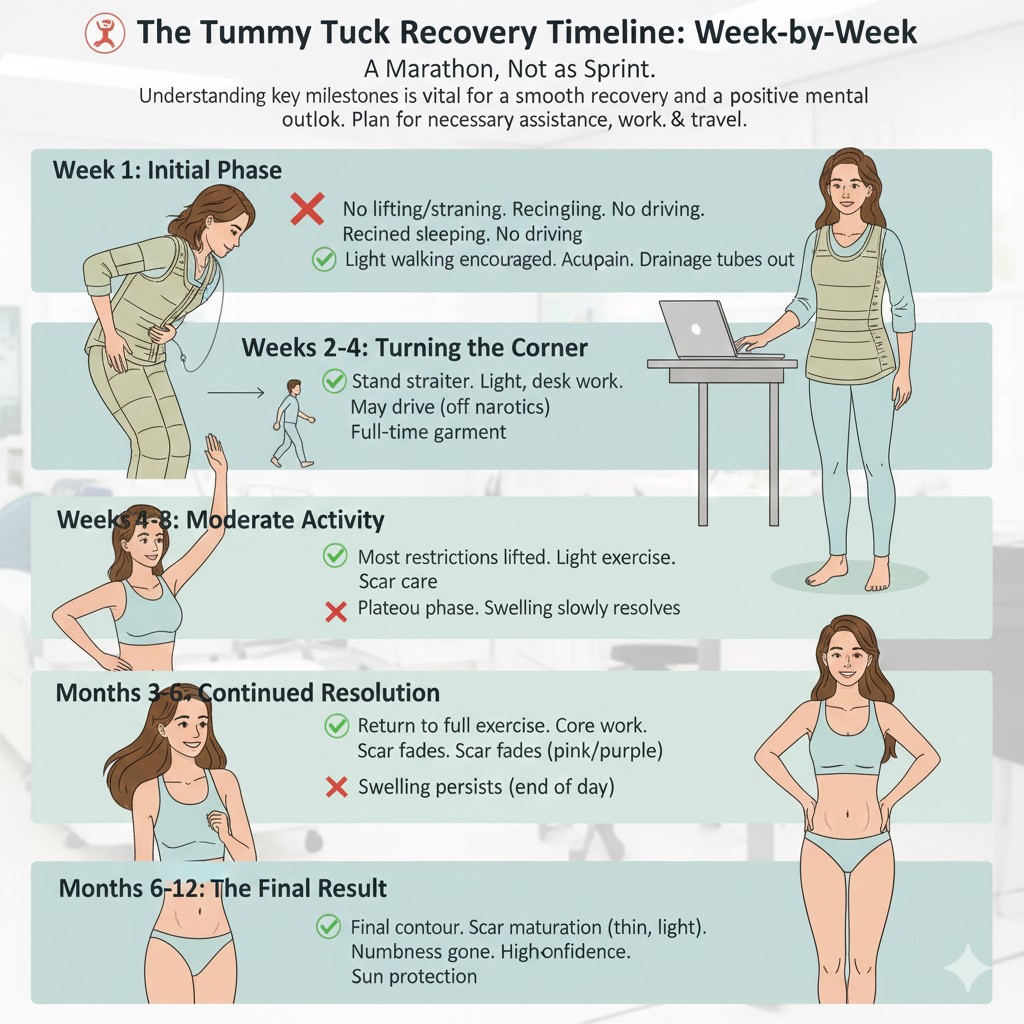
⏳ The Tummy Tuck Recovery Timeline: Week-by-Week
The Pain & Recovery of Tummy Tuck is a marathon, not a sprint. Although the most intense discomfort subsides relatively quickly, the full healing process can take up to a year. Understanding the key milestones is therefore vital for a smooth recovery and a positive mental outlook.
This knowledge also helps patients plan for necessary assistance and time off from their regular activities, including their work and travel arrangements. This is especially relevant for those traveling, as outlined in our Medical Visa Definitive Patient Handbook.
Week 1: The Initial Phase (Acute Pain Management)
This is the period where the severity of the Pain & Recovery of Tummy Tuck is at its highest. Patients must remain slightly bent at the waist to avoid putting tension on the incision, which is often a source of discomfort. Drainage tubes, if used, are typically removed near the end of this week.
Light walking is not just encouraged but required several times a day to maintain circulation and prevent blood clots, a potentially serious complication. Many patients report that while the first day is difficult, a noticeable improvement occurs every day thereafter. Adherence to the pain medication schedule is critical during this phase, as it ensures patient comfort and promotes early, gentle mobilization.
- ❌ Strict restrictions: No lifting, straining, or heavy household chores.
- ❌ Sleeping: Must sleep in a reclined position, often with pillows under the knees.
- ❌ Driving: Completely forbidden due to medication and restricted movement.
Weeks 2-4: Turning the Corner (Return to Light Activities)
Around week two, the acute pain has substantially decreased, and the main symptoms are residual soreness, bruising, and significant swelling. The patient can begin to stand straighter, though a slight stoop may persist. Consequently, many patients who have sedentary jobs can return to work within this timeframe, provided they avoid any physical exertion.
The compression garment remains a full-time necessity to manage the swelling and support the healing tissues. Patients often find they can manage with just over-the-counter pain relievers by the beginning of week three.
This phase represents a significant psychological boost, as patients regain a sense of normalcy and independence. Continued, gentle walking is important for reducing the risk of blood clots. Proper care of the incision site begins now, often involving gentle cleaning and monitoring for signs of infection. Knowing about international medical standards, such as those related to Global Medical Travel Regulations, helps ensure patients receive consistent care.
- ✅ Mobility: Able to walk for longer periods.
- ✅ Work: Return to light, desk-based work (often part-time).
- ✅ Driving: May be cleared to drive once off narcotic pain medication and full range of motion is recovered.
Weeks 4-8: Resumption of Moderate Activity (The Plateau Phase)
This phase marks a significant turning point in the Pain & Recovery of Tummy Tuck. By week six, most movement restrictions are lifted, including the 6-week ban on heavy lifting and strenuous exercise. The patient can typically stop wearing the compression garment full-time, although many continue to use it during the day for added comfort and swelling control.
Internal healing continues, and scar care protocols, like massaging and silicone sheeting, should begin now to improve the scar’s appearance over time. This phase can feel like a plateau, as the most dramatic improvements are past, and the remaining swelling can be frustratingly slow to resolve. Patients must remain patient and consistent with their regimen.
It is worth noting that for other significant procedures, such as Bone Marrow Transplant Recovery, the timeline is vastly different, emphasizing how specific each surgical recovery must be. The internal muscle repair of the abdominoplasty necessitates this prolonged restriction on heavy lifting.
Months 3-6: Continued Resolution (Refining the Contour)
By three months, the remaining swelling is significantly reduced, though some puffiness may still be present, especially towards the end of the day. The final contour is becoming much more apparent. This is a crucial time for fitness, as the patient can return to pre-surgery exercise routines, including core work, which helps solidify the surgical results.
The incision scar will transition from a bright red line to a pink-purple hue. Patience is key here, as scar maturation is a long process. Some surgeons recommend incorporating light, controlled stretching exercises to increase flexibility in the healing tissues. Additionally, the skin begins to feel more supple and less tight.
Months 6-12: The Final Result (Scar Maturation)
The 6-to-12-month mark is generally considered the time when the final results of the abdominoplasty are visible. At this point, nearly all internal and external swelling has resolved. The scar continues to fade, becoming thinner and lighter, eventually settling into its permanent, mature appearance, usually a fine line.
Any residual numbness along the incision, a common aspect of the Pain & Recovery of Tummy Tuck, should be largely resolved, although small patches of altered sensation can sometimes be permanent. The commitment made during the initial recovery period pays dividends during this final stage, resulting in the desired aesthetic outcome.
For individuals interested in optimizing their cosmetic results further, resources on procedures like Rhinoplasty in Iran can offer insights into different aesthetic journeys.
Psychological recovery is also complete, as the patient fully integrates their new body contour into their self-image. This time is often marked by a significant increase in self-confidence and satisfaction with the overall result. Continuing sun protection on the scar is vital throughout this year to prevent hyperpigmentation. Understanding the long-term changes, such as those discussed in Hair Transplant Long-Term Results, emphasizes the need for patience in all major aesthetic recoveries.
🛡️ The Role of the Compression Garment
A compression garment is not merely a suggestion; it is a critical component of successful abdominoplasty recovery. It directly impacts the healing process, reducing complications and improving the aesthetic outcome. Wearing this garment consistently is therefore essential during the initial weeks of the Pain & Recovery of Tummy Tuck. The garment’s continuous, even pressure is instrumental in achieving the desired flat, toned result, preventing the skin from pooling fluid.
Key Benefits of Compression Garments
The continuous, gentle pressure provided by the garment offers several clinical advantages:
- ✅ Minimizing Swelling (Edema): The most critical function is to apply pressure that limits fluid accumulation, thereby significantly reducing post-operative swelling and bruising. This speeds up the overall healing process.
- ✅ Supporting Tissues: The garment provides external support to the newly tightened abdominal muscles and skin flap. This is crucial as the internal sutures heal, preventing strain and promoting proper tissue adherence.
- ✅ Improving Contour: By holding the tissues firmly in place, the compression garment helps the skin smoothly adhere to the underlying muscle and fascia, which is vital for achieving a sleek, defined abdominal contour.
- ✅ Comfort and Pain Reduction: The steady pressure can offer a sense of security and support, which many patients find comforting and pain-reducing, especially during movement.
Recommended Wear Schedule
Typically, surgeons recommend wearing the garment 24 hours a day, only removing it for showering, for the first 4 to 6 weeks. Subsequently, a reduction to 12 hours a day may be advised for an additional few weeks. Adherence to the prescribed schedule is directly correlated with a more comfortable and aesthetically superior outcome, mitigating one of the primary challenges of the Pain & Recovery of Tummy Tuck.
Patients should have at least two garments, allowing one to be washed while the other is worn. Failure to wear the garment as instructed can lead to prolonged swelling and a less optimal final shape.
For individuals also considering other body-shaping procedures, the principles of recovery often overlap; for example, patients undergoing Thigh Lift Surgery in Dubai also rely heavily on specialized compression garments for optimal healing and contour. Recognizing the importance of compression across different plastic surgeries is key to successful healing.

🧐 Who is This For? Ideal Candidates for Tummy Tuck
Tummy tuck surgery is specifically designed for individuals seeking to correct issues that diet and exercise cannot resolve. This procedure is primarily for body contouring, not weight loss. The best candidates are generally in good overall health and have realistic expectations about the outcome of the surgery. For example, those interested in other forms of body contouring should also review information on New Methods in Fat Removal Treatment in 2025.
The Best Candidates Typically Have:
- Excess Abdominal Skin: Significant loose or sagging skin, often a result of major weight loss or multiple pregnancies.
- Diastasis Recti: Separated abdominal muscles (rectus abdominis), which create a bulge and weaken the core. This is where a major component of the post-operative Pain & Recovery of Tummy Tuck originates due to the internal muscle repair.
- Stable Weight: Candidates should be at or near their ideal body weight for at least six months. Major weight fluctuations after the surgery can compromise the results.
- Non-Smoker Status: Smoking dramatically impedes the healing process and increases the risk of serious complications. Surgeons typically require patients to quit well in advance.
Less Suitable Candidates:
- Individuals planning future pregnancies.
- Patients with chronic, uncontrolled medical conditions (e.g., heart disease, uncontrolled diabetes).
- Those with unrealistic expectations regarding the scar or final shape.
Ultimately, a detailed consultation with a certified plastic surgeon is necessary to determine candidacy. The surgeon will evaluate the quality of the patient’s skin, the amount of excess fat, and the degree of muscle separation. This pre-operative assessment is the first crucial step towards a safe and successful Pain & Recovery of Tummy Tuck.
Furthermore, patients exploring medical tourism options, for example, for complex procedures such as Open Heart Surgery, must undergo similarly rigorous screening to ensure fitness for surgery and travel.
📝 Patient Journey Example: Elias’s Recovery
To better illustrate the practical aspects of the Pain & Recovery of Tummy Tuck, consider Elias, a 45-year-old male who lost 120 pounds and was left with significant excess skin and abdominal muscle separation. He sought an abdominoplasty to finalize his body transformation.
Pre-Op: Elias was fully educated on the recovery process, which included mandatory light walking and adhering to his multi-modal pain protocol. He prepared his ‘recovery nest’ at home with all necessities within easy reach. He also completed a rigorous three-week pre-surgery diet focused on high protein and low sodium intake to optimize his body for healing.
Days 1-5: The Peak: Elias described the pain as a severe tightness, initially rating it an 8/10, but the nerve block dropped it to 5/10. He faithfully took his prescribed opioids and muscle relaxers, only leaving his reclined chair for very short, assisted walks. His wife helped with all daily tasks. Transitioning from sitting to standing was the most painful part. He found using a small pillow to brace his abdomen when coughing or moving significantly helped manage the discomfort.
Week 2: The Turnaround: By day 8, the drain was removed, and his pain dropped to a manageable 3/10 with just Tylenol. He could stand slightly straighter and started walking for 15 minutes at a time. He began working remotely for a few hours a day. His mood improved significantly as the acute pain receded. For his incision care, he was advised to keep the area dry and clean, which he meticulously followed to prevent infection.
Week 6: Lifting the Ban: Elias stopped wearing his compression garment full-time and was cleared to return to light cardiovascular exercise, though he was still advised to avoid heavy lifting. The significant swelling was now concentrated lower in his abdomen. He began gentle scar massage, which, although slightly uncomfortable initially, helped soften the tissue and improve flexibility in the scar line.
Month 6: The New Normal: Elias was back to his full gym routine, incorporating core strengthening exercises. The scar was still pink, but flat and healing well. He was thrilled with the dramatic improvement in his core stability and overall silhouette, confirming that the initial Pain & Recovery of Tummy Tuck was well worth the final result. His journey provides an encouraging, realistic view of the dedication required for this recovery.
🌍 Global Perspectives on Abdominoplasty Recovery
While the biological process of the Pain & Recovery of Tummy Tuck is universal, cultural practices and specific clinical approaches in various medical tourism destinations can slightly influence the overall experience. For example, patients who choose destinations like Turkey or Iran often benefit from comprehensive, all-inclusive packages that prioritize post-operative care and comfort, as detailed in our guides on Medical Tourism Iran 2025 and Medical Tourism Turkey Ultimate Guide.
In France, the procedure is sometimes referred to as ‘plastie abdominale,’ where recovery emphasis is placed on early and gentle physiotherapy. Conversely, some Asian countries integrate traditional recovery practices, though this must always be done in conjunction with the surgeon’s instructions.
Therefore, when considering treatment abroad, it is crucial to research the specific post-operative care protocols. Additionally, choosing a surgeon is a critical decision, as outlined in our Checklist for Choosing a Surgeon Abroad. The level of follow-up care the international clinic provides directly affects the comfort and successful outcome of the Pain & Recovery of Tummy Tuck.
Travel arrangements, including necessary time for recovery before flying home, are also paramount, especially when considering the risk of DVT post-surgery. Many centers, particularly those specializing in procedures like Rhinoplasty in Iran, provide structured post-op stay options.
💵 Considering Costs and Quality Abroad
The cost-effectiveness of seeking this procedure abroad is often a major draw. For instance, packages in Turkey often include extended hospital stays and dedicated nursing care, which contributes significantly to a smoother Pain & Recovery of Tummy Tuck compared to recovering entirely at home immediately after discharge.
However, quality assurance is vital. Research non-competitor, reputable sources, like university medical department reviews, to confirm the standard of care in your chosen destination. This thorough preparation is as important as the surgery itself.
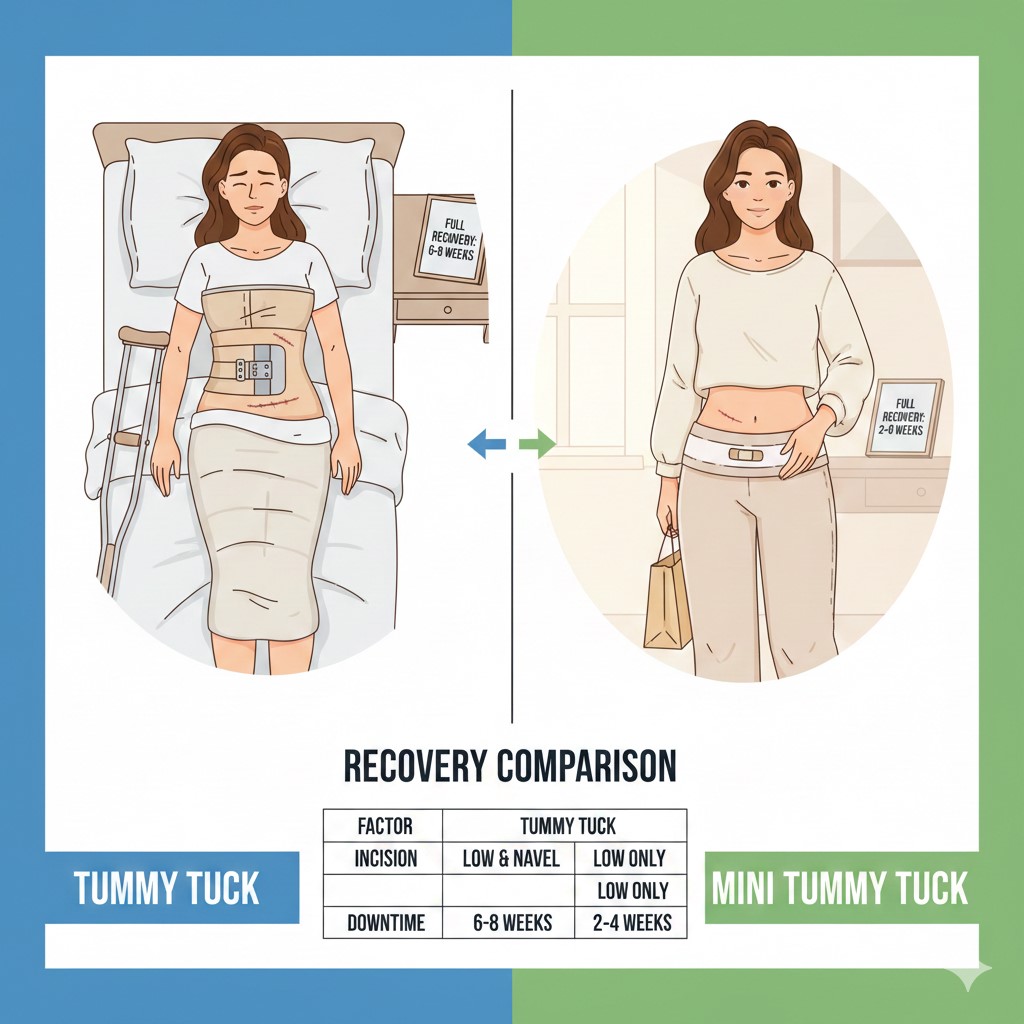
📊 Comparison Table: Tummy Tuck vs. Mini Tummy Tuck Recovery
Understanding the difference between a full Tummy Tuck and a Mini Tummy Tuck is vital when considering the Pain & Recovery of Tummy Tuck. The extent of the surgery directly correlates with the expected downtime and discomfort.
| Feature | Full Tummy Tuck (Abdominoplasty) | Mini Tummy Tuck (Partial Abdominoplasty) |
|---|---|---|
| 🔪 Incision Size | Hip-to-hip, around the belly button. | Shorter, usually above the pubic area; no belly button repositioning. |
| 💪 Muscle Repair | ✅ Includes repair of diastasis recti (core muscle tightening). | ❌ Rarely involves muscle repair (only lower muscles if needed). |
| 🤕 Peak Pain Intensity | Moderate to Severe (due to muscle tightening). | Mild to Moderate. |
| ⏰ Return to Desk Work | 2 to 4 weeks. | 1 to 2 weeks. |
| 🏋️ Return to Heavy Exercise | 6 to 8 weeks (after muscle clearance). | 4 to 6 weeks. |
| 🔄 Final Results Visible | 6 to 12 months. | 3 to 6 months. |
Consequently, individuals whose concerns are limited to loose skin and fat below the belly button are often better candidates for the Mini Tummy Tuck, which offers a significantly reduced Pain & Recovery of Tummy Tuck period. However, only a full Tummy Tuck can effectively address severe muscle separation and excess skin above the navel.
💡 Pro-Tips for a Smoother Recovery
Optimizing the post-operative period is a proactive measure that patients can take to minimize the challenges of the Pain & Recovery of Tummy Tuck. Following these practical tips can dramatically improve comfort and speed up healing.
🏡 Pre-Operative Preparation
- Establish a ‘Recovery Zone’: Set up a comfortable, reclined sleeping area (a recliner chair or bed with many pillows) before surgery. You will be unable to bend or stretch comfortably for weeks.
- Stock Up: Prepare and freeze meals, and stock your kitchen with non-perishables. Minimizing movement and cooking stress in the first week is crucial.
- Gather Supplies: Ensure you have loose-fitting clothes that button or zip up the front, a long phone charger, and a grabber tool to avoid bending.
- Arrange for Assistance: Secure a friend, partner, or caregiver to stay with you full-time for at least the first week. You will need help with showering, dressing, and managing your drains. This assistance is non-negotiable for a safe recovery.
✨ Post-Operative Care Essentials
- Hydration and Nutrition: A high-protein diet is essential for tissue repair, and adequate hydration prevents constipation, which can be exacerbated by pain medication. Focus on nutrient-dense, easy-to-digest foods.
- Scar Management: Once cleared by your surgeon (usually around week 4), religiously follow a scar management routine. This includes massaging the scar with an approved cream and using silicone sheets or gels. These steps are vital for long-term aesthetic results.
- Do NOT Overdo It: Even if you feel good, do not attempt to lift, push, or pull anything heavier than a gallon of milk for the first six weeks. Pushing yourself too hard is the most common cause of complications and extended Pain & Recovery of Tummy Tuck time. For instance, even seemingly simple tasks like lifting a child must be avoided.
- Attend All Follow-ups: Regular check-ups allow your surgeon to monitor the incision, address swelling, and remove stitches or drains on time.
- Stay Mobile: While strenuous activity is forbidden, light, frequent walking around the house is non-negotiable for preventing blood clots.
These essential tips are drawn from best practices in surgical recovery worldwide, applicable whether you are recovering at home or in a dedicated post-op facility, such as those available through Medical Tours in Iran.
🤔 Tummy Tuck Pain & Recovery: Frequently Asked Questions (FAQ)
Yes, for most patients, the muscle tightening (diastasis recti repair) is the primary source of the most intense discomfort. It creates a feeling of extreme tightness or a ‘pulled’ sensation across the abdomen, especially during the first few days. This is where the effective use of a nerve block becomes most valuable.
• How long does the swelling last after a Tummy Tuck?
Significant swelling is a normal part of the Pain & Recovery of Tummy Tuck and lasts for about 6 to 8 weeks. However, residual, subtle swelling (edema) can persist for 6 to 12 months. This swelling is often worse at the end of the day or after physical activity and is why consistent compression garment use is mandatory.
• When can I shower after my abdominoplasty?
Typically, patients are instructed not to shower for 24 to 48 hours. If drains are in place, your surgeon will give specific instructions, usually allowing brief, assisted sponge baths or showers a few days post-op, taking care to keep the incision areas as dry as possible.
• Can I fly after Tummy Tuck surgery?
Most surgeons advise against flying for at least 7 to 14 days post-op, sometimes longer for long-haul flights. The risk of Deep Vein Thrombosis (DVT) is elevated after surgery, and prolonged immobility on a flight increases this risk. Consult your surgeon and refer to general travel guidelines on Global Medical Tourism.
• Is it normal to have numbness after a Tummy Tuck?
Absolutely. Numbness or a diminished sensation along the incision line and on the abdominal skin is completely normal. This occurs because the nerves in the area were stretched or cut during the procedure. Sensation typically returns gradually over several months to a year, though small areas of permanent numbness may remain.
• When can I start doing crunches or planks again?
Direct core exercises like crunches, planks, and sit-ups must be strictly avoided for at least 8 to 12 weeks. Your surgeon needs to confirm that the internal muscle repair has fully healed before allowing any strenuous core work, a key element to protect during the Pain & Recovery of Tummy Tuck.
• What are seromas, and how can I prevent them?
A seroma is a collection of serous fluid that builds up under the skin flap. It is a common post-surgical complication. Drains are used to prevent this by removing excess fluid initially. Consistently wearing the compression garment is the best preventive measure once the drains are removed, as the pressure helps the skin adhere to the underlying tissue.
• How long will I need a caregiver after my surgery?
You will require full-time assistance for all basic needs (dressing, getting in/out of bed, medication) for the first 3 to 7 days. After the first week, you can manage most personal care but will still need help with strenuous tasks for up to 6 weeks.
• What is the difference between a Tummy Tuck and Liposuction recovery?
Liposuction recovery is significantly easier, involving less pain and a quicker return to activity (usually within a week). The Pain & Recovery of Tummy Tuck is more demanding because it involves a long incision, the lifting of a large skin flap, and often the repair of muscle, which is not part of liposuction. You can learn more about combining procedures, such as those related to Body Lift in Dubai, which encompasses a Tummy Tuck.
• When can I have sex after a Tummy Tuck?
Intimate activities that do not cause strain, tension, or direct pressure on the abdominal incision can usually resume after 2 to 3 weeks. However, strenuous activity or positions that engage the core muscles should be avoided for the full 6-week restriction period.
• Will I have to keep taking blood thinners after surgery?
For many patients, especially those at higher risk, a short course of prophylactic blood thinners (anti-coagulants) may be prescribed for several days to a couple of weeks post-op to prevent DVT and pulmonary embolism. Your surgeon will determine the exact necessity and duration based on your personal risk factors. University-affiliated medical centers, like those featured in our Hospital Directory, often have strict protocols for this.
• Can I take ibuprofen for Tummy Tuck pain?
In general, NSAIDs like ibuprofen are often temporarily restricted just before and immediately after surgery because they can increase the risk of bleeding. However, they are frequently integrated into the multi-modal pain management plan after the initial 72 hours, as they are effective anti-inflammatories that help reduce swelling—a major contributor to the overall Pain & Recovery of Tummy Tuck experience. Always follow your surgeon’s specific instructions. Furthermore, ensure you have reviewed your Pre-operative Check-up results with your team.
🔗 Related Resources and Internal Links
We encourage you to explore more in-depth guides on plastic surgery and recovery to further support your journey:
- For comprehensive insight into plastic surgery options: Plastic Surgery Department
- Considering a different body contouring procedure? Read about Cost of Liposuction in Dubai 2025.
- If you are planning a trip for your procedure: Pre-Travel Resources & Checklists for Patients.
- For information on related surgical aftercare: Tummy Tuck Before & Aftercare.
- A guide to other common aesthetic procedures: Best Countries for Cosmetic Surgery.
- Comparing surgery options: Explant: Removing Implant Surgery Guide.
- For those considering the procedure abroad: Plastic Surgery 2025 UAE, Turkey, Iran.
- Aesthetic options in different locations: Aesthetic in Dubai Ultimate Guide.
- Detailed information on post-operative care and recovery for other surgical types: All Articles.
- Understanding patient support services: About Us.
- Learn about financing options: Tours in Turkey.
- For recovery tips following specific procedures: Hair Transplant Recovery Timeline.
- Further information on wound healing protocols: Best Liposuction in Dubai.
- Check out our surgical product offerings: Full Abdominoplasty Product.
- For those interested in general health travel: Global Medical Treatment Regulations Guide.
- Planning your orthopedic needs: Orthopedic Medical Tourism.
- General surgical recovery resources: General Surgery Department.
- Finding qualified doctors: Find a Doctor.
- Contact our team: Contact Us.
- For more information on muscle repair: Body Plastic Surgery.
✨ Conclusion: A Worthwhile Journey
The Pain & Recovery of Tummy Tuck is a demanding but ultimately rewarding process. By diligently following your surgeon’s post-operative instructions, utilizing modern pain management techniques, and maintaining patience with the slow nature of swelling resolution, you can ensure a successful outcome. The journey requires commitment, but the reward is a significantly improved abdominal contour and a boost in self-confidence. Be kind to your body, prioritize rest, and trust the process of healing. This commitment to your recovery will secure the best possible aesthetic and physical result.