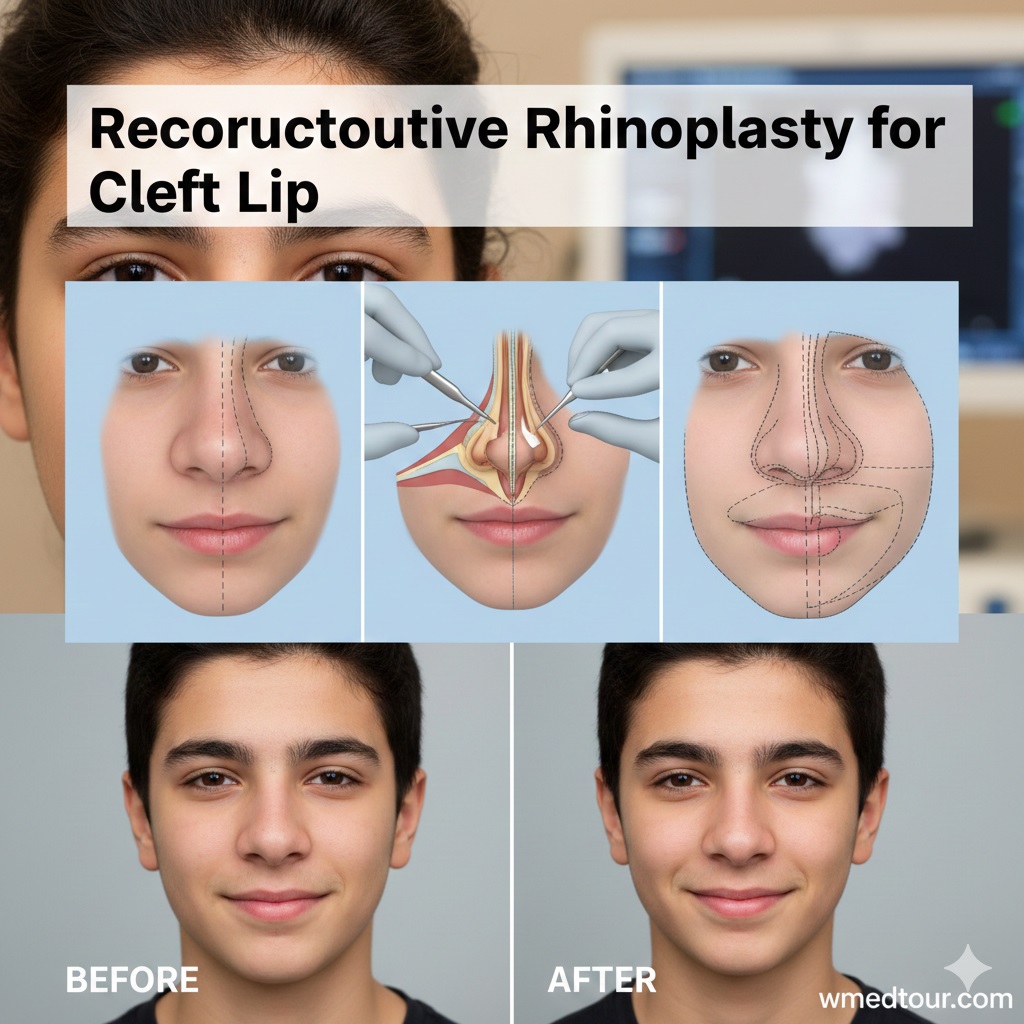
✨ Case study of Reconstructive Rhinoplasty with Cleft Lip Treatment
💡 Executive Summary
Initially, addressing residual deformities following primary cleft lip and palate repair always requires a highly specialized approach. Therefore, this article provides a detailed look at the complex procedure known as Reconstructive Rhinoplasty with Cleft Lip Treatment. Specifically, this combined surgery typically targets the challenging Cleft Lip Nasal Deformity (CLND). This deformity involves severe nasal asymmetry, collapsed alar rims, and deficient nasal support. Because of the significant tissue deficit, surgeons consequently rely on the strength and volume of autologous Rib Cartilage for robust and lasting reconstruction. Ultimately, we discuss the benefits, the surgical process, and more importantly, why specialized centers in countries like Iran excel in these intricate revision procedures, offering patients significant aesthetic and functional improvements.
🔬 Understanding Cleft Lip Nasal Deformity Correction
Cleft Lip Nasal Deformity is characterized by significant structural problems that persist even after primary cleft repair. These problems include a flattened nostril dome, a deviated septum, and poor tip projection. Consequently, the goal of Reconstructive Rhinoplasty with Cleft Lip Treatment is not just cosmetic refinement but also restoring anatomical symmetry and improving nasal function. In fact, surgeons often consider this type of surgery a “secondary” or “tertiary” procedure. This procedure only takes place once the facial skeleton has matured.
Furthermore, standard techniques are usually inadequate due to the inherent shortage of local cartilage and scar tissue from prior operations. Therefore, this necessitates the use of robust graft materials. For instance, consult our guide on Gender Confirmation Surgery for insight into other complex reconstructive surgeries.
🛠️ The Role of Rib Cartilage in Cleft Lip Nasal Repair
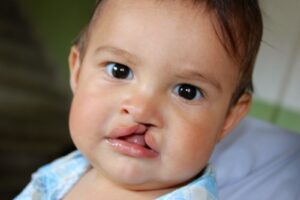
Specifically, the use of Rib Cartilage has become the preferred technique for providing the strong, resilient framework needed to correct complex nasal issues. This is especially true when performing Reconstructive Rhinoplasty with Cleft Lip Treatment. Clearly, Rib Cartilage is essential here because it offers the necessary bulk and rigidity to overcome the contracting forces of existing scar tissue. When harvested (autologous costal cartilage), the surgeon can create customized, strong, L-shaped struts and spreader grafts. In turn, these grafts effectively reshape the severely deviated internal and external nasal structures, thereby ensuring a more symmetrical and projected nose tip.
✅ Pros and Cons of Using Rib Cartilage in Cleft Repair
➕ Advantages (Pros)
- Structural Integrity: Provides maximum strength to correct severe asymmetry and projection deficits.
- Volume for Revision: Ample material is available for comprehensive reconstruction, which is crucially needed for multiple-stage Cleft Lip Treatment.
- Excellent Biocompatibility: The patient’s own tissue thus eliminates foreign body reaction risks.
- Long-Term Stability: Offers superior resistance to scar tissue contracture for lasting results.
➖ Disadvantages (Cons)
- Donor Site Morbidity: Requires a secondary incision (on the rib cage), consequently increasing initial pain and healing time.
- Potential for Warping: Although rare with experienced surgeons, the large graft may twist slightly over time.
- Increased Procedure Time: The complexity and harvest indeed significantly lengthen the operation.
- Specialized Skill Required: Therefore, this procedure demands an extremely skilled surgeon, which emphasizes the importance of detailed vetting, as covered in our surgeon vetting guide.
🧑⚕️ Patient Journey: The Integrated Case Study (Shayli’s Complex Procedure)
Shayli, as observed in the video footage [Image 5: Shayli’s initial consultation], presented with a complex history. She required both significant aesthetic correction and an auxiliary lip repair. Although the video focuses on general revision, the requirement for symmetry and lip repair strongly suggests a history potentially related to a cleft or significant congenital facial asymmetry. Therefore, this elevates the procedure to the complexity of Reconstructive Rhinoplasty with Cleft Lip Treatment.
📜 Shayli’s Integrated Treatment Plan Details:
- Consultation & Goals: Shayli emphasized precise symmetry and a refined nose model, along with the specific lip repair. Ultimately, this level of revision suggests she aimed to correct residual nasal and lip asymmetry often seen after initial cleft interventions.
- Surgical Decision: Consequently, the surgeon recognized the need for Rib Cartilage (as seen in [Image 15: Harvested Rib Cartilage]) to provide the required structural foundation for the nose. This material overcomes the existing scar tissue. Thus, this combined operation constitutes the core of Reconstructive Rhinoplasty with Cleft Lip Treatment.
- Integrated Repair: The procedure addressed three components: (1) First, Rib Cartilage Harvest, (2) Then, Rhinoplasty for tip projection and structural correction, and (3) Finally, Cleft Lip Repair focusing on refining the vermillion border and minimizing the residual scar/asymmetry.
- Expert Care: The patient specifically sought out Dr. Gholami, which demonstrates the need for a highly specialized facial reconstructive surgeon capable of handling both the nose and the lip components simultaneously. This is a prerequisite for this complex field. Therefore, this level of specialization mirrors what is necessary in fields like intersex surgeries.
Ultimately, successful treatment requires achieving both a structurally sound, symmetrical nose and a harmonized lip contour. Hence, the procedure provides the patient with a significant improvement in function and facial aesthetics [Image 45: Post-operative view].
🎯 Who is This Integrated Surgery For?
Consequently, the comprehensive procedure of Reconstructive Rhinoplasty with Cleft Lip Treatment is specifically designed for patients who meet the following criteria:
- Patients with Cleft Lip Nasal Deformity (CLND): For example, typically adolescents or adults seeking final correction after earlier, multi-stage cleft repairs.
- Individuals with Severe Septal Deviation: In other words, those whose breathing function is severely impaired by a complex septal deformity tied to the cleft history.
- Patients Requiring Major Nasal Augmentation: That is to say, people needing significant projection and symmetry restoration due to tissue deficiency.
- Individuals Seeking Integrated Facial Harmony: Namely, patients who require simultaneous refinement of both the nose and the lip scar for optimal facial balance.
✈️ Global Comparison: Why Choose Iran for Integrated Cleft Lip and Nose Reconstruction?
When seeking specialized and cost-effective care for Reconstructive Rhinoplasty with Cleft Lip Treatment, Iran remains an outstanding destination.
🇮🇷 Iran’s Edge in Cleft and Revision Surgery
The volume and complexity of facial aesthetic surgeries performed in Iran have created an environment of unparalleled specialization. Consequently, Iranian surgeons are highly adept at utilizing advanced grafting techniques like Rib Cartilage for complex revision and congenital defect cases.
- Specialized Experience: Since the country has a high number of patients seeking aesthetic and revision rhinoplasty (the country’s signature procedure), it means that Iranian surgeons possess refined skills in detailed nasal and facial reconstruction. This is precisely what is needed for successful Cleft Lip Treatment.
- Cost-Effectiveness: Top-tier reconstructive surgery, which is often prohibitively expensive in Europe or North America, is offered at a fraction of the cost in Iran, thereby ensuring access to quality care. In addition, this economic benefit extends to many treatments, including comprehensive fertility treatments abroad.
- Integrated Care: Furthermore, many centers provide combined OMFS (Oral and Maxillofacial Surgery) and Plastic Surgery expertise, which ensures seamless care for the nasal and lip components of the Reconstructive Rhinoplasty with Cleft Lip Treatment. For full travel details, check our Medical Travel Guide for Iran Regulations.
Ultimately, Iran offers a superior combination of skill, volume, and affordability for these intricate facial reconstructions.
📊 Comparison Table: Complex Rhinoplasty & Cleft Repair
| Factor | Iran (Top Destination) | Western Europe / USA |
|---|---|---|
| Expertise in Cleft Rhinoplasty Revision | Very High Volume & Specialized Focus | High, but often centered in university hospitals. |
| Estimated Cost (Complex Procedure) | $3,500 – $8,000 USD | $15,000 – $40,000+ USD |
| Access to Integrated OMFS/Plastic Surgeons | Readily Available via Medical Tourism | Requires navigating specialized hospital networks. |
Sources: Cost data reflects integrated surgical packages in major medical tourism markets. For details on related plastic surgery costs, review our guide on Breast Augmentation in Iran.
❓ Frequently Asked Questions (FAQ)
🕒 Timing and Results of Surgery
At what age should a patient undergo Cleft Lip Deformity correction?
This reconstructive surgery is typically performed after the face has reached full skeletal maturity, generally between 16 to 18 years of age. Consequently, performing the rhinoplasty earlier can interfere with normal facial bone growth, thus this late timing is crucial for stable, long-term results.
Is the lip revision done simultaneously with the nose?
Yes, in the context of Reconstructive Rhinoplasty with Cleft Lip Treatment, the lip revision is usually performed at the same time as the nasal reconstruction in order to achieve optimal facial symmetry and harmony in a single operating session. This refinement often minimizes scarring or improves the Cupid’s bow.
Can this procedure entirely eliminate all signs of a previous cleft lip?
Although Reconstructive Rhinoplasty with Cleft Lip Treatment significantly improves the appearance of the nose and lip, including scar revision, it cannot completely erase the history of the cleft. Instead, the goal is maximum aesthetic and functional restoration, leading to results that are often difficult to detect by the casual observer.
🩹 Recovery and Material Questions
How is the structural nasal deficiency in cleft patients different?
Cleft-related nasal deformity involves innate deficiency and malposition of the cartilage and underlying bone structure from birth. This is compounded by scar contracture, thereby making the reconstruction significantly more challenging. It requires more extensive grafting than a typical revision due to aesthetic dissatisfaction.
What is the typical recovery time before returning to non-strenuous work?
Patients can usually return to light, non-physical work or school within 10 to 14 days. However, they must avoid strenuous activity, heavy lifting, or any contact sports for at least 6 weeks to ensure the cartilage grafts properly integrate and the lip incisions heal without tension.
What happens to the rib cage after the cartilage is removed?
Only a small, non-structural segment of cartilage is harvested. The area heals with fibrous tissue, and importantly, there is no long-term functional impairment or increased risk of lung injury. In addition, the donor site scar is typically small and placed in an inconspicuous area.
How long should a patient plan to stay abroad for this surgery?
For a complex surgery like Reconstructive Rhinoplasty with Cleft Lip Treatment, patients should plan to stay in the medical destination (like Iran) for a minimum of 10 to 14 days. This allows sufficient time for immediate recovery, cast removal, and finally, the surgeon’s final check-up before flying home, which is a crucial aspect of global medical tourism planning.
🔗 Further Exploration and Internal Links
- Plastic Surgery Department
- Rhinoplasty Iran Cities Guide
- Iran vs. Turkey Rhinoplasty Cost
- Best Countries for Cosmetic Surgery
- Rhinoplasty Price in Iran
- Medical Tourism Iran Ultimate Guide
- Septoplasty Procedures
- Medical Visa Definitive Handbook
- Face, Neck, and Eyes Surgeries
- Genital Cosmetic Surgery
- Find a Doctor
- More Articles
- Contact Us
- FAQ Section
- About WMedTour
📚 Authoritative Sources
The information presented here integrates current surgical consensus on Cleft Lip Nasal Deformity correction:
Costal Cartilage in Correction of Cleft Lip Nasal Deformity – NCBI (Nofollow) |
Modern Management of Cleft Lip Nasal Deformity – Aesthetic Surgery Journal (Follow)