Recovering After Colectomy: Day-by-Day Timeline & Practical Tips 🌟
Executive Summary 📋
Recovering After Colectomy: Day-by-Day Timeline & Practical Tips is a journey that requires patience, preparation, and professional guidance. This comprehensive guide outlines the transition from the operating room to full physical activity. Key highlights include:
- 🔹 Immediate Phase: Focus on pain management and early mobility within the first 24 hours.
- 🔹 Hospital Stay: Transitioning from liquid diets to soft solids while monitoring bowel function.
- 🔹 Home Recovery: Adapting your environment and diet to support long-term bowel health.
- 🔹 Expert Support: Utilizing specialized general surgery resources to minimize complications.
Who is This For? 👥
This roadmap serves patients, their families, and healthcare professionals seeking a detailed understanding of post-surgical life. Whether you are undergoing a resection for diverticulitis, Crohn’s disease, or colorectal cancer at our oncology department, this guide offers the clarity you need. We designed these insights for those prioritizing a smooth transition back to health through structured protocols and empathetic care.
Understanding the Recovery Landscape 🏥
The process of Recovering After Colectomy: Day-by-Day Timeline & Practical Tips starts the moment you wake up from anesthesia. Every patient heals at a different pace. However, following a clinical timeline helps set realistic expectations. Surgeons often use Enhanced Recovery After Surgery (ERAS) protocols. These protocols aim to get you eating and walking sooner. Consequently, the traditional long hospital stay is becoming a thing of the past.
Modern techniques in laparoscopic surgery have revolutionized these outcomes. Smaller incisions mean less pain and a faster return to daily routines. Therefore, choosing a facility with advanced technology is a critical first step. At WMedTour, we connect you with world-class doctors who specialize in these minimally invasive approaches.
Phase 1: The Hospital Experience (Days 1–5) 🛌
Day 1: The First Steps
On the first day, the primary goal involves waking the digestive system and managing discomfort. You might feel groggy or bloated. Nurses will encourage you to sit up or take a few steps. This movement prevents blood clots and stimulates the bowels. Although it sounds challenging, early walking is the most effective way to speed up Recovering After Colectomy: Day-by-Day Timeline & Practical Tips. You will likely receive fluids through an IV to maintain hydration.
Days 2 and 3: Dietary Progression
By the second day, you may start sipping clear liquids. If your body tolerates these, you will move to a full liquid diet. Doctors monitor your “bowel sounds” to ensure the intestines are functioning. During this phase, many patients visit our FAQ section to understand the normal variations in initial bowel movements. It is common to experience gas or mild cramping as the system restarts. This is a positive sign that healing is underway.
Days 4 and 5: Preparing for Discharge
Before leaving, you must meet specific criteria. These include passing gas, tolerating soft foods, and managing pain with oral medications. Your medical team will check your incisions for signs of infection. If you have a stoma, specialists will teach you how to care for the appliance. Many patients choose Iran for their surgery because of the intensive post-operative nursing care available during these critical early days.
The Recovery Comparison: Laparoscopic vs. Open Surgery 📊
The type of surgery you undergo significantly influences Recovering After Colectomy: Day-by-Day Timeline & Practical Tips. Below is a comparison of what to expect based on the surgical approach.
| Feature | Laparoscopic Colectomy | Open Colectomy |
|---|---|---|
| Incision Size | Several small (0.5-1cm) cuts | One large (10-20cm) incision |
| Hospital Stay | 2 to 4 days | 5 to 8 days |
| Pain Levels | Moderate; managed with oral pills | Significant; may require IV pumps |
| Return to Work | 2 to 3 weeks | 6 to 8 weeks |
Phase 2: Transitioning Home (Weeks 2–4) 🏠
Establishing a New Routine
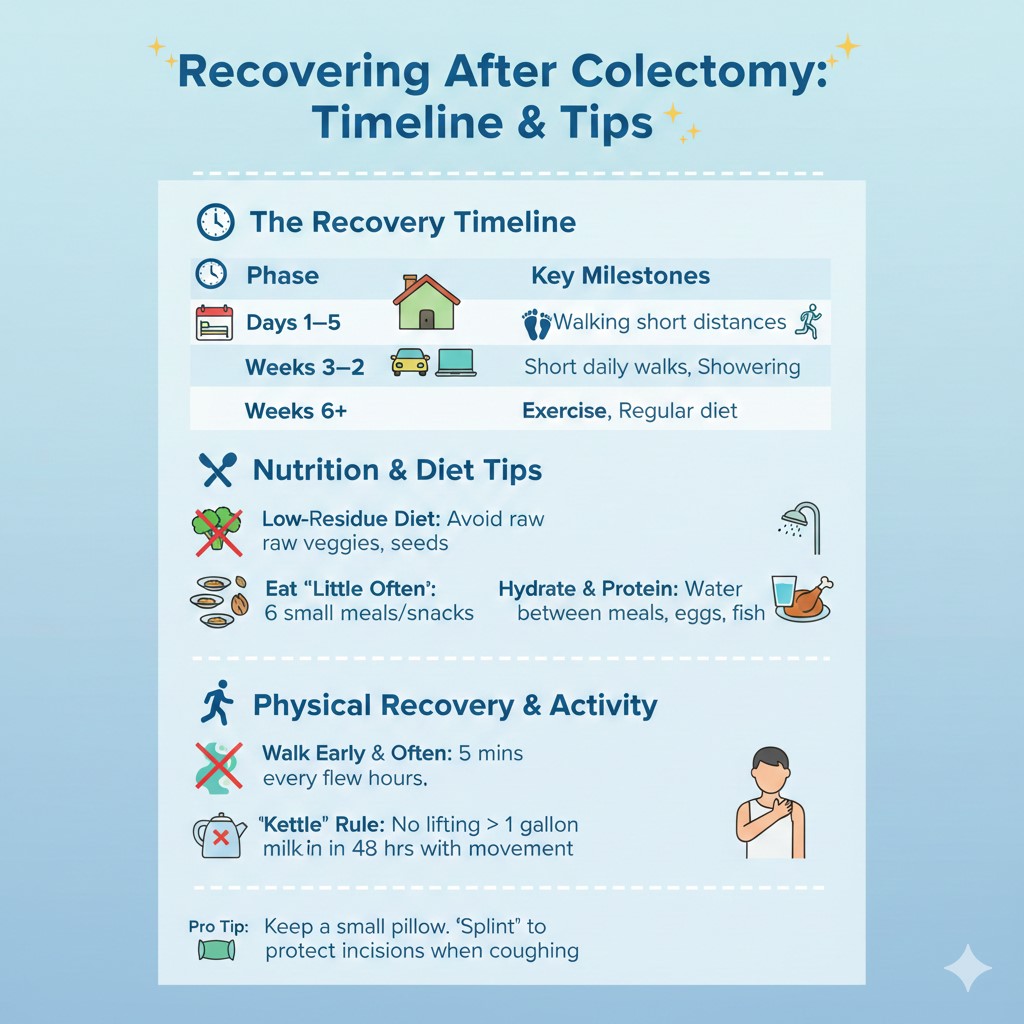
Returning home marks a significant milestone in Recovering After Colectomy: Day-by-Day Timeline & Practical Tips. However, it can also feel overwhelming. You must balance rest with activity. We recommend taking short walks every few hours. Avoid lifting anything heavier than a gallon of milk. Your body is focusing its energy on internal healing. Therefore, you might feel more tired than usual. Listen to your body and prioritize sleep.
Wound Care and Hygiene
Keep your incision sites clean and dry. Most surgeons allow showering after 48 hours, but you should avoid soaking in baths. Look for redness, swelling, or unusual drainage. If you notice a fever, contact your doctor immediately. For international patients, WMedTour offers telemedicine consultations to monitor your progress remotely. This ensures you have professional eyes on your recovery even after you fly back home.
Dietary Adjustments for Bowel Stability
Your colon’s job is to absorb water. After a colectomy, your stools may be looser. To manage this, focus on a low-residue diet initially. This includes white bread, rice, and cooked vegetables without skins. Avoid high-fiber foods like nuts, seeds, and raw fruits for at least four weeks. Small, frequent meals are easier on the system than three large ones. Furthermore, stay hydrated by drinking water between meals rather than during them.
The Patient Roadmap: Your Journey with WMedTour 🗺️
Navigating surgery abroad involves more than just the operation. We provide a structured roadmap to ensure Recovering After Colectomy: Day-by-Day Timeline & Practical Tips remains the focus. Here is how we support you:
- Pre-Arrival Consultation: Reviewing medical history via pre-operative consultation.
- Arrival & Admission: VIP transport to the hospital and personal translator assistance.
- Surgery & Immediate Recovery: Expert care in JCI-accredited facilities.
- Post-Op Convalescence: Staying in a recovery-friendly hotel with medical supervision.
- Healing Tourism: Gentle sightseeing to boost morale during later recovery stages.
- Follow-up: Continued support through our contact channels.
Case Study: Arthur’s Path to Full Recovery 🌟
Arthur, a 58-year-old engineer from the UK, faced a total colectomy due to severe ulcerative colitis. He chose to travel to Mashhad for his procedure. Initially, Arthur worried about the long-distance travel and the language barrier. However, the WMedTour team managed every detail. His Recovering After Colectomy: Day-by-Day Timeline & Practical Tips went exactly according to plan. By day 3, he was walking the hospital corridors. By week 4, back in London, he was enjoying light walks in the park. Arthur credits his success to the intensive nursing care and the specialized diet plan provided by his Iranian surgeons.
Phase 3: Long-Term Healing (Months 2–6) 🌱
Returning to Physical Activity
As you enter the second month, you can gradually increase exercise. Yoga and swimming are excellent low-impact options. However, consult your surgeon before starting core-heavy workouts. Abdominal muscles need time to regain strength without risking a hernia. If you had a joint replacement or other surgeries previously, your recovery speed might differ. Be patient with your progress.
Monitoring Nutritional Health
Because the colon absorbs certain vitamins and minerals, long-term monitoring is vital. You might need supplements like Vitamin B12 or Vitamin D. Regular comprehensive health checkups help track these levels. Maintaining a food diary can also help identify any “trigger foods” that cause bloating or urgency. Over time, most patients return to a varied and enjoyable diet.
Cost Analysis: Recovery and Surgical Packages 💰
The financial aspect of surgery is a major consideration. Below is an estimated cost breakdown for colectomy packages in top medical tourism destinations. These prices include the hospital stay, surgeon fees, and initial recovery support.
| Destination | Surgical Cost (USD) | Recovery Accommodation | Total Package |
|---|---|---|---|
| Iran (WMedTour) | $3,500 – $5,000 | Included | $4,500 – $6,500 |
| Turkey | $7,000 – $10,000 | Extra | $8,500 – $12,000 |
| India | $5,500 – $8,000 | Extra | $7,000 – $10,000 |
Recovery & Tourism: Healing in a Beautiful Setting 🌴
Why recover in a cold, sterile environment when you can heal amidst history and nature? Many patients use the later stages of Recovering After Colectomy: Day-by-Day Timeline & Practical Tips to explore. After your initial two weeks of rest, gentle tourism can significantly boost your mental health. In Iran, you can enjoy the serene atmosphere of Persian gardens or the stunning architecture of Shiraz. These experiences provide a peaceful transition from being a “patient” back to being a “traveler.” We handle all the logistics, so you can focus on your well-being.
Practical Tips for a Smooth Recovery 💡
- ✅ Stay Hydrated: Drink 8–10 glasses of water daily to prevent dehydration.
- ✅ Chew Thoroughly: Digestion starts in the mouth. Help your intestines by breaking down food well.
- ✅ Walk Daily: Even 10 minutes of walking prevents complications like pneumonia.
- ✅ Manage Stress: Consider meditation or reading to keep your mind calm.
- ✅ Follow-up: Never skip your scheduled health checkups.
The Role of Support Systems 🤝
Recovery is not a solo journey. Having a caregiver helps manage the practicalities of daily life. At WMedTour, our coordinators act as your extended support system. From arranging air ambulances if needed to daily check-ins, we are with you. Emotional support is just as important as physical care. Connecting with others who have undergone Recovering After Colectomy: Day-by-Day Timeline & Practical Tips can provide invaluable perspective.
When to Call Your Surgeon 📞
While most recoveries proceed smoothly, you must know the red flags. Contact your medical team if you experience:
- Persistent nausea or vomiting.
- Inability to pass gas or stool for more than 24 hours.
- Severe abdominal swelling or pain that worsens.
- A fever higher than 38°C (100.4°F).
- Pus or foul-smelling discharge from incisions.
Final Thoughts on the Healing Journey 🏁
Completing Recovering After Colectomy: Day-by-Day Timeline & Practical Tips is a testament to your resilience. While the first few weeks are demanding, the long-term benefits of surgery often far outweigh the temporary challenges. By choosing the right surgical team and following a structured recovery plan, you ensure the best possible outcome. At WMedTour, we take pride in being your partner in health, providing world-class medical departments and personalized care at every turn.
Frequently Asked Questions (FAQ) ❓
1. How long does the pain last after a colectomy?
Most patients experience significant soreness for the first 5 to 7 days. However, this is usually well-managed with medication. By the end of the second week, most people switch to over-the-counter pain relievers. If you had laparoscopic surgery, you will likely feel much better sooner than with an open procedure. It is important to stay ahead of the pain by taking your medication as prescribed rather than waiting for discomfort to become severe. If the pain suddenly increases, you should notify your surgical team immediately.
2. When can I start eating normal food again?
You will typically start with liquids and transition to soft foods within the first week. Most patients can return to a relatively normal diet after 4 to 6 weeks. However, “normal” might look different for everyone. You should introduce high-fiber foods very slowly to see how your body reacts. Some people find that spicy or very greasy foods cause issues for a few months. Our team can provide a specific dietary guide tailored to your surgery type.
3. Is it normal to have frequent bowel movements after surgery?
Yes, this is very common during the initial phase of Recovering After Colectomy: Day-by-Day Timeline & Practical Tips. Since a portion of the colon (which absorbs water) is gone, the stool will be softer and more frequent. Your body will eventually adapt, and the frequency will decrease over several months. Using a barrier cream can help prevent skin irritation during this time. If you experience more than 10-12 movements a day or signs of dehydration, you must consult your physician to adjust your management plan.
4. Can I travel by plane after my surgery?
Most surgeons recommend waiting at least 10 to 14 days before flying. This allows the initial risk of blood clots and bowel obstructions to pass. When you do fly, make sure to walk in the aisle every hour and stay hydrated. Wearing compression stockings is also highly recommended. At WMedTour, we coordinate your return trip to ensure you are cleared for travel by your surgeon. If you require extra assistance, we can arrange for medical escort services on your flight.
5. How do I prevent a hernia after abdominal surgery?
The best way to prevent an incisional hernia is to avoid heavy lifting for at least 6 to 8 weeks. This includes avoiding strenuous core exercises or manual labor. Supporting your abdomen with a pillow when you cough or sneeze can also reduce pressure on the healing tissues. Maintaining a healthy weight and avoiding smoking—which impairs tissue healing—are also critical factors. If you notice a new bulge near your incision, have it evaluated by a doctor during your follow-up checkup.
6. Will I need vitamin supplements forever?
This depends on how much of the colon or small intestine was removed. For most partial colectomies, permanent supplementation is not necessary. However, if a large portion of the terminal ileum was involved, you might need Vitamin B12 injections. Regular blood tests are the only way to know for sure. We suggest including these tests in your annual physical. Your doctor will advise if a specific multivitamin or mineral supplement is required based on your lab results.
7. What are the benefits of recovering in Iran through WMedTour?
Iran offers a combination of highly skilled surgeons and exceptionally low costs. Beyond the financial savings, the quality of nursing care and the availability of specialized post-op facilities are outstanding. You receive personalized attention that is often difficult to find in overcrowded Western hospitals. Furthermore, the cultural hospitality makes international patients feel welcome and safe. Our Mashhad location, for example, is world-renowned for its medical excellence and spiritual tranquility.
8. How soon can I drive a car again?
You should not drive as long as you are taking narcotic pain medications, as they impair your judgment and reaction time. Most patients are ready to drive again within 2 to 3 weeks. You must be able to move your foot from the gas to the brake quickly and comfortably. Additionally, you should be able to twist your torso to check mirrors without sharp pain. Always check with your insurance provider and your surgeon before getting back behind the wheel to ensure you are legally and physically cleared.
9. How do I manage a stoma if I have one?
If your surgery involves a stoma, you will work closely with a Wound, Ostomy, and Continence (WOC) nurse. They will teach you how to change the bag and care for the skin around the stoma. While it feels daunting at first, it quickly becomes a manageable part of your routine. There are many modern, discreet appliances available that allow you to live a completely active life, including swimming. For more tips, you can reach out to our specialist network for guidance.
10. Can I still get colon cancer after a colectomy?
If you had a partial colectomy, the remaining part of your colon still needs monitoring. You will still need regular colonoscopies as recommended by your oncologist. If you had a total colectomy, the risk is significantly lower, but the rectal stump (if preserved) still requires surveillance. Surgery removes the existing problem but does not change your genetic predisposition. Therefore, lifelong follow-up care remains a vital part of your long-term health strategy and cancer prevention efforts.
11. What should I do if I feel depressed during recovery?
Post-operative depression is more common than people realize. The combination of physical trauma, hormonal shifts, and lifestyle changes can take a toll. It is important to talk about your feelings with family, friends, or a professional counselor. Light exercise and getting sunlight can also help regulate your mood. If feelings of sadness persist, please contact our support team. we can help connect you with resources or provide a listening ear during your journey.
12. How does WMedTour handle emergencies after I return home?
We maintain a digital record of your surgery and recovery. If an emergency arises, we can provide your local doctors with all the necessary surgical notes and data. Additionally, our surgeons are available for urgent telemedicine sessions to consult with your local team. We believe in “continuity of care,” meaning our responsibility doesn’t end when you leave the hospital. We remain a resource for you as long as you need us during your recovery phase.
The Patient Roadmap to Success 🛣️
Your journey to health is a marathon, not a sprint. Follow these milestones for the best results.
Travel
Seamless logistics managed by WMedTour.
Surgery
Elite surgical care in modern hospitals.
Recovery
Supported healing in a calm environment.
Life
Return to the activities you love.