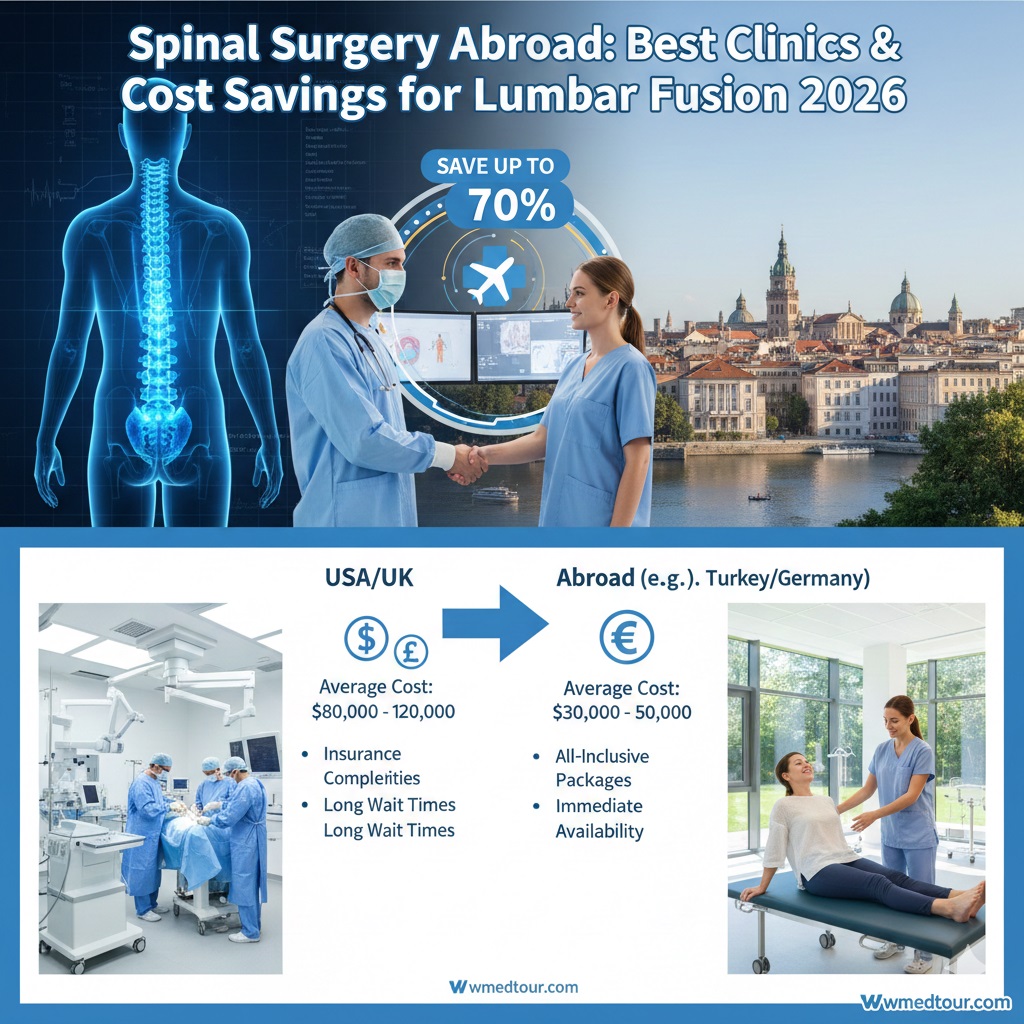
Spinal Surgery Abroad: Best Clinics and Cost Savings for Lumbar Fusion in 2026 ✈️💰
Your Comprehensive 2026 Guide to World-Class, Affordable Back Care
⭐ Executive Summary: Key Takeaways
Choosing to pursue Spinal Surgery Abroad: Best Clinics and Cost Savings for Lumbar Fusion in 2026 offers a viable path to high-quality care at a fraction of the cost in many Western nations. Furthermore, leading destinations like Turkey, India, and Germany provide highly specialized orthopedic and neurosurgical departments. The cost savings for Lumbar Fusion specifically can reach 50-70% compared to US prices. Thus, proper research and choosing accredited centers remain crucial for a successful medical journey. Orthopedic medical tourism is a growing field you should certainly investigate.
- Cost Savings: Expect savings up to 70% on Lumbar Fusion.
- Top Destinations: Turkey, India, and Germany are frequently cited for excellence in Spinal Surgery Abroad.
- Key Requirement: Prioritize JCI or ISO-accredited clinics and experienced spine surgeons.
Understanding the Need for Spinal Surgery Abroad: Lumbar Fusion Insights
Chronic lower back pain can significantly diminish your quality of life. Indeed, when conservative treatments fail, a procedure like **Lumbar Fusion** may become necessary. This surgery permanently connects two or more vertebrae in your lower back. Specifically, it stabilizes the spine and reduces pain caused by conditions such as degenerative disc disease, spondylolisthesis, or spinal stenosis. Consequently, the need for this specialized procedure is rising globally. However, the staggering cost of this surgery in countries like the United States or the UK often forces patients to explore Spinal Surgery Abroad: Best Clinics and Cost Savings for Lumbar Fusion in 2026. This medical tourism option provides access to high standards of care without the crippling financial burden.
Moving forward, this detailed guide examines the world’s premier destinations for spinal care. We will explore how you can secure substantial cost savings. Moreover, we will help you identify the best clinics for your Lumbar Fusion surgery in 2026. Remember, researching centers and surgeons is key to a positive outcome. Consider our comprehensive guide on choosing a surgeon or clinic abroad for a helpful checklist.
❓ Why Choose Medical Tourism for Lumbar Fusion?
The primary driver for seeking Spinal Surgery Abroad is, without a doubt, cost. The average price of a single-level **Lumbar Fusion** in the US can easily exceed $100,000. Conversely, many reputable international hospitals offer the same high-quality procedure for $15,000 to $35,000. This massive differential makes medical travel incredibly appealing. Additionally, many international centers provide immediate access to surgery, bypassing long waiting lists common in public healthcare systems.
Therefore, medical tourism for Lumbar Fusion often means:
- Immediate Access: Faster scheduling of complex procedures.
- Exceptional Value: Bundled packages covering surgery, hospital stay, and basic rehabilitation.
- High Standards: Access to internationally trained surgeons and modern technology, like robotic-assisted **Spinal Surgery**.

🌍 Best Countries and Clinics for Spinal Surgery Abroad in 2026
Identifying the top global destinations for specialized care, particularly complex procedures like Lumbar Fusion, requires assessing accreditation, surgeon experience, and technological investment. We have analyzed the landscape for 2026 to highlight the best options for your Spinal Surgery Abroad: Best Clinics and Cost Savings for Lumbar Fusion in 2026.
Turkey: The Cost-Quality Leader 🇹🇷
Turkey consistently ranks among the top destinations for medical tourism globally. Consequently, it offers an outstanding combination of affordability and state-of-the-art facilities. Many Turkish hospitals are JCI-accredited and employ surgeons trained in Europe and the US. Furthermore, they excel in minimally invasive spine surgery techniques, which aid faster recovery. Hence, patients seeking **Lumbar Fusion** find Turkey to be an extremely compelling option. You can learn more about general medical travel in this region by visiting our comprehensive medical travel Turkey guide.
- Pros: Very competitive pricing, high volume of procedures, advanced technology (e.g., O-arm imaging), short waiting times.
- Cons: Requires careful clinic vetting; communication can sometimes be an issue if staff are not fluent in English.
**Example Clinic Insight:** Several large hospital groups in Istanbul and Ankara have dedicated spinal surgery centers with internationally recognized neurosurgeons.
Germany: Excellence and Precision 🇩🇪
German clinics are synonymous with precision, rigorous standards, and superior medical outcomes. While costs here are higher than in Asian or Middle Eastern centers, they often remain significantly lower than in the US. Moreover, the focus in Germany is on complex cases and rehabilitation excellence. Therefore, for patients prioritizing the highest level of proven surgical precision and meticulous post-operative care, Germany presents a premium option for Lumbar Fusion. Learn about the regulations in our legal medical travel guide for Germany.
- Pros: Unparalleled regulatory oversight, world-class rehabilitation, leading-edge surgical techniques (e.g., robotic spine surgery).
- Cons: Higher cost compared to other medical tourism hubs, potentially requiring longer stays for recovery protocols.
India: High-Quality, Ultra-Affordable Care 🇮🇳
India is a powerhouse of high-volume, high-quality medical services, particularly in major cities like Mumbai, Delhi, and Chennai. Furthermore, numerous hospitals maintain international accreditations (JCI or NABH). Indian surgeons often have extensive experience in spinal **Lumbar Fusion** procedures due to the sheer volume of cases they handle. Therefore, for maximum cost savings combined with established medical quality, India is a top choice. This option is very popular for patients seeking affordable joint and spine care, such as those looking for affordable hip replacement surgery.
- Pros: The lowest cost structure globally, highly experienced surgeons, established medical tourism infrastructure.
- Cons: Requires navigation of cultural differences; quality can vary widely, necessitating thorough research.
Iran: Emerging Expertise in Neurosurgery 🇮🇷
Iran has rapidly developed its medical sector, particularly in specialized fields like neurosurgery and oncology. Indeed, many Iranian surgeons receive training at prestigious institutions worldwide. The cost of complex procedures like Spinal Surgery Abroad in Iran is remarkably low, rivaling or even surpassing India’s affordability. For advanced procedures like lung cancer treatment in Iran or complex spine work, the value proposition is hard to ignore. We offer a detailed medical travel Iran guide for further details.
- Pros: Extremely competitive pricing, highly skilled neurosurgeons, excellent patient-to-staff ratios in private facilities.
- Cons: Navigating travel and visa complexities (refer to medical visa definitive patient handbook), less established international tourism support compared to Turkey.
💸 Cost Savings Breakdown for Lumbar Fusion in 2026
Understanding the potential savings is paramount when considering **Spinal Surgery Abroad**. The cost of a single-level Lumbar Fusion encompasses the surgeon’s fee, hospital charges, anesthesia, implants, and rehabilitation. This section details the dramatic cost difference that drives medical tourism for Lumbar Fusion.
The Price Disparity: USA vs. Global Hubs
In the United States, the total billed charges for a **Lumbar Fusion** can easily range from $80,000 to over $150,000, depending on the hospital and geographical region. In stark contrast, top international clinics offer comprehensive packages that include nearly every aspect of the patient’s journey. Consequently, the patient benefits from transparent pricing and significant financial relief. This transparency contrasts sharply with the often opaque pricing structures found domestically. For an overview of how we compare costs across different procedures, review our guide on cancer treatment cost by country.
What is Included in the Cost?
When comparing prices, it is absolutely essential to know what the quoted fee includes. A genuine package for Spinal Surgery Abroad should typically cover:
- Surgeon and Anesthesiologist Fees.
- Hospital Stay (4-7 days, depending on recovery).
- Implant Costs (screws, rods, cages).
- Pre-operative tests and consultations.
- Post-operative physiotherapy/rehabilitation sessions while abroad.
- Accommodation and local transportation (often included in comprehensive packages).
Cost Comparison Table: Lumbar Fusion (L4-L5/L5-S1) Estimates for 2026
| Country | Estimated Cost Range (USD) | Estimated Savings vs. US Average ($100k) |
|---|---|---|
| USA (Average) | $80,000 – $150,000 | N/A |
| Turkey 🇹🇷 | $18,000 – $30,000 | 65% – 82% |
| India 🇮🇳 | $15,000 – $25,000 | 70% – 85% |
| Germany 🇩🇪 | $35,000 – $55,000 | 45% – 65% |
| Iran 🇮🇷 | $14,000 – $22,000 | 75% – 86% |
*Estimates are for a single-level posterior **Lumbar Fusion** in 2026. Prices vary based on technique (TLIF, PLIF, ALIF), specific implants, and hospital prestige.
Consequently, the financial argument for pursuing Spinal Surgery Abroad: Best Clinics and Cost Savings for Lumbar Fusion in 2026 is exceptionally strong.
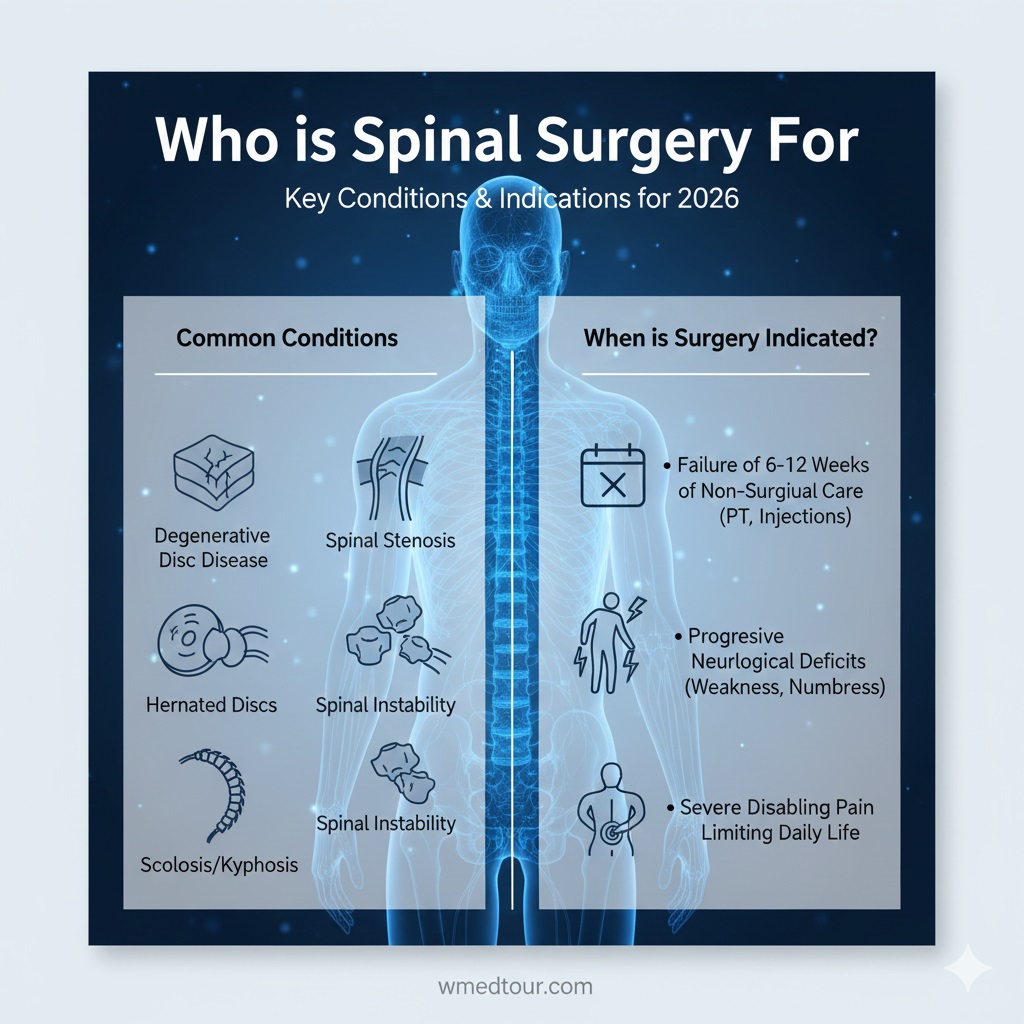
👤 Who is This For?
The option of seeking Spinal Surgery Abroad is specifically suited for several patient profiles. First and foremost, it targets individuals facing high deductibles, limited or no insurance coverage, or high co-pays in their home country. These financial constraints often make domestic surgery prohibitively expensive. Therefore, the significant savings offered abroad become life-changing.
Moreover, it is an ideal path for those living in countries with excessive wait times for elective procedures like **Lumbar Fusion**. Patients who have already done extensive research and understand their diagnosis thoroughly also benefit greatly. Specifically, they can confidently vet international surgeons and clinics. However, this option is generally not recommended for patients with multiple complex comorbidities that might require immediate, extensive post-operative critical care only available locally. Furthermore, candidates must be physically stable enough for international travel and have a solid support system for their recovery both abroad and upon returning home. Planning ahead for your entire medical journey is paramount, so be sure to check our pre-travel resources and checklists.
📜 Case Study: Maria’s Lumbar Fusion Journey
Maria, a 52-year-old marketing professional from Canada, suffered from chronic debilitating pain due to a Grade 2 Spondylolisthesis at L4-L5. Subsequently, her local specialists recommended a Posterior Lumbar Interbody Fusion (PLIF). However, the public healthcare waiting list was over 18 months long. Conversely, pursuing the surgery privately in Canada would cost approximately CAD $75,000. This was simply not an option for her.
The Decision to Go Abroad
After extensive research into Spinal Surgery Abroad: Best Clinics and Cost Savings for Lumbar Fusion in 2026, Maria chose an accredited hospital in Turkey. This decision was based on their excellent neurosurgery department, use of robotic navigation during surgery, and a comprehensive package price. The Turkish clinic offered the entire PLIF procedure for USD $25,000 (roughly CAD $34,000). This represented a massive saving of over 50% on the private Canadian cost.
The Outcome and Recovery
Maria traveled to Istanbul in September 2026. She had her pre-op consultations and the surgery within one week of arrival. The procedure was successful, and she spent five nights recovering in the hospital. Post-discharge, she stayed for two weeks in a serviced apartment for initial rehabilitation sessions. She was able to return home three weeks after the surgery, reporting a significant reduction in nerve pain. Her total trip cost, including flights and accommodation, remained under $30,000 USD. This experience underscores the significant financial and time-saving benefits of choosing Spinal Surgery Abroad from highly reputable centers. She then continued her recovery with physical therapy at home, keeping in mind the long-term **Lumbar Fusion** recovery timeline.
🛡️ Safety and Accreditation: Vetting Clinics for Lumbar Fusion
Safety must always be your absolute priority, even when cost savings are a major factor. Therefore, you must rigorously vet any potential facility offering Spinal Surgery Abroad. Simply looking for low cost is a risky strategy. You need to focus on objective measures of quality and safety.
The Importance of International Accreditation
Always look for hospitals and clinics that hold international accreditation. The **Joint Commission International (JCI)** accreditation is the gold standard globally. This certification signals a commitment to high standards of patient care and safety. Consequently, JCI-accredited facilities are often the safest bet for complex procedures like **Lumbar Fusion**. When researching, you should also look for affiliations with major international bodies, such as the World Health Organization (WHO), as discussed in our global medical treatment regulations guide.
“International accreditation, particularly JCI, assures patients that the facility adheres to rigorous, standardized protocols, significantly reducing risks inherent in complex surgeries like Lumbar Fusion.” – Source: Johns Hopkins Medicine International (Normal Outbound Link).
Surgeon Qualifications and Experience
The surgeon’s experience level is arguably the single most important factor in the success of your **Lumbar Fusion**. You need a surgeon who specializes specifically in spine or neurosurgery, not a general orthopedic surgeon. Furthermore, inquire about their training, number of Lumbar Fusion procedures performed annually, and complication rates. Consequently, selecting a high-volume specialist reduces your surgical risk significantly. Always verify that the surgeon is a member of reputable international organizations, such as the North American Spine Society (NASS) or the AOSpine foundation (Nofollow Outbound Link). This dedication to specialty groups is a strong indicator of up-to-date expertise.
It is important to understand the full context of neurosurgery abroad, as detailed in our guide on neuro-oncology in Iran, which demonstrates the level of specialization available.
🩹 Post-Operative Care and Recovery Timeline
The surgery is only the first step. Therefore, a successful recovery from Lumbar Fusion hinges critically on proper post-operative care and rehabilitation. Since recovery takes several months, planning for this phase is non-negotiable. Typically, patients remain in the hospital for 4-7 days following the procedure. During this initial stay, nurses and physical therapists help patients learn to walk and manage pain effectively.
The Initial Weeks: What to Expect
Upon discharge, you will either fly home or remain near the clinic for an additional week or two of recovery and outpatient physical therapy. This period involves strict limitations on lifting, twisting, and bending. Consequently, having a travel companion is often necessary. The surgeon will provide detailed instructions for wound care and pain management. It is vital to follow these instructions exactly to prevent complications like infection. This level of planning is similar to what is required for fertility treatments pre-travel checklist, underscoring the universal need for preparation in medical travel.
Long-Term Rehabilitation
Full recovery from **Lumbar Fusion** can take 6 months to a year. Therefore, once you return home, you must commit to a structured physiotherapy program. The success of your **Spinal Surgery Abroad** is highly dependent on this long-term commitment. Always ensure that the foreign clinic provides a detailed report and post-operative instructions for your local doctor and physical therapist. Ultimately, consistent rehabilitation is what leads to the best long-term outcomes.
💡 FAQ Section: Spinal Surgery Abroad and Lumbar Fusion
1. What is the primary difference between ALIF, PLIF, and TLIF procedures?
These acronyms describe the approach used in **Lumbar Fusion**: Anterior (ALIF), Posterior (PLIF), and Transforaminal (TLIF). The key difference is the direction from which the surgeon accesses the spine to place the bone graft or cage. Each technique has distinct advantages depending on the patient’s specific spinal condition. Your surgeon will recommend the best approach for your **Spinal Surgery Abroad**.
2. How long is the typical hospital stay after a Lumbar Fusion?
The hospital stay for a standard single-level **Lumbar Fusion** typically lasts between four and seven days. However, the duration varies based on the surgical technique used, the patient’s age, and their initial post-operative mobility and pain control.
3. Does a Lumbar Fusion procedure restrict my future mobility?
Yes, a Lumbar Fusion permanently fuses two or more vertebrae, which eliminates motion at that segment. However, the goal is to stabilize an already painful or unstable segment. Most patients experience minimal change in overall mobility, as the surrounding segments compensate. Nonetheless, it’s a key consideration when deciding on Spinal Surgery Abroad.
4. What is the success rate for Lumbar Fusion surgery?
Success rates for reducing pain and improving function are generally reported to be around 70-90%, but this depends heavily on the underlying condition, the quality of the surgery, and patient adherence to the post-operative recovery plan.
5. Will I need a medical visa for **Spinal Surgery Abroad**?
For most medical tourism destinations, a standard tourist visa may suffice for short stays. However, for extended recovery periods or in certain countries, a specific medical visa may be necessary. Always check the current regulations for your chosen country well in advance. Our definitive patient handbook on medical visas provides essential information.
6. What are the risks of traveling shortly after Lumbar Fusion?
The main risk is the potential for developing Deep Vein Thrombosis (DVT) or a pulmonary embolism due to prolonged sitting. Doctors recommend taking precautions such as walking frequently, wearing compression stockings, and possibly taking blood-thinning medication as prescribed. Patients typically wait 10-14 days post-surgery before flying.
7. How long will I need to stay in the destination country?
The minimum stay is typically 7-10 days to allow for the initial post-operative check-ups and wound care. For a safer recovery, many patients choose to stay for 2-3 weeks, especially if the procedure was a complex **Spinal Surgery Abroad**.
8. Are the metal implants used in fusion surgery safe and recognized globally?
Reputable clinics for Spinal Surgery Abroad use high-quality, globally recognized implants from major international manufacturers (e.g., Medtronic, Stryker, Zimmer Biomet). Always confirm the brand and quality of the hardware being used pre-surgery.
9. What documentation do I need to bring for the surgery?
Bring copies of all relevant medical records, including recent MRI/CT scans, X-rays, lab results, and a letter from your referring physician detailing your diagnosis and treatment history. This is vital for the foreign surgical team.
10. Can I get a robotic-assisted Lumbar Fusion abroad?
Yes, many high-end hospitals in countries like Turkey, Germany, and India have invested in robotic navigation systems for spine surgery. These systems can improve accuracy and potentially lead to smaller incisions and faster recovery. Ask specifically about robotic surgery when researching your options.
11. Will my home country insurance cover Spinal Surgery Abroad?
Generally, most standard health insurance policies, especially in the US, do not cover elective surgery performed abroad. However, some specific international or travel health insurance plans may offer limited coverage. Always check with your provider directly. This is similar to the financial considerations needed for procedures like heart surgery cost comparisons.
12. What does “fusion success” mean in the context of Lumbar Fusion?
Surgical success, or “fusion success,” is defined by radiological evidence that solid bone has grown between the fused segments. This is typically confirmed by X-rays or CT scans taken six to twelve months after the operation.