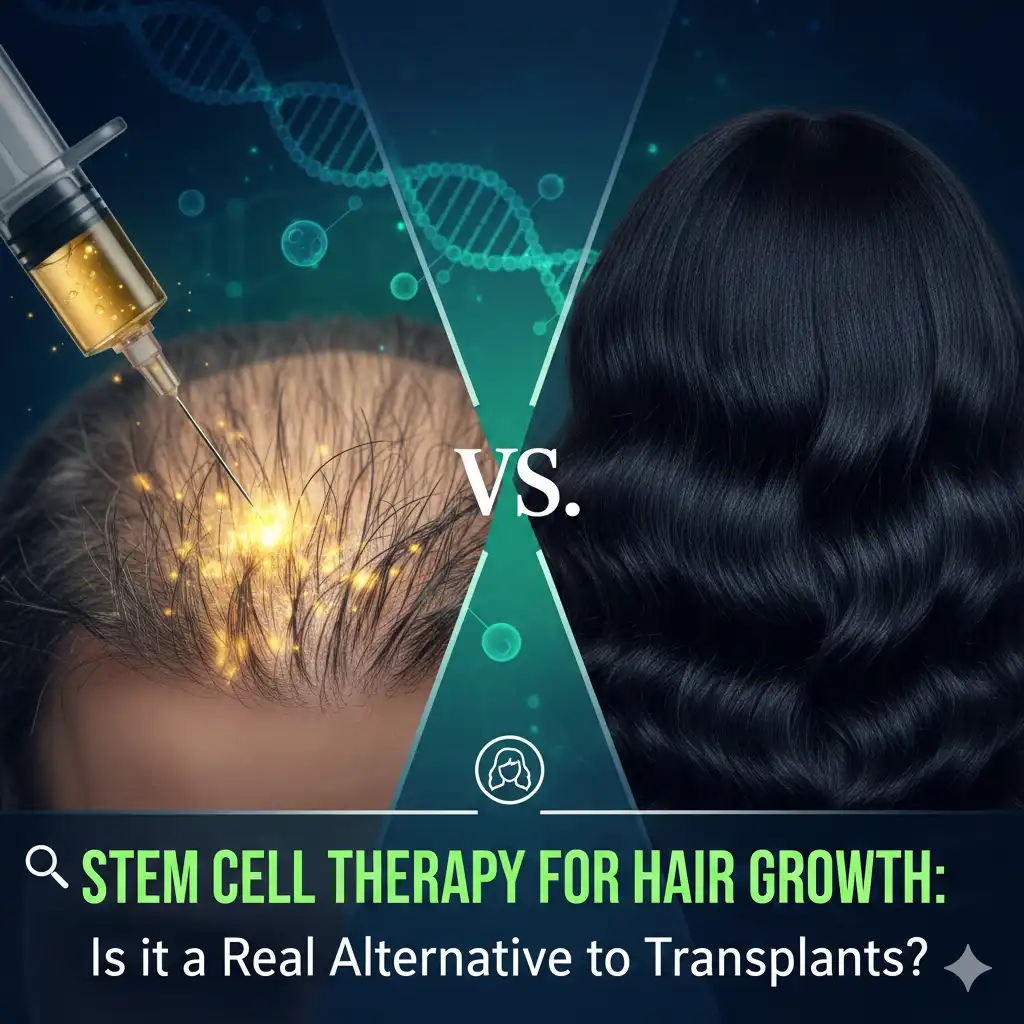
Stem Cell Therapy for Hair Growth: Is it a Real Alternative to Transplants? 🧬💇♂️
Executive Summary: Key Takeaways 📋
- Stem cell therapy is a non-surgical regenerative treatment using the body’s own cells to repair follicles.
- Unlike transplants, stem cell therapy does not require large donor areas or linear scarring.
- It is most effective for early-to-moderate thinning rather than complete baldness.
- Treatment involves a significantly shorter recovery time compared to traditional FUE or FUT methods.
- Current success rates show high patient satisfaction in improving hair density and thickness.
Many individuals facing hair loss today find themselves at a crossroads. They often ask if Stem Cell Therapy for Hair Growth can truly replace the need for surgical intervention. Historically, the gold standard for restoring a receding hairline has been the hair transplant. However, regenerative medicine has introduced groundbreaking shifts in how we approach follicular health. At WMedTour, we specialize in guiding patients through these complex medical choices.
This comprehensive guide dives deep into the science. We explore whether stem cell technology offers a viable alternative to the knife. We also look at the financial implications, recovery paths, and long-term expectations. If you are seeking a solution that avoids the invasiveness of surgery, this analysis is for you.
Understanding the Science of Stem Cell Therapy for Hair Growth 🔬
Stem cell therapy for hair loss is one of the most exciting frontiers in regenerative medicine. Rather than just moving hair from one spot to another (like a traditional transplant), it aims to “wake up” the biological machinery responsible for hair production.
Here is a breakdown of the science behind how it works.
1. The Anatomy of a Hair Follicle
To understand the therapy, you first have to look at the hair follicle. Deep within the follicle lies a specialized area called the bulge. This area houses a reservoir of follicular stem cells.
In a healthy scalp, these cells constantly divide and differentiate to create the hair shaft. However, in cases of androgenetic alopecia (pattern baldness), these follicles don’t necessarily disappear; they simply shrink (miniaturize) and enter a dormant state where the stem cells are no longer “told” to build hair.
2. How the Therapy Works
The goal of stem cell therapy is to introduce new signals or healthy cells into these dormant areas to restart the growth cycle. There are two primary scientific approaches:
A. In-Vivo Activation (The “Signal” Method)
This involves injecting Platelet-Rich Plasma (PRP) or exosomes (tiny messengers secreted by stem cells) into the scalp.
The Science: These injections deliver growth factors that bind to receptors on your existing, dormant stem cells.
The Result: It triggers the transition from the Telogen (resting) phase back into the Anagen (growth) phase.
B. Cell Harvesting (The “Seed” Method)
In more advanced clinical settings, a small tissue sample (a “punch biopsy”) is taken from a healthy part of the scalp.
The Science: The stem cells are isolated and sometimes multiplied in a lab.
The Result: These concentrated cells are injected into thinning areas, effectively “re-seeding” the scalp with active biological units.
3. Why it’s Different from Transplants
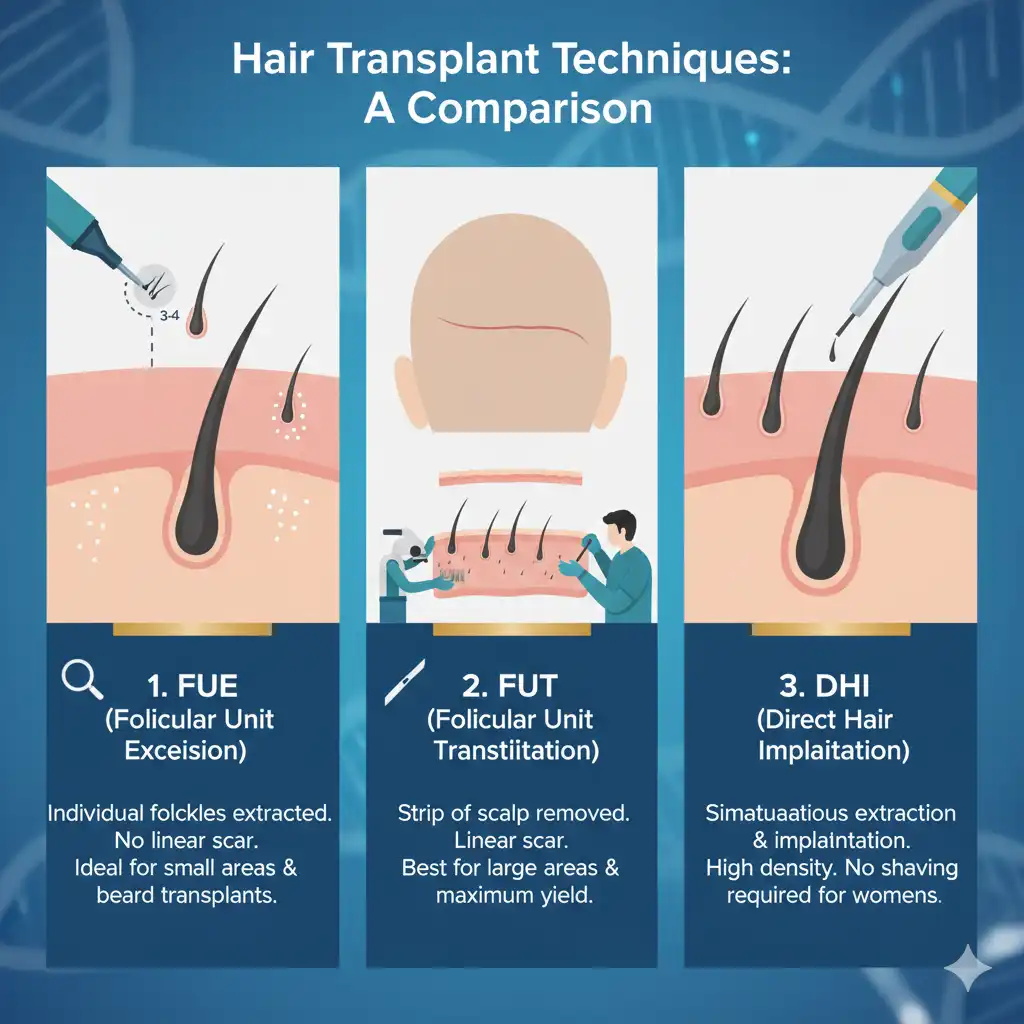
Standard hair transplants are a “numbers game”—you are moving a finite amount of hair from the back of the head to the front. Stem cell therapy is regenerative:
| Feature | Hair Transplant | Stem Cell Therapy |
| Method | Relocates existing follicles. | Repairs and reactivates follicles. |
| Invasiveness | Surgical (requires recovery). | Minimally invasive (injections). |
| Sustainability | Limited by donor hair supply. | Potential to improve overall hair density. |
| Current Status | Standard of care. | Emerging/Experimental in many regions. |
4. The Reality Check
While the science is solid, it’s important to note that results vary. Factors like the age of the patient, the extent of hair loss, and the specific type of stem cells used (autologous vs. donor-derived) play a massive role in success rates. It isn’t a “one-and-done” miracle, but rather a biological nudge to the scalp’s ecosystem.
The Mechanism of Follicular Regeneration 💡
When injected into the scalp, stem cells release growth factors. These proteins signal existing follicles to move from the resting phase back to the growth phase. This is quite different from a transplant. A transplant moves hair from point A to point B. Stem cell therapy aims to make the hair you already have healthier and more abundant. For those interested in broader dermatological health, our skin and hair department provides extensive resources on these biological interactions.
According to research from The National Center for Biotechnology Information, the presence of these cells stimulates angiogenesis. This means it improves blood flow to the scalp. Better blood flow ensures that nutrients reach the root of the hair efficiently. Consequently, this prevents further miniaturization of the hair shaft.
Who is This For? 🎯
Not every patient is a candidate for every treatment. Understanding where you fall on the Norwood scale is vital. Stem Cell Therapy for Hair Growth is specifically designed for a certain demographic. It is not a “magic bullet” for total baldness, but it is a powerful tool for early intervention.
Ideal Candidates for Regenerative Therapy
- Individuals in the early stages of androgenetic alopecia.
- Patients with thinning hair who still possess active, albeit weak, follicles.
- Women experiencing diffuse hair thinning across the crown.
- People who wish to avoid surgery due to medical or personal reasons.
- Patients looking to enhance the results of a previous hair transplant procedure.
When Surgery is Still Necessary
If the scalp is completely smooth and shiny, follicles may be permanently dead. In these cases, Stem Cell Therapy for Hair Growth may not provide enough stimulus. At this stage, a surgical approach is usually the only way to relocate living follicles to the bald area. You can consult with experts in our plastic surgery department to determine your specific hair density needs.
Comparing the Giants: Stem Cell Therapy vs. Hair Transplants ⚖️
Choosing between these two paths requires a side-by-side comparison of logistics, results, and comfort. While transplants offer immediate relocation of hair, stem cell therapy offers biological rejuvenation.
| Feature | Stem Cell Therapy | Hair Transplant (FUE/FUT) |
|---|---|---|
| Invasiveness | Minimal (Injections) | High (Surgical) |
| Recovery Time | 1-2 Days | 7-14 Days |
| Scarring | None | Possible donor scars |
| Visible Results | Gradual (3-6 months) | 6-12 months |
| Donor Area Needed | Small tissue sample only | Large amount of healthy hair |
Pros and Cons: Stem Cell Therapy 🌟
Pros: This method avoids the “doll-like” look of poorly executed transplants. It uses your body’s own natural rhythm. There is no risk of graft rejection. It also addresses the root cause of thinning by improving the scalp environment. Furthermore, it can be combined with PRP therapy for even better results.
Cons: It requires patience. You will not walk out with a new hairline. Multiple sessions might be necessary depending on the severity of your hair loss. It is also less effective for very advanced baldness where the skin has scarred over.
The Patient Roadmap: Your Journey to Restoration 🗺️
Entering the world of medical tourism for hair restoration can be daunting. We have simplified the process into a clear, actionable roadmap. This ensures you know exactly what to expect from the first click to the final result.
Phase 1: Initial Discovery and Consultation 🖥️
The journey begins with a digital consultation. You will share photos of your scalp with our medical team. This allows us to assess if Stem Cell Therapy for Hair Growth is right for you. We often look at the health of your donor area and the extent of thinning. Visit our contact page to start this initial assessment.
Phase 2: Travel and Arrival ✈️
Once cleared, we help you choose a destination. Many patients prefer Iran or Turkey for their high-tech facilities and affordable costs. Our team handles the logistics, including airport transfers and local accommodation. If you need urgent medical transport, we even coordinate air ambulance services for high-profile clients.
Phase 3: The Procedure Day 🏥
The actual procedure is usually outpatient. First, a small sample of fat or hair tissue is harvested under local anesthesia. These cells are processed in a centrifuge or lab. Finally, the concentrated stem cells are injected into the target areas. The whole process takes about 2 to 4 hours. You can find more about specialized clinics in our departments listing.
Phase 4: Post-Care and Growth Monitoring 📈
Recovery is nearly instantaneous. You might experience slight redness for 24 hours. Over the next few months, the stem cells work quietly beneath the skin. We schedule follow-up calls to monitor your progress. Many patients see a significant increase in hair diameter by month four. For those also considering other aesthetic improvements, our rhinoplasty services can often be bundled into the same trip.
Case Study: A 38-Year-Old Patient Journey 🧑💼
Consider the case of “Michael,” a finance professional from London. Michael noticed his hair thinning at the temples. He was not ready for a full transplant. He feared the downtime and the potential for a visible “scar” in the back of his head. He chose Stem Cell Therapy for Hair Growth through WMedTour.
Michael traveled to a top-tier facility. The procedure was completed in an afternoon. He spent the rest of his week enjoying a light vacation. Six months later, Michael reported that his “see-through” patches were gone. His hair felt thicker, and his barber noticed new growth in areas that had been dormant for years. Michael avoided the risks associated with general anesthesia and was back at work in three days.
Cost Analysis: Investing in Your Confidence 💰
The cost of hair restoration varies wildly based on geography and technology. Stem cell therapy is often priced per session, whereas transplants are priced per graft. Here is a breakdown of what you might expect globally.
| Region | Stem Cell Therapy (per session) | Hair Transplant (Average) |
|---|---|---|
| USA / Europe | $3,000 – $6,000 | $10,000 – $15,000 |
| Middle East (Iran/Oman) | $800 – $1,500 | $1,500 – $3,000 |
| India | $700 – $1,200 | $1,200 – $2,500 |
By choosing medical tourism, you can access premium care at a fraction of the price. Our tours in Iran offer particularly high value. The savings often cover the entire cost of travel and a luxury stay. For more details on international pricing, check our global medical tourism guide.
Recovery, Tourism, and Wellness 🏨
One of the biggest advantages of Stem Cell Therapy for Hair Growth is that it allows you to be a “tourist” almost immediately. Unlike surgery, which requires you to keep your head elevated and avoid the sun, stem cell patients have fewer restrictions. You can explore the culture of your destination without looking like a surgical patient.
Many our patients visit the ophthalmology department for a quick eye checkup while abroad. Others take the opportunity to visit a specialist doctor for a comprehensive executive health checkup. This holistic approach to health is why medical tourism is growing so rapidly.
Frequently Asked Questions (FAQ) ❓
1. Is stem cell hair therapy safe?
Yes, the procedure is extremely safe because it typically uses autologous cells. This means the cells come from your own body, eliminating the risk of allergic reactions or rejection. Clinical studies published by Harvard University researchers often highlight the low risk profile of regenerative medicine. Because there are no large incisions, the risk of infection is also much lower than that of a traditional hair transplant. Most patients experience nothing more than very minor swelling or tenderness at the injection site for a day or two. It is a preferred choice for those who are sensitive to pharmaceutical treatments or invasive surgeries.
2. How long does it take to see results from stem cell therapy?
Patience is key when dealing with biological regeneration. While you might feel an improvement in scalp health within weeks, visible hair growth usually takes 3 to 6 months. This timeline matches the natural growth cycle of hair follicles. By the six-month mark, most patients notice a significant increase in hair density and a reduction in shedding. Unlike a transplant, where the hair falls out before regrowing, stem cell therapy provides a more gradual and steady improvement. We recommend tracking your progress with high-quality photos every month to see the subtle changes in hair shaft thickness. This long-term view helps in maintaining realistic expectations for the final outcome.
3. Can I combine stem cell therapy with a hair transplant?
Absolutely, and many surgeons actually recommend this “hybrid” approach. Using Stem Cell Therapy for Hair Growth alongside a transplant can significantly improve the survival rate of the newly implanted grafts. The stem cells create a nutrient-rich environment that helps the grafts “take” more effectively. Additionally, it can help rejuvenate the hair that was not transplanted, creating a more seamless and natural look across the entire scalp. If you are planning a transplant in our hair transplant department, ask about adding a stem cell session to your package. This combination is often the secret behind the most successful high-density restoration cases.
4. Does stem cell therapy work for women with hair loss?
Yes, it is arguably one of the best options for female hair loss. Women often experience diffuse thinning rather than the localized bald spots seen in men. This makes them poor candidates for traditional transplants because they lack a strong donor area. Stem cell therapy addresses the thinning globally across the scalp without requiring any hair to be moved. It strengthens existing strands and awakens dormant ones, which is ideal for the pattern of hair loss most common in women. Many female patients report a restored sense of confidence as their “part” line becomes tighter and less visible. It is a non-hormonal, non-surgical solution that fits perfectly into a busy lifestyle.
5. How many sessions will I need?
The number of sessions depends on your specific goals and the baseline condition of your hair. Some patients achieve their desired results after just one intensive session. Others, especially those with more advanced thinning, may benefit from a series of 2 to 3 treatments spaced several months apart. During your initial consultation at WMedTour, we will provide a personalized treatment plan. Factors like age, genetics, and current hair care routine all play a role in this decision. Think of it as a biological investment where maintenance might be required every few years to keep the follicles in peak condition. We always aim for the most efficient path to restoration.
6. Will the new hair look natural?
Because the treatment stimulates your own existing follicles, the hair that grows is 100% yours. There are no issues with incorrect growth angles or “pluggy” hairlines that can sometimes occur with surgical transplants. The texture, color, and growth direction will be perfectly consistent with the rest of your hair. This is the primary reason why many celebrities and professionals choose regenerative therapy; it provides a discreet improvement that doesn’t scream “I had work done.” You simply wake up one day and realize your hair looks as healthy as it did five or ten years ago. It is the ultimate “invisible” cosmetic enhancement.
7. Is the procedure painful?
Pain is minimal and very manageable. We use local anesthesia to numb the areas where the tissue is harvested and where the cells are injected. Most patients describe the sensation as a light pressure or a series of small pinpricks. Once the numbing agent takes effect, you can relax, listen to music, or even catch up on emails. After the procedure, any discomfort can usually be managed with over-the-counter pain relievers like paracetamol. Compared to the recovery from a total knee replacement or other major surgeries, this is a walk in the park. You will be able to resume most normal activities by the very next morning.
8. Are there any side effects?
Side effects are extremely rare. The most common issues are temporary redness, slight swelling, or minor bruising at the injection sites. These typically resolve on their own within 24 to 48 hours. Because no foreign substances or harsh chemicals are used, there is no risk of systemic side effects. Unlike some hair loss medications that can affect hormone levels or libido, stem cell therapy is localized and biological. It is a “clean” medical treatment that works with your body’s natural healing mechanisms. If you have a history of skin conditions, you should consult with our dermatology specialists before proceeding, just to ensure your scalp is in a healthy state for the injections.
9. What is the success rate of stem cell hair therapy?
Clinical data suggests a success rate of over 80% for patients in the early to middle stages of hair loss. Success is defined as a measurable increase in hair density, thickness, and overall scalp coverage. While it cannot grow hair on a completely bald, scarred scalp, it is remarkably effective at reversing the thinning process. Success also depends on the quality of the laboratory processing the cells. This is why WMedTour only partners with certified clinics that use advanced centrifuge and isolation technology. When done correctly, the results are long-lasting and transformative. Many of our patients consider it the best decision they ever made for their self-esteem.
10. How much does the procedure cost in Iran?
Iran has become a global hub for regenerative medicine. You can expect to pay between $800 and $1,500 for a high-quality stem cell session. This is roughly 70-80% cheaper than the prices in the United States or the UK. This price usually includes the consultation, the procedure, and post-operative care. When you book through WMedTour in Mashhad or Tehran, you are also getting access to world-class surgeons who perform these treatments daily. The lower cost is a result of favorable exchange rates and lower overheads, not a reduction in medical quality. It makes premium hair restoration accessible to everyone.
11. Can stem cell therapy stop further hair loss?
Yes, this is one of its most important functions. By improving the health of the follicle and the surrounding tissue, it can halt the progression of androgenetic alopecia. It strengthens the “weak” hairs that are currently in the process of miniaturizing. By keeping these hairs in the growth phase longer, it prevents the widening of your part or the recession of your hairline. It is often used as a preventive measure by younger men who see the first signs of thinning and want to act before surgery becomes necessary. It is much easier to save the hair you have than to replace the hair you have lost.
12. How do I get started with WMedTour?
The first step is a free online evaluation. You can visit our contact page and upload photos of your hair from the front, top, and back. Our medical consultants will review your case with a specialist and provide a preliminary recommendation. We will then discuss the best locations, costs, and travel dates that work for you. We provide a full “concierge” experience, meaning we are with you from the moment you leave your home until you return with a fuller head of hair. There is no obligation to book, and we are happy to answer all your technical questions about the science behind the therapy.
Medical Disclaimer: The information provided in this article is for educational purposes only and does not constitute medical advice. Stem Cell Therapy for Hair Growth results can vary significantly between individuals. Always consult with a qualified medical professional before undergoing any treatment. WMedTour is a medical tourism facilitator and does not provide direct medical treatment. For any surgical concerns, please refer to our about us page for our quality standards.