🕵️ Survival Guide: How to Spot Unlicensed Technicians in Turkey
📋 Executive Summary
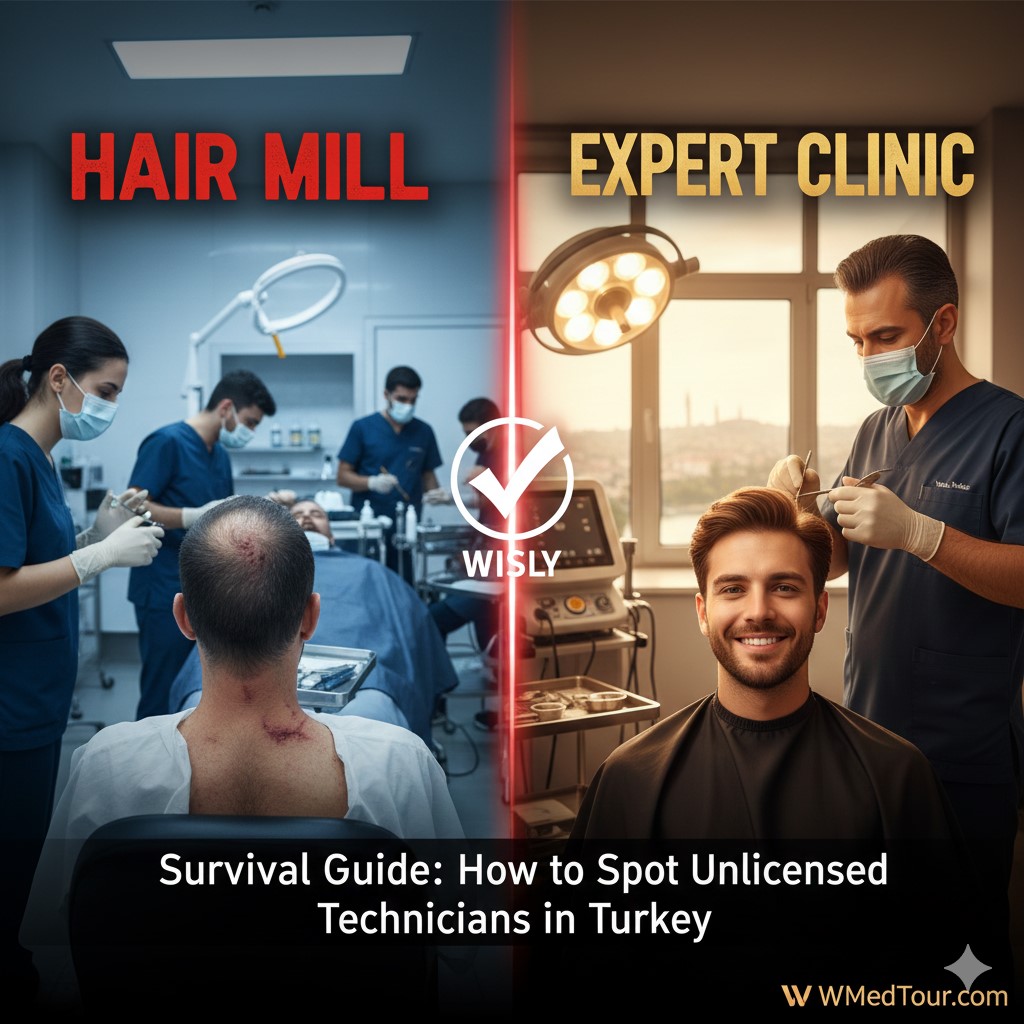
The rise of medical tourism has created a phenomenon known as the **Hair Mill**. These are high-volume clinics where unlicensed technicians, rather than qualified doctors, perform delicate surgeries. This Survival Guide: How to Spot Unlicensed Technicians in Turkey empowers you to navigate the risks. Key takeaways include identifying red flags like “all-inclusive” price traps, verifying ISHRS certifications, and understanding why a doctor must lead your procedure. Protecting your donor area is a one-time opportunity; do not let an unlicensed worker ruin your results.
Turkey has become the global capital for restoring hair. Thousands of patients travel there every month seeking a fresh look. Most clinics provide world-class care under expert surgeons. However, the high demand has birthed a darker side of the industry. This side is often called the “Hair Mill.” These factories prioritize profit over patient safety. They often employ unlicensed technicians to handle the entire surgery. This Survival Guide: How to Spot Unlicensed Technicians in Turkey will help you separate the experts from the imposters.
🏗️ What is a “Hair Mill” and Why Does It Matter?
A hair mill is a clinic that operates like an assembly line. They may schedule 20 or 30 surgeries in a single day. In these settings, the licensed doctor is often just a face for the website. Once you go under anesthesia, the doctor disappears. Instead, young, inexperienced workers perform the extractions and incisions. This practice is not only unethical but also illegal in many jurisdictions. Specifically, in Turkey, a medical doctor must supervise or perform the critical steps of the skin and hair restoration process.
⚠️ The Danger of Unlicensed Workers
Why should you care who holds the tools? Surgery requires years of anatomical knowledge. Unlicensed technicians often lack the training to handle complications. They might over-harvest your donor area. This leads to permanent scarring or a “moth-eaten” look on the back of your head. Furthermore, they may not follow strict sterilization protocols. This increases the risk of necrosis or severe infections. Using our Survival Guide: How to Spot Unlicensed Technicians in Turkey ensures you avoid these life-altering mistakes.
🚩 Red Flags: How to Spot the Imposters
Imposters are often very good at marketing. They use flashy Instagram ads and celebrity endorsements to hide the truth. However, there are subtle signs that a clinic is a mill. If you notice these red flags, proceed with extreme caution. Your health is worth more than a discounted package deal. Let us look at the most common warning signs.
💰 1. The “Unlimited Grafts” Trap
Reputable doctors rarely promise “unlimited grafts.” Every person has a limited donor supply. Over-harvesting can ruin your ability to have future surgeries. If a clinic promises 5,000 grafts for everyone regardless of hair density, they are likely a mill. Technicians in these clinics are often paid per graft. This gives them an incentive to harvest as many as possible, even if it harms the patient. Always consult a real professional through a telemedicine consultation first.
📸 2. Lack of Doctor Interaction
In a high-quality clinic, the doctor performs the consultation. They draw your hairline and explain the risks. If you only speak with “coordinators” or “sales reps,” be wary. In many mills, you might not even meet the doctor until five minutes before surgery. Some patients report never seeing a doctor at all. Ensure you ask specifically who will be making the incisions and extracting the follicles.
🏥 3. The Clinic Environment
Is the clinic located inside a multi-disciplinary hospital or a small, hidden office? While some boutique clinics are great, many mills hide in residential buildings. They avoid government inspections this way. Check if the facility is registered with the Turkish Ministry of Health. You can find verified locations in our all locations directory. Safety starts with a regulated environment.
⚖️ Pros and Cons: Licensed Surgeon vs. Unlicensed Technician
It is tempting to choose the cheaper option. However, the differences in outcome are night and day. This Survival Guide: How to Spot Unlicensed Technicians in Turkey wouldn’t be complete without a direct comparison. Here is what you are actually buying with each choice.
✅ Licensed Surgeon
- **Pros:** Higher graft survival rates, natural-looking hairlines, and medical accountability.
- **Pros:** Immediate handling of any surgical complications or allergic reactions.
- **Cons:** Generally higher price points and longer waiting lists for appointments.
- **Cons:** The surgery might take longer as the doctor is more meticulous.
❌ Unlicensed Technician (Hair Mill)
- **Pros:** Very low cost and immediate availability for surgery.
- **Pros:** All-inclusive packages that feel like a luxury holiday.
- **Cons:** High risk of over-harvesting and permanent donor area damage.
- **Cons:** Artificial, “doll-hair” appearance due to poor graft placement angles.
📊 Comparison: Professional Clinic vs. Hair Mill
This table summarizes the core differences you will encounter. Use this as a checklist when researching hair transplant procedures.
| Feature | Professional Clinic | The “Hair Mill” |
|---|---|---|
| Daily Patients | 1 to 2 max | 10 to 50+ |
| Incision Performer | Licensed Surgeon | Unlicensed Technician |
| Graft Planning | Conservative & Long-term | Aggressive “Unlimited” Grafts |
| Follow-up Care | Direct doctor access | Automated WhatsApp bots |
🛣️ The Patient Roadmap: A Safe Path to Results
Avoiding a hair mill requires a structured approach. You should not rush into a decision based on a discount. Instead, follow this roadmap to ensure your safety. This plan is designed for both individuals and professionals seeking high-quality care.
Step 1: Deep Research and Verification
Start by looking for the doctor’s name, not just the clinic’s brand. Check if they are members of the International Society of Hair Restoration Surgery (ISHRS). This organization has a strict “Doctors Only” policy for incisions. Read reviews on independent platforms, not just the clinic’s website. If you are also interested in plastic surgery, see if the doctor has a broad medical background.
Step 2: The Direct Consultation
Demand a video call with the surgeon. Ask specific questions. How many years have they been practicing? What percentage of the surgery do they personally perform? If they avoid these questions, they are hiding something. A professional will be happy to discuss their technique, whether it is FUE or DHI. You can also ask about related treatments like PRP therapy to boost results.
Step 3: Evaluating the Offer
Review the quote carefully. Does it include medical insurance? Is the surgery performed in a licensed hospital? Mills often bundle everything into a “too good to be true” price. While Turkey is affordable, quality medical staff and sterile equipment have costs. If the price is significantly lower than the market average, it usually means they are cutting corners on staff licensing.
Step 4: Final Verification on Arrival
When you arrive, look at the clinic’s walls. Are the diplomas displayed? Do the people in the room look like medical professionals or teenagers in scrubs? You have the right to walk away if you feel uncomfortable. Your safety is paramount. We often help patients coordinate these visits through our contact us page to ensure they visit verified partners.
👨⚕️ Who is This For?
This Survival Guide: How to Spot Unlicensed Technicians in Turkey is written for specific groups. Education is the best defense against medical malpractice.
- **First-time Patients:** Those who are new to medical tourism and might be overwhelmed by flashy ads.
- **Corrective Surgery Seekers:** People who have already suffered a bad transplant and need help from a real expert.
- **Safety-Conscious Professionals:** Individuals who value their health and career appearance over saving a few hundred dollars.
- **Medical Tourism Organizers:** Professionals looking for ethical partners to recommend to their clients.
📖 Case Study: Mark’s Cautionary Tale
Mark, a 40-year-old teacher from London, chose a clinic in Istanbul that promised 5,500 grafts for €1,500. He was lured by the 5-star hotel and VIP transport. On the day of surgery, he saw the doctor for only two minutes. Three young technicians performed the 8-hour procedure. Six months later, Mark had large bald patches in his donor area that could not be covered. His hairline looked like a straight, unnatural wall. He eventually came to us to find a specialist in expert hair restoration to fix the damage. Mark’s story reminds us that “cheap” can become very expensive in the long run.
💰 Cost Analysis: Quality vs. Factory Prices
Understanding the price landscape helps you spot outliers. Here is a breakdown of what you should expect to pay for legitimate care in Turkey compared to other regions.
| Region | Typical Cost (Quality) | Provider Type |
|---|---|---|
| Turkey (Quality Clinic) | €2,500 – €4,500 | Surgeon-led, Hospital-based |
| Turkey (Hair Mill) | €1,200 – €1,800 | Technician-led, Private office |
| USA / UK | €8,000 – €15,000 | Private Specialist |
☀️ Recovery & Tourism: Doing It Right
A safe transplant allows you to enjoy Turkey’s beauty during your recovery. If you choose a professional clinic, you will have minimal swelling and pain. You can visit historic sites or enjoy a tour in Turkey after your first wash. Legitimate doctors provide a detailed recovery kit and clear instructions. They don’t just send you home with a headband and a smile. If you are traveling from afar, we also offer air ambulance services for those with complex medical needs. For more details on safe travel, check our global medical tourism guide 2025.
🛡️ Medical Disclaimer
The information provided in this Survival Guide: How to Spot Unlicensed Technicians in Turkey is for educational purposes only. It is not intended as medical advice. Always consult with a licensed healthcare professional before undergoing any surgical procedure. WMedTour does not provide medical services directly; we connect patients with licensed providers. Surgery involves risks, and individual results may vary based on health conditions and genetic factors.
❓ Frequently Asked Questions (FAQ)
1. Is it legal for technicians to perform hair transplants in Turkey?
Under Turkish law, only licensed medical doctors or specifically trained healthcare professionals under direct doctor supervision can perform surgical steps. Specifically, the creation of incisions (opening channels) is a surgical act that must be done by a doctor. Unfortunately, many “hair mills” ignore these laws to increase their profit margins. They hire unlicensed workers who lack the proper medical credentials to perform surgery safely. This is why using a Survival Guide: How to Spot Unlicensed Technicians in Turkey is essential for every patient. Always ask for the surgeon’s diploma and Ministry of Health registration number before agreeing to any procedure.
2. How can I verify a doctor’s credentials in Turkey?
You can verify a doctor through several reliable channels. First, check if they are registered with the Turkish Medical Association (Türk Tabipleri Birliği). Second, look for international certifications such as membership in the ISHRS or ABHRS. These organizations have strict ethical codes regarding who can perform surgery. Additionally, reputable doctors often have their diplomas and certifications displayed clearly on their professional websites or clinic walls. You can also contact our team through the about us page for assistance in verifying clinic partners. Never rely solely on Instagram photos, as these can easily be faked or stolen from other reputable surgeons.
3. What are the signs of a “Hair Mill” on social media?
Social media red flags include a focus on “VIP packages” rather than medical details. If the account posts hundreds of results but never mentions the lead surgeon’s name, it is likely a mill. Mills often use high-pressure sales tactics, offering “discounts that expire tonight.” They also use generic stock photos or heavily filtered images that hide scarring. Another sign is the use of celebrity endorsements where the celebrity doesn’t actually discuss the medical process. A professional surgeon’s social media will focus on education, technique, and realistic expectations. They will often show “long-term” results rather than just the immediate post-operative look.
4. Can a bad hair transplant be fixed?
Yes, but it is much harder and more expensive than getting it right the first time. Repair surgery often requires a highly skilled surgeon to fix unnatural hairlines or hide donor scarring. Sometimes, the donor area is so depleted that a second surgery is impossible. In these cases, doctors might use body hair or specialized molecular diagnostics to plan a new strategy. If you have been a victim of a mill, you should seek a consultation with a repair specialist immediately. Do not go back to the same mill for a “free repair,” as they will likely cause even more damage to your scalp.
5. Why does the doctor’s involvement matter for the hairline design?
The hairline is the most visible part of a transplant. A doctor uses facial proportions and aging patterns to design a hairline that looks natural for decades. Technicians in mills often draw “one-size-fits-all” hairlines that are too low or too straight. As you age, these artificial hairlines look very out of place. Furthermore, the angle of the incisions determines how the hair will grow. Licensed doctors understand the natural “flow” of hair across the scalp. Technicians often place grafts at incorrect angles, leading to hair that stands straight up or grows in the wrong direction. This is a common failure point in factory-style clinics.
6. Are all low-cost clinics in Turkey considered hair mills?
Not necessarily, but there is a strong correlation. Turkey is naturally more affordable due to economic factors, but there is a “floor” to what a safe surgery costs. You have to pay for a sterile operating room, high-quality local anesthesia, and experienced medical staff. If a clinic’s price is significantly lower than €2,000, they are likely saving money by using unlicensed labor. It is possible to find ethical, lower-cost clinics, but they will still be led by a doctor who is present throughout the day. Your goal is to find value, not just the lowest price. Always refer back to our Survival Guide: How to Spot Unlicensed Technicians in Turkey during your search.
7. What happens if I have a complication at a hair mill?
Complications at mills can be disastrous. Because there is often no doctor on-site, the staff may not know how to handle an allergic reaction to anesthesia or a sudden drop in blood pressure. Long-term complications like necrosis (tissue death) are also more common in mills due to poor hygiene. If a mill realizes there is a problem, they may try to hide it or discharge you quickly to avoid liability. In contrast, a hospital-based clinic has access to full medical teams and emergency equipment. This is why we recommend clinics located in established medical departments rather than isolated offices.
8. Does DHI or FUE technique protect me from unlicensed technicians?
No, the technique name is often used as a marketing tool by mills. They might claim DHI is “no-touch” or “superior” to charge more, while still using unlicensed workers to perform it. Both FUE and DHI are safe and effective when performed by a doctor. Both are dangerous when performed by an untrained technician. Do not let technical jargon distract you from the most important question: “Who is holding the pen/blade?” Legitimate clinics will explain why they chose a specific technique for your hair type. You can learn more about these differences in our FAQ section for hair treatments.
9. How long should a consultation with a real doctor take?
A professional consultation should take at least 20 to 30 minutes. The doctor needs to examine your donor density, scalp elasticity, and medical history. They should also discuss your expectations and potential future hair loss. If a consultation lasts only 5 minutes and ends with a sales pitch, it is a red flag. Real doctors are often more concerned with whether you are a “good candidate” than with making a sale. They might even tell you that you aren’t ready for surgery yet. This honesty is a hallmark of a professional. If you want a thorough checkup, consider our checkup department services.
10. Can I sue a hair mill if things go wrong?
Suing a clinic in a foreign country is extremely difficult, expensive, and time-consuming. Many mills operate under “shell companies” that disappear if they face legal trouble. They may also have you sign waivers in a language you don’t fully understand. This is why prevention is the only real cure. By the time you need a lawyer, the damage to your scalp is already done. Using the Survival Guide: How to Spot Unlicensed Technicians in Turkey helps you avoid the need for legal action entirely. Invest in a reputable clinic from the start to protect your peace of mind and your health.
11. Why do mills harvest so many grafts at once?
Mills often harvest 4,000 to 6,000 grafts in a single session to create a “wow” factor. However, this often leads to a high graft death rate because the grafts are outside the body for too long. Furthermore, over-harvesting leaves the donor area thin and scarred. A responsible doctor might suggest two smaller sessions over two years to preserve the donor area. This long-term thinking is what separates a medical professional from a factory worker. Protecting your donor hair is vital, especially if you have progressive hair loss. You can find more about specialized care in our oncology-related hair loss sections if relevant.
12. How do I find a clinic that is not a hair mill?
Start by using a trusted platform like WMedTour. We vet our partners to ensure they follow ethical standards and use licensed surgeons. Look for clinics that limit their daily patient count. Check for transparency regarding their medical team. Avoid any clinic that seems more like a travel agency than a medical facility. Read through our verified doctor profiles to find specialists who prioritize quality over quantity. Taking your time to choose the right partner is the most important step in your hair restoration journey. We are here to help you every step of the way.
In summary, your hair transplant is a permanent change to your body. Do not leave it in the hands of unlicensed workers. By following this Survival Guide: How to Spot Unlicensed Technicians in Turkey, you can ensure a safe, successful, and natural-looking result. Turkey remains an amazing destination for hair restoration, provided you choose your surgeon with care and diligence.