🏳️⚧️ GCS Thailand vs Iran: Head-to-Head Comparison for Transgender Surgery
Choosing the right destination for Gender Confirmation Surgery (GCS), also widely known as Sex Reassignment Surgery (SRS), is a monumental decision. Furthermore, it is a choice that affects not only your physical health but also your emotional and financial well-being. For many years, Thailand GCS procedures have set the global standard, attracting patients with decades of surgical experience and cultural acceptance. However, a less-known but increasingly prominent option is Iran GCS, offering exceptional surgical expertise at significantly lower costs. Consequently, prospective patients must carefully weigh the distinct benefits and drawbacks of each country. This authoritative guide offers a direct, head-to-head comparison of the two leading destinations. By systematically examining the surgical quality, financial aspects, legal landscape, and patient experience in both nations, we aim to simplify this complex decision. Ultimately, understanding these differences is crucial for anyone planning their gender transition journey, making the choice between GCS Thailand vs Iran clear.
✨ Executive Summary: Key Takeaways
The choice between Thailand and Iran for GCS hinges on balancing cost, surgical technique, and cultural environment.
- Thailand GCS: Offers a globally recognized, mature medical tourism infrastructure, luxurious facilities, and a culturally tolerant environment. However, the cost is significantly higher, and legal gender recognition remains restricted.
- Iran GCS: Provides world-class surgical expertise at an unparalleled value (often 30-50% less than Thailand). It is unique for offering state-sanctioned legal gender change, but requires navigating a strict bureaucratic process and involves a less Westernized social environment.
💰 The Financial Equation: Cost, Value, and Affordability
Cost is often the primary factor driving patients to seek surgery abroad. Analyzing the pricing structure for GCS Thailand vs Iran reveals vast differences that impact overall affordability. For prospective patients, it is critical to look beyond the surgeon’s fee and consider the total cost of the medical journey, including accommodation and post-operative care.
🇹🇭 Thailand GCS Pricing Structure
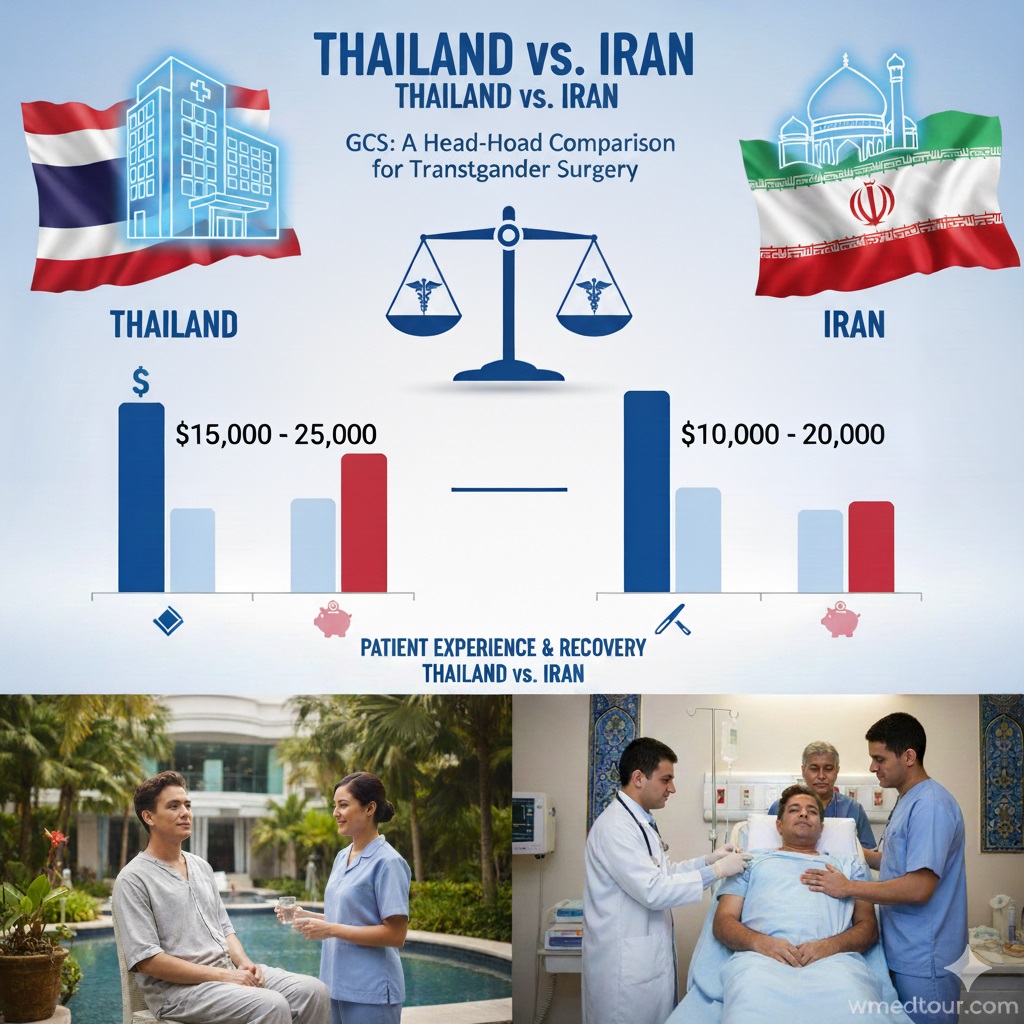
Thailand operates at the premium end of the GCS medical tourism market. Typically, a comprehensive Male-to-Female (MTF) GCS package, including the hospital stay, surgeon’s fee, and basic post-operative care, ranges from USD $15,000 to $25,000 or more. This premium price often covers a more luxurious, resort-like recovery experience and extensive English-language support. Moreover, the high cost is a direct result of the country’s global reputation and its high volume of international patients. Importantly, while the price is high, the quality is reliably consistent. Furthermore, patients often pay extra for ancillary procedures or extended stays, which further increases the final cost. To understand the full scope of costs in a medical journey, see our guide to global medical treatment regulations.
🇮🇷 Iran GCS Pricing Structure
Iran stands out as one of the most cost-effective destinations globally for GCS, despite its specialized medical standards. The total cost for a high-quality MTF GCS procedure in Iran typically falls between USD $10,000 and $20,000, often including more extensive post-operative accommodations. This remarkable affordability is primarily due to currency differences and government subsidies on medical infrastructure. However, prospective patients must be aware that while the surgical fee is lower, the payment process can involve different currency transfers and may require guidance through the local financial system. For a detailed look at related pricing in Iran, explore our information on rhinoplasty Iran price.
🔪 The Surgical Landscape for GCS: Expertise and Techniques in Thailand vs Iran
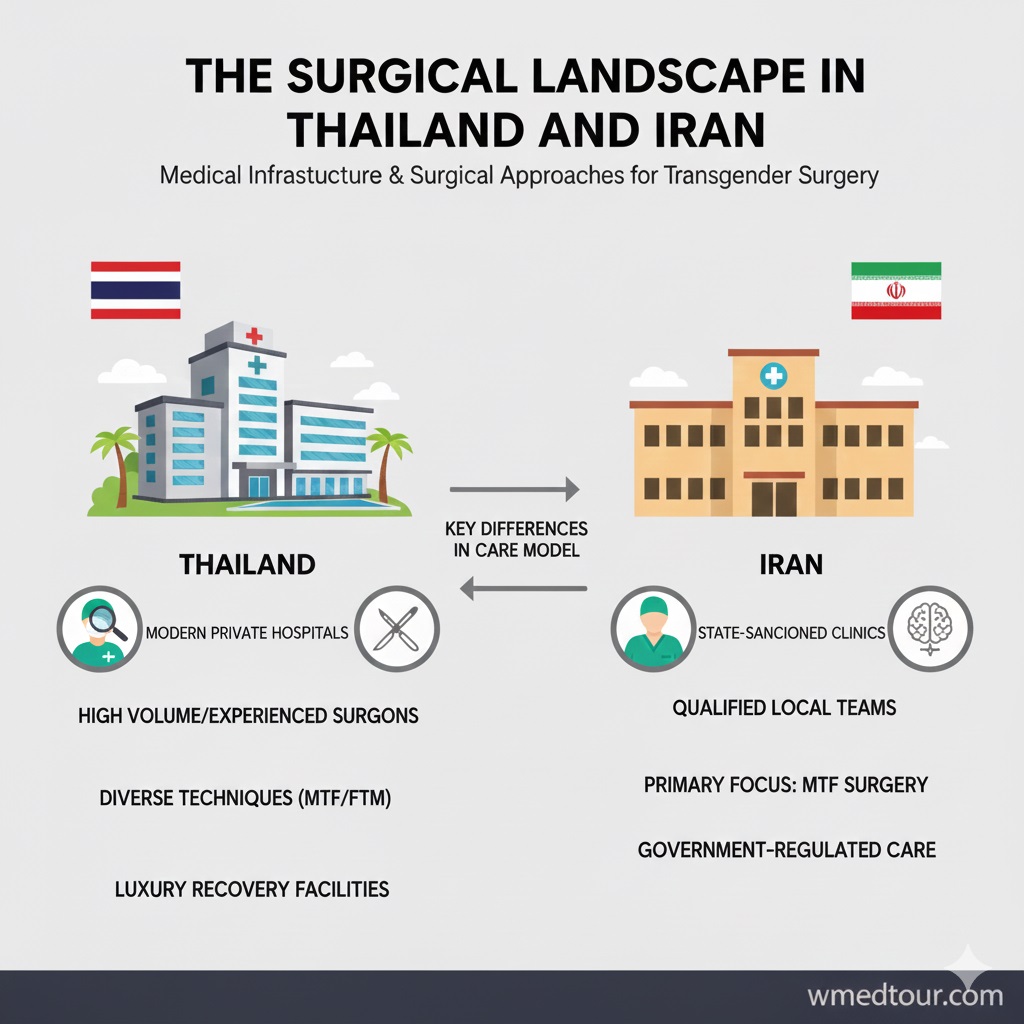
The quality of the surgical outcome depends entirely on the surgeon’s skill and the adopted technique. In the debate of GCS Thailand vs Iran, both countries have produced world-renowned specialists, yet their approaches and focus areas differ.
🇹🇭 Thailand’s Proven Expertise and Innovation
Thailand is widely considered the pioneer of modern GCS, particularly for Male-to-Female (MTF) procedures. Thai surgeons have decades of experience and are responsible for many of the foundational techniques used globally today. Their expertise is broad, encompassing classic Penile Inversion (PI) and newer variations like the Peritoneal Vaginoplasty (PPV). As a result, Thailand has a well-established system for follow-up care and revision surgeries. Furthermore, the sheer volume of cases processed by top Thai clinics guarantees a mature, standardized approach, making it a reliable choice for patients prioritizing established excellence. Explore the options at top MTF hospitals in the region.
🇮🇷 Iran’s Specialized Surgical Focus
Iran’s GCS industry developed under a unique religious and legal mandate, leading to a highly specialized focus on GCS by select surgeons. Many Iranian surgeons are trained internationally and have mastered complex techniques, including advanced neovaginoplasty and Female-to-Male (FTM) phalloplasty procedures. Importantly, the procedures are often performed in specialized clinical settings under the strict oversight of the Ministry of Health. Consequently, Iran has quietly become a hub for patients seeking technically advanced, high-quality surgery at a reduced rate. The quality of care often aligns with international standards, even though the surrounding hospital infrastructure may not boast the luxury appeal of its Thai counterparts. Learn more about the general journey in our gender confirmation surgery guide.
⚖️ Legal and Ethical Frameworks: The Paradox of GCS Thailand vs Iran
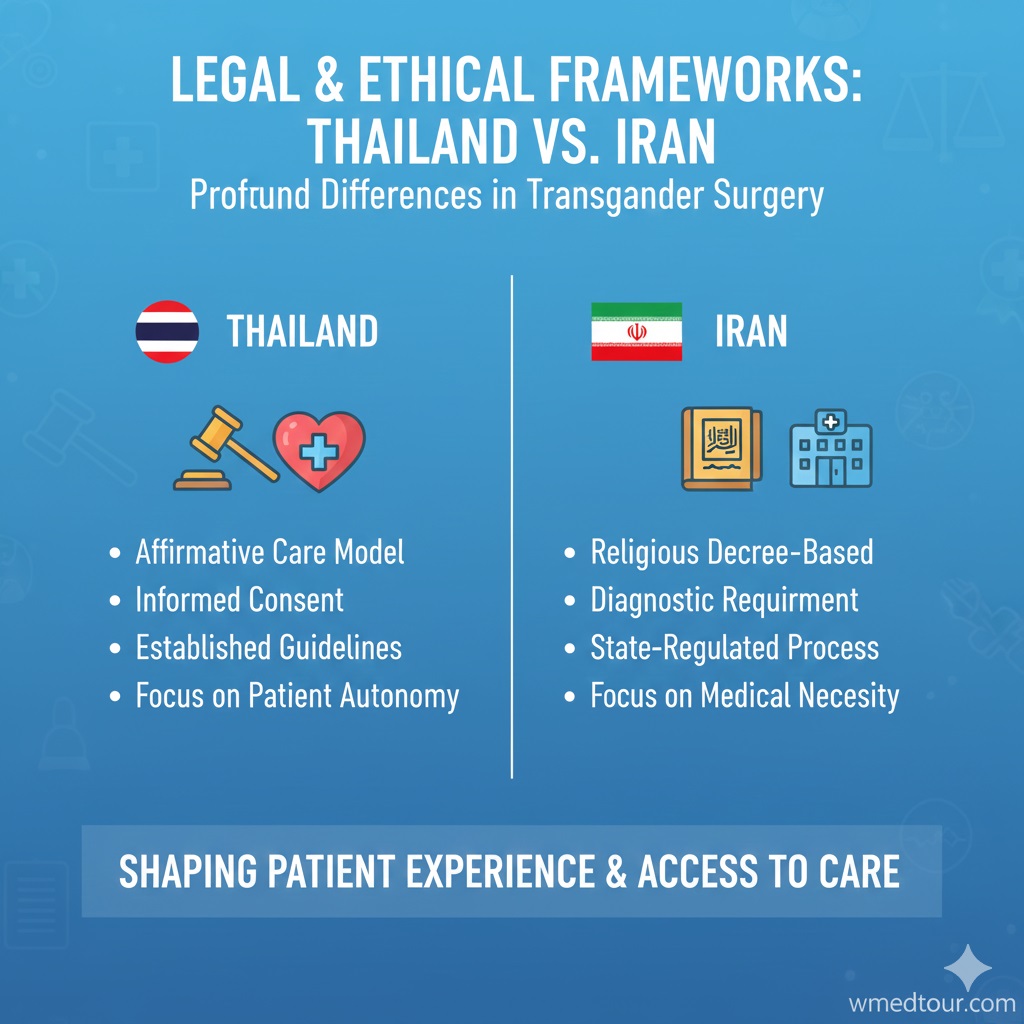
The legal and ethical dimensions of transgender surgery are profoundly different in these two nations. Consequently, these frameworks profoundly shape the patient experience and access to care. Understanding this distinction is perhaps the most crucial part of comparing the two destinations.
🇹🇭 Thailand’s Social Acceptance vs. Legal Stagnation
Thailand possesses a culture famous for its high level of social tolerance toward transgender individuals, often referred to as ‘Katoey.’ This cultural acceptance creates a comfortable and welcoming environment for medical tourists. Paradoxically, however, Thailand’s legal system has lagged behind its social environment. As a result, transgender individuals, including those who undergo GCS, are currently unable to legally change their gender marker on official documents such as passports and national ID cards. This legal gap can create significant administrative issues for patients returning home. It is a critical consideration for anyone prioritizing legal gender recognition as part of their transition journey. See how Thailand stacks up globally in the guide to legal GCS countries.
🇮🇷 Iran’s Surgery and Mandatory Process
Iran presents a unique, globally recognized paradox. Since a landmark fatwa in the 1980s, GCS has been officially legal for individuals diagnosed with gender dysphoria. This makes Iran one of the few Muslim-majority nations to officially recognize transgender surgery. However, this recognition is highly conditional. The state requires a rigorous, mandatory process involving extensive psychological and medical evaluations, and ultimately, a court order to grant legal gender change. This is the only way to officially change legal documents. While this process is demanding, it guarantees legal recognition upon completion. Therefore, the framework ensures access but mandates a strict, state-controlled path. This regulatory environment is detailed in our guide to Iran’s medical travel regulations.
🏨 Patient Experience and Recovery: Culture, Logistics, and Comfort
The environment surrounding the surgery significantly impacts recovery. The patient experience in the two countries offers a clear contrast, representing the final key difference in the **GCS Thailand vs Iran** debate.
🇹🇭 The Medical Tourism Model
Thailand has perfected the medical tourism model. Patients benefit from five-star hospital wings, dedicated translation services, and luxury post-operative recovery villas. Everything is streamlined for the international visitor, prioritizing comfort and ease of logistics. Consequently, the high level of service minimizes stress and simplifies the pre- and post-operative stages. Many patients feel less alienated due to the existing and visible LGBTQ+ community and general societal openness. Travel logistics are straightforward, with easy visa entry for most nationalities, as outlined in our pre-travel resources checklist. This ease contributes immensely to a smooth recovery.
🇮🇷 The Specialized Clinical Model
The patient experience in Iran is more clinical and less focused on luxury tourism. While the medical care is excellent, the recovery amenities might be simpler, though still hygienic and fully professional. Logistically, navigating Iran can be more challenging. International patients often require professional medical facilitators, such as WMEDTOUR, to handle visas, transportation, and translation. The social environment is highly conservative, which requires patients to respect local dress codes and customs. However, the patient journey is entirely focused on the medical outcome. Moreover, the dedication of the local medical teams often compensates for the lack of tourism infrastructure. Patients find detailed resources helpful, like the medical travel Iran ultimate guide, when planning their trip.
📊 Direct Comparison Table: GCS Thailand vs Iran
This table summarizes the core differences to help you quickly weigh your options:
| Factor | 🇹🇭 Thailand GCS | 🇮🇷 Iran GCS |
|---|---|---|
| Cost (MTF GCS) | $15,000 – $25,000+ (Premium) | $10,000 – $20,000 (Affordable) |
| Surgical Expertise | Pioneers, High-Volume, Standardized Care | Highly Specialized, Focus on Technical Skill & Complex Procedures |
| Legal Status Post-Op | No legal gender recognition on ID | Mandatory legal ID change |
| Medical Tourism | World-class, luxury, all-inclusive model | Clinical, specialized, less tourism-focused |
| Social Environment | Generally tolerant and accepting | Highly conservative, strict public codes |
| Logistics/Travel | Easy, Western-friendly, minimal support needed | Complex, requires mandatory facilitation (Iran visa requirements are strict) |
📝 Case Study: Two Paths to Transformation
To better illustrate the practical differences in the journey, consider the stories of two hypothetical patients seeking GCS.
Case A: Sarah, The Comfort Seeker (Thailand)
Sarah, a 35-year-old software engineer from Canada, prioritized comfort, discretion, and a streamlined recovery. She chose Thailand. Her package cost was $22,500. She spent three weeks in a luxury private hospital suite with a dedicated nurse and translator. The entire process, from airport pickup to post-operative check-ups, felt effortless and catered to. Her surgeon, a renowned pioneer in the field, used the Peritoneal Pull-Through technique. While Sarah was thrilled with her outcome and the recovery environment, she acknowledges that upon returning home, she must still use her old documents until her home country legally processes her gender change, a minor inconvenience given her seamless medical journey. Sarah recommends this path for those prioritizing comfort and ease above all else, and for those who are looking for the highest level of established medical tourism.
Case B: Amir, The Value & Legal Priority Patient (Iran)
Amir, a 28-year-old student from Germany, needed the most affordable, high-quality option that also provided immediate legal recognition. He chose Iran. His surgery cost $14,000. WMEDTOUR arranged his visa, court appointments, and translation services. The medical process was intensive, involving several pre-operative assessments and a court order. His surgeon, highly specialized in the latest surgical method, delivered an excellent technical result. The recovery environment was clean and professional, but basic compared to Thailand. The social conservatism required him to adjust his dress and behavior publicly. However, upon discharge, he received a court document enabling him to legally update his passport and ID immediately, securing his new identity legally. Amir’s journey demonstrates the high value and legal certainty available in the Iran GCS tours.
🎯 Who Is This For? Making the Final Choice
The core of the GCS Thailand vs Iran choice is prioritization. Here is a clear breakdown of which destination is best suited for different patient profiles.
Choose Thailand If…
- You prioritize a resort-style recovery, dedicated hospitality, and a vast infrastructure built for international medical tourists.
- Cost is secondary to comfort, ease of travel, and established global branding.
- You need a straightforward visa process and an English-speaking environment.
- You are seeking a highly standardized procedure with a long track record of success from surgeons with decades of experience in **GCS Thailand vs Iran**.
Choose Iran If…
- You must prioritize cost savings without compromising surgical quality.
- Legal gender recognition immediately post-surgery is a primary non-negotiable requirement.
- You are comfortable navigating a culturally conservative environment with the aid of a professional facilitator.
- You are specifically seeking specialized techniques for procedures like FTM surgery or complex MTF revisions, which Iranian surgeons are known for. Note: Consider consulting a specialist like those found in our doctor directory.
Furthermore, regardless of your choice, securing appropriate fertility preservation options before GCS remains a crucial step in the process.
❓ FAQ Section: Your Questions About Thailand vs. Iran GCS Answered
We address the most important and common questions regarding the **GCS Thailand vs Iran** comparison, ensuring you have all the facts necessary for informed consent. The legal and medical complexities inherent in genital cosmetic surgery make these answers vital.
General & Logistical Questions
Q1: How long is the waiting time for a GCS procedure in each country?
Waiting times in Thailand are generally shorter, often ranging from 3 to 6 months for top surgeons, due to high clinic capacity. In Iran, the process can take longer, potentially 6 to 12 months, due to the mandatory pre-operative legal and psychological clearance process. However, immediate surgery slots are sometimes available in both locations.
Q2: Is hormone replacement therapy (HRT) mandatory before surgery in both nations?
Yes, both Thailand and Iran generally follow the international WPATH Standards of Care (SOC), which requires a minimum duration of continuous HRT (usually 12 months) and a real-life experience (RLE) period, typically substantiated by letters from two mental health professionals. We detail this in our womanisation surgery guide.
Q3: Are non-binary identities legally recognized in Thailand or Iran?
Neither country currently offers comprehensive legal recognition for non-binary identities. Iran’s legal framework focuses strictly on the male-to-female or female-to-male binary transition for legal recognition purposes. Thailand lacks a formal legal gender recognition process entirely.
Cost & Financial Questions
Q4: What is typically NOT included in the GCS package price for each destination?
In both countries, package prices rarely include the cost of airfare, prolonged hotel stays outside the hospital (especially in Iran), complications requiring extended recovery, or ancillary procedures like Facial Feminization Surgery (FFS) or body contouring. Furthermore, the mandatory legal costs in Iran are often separate from the surgical fee.
Q5: How does the cost of FTM Phalloplasty compare in GCS Thailand vs Iran?
Phalloplasty is a multi-stage, significantly more complex surgery. The cost disparity remains, though both are premium procedures. Iran often provides superior value for Phalloplasty due to specialized surgeons and lower overhead, whereas Thai Phalloplasty tends to align with Western premium pricing due to the long duration of the required surgical teams.
Q6: Are there financing or loan options available for international patients in either country?
Direct financing or loan options from the hospitals are generally unavailable for international patients in both Thailand and Iran. Patients usually rely on personal financing, medical loans secured in their home country, or crowdfunding. Consequently, this financial aspect underscores the necessity for thorough planning and budgeting for the full medical journey.
Ethical & Safety Questions
Q7: What ethical considerations exist regarding GCS in Iran?
The primary ethical consideration in Iran stems from the social context where GCS, though legally sanctioned, is sometimes perceived as a means to “correct” or channel same-sex desire into a medically accepted path. Additionally, the mandated legal screening process raises concerns about patient autonomy, which some academic observers have noted. However, the legal clarity is appreciated by many patients. The complexity of this ethical and legal framework has been the subject of academic analysis (Normal Link).
Q8: How safe is travel to Iran for a transgender patient?
While the social environment is conservative, transgender patients who are undergoing the sanctioned GCS process, especially with a facilitator, are protected and often treated with respect within the medical community. The main safety concerns are political and logistical, not targeted violence against medical tourists. You should always consult up-to-date travel advisories and use a reputable medical tourism provider, such as WMEDTOUR, for coordination.
Recovery & Outcomes Questions
Q9: What is the typical full recovery time, and does it differ between GCS Thailand vs Iran?
The surgical recovery timeline is medically standardized and does not differ significantly between the two countries. Initial recovery requires 3-4 weeks in the destination country, followed by 6-8 weeks of limited activity at home. Full physical recovery and the final aesthetic outcome take 9-12 months. This is consistent with any major complex genital surgery.
Q10: Are long-term follow-up and revision surgeries easily available to international patients?
Yes. Both countries, particularly Thailand, have structured programs for long-term follow-up and revision surgeries, though these procedures are typically at the patient’s expense. You must factor in the cost and logistics of a return trip, which is often easier for a Turkey medical tour than an Iran tour, for example.
Q11: How do GCS outcomes compare between the two countries in terms of aesthetic results?
The aesthetic outcomes are highly surgeon-dependent, not country-dependent. Both Thailand and Iran host surgeons capable of world-class results. Thailand’s high volume provides a broader data set, while Iran’s specialized focus yields exceptionally high-quality outcomes from select, top-tier surgeons. Ultimately, choosing a surgeon based on their portfolio is more important than choosing a country. Always use a rigorous surgeon selection checklist.
Q12: Is fertility preservation possible for transgender individuals before GCS?
Yes, fertility preservation (sperm or egg freezing) is highly recommended before GCS, as the surgery often results in sterility. This should be completed before starting HRT or major surgery. You can find more information on comprehensive options in our fertility treatments abroad guide.
🔗 Conclusion: The Choice is Personal
Ultimately, the choice between GCS Thailand vs Iran is deeply personal. Both destinations offer high-quality, life-changing transgender surgery. Thailand provides the proven, luxury medical tourism experience at a premium price. In contrast, Iran provides cutting-edge, world-class surgical expertise at an unparalleled value, requiring an open mind regarding cultural differences. Academic research highlights the importance of individual patient needs when selecting a global healthcare provider (Nofollow Link).
Your decision should be guided by a clear prioritization of your budget, your need for advanced surgical techniques, and your comfort with the social environment. By carefully considering all the factors detailed in this head-to-head comparison, you can confidently choose the path that best supports your transition journey. We at WMEDTOUR are here to guide you, regardless of which destination you choose for this transformative step. Visit our Contact Us page for a free consultation. For more information on surgical excellence, review our top hospitals list.