🏥 Top clinics for Vitiligo Surgery Abroad: Costs, Techniques, Results & Top Clinics 2026 ✈️
📋 Executive Summary
Vitiligo affects millions worldwide, yet effective surgical treatments remain expensive or inaccessible in many Western nations. This comprehensive guide explores the Top clinics for Vitiligo Surgery Abroad, offering a path to repigmentation through advanced techniques like Melanocyte-Keratinocyte Transplantation (MKTP). Here is what you will discover:
- Cost Savings: Save up to 70% by choosing medical tourism hubs like Iran, India, or Turkey.
- Advanced Techniques: Learn about NCES, MKTP, and Blister Grafting.
- Patient Roadmap: A step-by-step guide from consultation to full recovery.
- Safety & Results: How to verify clinic credibility and realistic outcome expectations.
Whether you are seeking Top clinics for Vitiligo Surgery Abroad for financial reasons or to access specialized experts, this article provides the authoritative data you need to make an informed decision.
Understanding the Shift: Why Go Abroad?
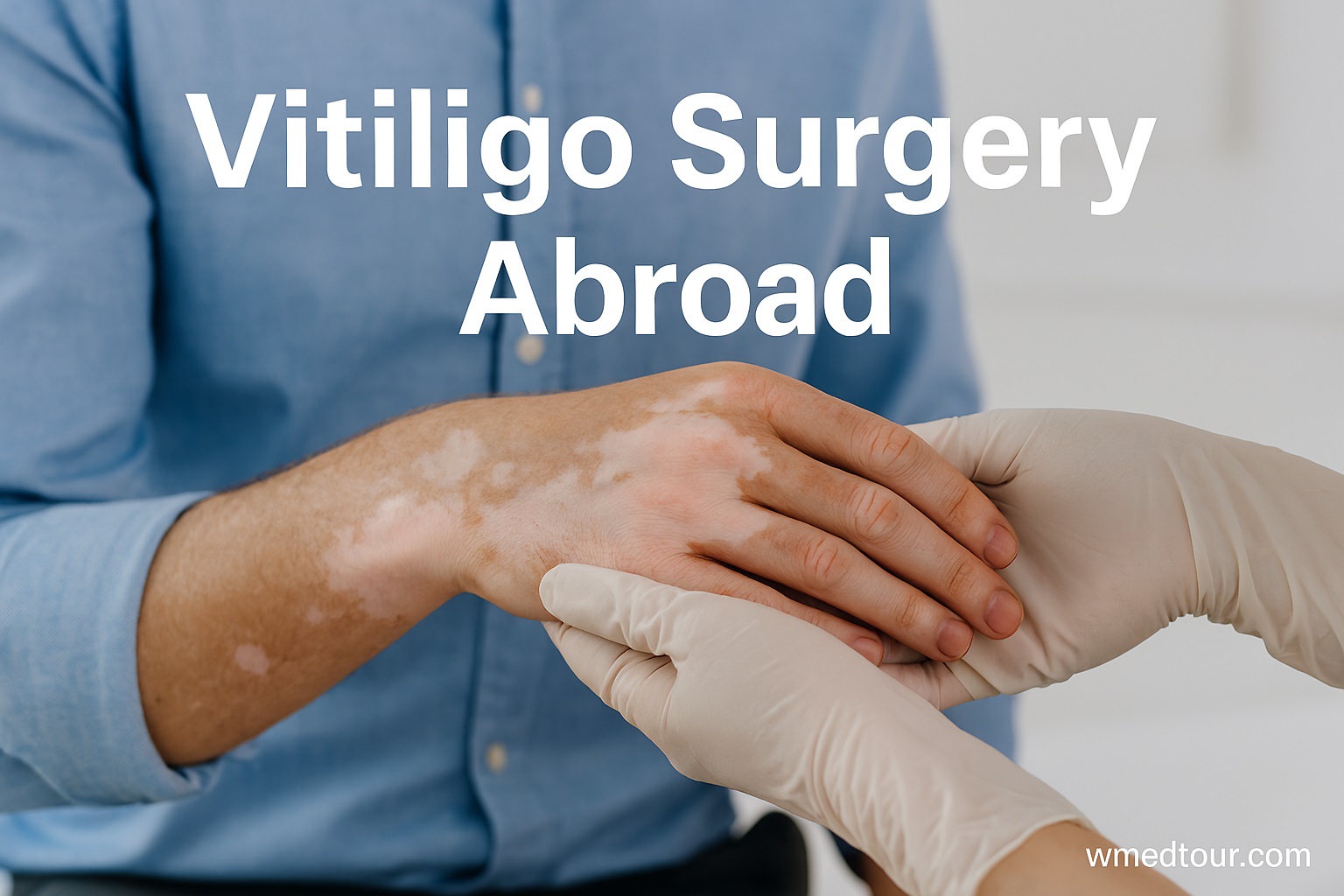
Vitiligo is a long-term skin condition characterized by the loss of pigment. For many, it is not just cosmetic; it is deeply personal. While medical management (creams, phototherapy) works for some, stable vitiligo often requires surgical intervention. Unfortunately, the cost in countries like the USA or UK can be prohibitive.
Consequently, patients look for the Top clinics for Vitiligo Surgery Abroad. These clinics often utilize cutting-edge technology that might not yet be FDA-approved in the States or is simply too expensive. Furthermore, destinations like Iran and India have high volumes of vitiligo cases, meaning their surgeons possess unparalleled experience.
By traveling, you access world-class care, reduce waiting times, and often enjoy a relaxing recovery environment. We at WMedTour connect you with these reputable centers.
🔍 Who is This For? Eligibility Criteria
Surgery is not a cure for active vitiligo. It is a restoration method for stable cases. You are an ideal candidate if:
- Stability: Your white patches have not grown in size for at least 12 months.
- No New Patches: You have not developed new lesions in the past year.
- Koebner Phenomenon: You do not develop vitiligo patches at sites of skin injury (cuts or scratches).
- Leukotrichia: The hair within the vitiligo patch is not predominantly white (though some techniques can address this).
If you meet these criteria, searching for the Top clinics for Vitiligo Surgery Abroad is your next logical step.
🧬 Advanced Surgical Techniques Explained
Modern vitiligo surgery is fascinating. It moves beyond simple skin grafts to cellular transplantation. Here, we break down the primary methods used by top international surgeons.
1. Non-Cultured Epidermal Cell Suspension (NCES) / MKTP
This is considered the gold standard in vitiligo treatment. Surgeons take a small piece of healthy skin, separate the melanocytes (pigment cells) and keratinocytes in a solution, and spray this “cellular soup” onto the prepared vitiligo patch.
Pros and Cons of MKTP
| ✅ Pros | ❌ Cons |
|---|---|
| Treats very large areas with a small donor graft (1:10 ratio). | Requires a specialized laboratory setup. |
| Excellent color matching. | Higher cost compared to simple grafting. |
| High success rate (often >90% repigmentation). | Requires strict post-op dressing care for 7 days. |
2. Suction Blister Epidermal Grafting (SBEG)
This technique involves creating blisters on the donor skin (usually the thigh) using suction. The roof of the blister, containing pigment cells, is transferred to the recipient site.
Pros and Cons of SBEG
| ✅ Pros | ❌ Cons |
|---|---|
| Very low scarring risk at the donor site. | Time-consuming procedure. |
| Simple technique requiring less equipment. | Can only treat small areas (1:1 ratio). |
3. Punch Grafting
Small punches of skin (2-4mm) are taken from a donor site and placed into holes created in the vitiligo patch. Pigment spreads from these islands over time.
This is an older technique but still used by some Top clinics for Vitiligo Surgery Abroad for specific areas like lips or fingers. However, it can sometimes lead to a “cobblestone” appearance.
🌍 Top Destinations and Clinics
When seeking the Top clinics for Vitiligo Surgery Abroad, three countries consistently rank highest for expertise and value.
1. Iran: The Hub of Cell Therapy
Iran is a global leader in cell therapy research. Institutes like the Royan Institute have pioneered stem cell applications. Iranian dermatologists treat thousands of vitiligo patients annually, giving them unmatched manual dexterity and clinical judgment.
The skin and hair departments in Iranian hospitals are equipped with advanced laboratories necessary for MKTP.
Why Choose Iran?
- Extremely low cost due to currency exchange rates.
- High medical standards in specialized cities like Tehran and Shiraz.
- Access to highly experienced surgeons who specialize strictly in pigmentary disorders.
Explore options in Iran here: Medical Tourism in Iran.
2. India: Technology Meets Affordability
India is another heavyweight in the vitiligo surgery arena. Major cities like Delhi, Mumbai, and Bangalore host JCI-accredited hospitals that offer NCES/MKTP at a fraction of US prices. Indian surgeons frequently publish research in top dermatology journals, validating their expertise.
For tour options, visit: Medical Tours in India.
3. Turkey: The Aesthetic Capital
While famous for hair transplants, Turkey also excels in cosmetic dermatology. Istanbul boasts hospitals with state-of-the-art infrastructure. Finding the Top clinics for Vitiligo Surgery Abroad in Turkey allows you to combine treatment with a rich cultural experience.
Learn more about Turkish medical facilities: Turkey Healthcare Directory.
💰 Cost Analysis: Home vs. Abroad
Understanding the financial aspect is crucial. Below is a comparison table estimating the costs for MKTP (Non-Cultured Epidermal Suspension) for a medium-sized area (e.g., face or hands).
| Country | Estimated Cost (USD) | Savings |
|---|---|---|
| USA / UK | $4,000 – $8,000 | Baseline |
| Iran | $800 – $1,500 | ~80% |
| India | $1,200 – $2,000 | ~70% |
| Turkey | $1,500 – $2,500 | ~60% |
Note: Prices are estimates and vary based on the surface area treated and clinic prestige.
📄 Hypothetical Case Study: Sarah’s Journey
To illustrate the process of visiting one of the Top clinics for Vitiligo Surgery Abroad, let us look at “Sarah,” a 29-year-old graphic designer.
The Background
Sarah had stable vitiligo on her forehead and eyelids for three years. Creams had stopped working. She felt self-conscious during client meetings. In the UK, she was quoted £5,000, which was out of budget.
The Decision
She contacted WMedTour. After a telemedicine consultation, she was deemed a good candidate for MKTP in Iran.
The Procedure
Sarah traveled to Tehran. The surgery took 3 hours under local anesthesia. A small patch of skin was taken from her thigh. The cells were processed and applied to her face. She felt no pain, only mild discomfort.
The Result
After 7 days, the dressing was removed. The area was red initially. However, by month 3, pigment islands appeared. By month 6, she achieved 95% repigmentation with a perfect color match. The total cost, including flights and hotel? Approximately $1,800.
🗺️ The Patient Roadmap: Step-by-Step
Embarking on medical tourism requires planning. Here is your roadmap to success.
Phase 1: Preparation
First, stabilize your condition. Ensure no new patches have appeared recently. Next, book a video consultation with a specialist. Send high-resolution photos of your patches.
Phase 2: Booking
Choose your destination. Whether you select the specialized dermatology centers in the Middle East or Asia, ensure you have your visa and flights ready.
Phase 3: The Surgery
Arrive 1-2 days before surgery for pre-op tests. The procedure typically lasts 2-4 hours. You are usually discharged the same day.
Phase 4: Recovery & Tourism
You must stay in the country for at least 7 days for the first dressing removal. During this time, you can enjoy light tourism. Visit museums or enjoy local cuisine, but avoid direct sun on the treated area.
Phase 5: Post-Op Care
Back home, you may need UVB phototherapy to stimulate the transplanted pigment cells. Follow-up with your doctor remotely.
🏥 How to Identify Top Clinics
Not all clinics are equal. When verifying the Top clinics for Vitiligo Surgery Abroad, look for:
- Surgeon Credentials: Look for membership in international dermatology societies.
- Technology: Do they have a CO2 laser for dermabrasion? Do they have a sterile cell-culture lab?
- Before/After Photos: Ensure they show results on skin types similar to yours.
- Transparent Pricing: No hidden fees for anesthesia or follow-ups.
You can browse verified profiles here: Our Medical Network.
⚠️ Medical Disclaimer
The content provided in this blog post is for informational purposes only and does not constitute medical advice. Vitiligo stability is crucial for surgical success. Always consult with a certified dermatologist before stopping current treatments or planning surgery. Results vary by individual.
❓ Frequently Asked Questions (FAQ)
1. Is vitiligo surgery permanent?
Yes, in most cases, the results of vitiligo surgery are permanent, provided the disease remains stable. Since the surgery transplants your own healthy pigment cells to the affected area, these cells usually behave like normal skin. However, if your vitiligo is unstable and active, new patches could theoretically form in other areas or, less commonly, the treated area could lose pigment again. This is why establishing stability for at least one year prior to the procedure is the most critical factor for long-term success.
2. Which country has the best doctors for vitiligo?
There is no single “best” country, but Iran and India are widely recognized as global leaders in this specific niche. This is due to the high prevalence of vitiligo in these regions, which drives extensive research and high surgical volume. Surgeons in these countries perform hundreds of MKTP procedures annually, refining their skills far beyond what is typical in Western clinics where the procedure is rarer. Turkey is also rapidly emerging as a top destination due to its high-quality medical infrastructure.
3. How do I find Top clinics for Vitiligo Surgery Abroad safely?
Safety relies on research. Do not just look for the cheapest option. Look for clinics that are affiliated with reputable hospitals or universities. Check if the surgeon is board-certified. Platforms like WMedTour vet these clinics for you, ensuring they meet international hygiene and safety standards. Always ask for a video consultation first to gauge the doctor’s expertise and communication style before booking any flights.
4. Is the surgery painful?
In short: The procedure itself is typically painless, but you will feel some discomfort during the recovery phase.
Because vitiligo surgery is minimally invasive and performed under local anesthesia, you should not feel any sharp pain while the surgeon is working. However, like any medical procedure, there are specific moments where sensation occurs.
1. During the Surgery (Pain Level: Very Low)
The Anesthesia: You will feel a quick “pinprick and sting” when the local anesthetic is injected into the donor and recipient sites. After about 30 seconds, the areas will be completely numb.
Sensation vs. Pain: You may feel some pressure or “tugging” as the surgeon works, but it should not be painful. If you feel any sharpness, you simply tell the surgeon, and they will apply more numbing agent.
Suction Blister Technique: This method uses a vacuum to create blisters. While not “sharp,” the prolonged suction (which can take 1–2 hours) can feel like a dull, annoying pressure. Some areas, like the inner arm or abdomen, can be more sensitive than the thigh.
2. Immediate Post-Op (Pain Level: Mild)
As the anesthesia wears off (usually 2–4 hours after surgery), the areas will begin to feel sore.
Most patients describe this as a “heavy sunburn” or a stinging sensation.
The donor site (where the healthy skin or cells were taken) is often more tender than the vitiligo patch itself.
3. The Recovery Week (Pain Level: Manageable)
Donor Site: If a “shave” or “split-thickness” graft was used, the area may feel raw, similar to a skinned knee. This usually lasts for 3–5 days.
Recipient Site: The treated vitiligo patch is kept under a firm dressing. It doesn’t usually hurt unless it is bumped, rubbed, or if the skin is stretched (especially near joints).
Management: Standard over-the-counter pain relievers (like Acetaminophen) are usually more than enough. Note: Some doctors advise avoiding Ibuprofen or Aspirin immediately after surgery as they can increase the risk of minor bleeding or bruising.
Comparison by Technique
| Technique | Pain During Procedure | Pain During Recovery |
| MKTP (Cellular) | None (Numbed) | Mild stinging (Sunburn feel) |
| Punch Grafting | None (Numbed) | Mild soreness at graft sites |
| Suction Blister | Dull/Annoying pressure | Very low (Minimal raw skin) |
Pro-Tip for Comfort
If you are anxious about the numbing injections, many clinics can apply a topical numbing cream 30–45 minutes before the procedure to make the initial needle pricks almost unnoticeable.
5. What is the success rate of MKTP?
In stable vitiligo, MKTP has a very high success rate. Studies published in reputable dermatology journals often cite repigmentation rates of 80% to 95% for segmental and stable non-segmental vitiligo. Success is highest on the face and neck. Areas like the hands, feet, and bony prominences (joints) are more challenging and may have slightly lower success rates, though modern techniques are improving results in these difficult areas as well.
6. Can I combine vitiligo surgery with a holiday?
Yes, but with precautions. This is the essence of medical tourism. You can enjoy the culture, food, and sights of the destination country. However, you must avoid direct sunlight on the treated areas and the donor site. It is best to schedule physically active tourism or beach trips for before your surgery. After the procedure, opt for indoor activities, museums, or relaxing in your hotel while you heal.
7. How long does the recovery take?
The immediate physical recovery is quick. You will wear a dressing for about 7 days. Once the dressing is removed, the skin will look red. The repigmentation process, however, takes time. You will start seeing pigment spots (islands) appearing around 4 to 8 weeks post-surgery. These spots will slowly coalesce (join together) to cover the area. Full cosmetic results are typically visible between 4 to 6 months after the procedure.
8. Does insurance cover vitiligo surgery abroad?
Generally, health insurance companies in the US and Europe classify vitiligo surgery as a cosmetic procedure, meaning they rarely cover it. Furthermore, most domestic insurance plans do not cover procedures performed internationally. This is exactly why finding Top clinics for Vitiligo Surgery Abroad is popular; the out-of-pocket cost in countries like Iran or India is often lower than the co-pay or deductible might be for similar treatments in the West.
9. What happens if the surgery fails?
If the pigment does not take, it is usually because the vitiligo was not actually stable, or the area suffered trauma (friction/infection) during healing. The good news is that the procedure can be repeated. Since MKTP uses very little donor skin, you have plenty of donor sites available for a second attempt. However, doctors will usually wait a year to ensure stability before retrying.
10. Can this surgery treat white hair (Leukotrichia)?
Yes, vitiligo surgery can treat white hair (Leukotrichia), though the process is technically more demanding than treating the skin alone. Leukotrichia occurs when the pigment-producing cells (melanocytes) at the base of the hair follicle are completely destroyed. Because the hair follicle is much deeper than the skin’s surface, standard topical treatments or phototherapy rarely work.
Effective Surgical Techniques for Hair Repigmentation
While various surgeries are used for skin, certain methods are significantly better at reaching the deep-seated melanocytes in hair follicles:
Follicular Unit Extraction (FUE): This is widely considered the most successful method for white hair. Surgeons transplant healthy, pigmented hair follicles (usually from the back of the scalp) into the vitiligo area.1 These follicles act as a “pigment factory,” repigmenting both the hair shaft and the surrounding skin.
Melanocyte-Keratinocyte Transplantation (MKTP): While primarily used for skin, MKTP can repigment hair via “retrograde migration.”2 This involves the transplanted cells on the surface moving downward into the follicle. However, this is less consistent than FUE and can take up to a year to show results.
Punch Grafting: Small plugs of healthy skin containing pigmented hair are inserted into the patches. While effective, it is often reserved for small areas like the eyebrows to avoid a bumpy texture on the skin.
Success Rates by Body Area
The depth and type of hair play a major role in how well the surgery works:
| Body Area | Success Rate | Notes |
| Eyebrows | High (80-90%) | Shallow follicles make pigment migration easier. |
| Beard / Face | Moderate (60-70%) | Responds well due to high blood flow in the facial area. |
| Scalp | Varies (50-60%) | Thick scalp skin can make cellular migration more difficult. |
| Eyelashes | Low / Complex | Requires highly specialized oculoplastic surgery. |
What to Expect During Recovery
Stability is Key: You must have “stable” vitiligo for at least 12 months (no new patches and no growth of old ones) to ensure the transplanted pigment isn’t attacked by the immune system.
Delayed Results: While skin often starts showing color in 4 to 8 weeks, hair takes much longer. It usually takes 3 to 12 months to see dark hair growing from the treated area.
The “Salt and Pepper” Stage: Initial results may be patchy. Some hairs may turn dark while others stay white, which might require a follow-up session for 100% coverage.
11. What is the difference between Cultured and Non-Cultured (MKTP) methods?
In the context of dermatology and the treatment of vitiligo, both Cultured and Non-Cultured methods are types of cellular grafting. They aim to transplant healthy pigment-producing cells (melanocytes) into areas of the skin that have lost color.
The primary difference lies in time, complexity, and scale.
1. Non-Cultured Method (MKTP)
The Melanocyte-Keratinocyte Transplant Procedure (MKTP), also known as Non-Cultured Epidermal Cell Suspension (NCES), is the most common and “modern” standard.
Process: A small thin sample of skin is taken from a donor site (like the thigh). These cells are immediately processed in a lab using an enzyme (trypsin) to create a “cell soup” or suspension.
Timeline: This is a same-day procedure. The cells are harvested, processed, and applied to the patient within 2 to 4 hours.
Expansion Ratio: You can treat an area roughly 3 to 10 times larger than the donor sample.
Main Advantage: It is faster, more cost-effective, and does not require a highly specialized clean-room facility.
2. Cultured Method
This is a more traditional but highly complex approach where the harvested cells are grown in a laboratory environment for several weeks.
Process: A tiny skin biopsy is taken and sent to a specialized laboratory. Over 2 to 4 weeks, the melanocytes are encouraged to multiply (culture) until millions of cells are grown.
Timeline: It takes several weeks between the biopsy and the actual transplant.
Expansion Ratio: This method allows for the treatment of massive areas (up to 60–100 times larger than the donor site) because the cells are grown in a lab.
Main Advantage: Ideal for patients with very large areas of vitiligo where there isn’t enough donor skin for the non-cultured method.
Summary Comparison Table
| Feature | Non-Cultured (MKTP) | Cultured Method |
| Duration | Same-day (1–4 hours) | 2–4 weeks (for cell growth) |
| Lab Requirement | Standard clinical lab | Specialized “Clean Room” facility |
| Coverage Area | Small to medium areas | Very large areas |
| Cost | Less expensive | Significant (due to lab fees) |
| Cell Types | Melanocytes + Keratinocytes | Usually pure Melanocytes |
Key Requirement for Both
For either method to be successful, the vitiligo must be stable. This means no new patches have appeared and existing patches have not grown for at least 6 to 12 months. If the disease is “active,” the body’s immune system will simply attack and destroy the newly transplanted cells.
12. Are there dietary restrictions after surgery?
Yes, there are almost always dietary restrictions after surgery, though they vary significantly based on the type of procedure you had.
The general rule is “slow and steady.” Your digestive system is often slowed down by anesthesia and pain medication, so rushing back to a normal diet can cause nausea, vomiting, or abdominal pain.
1. General Restrictions (For Most Surgeries)
For minor surgeries not involving the digestive tract (like orthopedic or skin procedures), restrictions are usually temporary and focused on avoiding nausea from anesthesia.
Avoid immediately: Heavy, greasy, spicy, or fried foods.
Avoid alcohol: Do not drink alcohol while taking prescription pain medication (narcotics), as the combination can be dangerous.
Hydration is key: Focus on water to help flush the anesthesia from your system and prevent constipation (a common side effect of pain meds).
2. The Typical “Diet Progression”
For major surgeries, especially abdominal, you typically follow a strict progression. You only move to the next stage when you can tolerate the current one without vomiting or pain.
| Stage | What it is | Examples |
| Stage 1: Clear Liquids | Liquids you can see through; easy on the stomach. | Water, broth, apple juice, gelatin (Jell-O), tea, black coffee. |
| Stage 2: Full Liquids | Thicker fluids and smooth dairy. | Milk, yogurt (smooth), protein shakes, cream soups, pudding, ice cream. |
| Stage 3: Soft Foods | Foods that can be mashed with a fork; low fiber. | Mashed potatoes, scrambled eggs, applesauce, bananas, cooked carrots, soft fish. |
| Stage 4: Regular Diet | Return to normal eating. | Chicken, raw vegetables, salads, fibrous fruits, steak. |
3. Restrictions by Surgery Type
The type of surgery dictates specific “do not eat” lists:
Abdominal/Bowel Surgery (e.g., Appendectomy, Hernia repair)
Restriction: Low Fiber (Low Residue). Your intestines need rest.
Avoid: Raw vegetables, salads, nuts, seeds, whole grains, and high-fiber cereals. These make the bowel work too hard.
Eat: White bread, white rice, cooked vegetables (without skin), tender meats.
Oral/Dental Surgery (e.g., Wisdom teeth, Tonsillectomy)
Restriction: Soft & Cool.
Strictly Avoid: Straws.7 The sucking motion can dislodge blood clots (dry socket) or stitches.
Avoid: Crunchy foods (chips, popcorn), spicy foods (burns the wound), and acidic foods (orange juice, tomato sauce).
Eat: Smoothies (spoon only), yogurt, warm broth (not hot), ice cream.
Bariatric (Weight Loss) Surgery
Restriction: Very Strict Volume & Texture.
Avoid: Sugar (causes “dumping syndrome”), carbonated drinks (stretches the stomach pouch), and drinking liquids while eating (flushes food too fast).
Eat: High-protein liquids initially, moving very slowly to purees over weeks.
4. Foods That Promote Healing
Once you are cleared to eat, focus on these to speed up recovery:
Protein: (Lean chicken, eggs, fish) Essential for repairing tissue and incision sites.
Vitamin C: (Berries, citrus—if allowed) Helps rebuild collagen.
Fiber: (Once cleared) Essential to resolve post-surgery constipation.
Immediate Warning: If you experience severe abdominal pain, persistent vomiting, or cannot keep fluids down, contact your surgical team immediately.