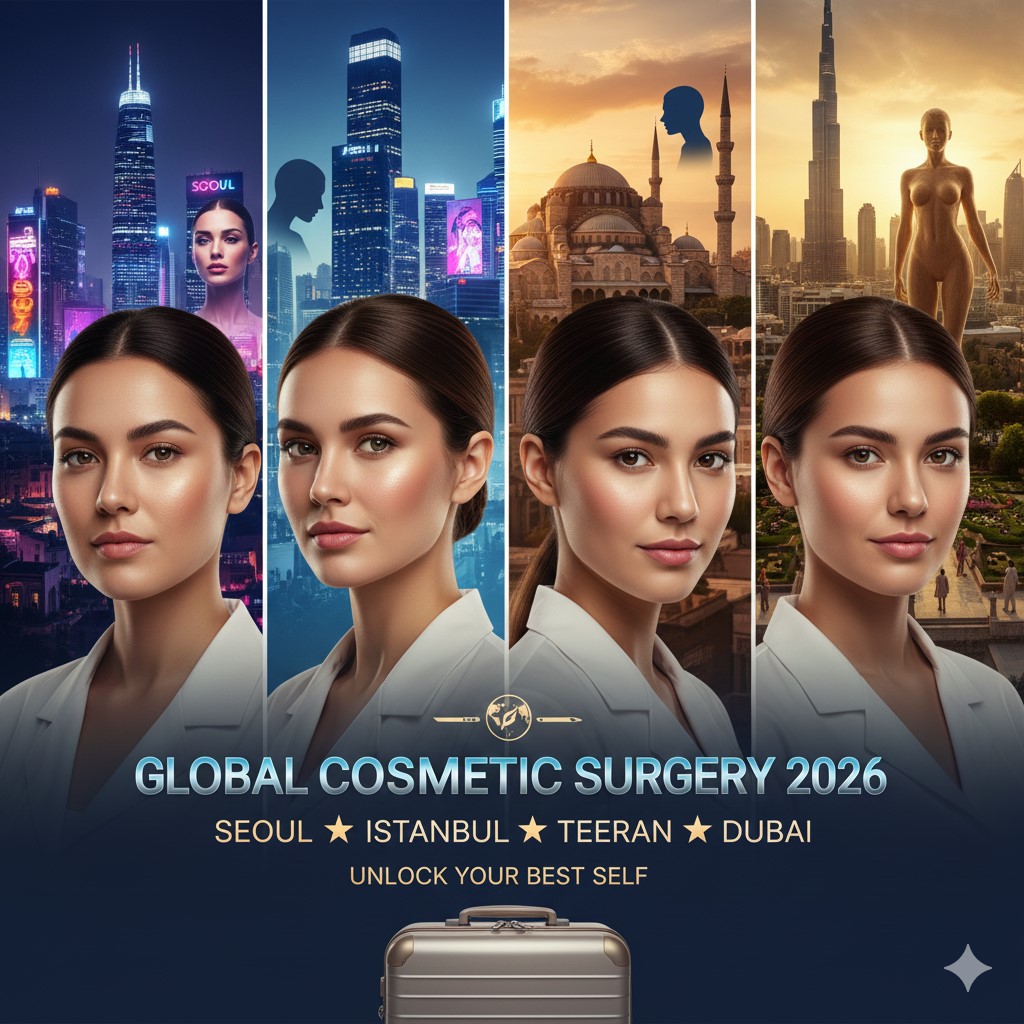
Top Cosmetic Surgeries in Global Hotspots: From Seoul to Istanbul 2026 🌍✨
Executive Summary 📋
The world of aesthetic enhancement has transformed into a global map of excellence. In 2026, medical tourism is no longer just about cost; it is about specialized mastery. While Seoul remains the undisputed capital for facial bone contouring and skin innovation, Istanbul has solidified its position as the global hub for high-density hair transplants. Additionally, Iran has emerged as the definitive “World Capital of Rhinoplasty,” offering unparalleled artistic precision for nasal surgery. Meanwhile, Dubai continues to lead as a luxury destination for advanced body sculpting. This guide explores the premier procedures in these hotspots, providing cost comparisons, patient roadmaps, and expert insights to help you navigate your international beauty journey safely and effectively.
The Evolution of Aesthetic Destinations in 2026 🌐
Cosmetic surgery has become a borderless industry. Consequently, patients today look beyond their local clinics. They seek the best surgeons in the world. Whether you are looking for rhinoplasty or advanced hair transplant procedures, the choice of destination matters. In 2026, technology and expertise have converged in specific “hotspots.”
Strategic planning is essential for any medical traveler. Therefore, understanding the strengths of each region is the first step. You should consider not only the price but also the cultural expertise of the surgeons. For instance, Korean surgeons are world-renowned for “V-line” jaw surgery. On the other hand, Iranian surgeons handle more nose jobs per capita than any other nation.
South Korea: The Precision of Seoul 🇰🇷
Seoul is often called the plastic surgery capital of the world. Indeed, the city boasts the highest number of procedures per capita globally. In 2026, the focus has shifted toward natural-looking results and regenerative medicine. Surgeons here utilize 3D printing for implants and AI-driven facial analysis.
Popular Procedures in Seoul
- Facial Bone Contouring: Changing the actual structure of the face via jaw and cheekbone reduction.
- Blepharoplasty: Expertly performed blepharoplasty (eyelid surgery) is a staple.
- Skin Rejuvenation: Utilizing the latest laser therapy technologies.
Pros and Cons of Seoul
Pros:
Seoul offers unparalleled expertise in facial aesthetics. The clinics are ultra-modern. Furthermore, the recovery centers are designed like five-star hotels. You can also find incredible skin and hair treatments that aren’t available elsewhere yet.
Cons:
The language barrier can be a challenge for some. Additionally, the travel distance from the West is significant. Costs are also rising as Seoul positions itself as a premium destination.
Turkey: The Artistic Hub of Istanbul 🇹🇷
Istanbul is a powerhouse in the medical tourism sector. It has become the primary destination for patients from Europe and the Middle East. By 2026, Istanbul’s medical infrastructure has seen massive investment. It is particularly famous for body contouring and hair restoration.
Leading Treatments in Turkey
If you are considering liposuction, Istanbul offers world-class surgeons at competitive prices. The “Turkish Aesthetic” often balances dramatic transformation with surgical safety. Moreover, many clinics offer “All-Inclusive” packages that cover everything from VIP transfers to luxury accommodation.
Pros and Cons of Istanbul
Pros:
Exceptional value for money is the main draw. Surgeons often have more experience due to high patient volumes. You can easily combine your treatment with a vacation in a historic city. Many doctors in Turkey are internationally certified.
Cons:
The market is very crowded. Thus, choosing a reputable clinic requires thorough research. Some patients might feel the “assembly line” nature of high-volume clinics. It is vital to seek a personalized approach.
Iran: The Global Rhinoplasty Capital 🇮🇷
Iran has earned its reputation as the world’s nose job capital. In Tehran and Shiraz, the sight of nasal bandages is a common cultural marker. Iranian surgeons are uniquely skilled in handling diverse nasal structures, particularly “fleshy” or “bony” noses common in the region.
The surgical volume in Iran is staggering. This has led to a generation of surgeons who are effectively “artists of the face.” Patients from the UK, Canada, and the GCC often choose plastic surgery in Iran for its combination of high artistry and very low cost.
Specialized Expertise in Tehran
Surgeons in Mashhad and Tehran often perform 5 to 7 rhinoplasties daily. This repeated practice ensures a level of muscle memory and finesse that is rare elsewhere. In 2026, Iran remains the most affordable high-quality option globally for facial work.
Pros and Cons of Iran
Pros:
The most affordable prices in the world for top-tier surgery. Extreme specialization in rhinoplasty ensures superior results for complex cases. Warm, legendary Persian hospitality.
Cons:
Visa logistics can be complicated for citizens of certain countries. International banking can be difficult, so carrying cash is often necessary. Cultural differences may require some adjustment for first-time visitors.
Dubai: The New Frontier of Body Contouring 🇦🇪
Dubai has rapidly climbed the ranks of global hotspots. It focuses on the luxury segment of plastic surgery in Dubai. The city attracts the world’s most famous surgeons to its state-of-the-art facilities.
Patients often visit for a tummy tuck in Dubai or advanced liposuction in Dubai. The city provides a level of privacy and luxury that is hard to match elsewhere.
Pros and Cons of Dubai
Pros:
English is widely spoken everywhere. The standards of care are regulated by strict international benchmarks. You can stay in some of the world’s best recovery resorts.
Cons:
It is significantly more expensive than Istanbul or Tehran. The summer heat can make recovery uncomfortable if you plan to go outdoors.
Who is This For? 👥
The world of international cosmetic surgery is diverse. This guide is designed for:
- Budget-Conscious Individuals: Those seeking high-quality plastic surgery without the exorbitant Western price tag.
- Specialty Seekers: Patients looking for surgeons who specialize exclusively in one procedure, such as facelift surgery.
- Privacy Seekers: Individuals who prefer to recover away from their home community.
- Wellness Travelers: People who want to combine their transformation with a relaxing international holiday.
The Patient Roadmap 🗺️
Traveling abroad for surgery requires meticulous planning. Follow this step-by-step guide for a safe experience.
Step 1: Research and Consultation
First, identify your goals. Use a telemedicine consultation to speak with doctors. Verify the surgeon’s credentials through official medical boards.
Step 2: Logistical Planning
Check visa requirements for your destination. Secure your flights and medical-friendly accommodation. Ensure you have a point of contact at the clinic.
Step 3: The Procedure
Arrive a few days early. This allows for an in-person pre-operative consultation. Make sure you feel comfortable with the facility.
Step 4: Recovery and Follow-up
Do not rush home. Stay near the clinic for the initial recovery period. Follow all post-operative instructions carefully. Arrange for digital follow-ups once you return.
Comparison of Global Hotspots 📊
| Feature | Seoul (South Korea) | Istanbul (Turkey) | Tehran (Iran) |
|---|---|---|---|
| Primary Specialty | Facial Contouring | Body & Hair | Rhinoplasty Artistry |
| Cost Level | Moderate to High | Budget-Friendly | Most Affordable |
| Technology | Pioneering / AI-Led | Modern / High Volume | Proven / Highly Skilled |
| Best For | V-Line, Eyes | Hair, BBL, Teeth | Nose, Facial Artistry |
Cost Analysis Table 2026 💰
Please note: These are average estimates for Top Cosmetic Surgeries in Global Hotspots. Prices vary by clinic and surgeon.
| Procedure | USA / UK Cost | Istanbul Cost | Iran Cost |
|---|---|---|---|
| Rhinoplasty | $8,000 – $15,000 | $2,500 – $5,000 | $1,500 – $2,500 |
| Liposuction | $6,000 – $12,000 | $2,000 – $4,500 | $1,200 – $2,000 |
| Breast Augmentation | $7,000 – $14,000 | $3,000 – $5,500 | $2,000 – $3,500 |
| Hair Transplant | $10,000 – $20,000 | $1,500 – $3,000 | $800 – $1,500 |
Case Study: Sarah’s Transformation Journey 🌟
Sarah, a 34-year-old marketing executive from London, wanted a rhinoplasty. However, the costs in London were prohibitive. After researching Top Cosmetic Surgeries in Global Hotspots, she chose Istanbul.
She booked a package through a medical facilitator. The package included her surgery at a JCI-accredited hospital, a stay at a boutique hotel in Sultanahmet, and all local transfers. She spent ten days in the city. During the first few days, she explored the Hagia Sophia. After her surgery, she focused on rest.
Sarah saved over 60% compared to UK prices. Most importantly, she was thrilled with her natural-looking result. She noted that the nursing care in Istanbul was exceptionally attentive.
Recovery & Medical Tourism 🏖️
The “tourism” part of medical tourism is best done *before* the surgery. After the procedure, your body needs stillness. In Seoul, you can enjoy gentle walks in serene parks. In Istanbul, the Bosphorus views provide a calming backdrop for healing.
Choosing a destination with a pleasant climate is beneficial. Furthermore, ensure your accommodation has excellent room service and high-speed internet. This makes the initial days of recovery much more bearable. You should also consider destinations like Oman or India for unique post-recovery wellness retreats.
Frequently Asked Questions (FAQ) ❓
1. Is it safe to get Top Cosmetic Surgeries in Global Hotspots like Istanbul?
Yes, it is generally safe if you choose an accredited facility. Turkey has many JCI-accredited hospitals. These hospitals meet strict international safety standards. However, you must perform your own due diligence. Always check the credentials of your specific surgeon. Read independent reviews from previous international patients. Avoid clinics that offer prices that seem “too good to be true.” Safety should always be your priority over cost savings. Many top surgeons in Istanbul are members of international societies like ISAPS.
2. Why is Iran called the “Rhinoplasty Capital” of the world?
Iran has the highest rate of nose surgery per capita globally. Approximately 200,000 rhinoplasties are performed there annually. This creates an ecosystem where surgeons are extremely specialized. Most surgeons focus purely on facial aesthetics. Because they see so many cases, they have refined techniques for even the most difficult nasal types. Many patients prefer the “artistic” touch of Persian surgeons. They often achieve high-definition results that look natural yet refined.
3. How much can I save on plastic surgery abroad?
The amount you can save on plastic surgery abroad varies a lot depending on the procedure, destination country, surgeon experience, and clinic quality — but in many cases the savings are significant compared to prices in the U.S., Western Europe, or other high-cost markets.
Below is a realistic breakdown you can use for planning or publishing:
⭐ Typical Savings Ranges by Surgery Type
| Procedure | Typical Cost at Home* | Average Abroad** | Approx. Savings |
| Rhinoplasty (Nose Job) | $6,500–$15,000 | $2,500–$6,000 | 40–70% |
| Breast Augmentation | $7,000–$15,000 | $3,000–$7,000 | 30–65% |
| Tummy Tuck | $8,000–$18,000 | $3,500–$9,000 | 40–75% |
| Liposuction | $3,000–$8,000 | $1,500–$4,000 | 30–70% |
| Facelift | $8,000–$20,000 | $4,000–$10,000 | 40–75% |
| Hair Transplant | $4,000–$15,000 | $1,500–$8,000 | 40–80% |
* Typical prices in the U.S./Western Europe
** Typical prices in popular medical tourism destinations (Turkey, UAE, Thailand, South Korea, India)
📌 Average savings range from 30% up to 80% — meaning many patients pay less than half what they would at home.
💡 Why Costs Abroad Are Lower
Savings usually come from one or more factors, including:
- Lower surgeon and facility fees
- Lower operating costs (staff, rent)
- Competitive pricing to attract international patients
- Package pricing (surgery + hotel + transfers)
📦 Savings Beyond Surgery Fees
When you go abroad for your procedure, you often save more than just surgical costs:
✈️ Travel + Accommodation Packages
Many clinics offer bundled packages that include:
- Airport transfers
- Hotel or recovery suites
- Local transportation
- Translator/concierge services
These packages often reduce overall travel costs compared with booking everything separately.
📆 Combined Services
Surgeries and follow-ups are scheduled efficiently, reducing the number of trips you need.
🔎 Example: Turkey vs U.S.
For a tummy tuck:
- U.S.: ~$10,000–$18,000
- Turkey: ~$3,500–$7,000
Potential saving: $5,000–$12,000 (50–70%)
For breast augmentation:
- U.S.: ~$7,000–$15,000
- Turkey: ~$3,000–$6,500
Potential saving: $4,000–$9,000 (50–65%)
📌 A Word on Quality
Lower cost does not automatically mean lower quality — many international clinics:
- Use internationally trained surgeons
- Have accreditations (JCI, ISO)
- Follow global safety standards
The key is choosing a reputable clinic, not just the cheapest.
🧠 Realistic Expectations
- Saving 10–30% is common even in moderately priced destinations (like Eastern Europe or UAE).
- Saving 40–80%+ is typical in high-competition medical tourism hubs (Turkey, India, Thailand, etc.).
- Some very low-cost offers may lack quality or transparency — avoid deals that seem “too good to be true.”
🧾 Final Takeaway
You can save a lot (often 40–90% or more) on plastic surgery abroad when you choose the right destination and provider. Savings include:
- Lower procedure costs
- Bundled travel and recovery services
- Fewer unexpected fees
4. What should I look for in a medical tourism agency?
A good agency should be transparent and responsive. They should provide clear information about the hospitals they work with. Look for agencies that offer comprehensive packages. This should include insurance, transfers, and 24/7 support. They should not pressure you into making a quick decision. Verify if they have a physical office and a track record of success. Reading testimonials on third-party sites is very helpful. A reputable agency acts as your advocate throughout the entire process.
5. How do I handle post-operative care once I return home?
Before leaving the clinic, get a detailed post-op report. This should be in English. It should explain exactly what was done and what medications were used. Most surgeons offer follow-up via video calls. If you experience complications, contact your surgeon immediately. It is also wise to have a local GP who is aware of your surgery. They can help with minor issues like suture removal. Ensure you have a clear plan for emergency care in your home country just in case.
6. Do surgeons in these hotspots speak English?
In major hubs like Dubai, English is the primary language of medicine. In Seoul and Istanbul, top surgeons usually speak English well. In Iran, many surgeons have studied or trained in Europe or the US. Most clinics catering to international patients employ full-time translators. These coordinators stay with you during consultations and the surgery day. Communication is crucial for a successful outcome. If you feel there is a language barrier during your initial call, it might be a red flag.
7. What are the risks of “All-Inclusive” medical packages?
The main risk is a lack of flexibility. Some packages might lock you into a specific hotel or clinic that isn’t ideal. Sometimes, “all-inclusive” doesn’t cover unexpected medical complications. Always read the fine print of the contract. Ensure you know what happens if you need to stay extra days. Ask if the package includes a companion. While these packages are convenient, they should not compromise the quality of medical care. The surgeon’s skill is more important than the hotel’s star rating.
8. Is rhinoplasty in Tehran better than in the West?
It is not necessarily “better,” but it is highly specialized. Iranian surgeons have immense experience with difficult nose structures. This means they are skilled at refining thicker skin and diverse bone types. Many patients find the aesthetic results in Iran more refined and “sculpted.” However, the West also has incredible surgeons. The main advantage of Iran is the combination of high skill and exceptionally low cost. Thousands of patients travel there specifically for the specialized expertise.
9. Can I combine multiple surgeries in one trip?
Yes, many patients combine procedures like a “Mommy Makeover.” This usually includes a tummy tuck and breast lift. Combining surgeries can save money on anesthesia and facility fees. However, it increases the recovery time and physical strain. Your surgeon must clear you for multiple procedures. Safety is the priority. If the combined surgery time is too long, they may suggest two separate sessions. Always listen to the doctor’s recommendation regarding surgical limits.
10. What is the best time of year to travel for surgery?
Spring and autumn are generally the best seasons. In Istanbul, Seoul, and Tehran, the weather is mild, which helps with comfort during recovery. Extreme heat can increase swelling and discomfort. Extreme cold can make traveling difficult. If you are going to Dubai, avoid the peak summer months of July and August. Also, consider local holidays. For example, traveling during Nowruz in Iran may affect clinic availability as it is the national New Year period.
11. Will my insurance cover cosmetic surgery abroad?
Standard health insurance rarely covers elective cosmetic surgery. This is true whether you stay home or go abroad. However, some specialized medical tourism insurance exists. These policies cover complications that might arise during or after your trip. It is highly recommended to purchase this specific insurance. It provides peace of mind for travel-related medical issues. Check with providers like Global Protectors or similar niche insurers. Always clarify what is covered before you fly.
12. How long should I stay in the country after Cosmetic Surgeries?
The length of stay after cosmetic surgery abroad depends on the type of procedure, your healing speed, and the need for post-operative monitoring. Below is a clear, practical guide used in medical tourism planning:
General Rule
You should stay long enough to pass the highest-risk period for complications and complete at least one in-person follow-up with your surgeon before flying.
Recommended Stay by Procedure Type
🔹 Minor / Minimally Invasive Procedures
Examples: Botox, fillers, laser treatments, PRP
- Stay: 1–3 days
- Why: Low risk, minimal recovery, quick follow-up
🔹 Hair Transplant (FUE, DHI, Sapphire FUE)
- Stay: 3–5 days
- Why: Initial healing, scalp inspection, washing instructions, swelling control
🔹 Facial Cosmetic Surgery
Examples: Rhinoplasty, eyelid surgery, facelift
- Stay: 7–10 days
- Why: Stitches removal, swelling and bruising monitoring, early complication management
🔹 Body Contouring & Breast Surgery
Examples: Liposuction, tummy tuck, breast augmentation/reduction
- Stay: 10–14 days
- Why: Drain removal, wound checks, mobility assessment, clot-risk monitoring
🔹 Multiple or Major Combined Procedures
Examples: Mommy makeover, full body contouring
- Stay: 14–21 days
- Why: Higher risk of complications, longer recovery, closer medical supervision required
Important Medical Reasons to Stay Longer
- Risk of blood clots (DVT) during long flights
- Possibility of infection or bleeding in early recovery
- Need for drain or stitch removal
- Ensuring you are fit to fly safely
Travel & Safety Tips
- Avoid long-haul flights immediately after surgery
- Wear compression garments during travel
- Stay hydrated and move regularly once cleared
- Always get written “fit-to-fly” clearance from your surgeon
Summary Table
| Procedure Type | Recommended Stay |
| Non-surgical treatments | 1–3 days |
| Hair transplant | 3–5 days |
| Facial surgery | 7–10 days |
| Body & breast surgery | 10–14 days |
| Multiple major surgeries | 14–21 days |
Final Answer
There is no one-size-fits-all rule, but staying long enough for early recovery and follow-up care is essential for safety and good results. Leaving too early increases medical and travel risks.
If you want, we can customize a stay plan based on:
- Your exact procedure
- Destination country
- Flight distance
- Recovery facilities available
Just tell us the details.