The Best Hair Transplant Surgeons in Turkey: A Comprehensive Guide 🏥
Executive Summary 📋
Turkey has emerged as the global epicenter for hair restoration. This guide provides an in-depth look at the best hair transplant surgeons in Turkey, focusing on their expertise, surgical methods, and patient outcomes. You will discover why thousands choose Istanbul annually. We cover everything from FUE and DHI techniques to cost structures and recovery roadmaps. By the end of this article, you will have the clarity needed to choose a top-tier specialist for your transformation.
Who is This For? 🤔
This comprehensive guide is designed for individuals experiencing various stages of hair loss. Whether you are dealing with a receding hairline or thinning at the crown, finding the best hair transplant surgeons in Turkey is your first step. Professionals seeking a discreet yet effective aesthetic upgrade will find valuable insights here. Additionally, it serves medical tourists who prioritize high success rates alongside affordable luxury.
If you value clinical excellence over “hair mill” volume, this article is for you. We focus on surgeons who personally oversee the graft extraction and site creation. This ensures your results look natural and last a lifetime.
Why Turkey Leads in Hair Restoration 🇹🇷
Turkey is not just a travel destination; it is a hub for plastic surgery and specialized hair care. The Turkish Ministry of Health enforces strict regulations. Consequently, clinics must maintain high hygiene and safety standards.
The concentration of talent in cities like Istanbul and Izmir is unmatched globally. Surgeons here perform thousands of procedures annually. This volume leads to unparalleled refinement in techniques like Sapphire FUE and DHI. Furthermore, the integration of skin and hair health ensures comprehensive treatment.
Qualities of the Best Hair Transplant Surgeons in Turkey 👨⚕️
Identifying the best hair transplant surgeons in Turkey requires looking beyond marketing. True experts possess specific certifications and a proven track record.
1. Board Certification and International Recognition
Top doctors often belong to the ISHRS (International Society of Hair Restoration Surgery). This membership signifies a commitment to ethical standards and continuous learning. Many leading figures, such as Dr. Abdulaziz Temiz, bring years of specialized experience to the operating table.
2. Hand-on Involvement
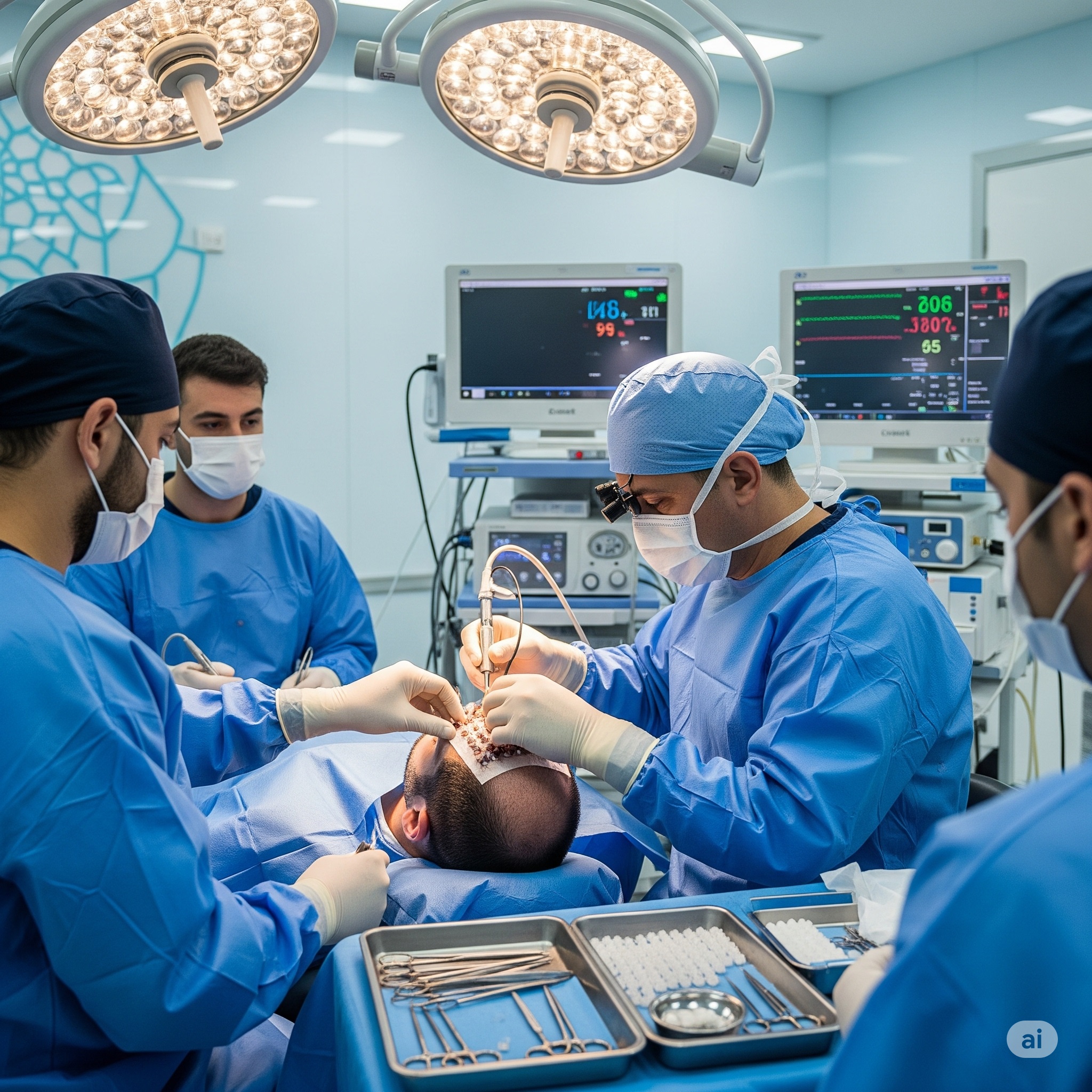
The most sought-after surgeons do not delegate the entire surgery to technicians. They personally design the hairline and create the recipient sites. This artistic touch determines the final look. For more details on clinical staff, you can visit our doctors directory.
3. Utilization of Advanced Technology
The best clinics utilize Sapphire blades or Choi Implanter Pens. These tools minimize trauma to the scalp. Less trauma means faster healing and better graft survival rates. If you are exploring options, our departments page lists various specialized units.
The field of hair restoration has undergone a massive transformation in 2025.1 Modern hair transplants have moved beyond simple “plug and play” methods to highly precise, data-driven procedures.2
By integrating artificial intelligence (AI), robotics, and regenerative medicine, surgeons can now offer near-perfect graft survival rates and results that are virtually indistinguishable from natural hair.
1. AI-Powered Surgical Planning3
Artificial Intelligence is now the “brain” behind the surgery. Before a single hair is moved, AI algorithms perform a deep analysis of the patient’s scalp.4
Graft Calculation: AI software analyzes the donor area to determine the exact number of grafts available without causing “over-harvesting” (which leaves the back of the head looking thin).5
3D Result Simulations: Patients can now see a 3D digital model of their future results.6 This ensures the surgeon and patient are aligned on the hairline’s shape, height, and density.
Predictive Loss Mapping: AI can predict future hair loss patterns based on current thinning, allowing the surgeon to place grafts strategically to maintain a natural look as the patient ages.7
2. Robotic Hair Transplantation (ARTAS iX)8
Robotics have brought unmatched consistency to the extraction and site-creation phases of the procedure.9
Precision Extraction: Systems like the ARTAS iX use stereoscopic vision to identify the healthiest follicular units.10 The robotic arm then extracts them with 0.1mm precision, reducing the risk of “transection” (damaging the bulb of the hair) by 99% compared to manual tools.11
Fatigue-Free Performance: Unlike human surgeons, robots do not experience hand fatigue during “mega-sessions” (procedures involving 4,000+ grafts), ensuring the last graft is handled as carefully as the first.
Automatic Site Creation: The robot can create recipient sites in the scalp according to a pre-programmed AI plan, ensuring perfect depth, angle, and spacing for high-density results.12
3. Advanced Implantation Tools
The tools used to place the hair have evolved from standard forceps to refined precision instruments.13
Sapphire FUE: Instead of traditional steel blades, surgeons now use blades made from genuine sapphire crystal.14 These blades are sharper and smoother, creating “V-shaped” incisions that cause significantly less tissue trauma and lead to faster healing (often within 3–5 days).
DHI (Direct Hair Implantation): Using the Choi Implanter Pen, grafts are loaded into a specialized needle and “clicked” directly into the scalp.15 This bypasses the need to cut channels beforehand, reducing the time the graft spends outside the body and increasing survival rates.
4. Regenerative Adjunct Therapies
In 2025, a hair transplant is rarely “just” a surgery; it is paired with biological boosters to ensure the new hair thrives.16
Exosome Therapy: These are cell-derived messengers injected into the scalp post-op.17 They signal dormant follicles to enter the growth phase and speed up tissue repair.18
Next-Gen PRP (Platelet-Rich Plasma): Advanced filtration kits now allow for a much higher concentration of growth factors than previous versions, providing a more powerful “soil” for the newly planted “seeds.”
Cold Graft Storage: Extracted grafts are now kept in specialized hypothermic solutions (similar to those used in organ transplants) to maintain cellular health during long procedures.
Comparison of Technologies (2025 Standards)
| Technology | Primary Benefit | Ideal Patient |
| Robotic FUE | Precision & Consistency | Patients needing 3,000+ grafts |
| DHI (Choi Pen) | High Density & No Shaving | Women or patients with thinning hair |
| Sapphire FUE | Minimal Trauma & Fast Healing | Active patients wanting quick recovery |
| AI Mapping | Natural Hairline Design | Everyone (standard planning tool) |
Future Outlook
While we aren’t yet at the stage of “hair cloning” (growing thousands of hairs from a single sample), 2025 has seen major breakthroughs in Stem Cell Activation.19 Clinical trials are currently showing that stimulating the scalp’s native stem cells can thicken existing hair by 40%, potentially reducing the number of grafts needed in future transplants.
Pros and Cons of Hair Restoration in Turkey ✅❌
Advantages (Pros)
- Cost-Effectiveness: Prices are 60-80% lower than in the US or UK.
- All-Inclusive Packages: Most surgeons include 5-star hotels and VIP transfers.
- Expertise: Access to surgeons who specialize solely in hair restoration.
- Advanced Techniques: Early adoption of the latest hair transplant procedures.
Disadvantages (Cons)
- Travel Distance: Long flights can be tiring for international patients.
- Language Barrier: Some clinics may lack fluent English speakers (though top ones provide translators).
- Market Saturation: Many “low-quality” clinics exist, requiring diligent research.
The Patient Roadmap 🗺️
Navigating your surgery involves several key steps. Following this roadmap ensures a stress-free experience from start to finish.
- Initial Consultation: Submit photos via telemedicine consultation for a graft estimate.
- Booking: Coordinate your dates and secure your flight to Turkey.
- Arrival: Meet your VIP driver and check into your hotel.
- Operation Day: Undergo the procedure, which typically lasts 6–8 hours.
- Post-Op Check: The surgeon reviews the grafts and performs the first wash.
- Long-term Care: Follow up via the contact us portal for recovery guidance.
Surgeon & Technique Comparison 📊
| Feature | FUE (Follicular Unit Extraction) | DHI (Direct Hair Implantation) | Sapphire FUE |
|---|---|---|---|
| Incision Tool | Steel Micro-punches | Choi Implanter Pen | Sapphire Crystal Blades |
| Graft Density | High | Very High | High |
| Healing Time | 7-10 Days | 5-7 Days | 5-7 Days |
| Best For | Large Areas | Thinning Areas/No Shave | Precise Hairline Design |
Case Study: A Journey to Recovery 🧑𝕔
Meet Mark, a 35-year-old professional from London. Mark struggled with Norwood Scale 4 hair loss. He researched the best hair transplant surgeons in Turkey for six months. Eventually, he chose a clinic in Istanbul known for its medical excellence.
Upon arrival, Mark received a pre-operative consultation. His surgeon recommended 4,000 grafts using the Sapphire FUE technique. The surgery was comfortable. Mark spent the next two days exploring the Bosphorus.
After six months, Mark saw significant growth. By the one-year mark, his confidence was restored. He now recommends others to check the Turkey location guide for reputable facilities.
Cost Analysis Table 💰
| Service Type | Estimated Cost (Turkey) | Estimated Cost (UK/USA) |
|---|---|---|
| Standard FUE (3000 Grafts) | $1,800 – $2,500 | $8,000 – $15,000 |
| DHI Package | $2,200 – $3,500 | $10,000 – $18,000 |
| PRP Therapy Session | $100 – $200 | $500 – $800 |
Note: Costs often include accommodation. For more on pricing, visit our medical articles section.
Recovery & Medical Tourism in Turkey 🏖️
Choosing the best hair transplant surgeons in Turkey allows you to combine surgery with a world-class vacation. Most patients feel fine 48 hours after the procedure. You can enjoy the rich history of Istanbul or the beaches of Antalya.
However, avoid heavy sun exposure and swimming. Many patients use their recovery time to visit dental clinics for minor checkups. Turkey’s healthcare system is integrated. This makes it easy to handle multiple needs at once. For those traveling from afar, air ambulance services are available for maximum safety, though rarely needed for hair transplants.
Medical Disclaimer: The information provided in this article is for educational purposes only. It does not substitute for professional medical advice, diagnosis, or treatment. Always seek the advice of your physician or other qualified health providers with any questions you may have regarding a medical condition.
Frequently Asked Questions ❓
1. How do I verify a surgeon’s credentials in Turkey?
Check if the doctor is registered with the Turkish Medical Association. You should also look for international certifications like the ISHRS. Most top surgeons display these clearly on their profiles.
2. Is the hair transplant permanent?
The short answer is yes, a hair transplant is considered permanent.1 However, “permanent” refers specifically to the hair that was moved, not necessarily the overall look of your hair as you age.2
To understand why it lasts—and what the risks are—you need to understand a biological principle called Donor Dominance.3
1. The Science: Why the hair stays
Most hair loss (Male Pattern Baldness) is caused by a sensitivity to the hormone DHT.4
The “Safe Zone”: The hair on the back and sides of your head is genetically different; it is resistant to DHT.5
Donor Dominance: When a surgeon moves a follicle from the back to the front, that follicle “remembers” its genetics.6 It stays resistant to DHT even in its new location.7 This is why the transplanted hair will continue to grow for the rest of your life.
2. The Catch: What is not permanent
While the transplanted hairs are there to stay, the native (original) hair around them is not.8
Continued Thinning: If you had a transplant at age 30, the hair behind the transplant may continue to fall out as you turn 40 or 50.
The “Island” Effect: If you don’t use maintenance medications (like Finasteride), you could end up with a permanent, hairy front line, but a new bald patch appearing behind it. This is why surgeons often insist on a long-term hair loss prevention plan.
Natural Aging: Just like the hair on the back of an 80-year-old’s head is thinner than it was at 20, your transplanted hair may naturally thin or turn grey over several decades.
3. The “Shock Loss” Phase (Don’t Panic)
It is important to know that about 2–4 weeks after surgery, almost all the transplanted hair will fall out.
Important: This is not permanent loss. It is called “Shock Loss.”9 The hair shaft falls out because the follicle is entering a resting phase after the trauma of surgery.10 The root stays alive underground, and new, permanent hair will begin to sprout in 3–4 months.11
Summary of Longevity
| Timeline | What to Expect |
| 0–3 Months | Shedding of transplanted hairs (normal). |
| 4–12 Months | New permanent hair grows in and thickens. |
| 1–10 Years | Transplanted hair remains stable; native hair may thin. |
| Lifetime | Transplanted follicles continue to produce hair. |
3. How long should I stay in Turkey after the surgery?
We recommend staying at least 3 to 4 days. This allows time for the final checkup and the first professional hair wash by the medical team.
4. Will I have visible scars?
Modern FUE and DHI methods leave tiny, dot-like scars that are invisible to the naked eye. Even with short hair, these marks are typically not noticeable.
5. When can I see the final results?
Initial growth starts around month three. However, the full density and final result usually take 12 to 18 months to manifest completely.
6. Is the procedure painful?
Surgeons use local anesthesia, so you won’t feel pain during the procedure. Most patients describe the sensation as minor pressure. Post-op discomfort is managed with standard painkillers.
7. Can women get hair transplants in Turkey?
Absolutely. Many of the best hair transplant surgeons in Turkey specialize in female hair restoration. Techniques like DHI are popular for women as they often don’t require shaving the entire head.
8. What is the success rate of these surgeries?
In reputable clinics, the graft survival rate is typically over 95%. Success depends heavily on the surgeon’s skill and your adherence to post-op care.
9. Are there any risks involved?
Like any surgery, minor risks include infection or swelling. Choosing a clinic with high hygiene standards minimizes these risks significantly. You can learn more at our FAQ page.
10. Do I need to take medications after the transplant?
Many surgeons suggest supplements or PRP therapy to support growth. Finasteride or Minoxidil may also be recommended to protect existing non-transplanted hair.
Yes, taking medications is a standard and essential part of the hair transplant process.1 These are divided into Short-Term Recovery Meds (to ensure healing) and Long-Term Growth Meds (to protect and enhance your results).2
1. Short-Term: The “Healing Phase” (Days 1–10)
Immediately after surgery, your clinic will provide a medical pack. These are mandatory to prevent complications:3
Antibiotics: Usually prescribed for 5–7 days to prevent infection in the thousands of tiny incisions.4 Even if you feel fine, you must complete the full course.
Anti-Inflammatories (e.g., Prednisolone): Taken for about 3–5 days to manage swelling, which typically peaks around day 3 and can move down toward the forehead and eyes.5
Pain Relief: Standard paracetamol or mild prescribed painkillers are used for the first 2–3 days.6 You should avoid NSAIDs like Aspirin or high-dose Ibuprofen initially, as they can thin the blood.7
Stomach Protection: Many surgeons include a “PPI” (like Lansoprazole) to protect your stomach lining while you are taking the other medications.8
2. Long-Term: The “Maintenance Phase”
While the transplanted hair is permanent, your native (original) hair is still susceptible to future loss.9 Surgeons often recommend these to “protect your investment”:
Finasteride: A daily pill that blocks DHT, the hormone responsible for male pattern baldness.10 It helps keep your non-transplanted hair thick and prevents a “patchy” look in the future.11
Minoxidil: Usually restarted 2–4 weeks after surgery.12 It increases blood flow to the follicles, helping the new grafts grow in thicker and faster.13
Biotin & Supplements: Many clinics suggest starting a high-quality Biotin (B7) supplement or a specific “hair-skin-nails” multivitamin after the first 2 weeks to support keratin production.14
Medication Summary Table
| Medication Type | Duration | Primary Purpose |
| Antibiotics | 5–7 Days | Prevent infection |
| Anti-inflammatories | 3–5 Days | Reduce scalp & face swelling |
| Painkillers | 2–3 Days | Manage post-op tenderness |
| Finasteride | Ongoing | Protect native (non-transplanted) hair |
| Minoxidil | Ongoing | Stimulate faster, thicker growth |
Important Safety Note
If you are currently taking blood thinners, herbal supplements (like Ginkgo Biloba), or regular vitamins, you must disclose these to your surgeon before the procedure, as some can increase bleeding during surgery.
11. Why is it so much cheaper in Turkey?
The lower cost of hair transplants in Turkey is driven by a unique combination of economic factors and a highly specialized healthcare infrastructure. In 2025, Turkey remains the global hub for this procedure, often costing $2,000 to $4,500 for an all-inclusive package, compared to $10,000 to $20,000 in the United States or the UK.
Here are the primary reasons for this price difference:
1. Lower Operational and Labor Costs
The most significant factor is Turkey’s lower cost of living.
Wages: Salaries for specialized medical teams, including nurses and technicians, are lower than in Western nations. While these professionals are often world-class experts, the local economic scale allows clinics to maintain high standards with lower payroll expenses.
Overhead: Rent for state-of-the-art facilities, utility costs, and administrative expenses are significantly cheaper in Istanbul or Ankara than in London or New York.
2. Currency Exchange Advantage
For international patients, the strength of the US Dollar, Euro, or British Pound against the Turkish Lira (TRY) provides massive purchasing power. Even with global inflation, the exchange rate remains highly favorable for travelers, effectively discounting the entire medical trip.
3. Government Support and Subsidies
The Turkish government treats medical tourism as a key national industry.
Incentives: Clinics often receive tax breaks and subsidies for attracting international patients.
Regulation: High competition is balanced by strict Ministry of Health regulations, ensuring that even lower-cost clinics must meet specific safety and hygiene benchmarks to maintain their licenses.
4. Economy of Scale
Turkey performs over 1 million hair transplants annually. This massive volume creates “economies of scale” that Western clinics cannot match:
Bulk Purchasing: Clinics buy medical supplies, sapphire blades, and specialized local anesthesia in such high quantities that they receive significant wholesale discounts.
Hyper-Specialization: Many Turkish clinics do nothing but hair transplants. By focusing on a single procedure 365 days a year, they have streamlined the surgical process to be both faster and more cost-efficient without losing quality.
5. All-Inclusive “Bundle” Pricing
In Western countries, you typically pay for the surgery, and then pay separately for consultations, medications, and aftercare kits. Turkish clinics use a “package” model. Because they partner with local hotels and transportation services in high volume, they can offer 5-star accommodations and VIP transfers for a lower total price than a standalone surgery would cost elsewhere.
Cost Breakdown at a Glance (2025 Averages)
| Feature | Turkey (Package) | USA / UK (Surgery Only) |
| 3,000 Grafts | $2,200 – $4,000 | $9,000 – $15,000 |
| Accommodation | Included (4-5 Stars) | Not Included ($500+) |
| Transfers | Included (VIP Van) | Not Included |
| Aftercare Kit | Included | Often Extra ($100+) |
12. Can I fly immediately after the procedure?
It is best to wait 48 hours. This ensures that the initial swelling has stabilized and the grafts have begun to settle. Always check with your doctor first.
Learn about hair loss research at Harvard University
and clinical studies at Stanford University.