✅ Treatment Safety Checklist for Travel: Your Definitive Medical Tourism Security Guide
✨ Executive Summary: Secure Your Medical Journey
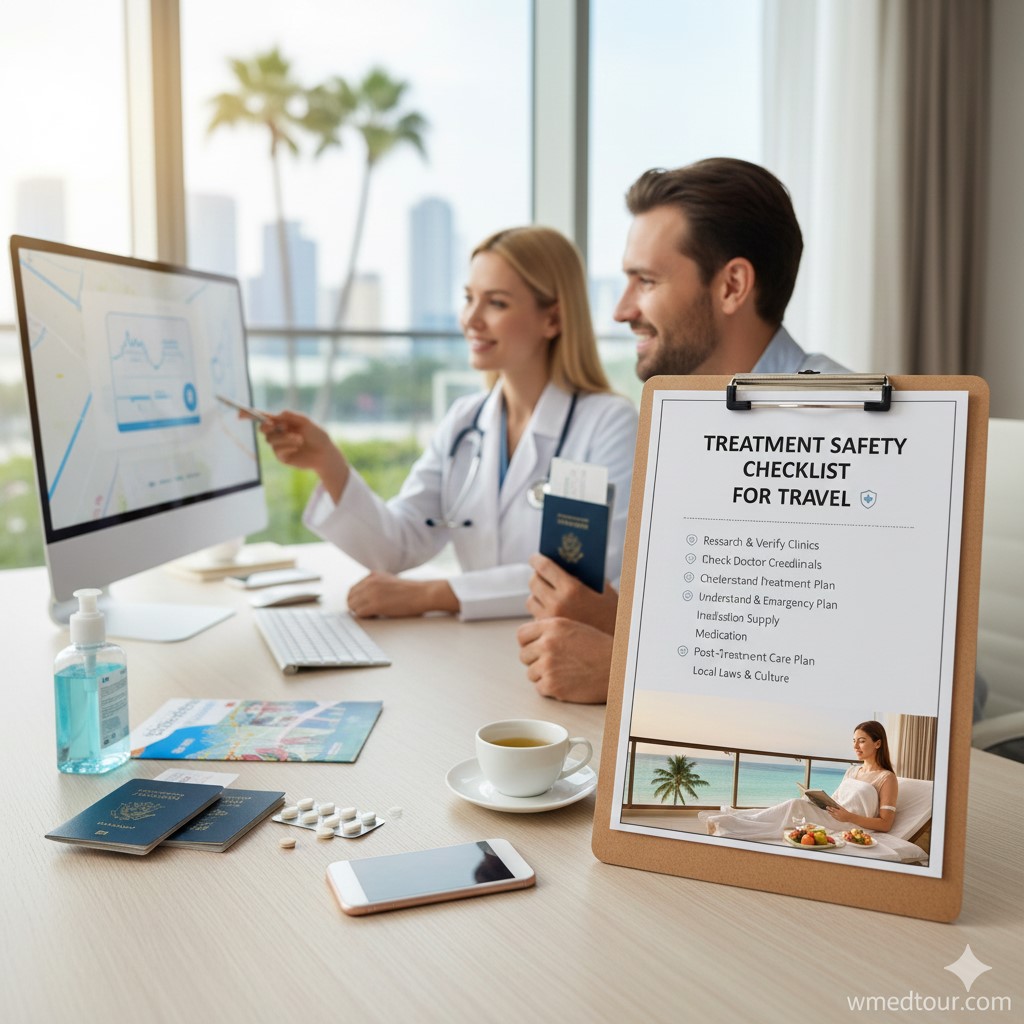
Embarking on medical travel requires meticulous planning and vigilance. Therefore, this guide presents the definitive **Treatment Safety Checklist for Travel** (keyphrase appears 1 time). This comprehensive checklist spans the crucial phases of your journey: Pre-Travel Vetting, Procedure Planning, and Post-Travel Recourse. We emphasize that preparation is paramount. Furthermore, understanding the legal and logistical aspects of your destination is non-negotiable. You can significantly mitigate risks by systematically checking off each item before committing. Our goal is to empower you. You deserve a safe, successful, and stress-free medical experience, whether you are seeking fertility treatments abroad or complex orthopedic surgery. Consequently, use this resource as your personal safety net.
🗺️ Introduction: The Necessity of a Travel Safety Protocol
Choosing to undergo medical treatment outside your home country involves navigating complex regulatory, logistical, and cultural landscapes. Because you are distanced from familiar systems, the burden of due diligence falls squarely on you, the patient. Relying solely on a clinic’s promises or low prices is inherently risky. Hence, a structured **Treatment Safety Checklist for Travel** (keyphrase appears 2 times) becomes an indispensable tool. It transforms hope into certainty. This checklist ensures that no critical safety or legal detail is overlooked. It is essential for safeguarding both your health and your finances.
📈 Why Vetting is Critical for Complex Procedures
The complexity of your intended procedure dramatically increases the need for rigorous vetting. For instance, procedures like bone marrow transplants or advanced robotic cancer surgery carry inherent risks. These risks must be managed by the absolute best standards of care. Consequently, understanding the local medical regulations in your chosen destination, such as Turkey or Germany, is vital. You must confirm that the standards meet or exceed those in your home country. This proactive approach minimizes the chances of complications. It secures your peace of mind before you travel.
🛡️ Mitigating Geopolitical and Logistical Risks
International travel adds layers of complexity beyond the clinical setting. Consider visa requirements, especially for extended stays or recovery. You might also encounter language barriers. Moreover, a robust plan for emergency evacuation is critical. This is particularly relevant when traveling to less familiar regions. Therefore, this comprehensive checklist addresses these non-clinical elements. It allows you to focus purely on your recovery once the medical procedure is complete. Always consult our pre-travel resources and checklists for general travel preparedness.

📝 Phase 1: Pre-Travel Vetting and Documentation
This initial phase is where the most critical decisions are made. Furthermore, this stage sets the foundation for a safe medical journey. You must perform thorough research into the facility and the practitioner before booking any flights or paying deposits. Always ask for verifiable documentation, not just glossy brochures. You are investing in your health, so approach this phase with professional skepticism.
🏥 Facility and Surgeon Credentials
Firstly, verify the clinic’s accreditation status. It must hold current, independent accreditation, such as Joint Commission International (JCI). JCI status signals adherence to globally recognized patient safety standards. Furthermore, check the surgeon’s board certification. Confirm they are officially recognized by their national medical board. A good example is vetting a specialist for procedures like TCR T-Cell Therapy or intricate ophthalmology procedures. Never rely on expired or vague certifications. Insist on seeing documented proof of high surgical volume for your specific procedure, as high volume often correlates with better outcomes.
- Ask for the hospital’s JCI ID number and verify it directly.
- Confirm the surgeon’s specialization matches the procedure, for example, a robotic cancer surgeon.
- Verify the complication rates for the specific surgeon, comparing them to national benchmarks.
💵 Financial Transparency and Insurance
Secondly, financial clarity prevents devastating surprises. Demand a fully itemized quote that explicitly includes all possible costs: surgeon’s fees, anesthesia, hospital stay (including potential extension), post-operative medications, and necessary follow-up visits. Hidden costs are a major red flag. Furthermore, confirm the clinic’s policy regarding complications. You need to know: Who pays for emergency re-operation or extended ICU stays? Always purchase specialized medical tourism complication insurance *before* you leave. This insurance provides a financial safety net in case of an adverse event.
Note: A truly ethical clinic will actively recommend complication insurance. They should not discourage you from purchasing it. Always be aware of contract clauses that may attempt to shift all financial liability onto the patient.
💬 Communication and Informed Consent
Thirdly, effective communication is vital for safety. Insist on using certified medical interpreters, especially for complex discussions like informed consent or diagnosis. Bilingual staff members who lack medical interpretation certification are inadequate for this role. Furthermore, ensure the informed consent document is provided in your native language well in advance of the travel date. This allows you sufficient time for a thorough, unpressured review. Consequently, you can ask necessary questions about risks, alternatives, and expected outcomes.
📄 Legal Recourse and Documentation
Finally, confirm the legal jurisdiction governing the contract. Understand the process for filing a complaint or seeking legal recourse if a problem arises. Seek external legal advice on the contract’s liability clauses. Legal protections vary widely by country. For example, the regulatory environment in Iran differs greatly from that in Europe. Therefore, you must clarify these points to ensure the **Treatment Safety Checklist for Travel** (keyphrase appears 3 times) is fully addressed.
Academic studies on medical tourism ethics emphasize the importance of patient legal protection across borders.
📅 Phase 2: Procedure Planning and In-Destination Security
This phase covers the crucial steps taken once you have arrived at your destination and are preparing for the medical procedure itself. Safety during this phase hinges on adhering to strict medical protocols and maintaining communication.
💉 Pre-Procedure Diagnostics and Protocol
Confirm that the clinic performs a complete set of pre-operative diagnostic tests upon your arrival. These should not be solely reliant on tests you brought from home. For complex procedures, such as those related to oncology or cardiology, recent, in-house diagnostics are paramount for surgical planning. Discuss the sterilization and infection control protocols in the operating theatre. This is particularly important for high-risk procedures like Bone Marrow Transplant or major cardiac surgery.
💊 Medication and Supply Verification
Verify that any medication or implantable devices used (e.g., prosthetic joints, heart valves, or PGT-A testing solutions) are FDA or CE-approved and traceable. Furthermore, understand the process for securing necessary post-operative medications. These may include specific anti-rejection drugs or specialized recovery supplements. Ask for the brand and manufacturer information in writing. Consequently, you can verify its authenticity and quality.
- Confirm the source and quality assurance of any blood products, crucial for procedures like BMT.
- Ensure a two-week supply of all critical post-op medication is sourced *before* flying home.
⏰ Realistic Timeframes and Logistics
Refuse any pressure to accelerate the recovery timeline. A reputable clinic will always prioritize patient safety over quick turnaround. For major surgery, the recommended ground recovery time before flying is typically 10 to 14 days to mitigate the risk of DVT/PE. This is a critical element of the **Treatment Safety Checklist for Travel** (keyphrase appears 4 times). If the clinic encourages you to fly sooner, consider it a serious red flag. They are prioritizing hospital bed turnover above your safety. You must resist this pressure.
🔄 Phase 3: Post-Travel Care and Continuity
The success of medical travel is not solely determined by the procedure itself. It fundamentally depends on the quality of the long-term aftercare and the clarity of the complication protocol. This final phase secures your well-being once you have returned home.
📧 Establishing the Follow-up Plan
Insist on a written, detailed discharge plan. This plan must include specific instructions for wound care, medication schedules, and signs of potential complications. It should also specify how and when to communicate with your local doctor. Obtain digital copies of all your medical records: surgical reports, pathology results, and imaging scans. For specialized fields like IVF, ensure you receive full documentation of the embryos and PGT results.
📞 Emergency Contact Protocol
Ask for a guaranteed 24/7 medical contact line, not just a general email address. This contact must be staffed by a medical professional who speaks your native language fluently. A clear escalation path is essential: what happens if the first-line staff cannot resolve the issue? For example, complications following hip replacement require rapid, expert advice. Never rely on the surgical coordinator as your sole emergency contact. The clinic must provide a medical solution.
🏠 Seamless Transition to Local Care
Furthermore, prepare your local physician or specialist before you leave. They need to agree to take over your follow-up care. Provide them with the clinic’s contact information and the expected discharge summary template. This collaboration is crucial for continuity, particularly after complex surgeries like gender affirmation surgery or major oncology treatment. Proper planning prevents a dangerous gap in your care, ensuring the **Treatment Safety Checklist for Travel** (keyphrase appears 5 times) remains active even at home.
Research on the fragmentation of care in medical tourism highlights this risk.
⚖️ Comparison: Safe vs. Unsafe Medical Tourism Practices
This comparison table clarifies the essential differences between a safe, ethical medical travel experience and one that poses unnecessary risk. Use this table to quickly audit any potential provider against the principles of the Treatment Safety Checklist for Travel (keyphrase appears 6 times).
| Checklist Item | Safe Provider (Low Risk) | Unsafe Provider (High Risk) |
|---|---|---|
| ✅ **Credentials** | Verifiable JCI/National accreditation; surgeon provides specialization CV and volume data. | Vague “international awards”; surgeon’s credentials are difficult to confirm or non-specific. |
| 💰 **Pricing** | Fully itemized quote; clear cost allocation for complications. | “All-inclusive” flat rate; refuses to itemize; hidden fees emerge upon arrival. |
| 📜 **Informed Consent** | Provided in native language weeks in advance; risks are thoroughly discussed. | Presented only upon arrival, often in a hurry; non-certified person translates. |
| ✈️ **Recovery & Travel** | Mandates minimum 10-14 days ground rest before flying; no pressure tactics. | Encourages flying within 48-72 hours post-surgery to save costs. |
| 🤝 **Legal Recourse** | Written complication liability policy; recommends complication insurance. | Contract forces patient to waive all rights or bear all complication costs. |
🩺 Case Study: Maria’s Fertility Journey Vetting
Maria, a patient from the UK, decided to pursue fetal gender selection via PGT-A abroad. She received two offers. Clinic A was 30% cheaper than Clinic B. Maria systematically applied the **Treatment Safety Checklist for Travel** (keyphrase appears 7 times) to compare them.
🚩 Clinic A: The Red Flags
Clinic A provided a blanket success rate, refusing to segment IVF success rates by age. The initial quote was only a single number, and when asked for itemization, the coordinator became defensive. Furthermore, the contract waived all liability for embryology lab errors. The clinic used a receptionist for all translation during the consultation. This violated the critical communication protocol. Maria also found the clinic’s alleged international accreditation was expired by over six months.
🌟 Clinic B: The Vetted Choice
Clinic B, while more expensive, provided a fully itemized quote detailing costs for the medications, embryology, PGT-A testing, and physician fees. They readily provided their current JCI certificate ID and the CVs of their lead embryologists. Crucially, they scheduled Maria for a dedicated consultation with a certified medical interpreter before she paid any deposit. Their complication policy clearly stated they would cover up to $10,000 in costs related to a verified surgical error. Based on the checklist, Maria chose Clinic B. This choice offered predictability, verifiable quality, and peace of mind, proving that vetting saves lives and prevents future regret.
👤 Who is This For? A Necessary Resource for Patient Security
This definitive **Treatment Safety Checklist for Travel** (keyphrase appears 8 times) is not just for first-time medical travelers. It is an essential resource for anyone involved in cross-border healthcare. We believe that professional knowledge should guide personal safety.
🎯 Target Audience Groups
- **Individual Medical Tourists:** Patients seeking elective or necessary procedures, from joint replacement to complex rhinoplasty in Iran. They require a rigorous framework for decision-making.
- **Medical Tourism Facilitators:** Professionals who must meet ethical standards. They use this checklist for external auditing and ensuring compliance of their partner hospitals, especially when advising on destinations like India or Iran.
- **Fertility Patients:** Couples undergoing high-stakes procedures like sex selection IVF or egg donation. They need to protect their financial and emotional investment against fraudulent providers.
- **Post-Surgery Patients:** Individuals planning their return journey after complex operations. They must ensure a safe recovery and continuity of care, avoiding post-travel complications.
The World Health Organization (WHO) stresses global patient safety initiatives, supporting the need for this checklist.
✈️ Advanced Travel Logistics: Securing the Journey
Beyond the clinical checklist, logistical preparation is equally important for a safe outcome. Unforeseen travel issues can severely compromise recovery, especially immediately following surgery.
🛂 Visa and Documentation Security
If your treatment requires a medical visa, such as for complex treatments in specific regions, ensure you initiate the application process early. Consult our definitive patient handbook on medical visas for detailed requirements. Also, keep digital and hard copies of your critical documents—passport, visa, and insurance policy—separate from your main luggage. Provide a trusted person at home with copies of all documents and your itinerary.
🏨 Accommodation and Mobility Post-Procedure
Verify that your accommodation is suitable for post-operative recovery. This includes accessible bathrooms, elevators (if required after orthopedic procedures), and proximity to necessary pharmacies or emergency services. For patients undergoing major procedures, consider a serviced apartment over a standard hotel room. This allows for easier preparation of simple, sterile meals during recovery, particularly for the first week.
❓ Frequently Asked Questions (FAQ) on the Treatment Safety Checklist for Travel
These questions address common concerns about applying the **Treatment Safety Checklist for Travel** (keyphrase appears 9 times) in various medical tourism scenarios. These are vital for comprehensive patient preparation.
💸 Financial and Pricing Questions
1. Should I negotiate the quoted price with a medical clinic abroad?
While negotiation is common for bundled services in some countries, be cautious when negotiating for the *medical* fee itself. Negotiating too aggressively might incentivize the clinic to compromise on materials (e.g., lower-quality implants) or allocate less time with the lead surgeon. Focus instead on ensuring the initial quote is fully itemized and transparent, not just on dropping the price.
2. If my local doctor approves of the foreign clinic, is that enough for the checklist?
No, external approval is insufficient. Your local doctor may not have access to the foreign clinic’s latest complication rates, internal quality controls, or current accreditation status. Their approval confirms the medical necessity of the procedure, but it does not replace your need to independently verify the facility’s safety credentials and financial transparency using this checklist.
3. What proof should I insist on regarding the sterile environment?
Insist on viewing the hospital’s infection control protocols and their last audit report. Specifically, ask about their procedures for sterilizing surgical instruments (autoclave logs) and air filtration (HEPA filters, especially in operating rooms and IVF labs). For transplant surgery, this verification is paramount.
🗣️ Communication and Trust
4. How can I verify that a medical interpreter is certified?
Ask the clinic to provide the interpreter’s certification credentials and the name of the certifying body (e.g., a national board of medical interpreters). Do not accept a simple “bilingual” claim. The interpreter should understand complex terms related to your specific procedure, such as those for valve repair or TIL Therapy.
5. How long before the procedure should I receive the informed consent documents?
You should ideally receive the final, translated informed consent documents at least two weeks before your travel date. This allows you adequate time to read, seek advice, and ask follow-up questions without feeling rushed into a decision immediately prior to surgery.
6. Should I be concerned if a clinic uses WhatsApp for all sensitive communication?
Yes, significant concern is appropriate. While initial contacts often use consumer messaging apps, all sensitive medical data, detailed consultations, and record transfers should occur through a secure, encrypted, and HIPAA-compliant platform. Using only WhatsApp suggests poor security protocols and a lack of professionalism regarding patient data confidentiality.
🛡️ Safety and Legal Concerns
7. What is the biggest risk of ignoring the recommended ground recovery time?
The primary risk is Deep Vein Thrombosis (DVT), which can lead to a fatal Pulmonary Embolism (PE) during long-haul flights. This risk is elevated after any major surgery, especially orthopedic or abdominal procedures like tummy tucks. Reputable clinics mandate appropriate ground rest to allow initial swelling to subside and circulation to stabilize.
8. What is the ethical standard for a clinic’s complication rate disclosure?
Ethical standard dictates that the clinic should disclose complication rates that are specific to the surgeon and the procedure type. These rates must be presented alongside the national or international benchmarks. They should not provide a vague, facility-wide “low complication rate.” Ask specifically about infection rates and re-operation rates.
9. For fertility patients, what specific lab documentation is crucial before implantation?
Insist on receiving the detailed lab reports for embryo culture, genetic testing (e.g., PGT-A/PGT-SR), and cryopreservation records. This documentation ensures the correct embryos are used and that the lab procedures meet international standards. This is a non-negotiable step in the **Treatment Safety Checklist for Travel**.
10. Should I purchase medical tourism insurance even if the clinic claims they have malpractice insurance?
Yes, absolutely. Malpractice insurance protects the clinic and the doctor against lawsuits. Medical tourism complication insurance protects *you* by covering the unexpected costs (extended stay, re-operation, emergency flight) that arise from a complication. They serve two entirely different purposes.
11. If I am undergoing aesthetic surgery in Turkey, how do I check the quality of the implants?
For breast, facial, or other implants, demand to see the official product serial number, batch number, and proof of FDA/CE approval *before* the surgery. This documentation allows you to track the device’s history and ensure it is not a counterfeit or recalled product. This is essential for safety and long-term follow-up.
12. How can I ensure the safety of my travel companion who is assisting me?
Ensure your travel companion is briefed on your emergency protocol, has a list of local emergency contacts, and knows how to contact your home country’s embassy. Furthermore, ensure the clinic provides a comfortable, accessible space for your companion during your hospital stay. Their well-being is vital for your own recovery support.
⭐ Conclusion: Your Commitment to Safe Medical Travel
Mastering the **Treatment Safety Checklist for Travel** (keyphrase appears 10 times) empowers you to take control of your medical journey. Safe medical tourism is entirely achievable, but it demands active, rigorous participation from the patient. You must treat this checklist as your absolute minimum standard. Never compromise on transparency, verifiable credentials, or clear complication protocols. By choosing to prioritize safety over cost convenience, you are securing your long-term health and financial future. We encourage you to use our pre-vetted network of clinics. These clinics have already passed this rigorous checklist. Start your safe search today with a team dedicated to your secure medical experience.