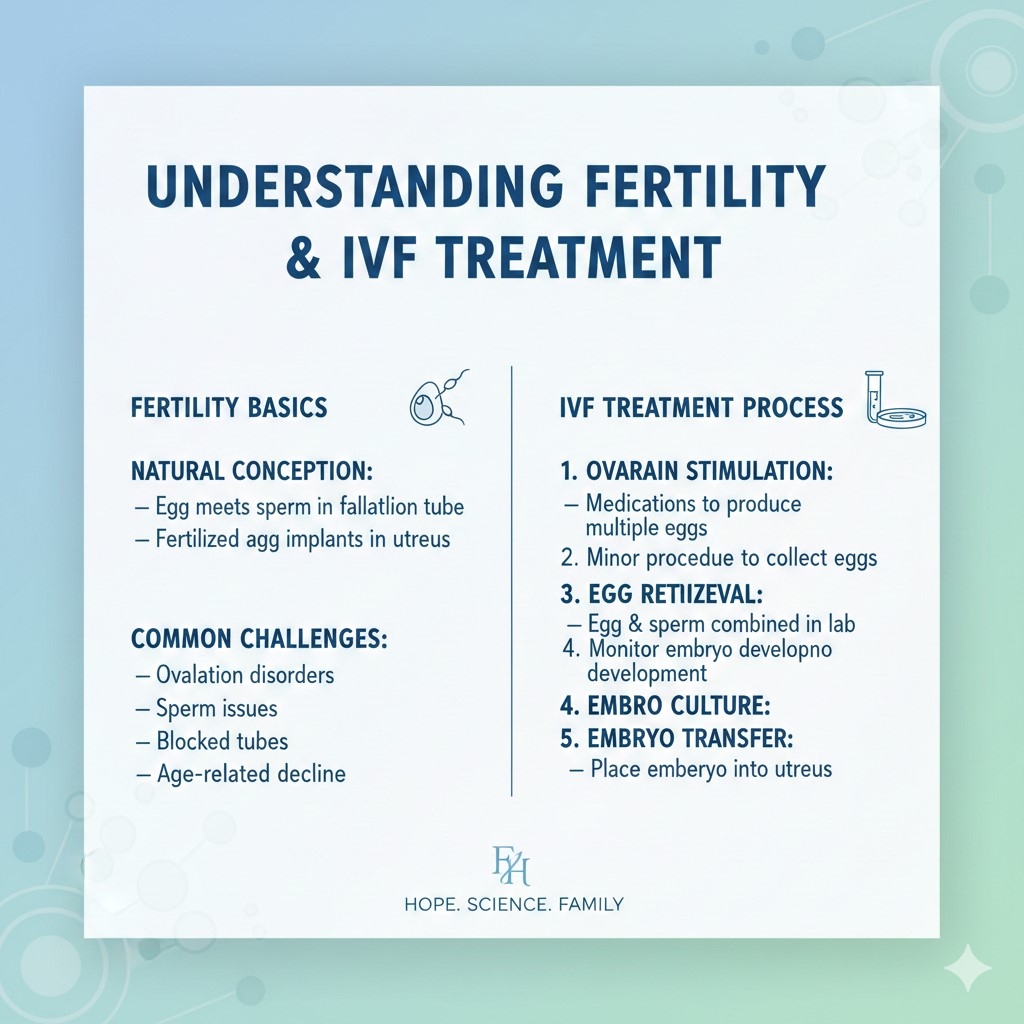
🧬 Understanding Fertility & IVF Treatment: A Complete Guide 2026
📋 Executive Summary
In 2026, fertility care has transformed through personalized medicine and advanced laboratory techniques. This guide provides a deep dive into the biological mechanics of conception and the sophisticated world of In Vitro Fertilization (IVF). Key takeaways include:
- Modern diagnostics now identify underlying fertility issues faster than ever.
- IVF success rates are rising due to AI-driven embryo selection and genetic screening.
- Global medical tourism has made high-quality IVF accessible to a broader international audience.
- Successful treatment requires a holistic approach, combining medical excellence with emotional support.
👥 Who is This For?
We designed this guide to serve as a beacon for diverse groups seeking clarity. Whether you are at the beginning of your journey or looking for advanced technical details, this content is for you.
📍 Individuals and Couples
If you have been trying to conceive for over a year, or six months if over 35, this guide clarifies your next steps. It offers empathy for those facing the emotional weight of infertility while providing actionable medical knowledge.
🩺 Medical Professionals and Facilitators
Healthcare providers and medical tourism professionals will find updated 2026 standards here. This helps in counselng patients about global options and the latest protocols in gynecological surgery and reproductive health.
🌱 Understanding Fertility: The Biological Foundation
Fertility is more than just a biological clock. It is a complex harmony of hormones, anatomy, and timing. Before diving into treatments, we must understand the hurdles that can arise.
Human reproduction relies on several critical factors working perfectly in tandem. First, the ovaries must release a healthy egg. Second, the sperm must be capable of reaching and penetrating that egg. Finally, the resulting embryo must find a receptive environment in the uterus.
🔍 Common Challenges in 2026
Many factors can disrupt this delicate balance. We often see hormonal imbalances like PCOS or anatomical issues such as blocked tubes. In many cases, a simple fertility check-up can pinpoint these issues early.
🔬 IVF Treatment: The Step-by-Step Evolution
In Vitro Fertilization (IVF) is the process of fertilizing an egg with sperm outside the body. In 2026, this process is more refined than ever. It has become the gold standard for many overcoming infertility.
1. Ovarian Stimulation
Ovarian stimulation in IVF (In Vitro Fertilization) is a medical process in which fertility medications are used to stimulate a woman’s ovaries to produce multiple eggs in a single menstrual cycle.
Normally, the ovaries release only one egg each month. In IVF, ovarian stimulation helps increase the number of eggs available, which improves the chances of successful fertilization and pregnancy.
During this phase, injectable hormones encourage several ovarian follicles to grow at the same time. Doctors closely monitor follicle development through ultrasound scans and hormone tests to ensure the eggs mature properly and to prevent early ovulation. Once the follicles reach the right size, a final injection is given to prepare the eggs for retrieval.
Ovarian stimulation usually lasts about 8 to 14 days and is followed by egg retrieval, fertilization in the laboratory, and embryo transfer.
The goal of ovarian stimulation is to maximize the chances of IVF success while keeping the process safe and controlled.
2. Egg Retrieval
Egg retrieval in IVF (In Vitro Fertilization) is a medical procedure used to collect mature eggs from a woman’s ovaries after ovarian stimulation.
What happens during egg retrieval
- It is usually performed 36 hours after the trigger injection, before ovulation occurs
- The procedure takes about 15–30 minutes
- It is done under light sedation or anesthesia, so pain is minimal
How egg retrieval is performed
- A thin needle is guided through the vaginal wall using ultrasound guidance
- The needle gently aspirates fluid from each ovarian follicle
- The eggs are collected from the follicular fluid in a laboratory
What happens after egg retrieval
- The collected eggs are examined for maturity
- Mature eggs are fertilized with sperm in the lab (standard IVF or ICSI)
- The resulting embryos are monitored for development
- Embryos may be transferred to the uterus or frozen for future use
Recovery after egg retrieval
- Most patients go home the same day
- Mild cramping, spotting, or bloating may occur for a few days
- Normal activities usually resume within 24–48 hours
Possible risks
- Temporary discomfort or bloating
- Infection or bleeding (rare)
- Ovarian Hyperstimulation Syndrome (uncommon and monitored carefully)
Why egg retrieval is important
Egg retrieval makes IVF possible by providing multiple eggs, which increases the chances of successful fertilization and healthy embryo development.
If you’d like, I can also explain embryo transfer, ICSI, or IVF success factors in simple terms.
3. Fertilization and ICSI
The eggs meet the sperm in the lab. For many, ICSI (Intracytoplasmic Sperm Injection) is used. This involves injecting a single healthy sperm directly into the egg, significantly increasing fertilization chances.
Fertilization and ICSI in IVF are the steps where an egg and sperm are combined to create an embryo in a laboratory.
Fertilization in IVF
Fertilization is the process in which a sperm penetrates an egg to form an embryo.
In conventional IVF:
- Retrieved eggs are placed in a laboratory dish with prepared sperm
- Fertilization happens naturally when a sperm enters the egg on its own
- The lab team checks after about 16–18 hours to confirm fertilization
This method works best when sperm count, movement, and shape are normal.
What is ICSI (Intracytoplasmic Sperm Injection)
ICSI is a specialized fertilization technique used in IVF, especially for male infertility.
In ICSI:
- A single healthy sperm is selected
- The sperm is directly injected into the center of the egg using a microscopic needle
- Fertilization occurs inside the egg without the sperm needing to penetrate it naturally
When ICSI is used
ICSI is commonly recommended when:
- Sperm count or motility is low
- Sperm shape is abnormal
- Previous IVF cycles had failed fertilization
- Frozen sperm or surgically retrieved sperm is used
- There is unexplained infertility
What happens after fertilization or ICSI
- Fertilized eggs are monitored as they divide into embryos
- Embryos are grown in the lab for 3–5 days
- The best embryo(s) are selected for transfer or freezing
Difference between IVF fertilization and ICSI
- Conventional IVF allows sperm to fertilize the egg naturally in the lab
- ICSI involves direct sperm injection and gives higher fertilization rates in male-factor infertility
Both methods are safe and widely used, and the choice depends on individual fertility conditions and medical history.
📊 Pros and Cons of Modern IVF
Every medical path has its trade-offs. Understanding these helps you make an informed choice with your fertility specialist.
✅ The Advantages
- High Success Rates: IVF remains the most effective form of assisted reproductive technology.
- Genetic Screening: PGT-A allows parents to screen embryos for chromosomal abnormalities before transfer.
- Control Over Timing: Egg and embryo freezing allow you to preserve fertility for the future.
❌ The Challenges
- Physical Toll: The medication cycles can cause mood swings and physical discomfort.
- Cost: In many Western countries, the price remains high, leading many to seek options in Iran or other hubs.
- Emotional Stress: The “two-week wait” for a pregnancy test can be a significant psychological burden.
📈 Comparison of Fertility Treatments
| Feature | IUI | Standard IVF | IVF with ICSI |
|---|---|---|---|
| Complexity | Low | High | Very High |
| Average Success Rate | 10-15% | 40-55% | 50-60% |
| Ideal For | Mild male factor or unexplained issues | Tubal blockage, Endometriosis | Severe male infertility |
| Relative Cost | $ | $$$ | $$$$ |
🛣️ The Patient Roadmap: Your Journey to Parenthood
Navigating the world of IVF treatment can feel overwhelming. Follow this roadmap to stay oriented.
Phase 1: Discovery and Testing
Consult with a reproductive endocrinologist. You will undergo blood panels and imaging. Your partner will likely provide a semen analysis. This phase defines your custom protocol.
Phase 2: The Treatment Cycle
This includes stimulation, retrieval, and fertilization. It spans about 4 to 6 weeks. Communication with your medical team is vital during this high-touch period.
Phase 3: The Transfer and Beyond
The best-quality embryo is transferred to the uterus. Following this, you will need rest and specific hormonal support. A blood test approximately 12 days later confirms if pregnancy has occurred.
💰 Cost Analysis 2026: Global Comparison
The cost of building a family shouldn’t be a barrier. Here is how prices compare globally in 2026.
| Country | Estimated IVF Cost (USD) | Wait Times |
|---|---|---|
| USA | $15,000 – $25,000 | Short |
| UK / Europe | $6,000 – $10,000 | Moderate |
| Iran | $2,500 – $4,500 | None |
| India | $3,500 – $5,500 | None |
Many patients choose to visit hospitals in Iran to access world-class doctors at a fraction of the cost.
🏖️ Recovery & Medical Tourism
Combining treatment with a relaxing environment can improve outcomes. Reducing cortisol levels through stress management is beneficial for implantation.
When you travel for IVF, you aren’t just a patient. You are a guest. Many choose destinations like Oman or Iran for their hospitality and advanced checkup departments. A peaceful recovery can make a world of difference.
📖 Case Study: Sarah & Mark’s Journey
Sarah (34) and Mark (36) struggled with unexplained infertility for three years. They felt drained by the high costs in their home country. After researching global medical locations, they chose a specialized center in Mashhad.
They underwent one cycle of IVF with ICSI. Because they combined their medical trip with a small tour, their stress levels were remarkably low. Sarah’s retrieval resulted in 8 healthy embryos. They transferred one, and today, they are expecting their first child. Their total cost, including travel, was 60% less than a single cycle at home.
❓ Frequently Asked Questions (FAQ)
1. What is the success rate of IVF for women over 40 in 2026?
Success rates for women over 40 have improved thanks to better culture media and genetic testing. While natural fertility declines, IVF with PGT-A screening can achieve success rates of 20-30% per transfer. Many women in this age group also find success through egg donation. Our gynecological experts can provide a personalized assessment. It is important to manage expectations while utilizing the best technology available today. Early intervention is always the most successful strategy for older patients.
2. Is IVF painful?
Most patients describe the process as uncomfortable rather than painful. The daily injections use very fine needles, similar to insulin shots. The egg retrieval is performed under sedation, so you won’t feel anything during the procedure. Afterward, some bloating and cramping are normal, much like a heavy period. Most women return to normal activities within 48 hours. Our team at WMedTour ensures you have the right support throughout. We prioritize your comfort at every stage of the medical journey.
3. How long should I stay abroad for IVF treatment?
A full IVF cycle requires about 15 to 20 days on the ground. This covers the final stimulation days, the retrieval, and the embryo transfer. Some patients arrive earlier for initial testing. Others choose to stay a few extra days to rest before flying home. We recommend checking our Iran tour packages for seamless planning. Proper planning ensures you aren’t rushed during critical medical windows. A relaxed schedule often leads to a much better patient experience.
4. Can I choose the gender of my baby through IVF?
Yes, gender selection is possible through Preimplantation Genetic Testing (PGT). This allows the embryologist to identify the sex of each embryo before transfer. While regulated in some countries, it is available in many international hubs for family balancing. You can read more about gender selection possibilities on our platform. This technology is highly accurate and also screens for sex-linked genetic disorders. It provides an extra layer of certainty for many growing families.
5. What is the difference between IVF and ICSI?
In standard IVF, thousands of sperm are placed near the egg in a dish to fertilize naturally. In ICSI, a single sperm is carefully selected and injected directly into the egg. ICSI is preferred when there are male fertility issues, such as low sperm count or motility. It is a more technical process but often yields higher fertilization rates. Our ICSI department specializes in these advanced cases. Most modern clinics now perform ICSI as a standard to maximize success. It bypasses many of the natural barriers to fertilization.
6. Are there any long-term risks for IVF babies?
Decades of research show that children conceived via IVF are as healthy as those conceived naturally. There is no evidence of increased risk for significant developmental or health issues. In fact, because IVF embryos are often screened, some genetic risks are actually lower. Modern 2026 protocols emphasize the health of both the mother and the child. Millions of healthy “IVF babies” are now thriving adults around the world. We follow the highest safety standards to ensure a healthy start for your family.
7. What lifestyle changes improve IVF success?
Maintaining a healthy BMI, quitting smoking, and reducing alcohol intake are crucial. We also recommend a diet rich in antioxidants and folic acid. Stress reduction through yoga or meditation can also help regulate hormones. Many patients undergo a full women’s health checkup before starting. Small changes in your daily routine can create a more receptive environment for the embryo. Your body is the vessel for your future child, so treat it with care. Consistency in these habits is key for the best results.
8. How much does IVF cost in Iran in 2026?
The cost of IVF in Iran remains very affordable, typically ranging from $2,500 to $4,500. This price often includes medications, the procedure, and laboratory fees. This is significantly lower than in the US or Europe due to lower overhead and currency exchange rates. You can find more details in our Iran medical directory. Despite the low price, the medical quality is world-class. It is one of the top reasons patients choose Iran for their fertility journey.
9. Can I fly immediately after an embryo transfer?
Most doctors recommend waiting at least 24 to 48 hours before flying. This allows the embryo to settle and gives your body time to recover from the minor stress of the procedure. It is also a good idea to avoid heavy lifting during your travel. If you have concerns, our air ambulance or concierge services can assist. Taking it easy for a few days post-transfer is a small investment in your success. Comfort and peace of mind are your priorities during this time.
10. Does insurance cover IVF in 2026?
Insurance coverage for IVF varies widely by country and provider. Some employers offer fertility benefits, while many public systems have long waiting lists. For many, paying out-of-pocket for international treatment is more cost-effective than local insurance co-pays. Contact our about us page to learn how we help with documentation. We can help you understand the financial landscape before you commit. Clarity on costs prevents unwanted surprises later on.
11. What if my first IVF cycle fails?
If your first IVF cycle doesn’t work, it’s completely normal to feel disappointed, frustrated, or even overwhelmed. Many people don’t succeed on the first try, and it doesn’t mean something is “wrong” with you or your body. IVF is a journey, and sometimes it takes more than one cycle to get the result you hope for.
Here’s what usually happens next:
- Your doctor will review everything: They’ll look at your egg quality, sperm, embryo development, and uterine environment to see if anything can be adjusted.
- Adjusting the plan: Sometimes the medications or protocols can be tweaked, or tests may identify issues that weren’t obvious before.
- Trying again: Many people do more than one IVF cycle, and success rates often improve in subsequent attempts.
It’s also important to give yourself emotional support—talk to a partner, friend, or counselor. IVF can be physically and mentally draining, so being kind to yourself is just as important as following the medical plan.
12. How do I start my IVF journey with WMedTour?
The first step is to reach out for a free consultation. You can send us your previous medical records through our contact page. Our experts will review your case and suggest the best clinics and doctors for your specific needs. We handle the logistics so you can focus on your health. Starting is often the hardest part, but we make it simple. Let us help you navigate the path to parenthood with confidence.