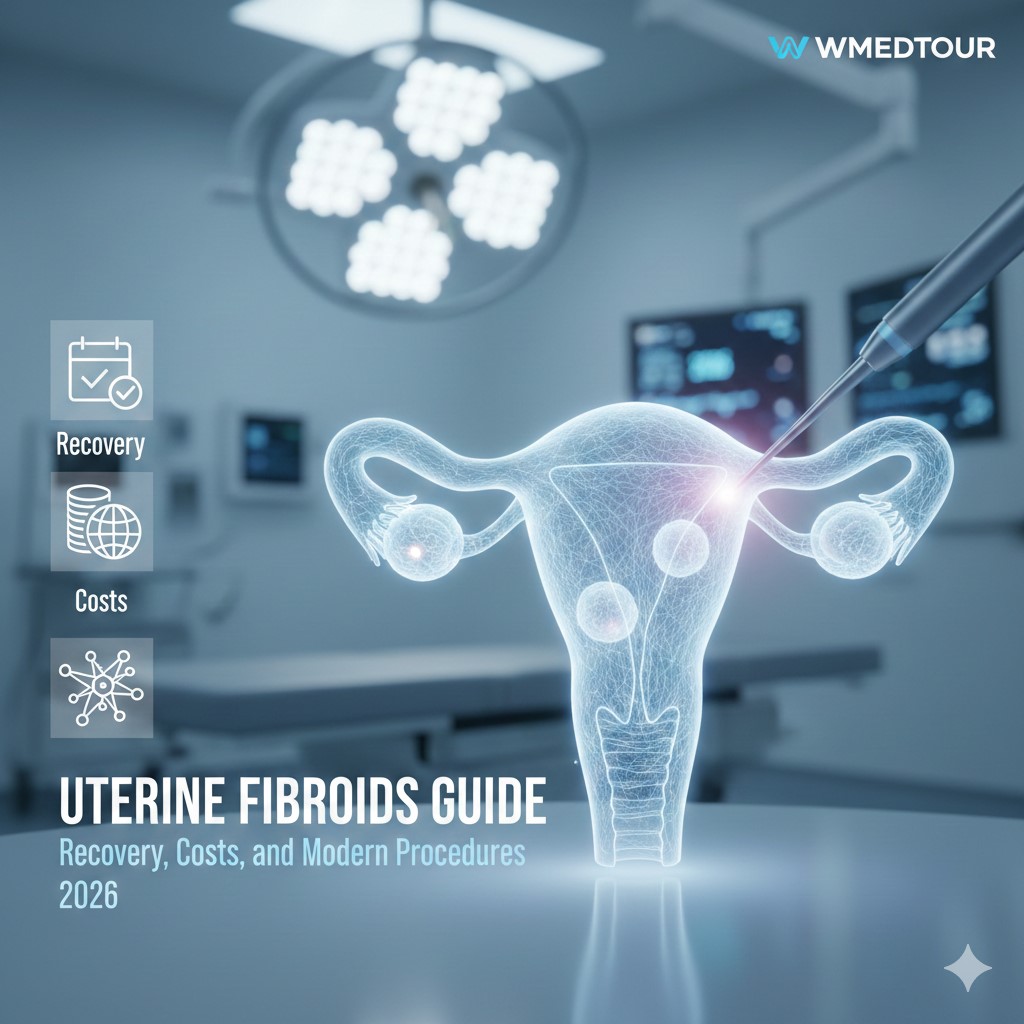
🎗️ Uterine Fibroids complete Guide: Everything You Need to Know in 2026
📋 Executive Summary
This Uterine Fibroids complete Guide provides a 360-degree view of one of the most common reproductive health issues. Fibroids affect up to 80% of women by age 50. While often asymptomatic, they can cause significant pain and fertility challenges. Key takeaways include:
- Nature: Fibroids are muscular tumors that are almost never cancerous.
- Symptoms: Heavy menstrual bleeding and pelvic pressure are primary indicators.
- Solutions: Options range from watchful waiting to advanced myomectomy.
- Medical Tourism: High-quality care is available globally at competitive prices.
👤 Who is This For?
We designed this guide for patients seeking clarity. It is for women experiencing unexplained pelvic pain. It is also for partners wanting to support their loved ones. Furthermore, medical professionals can use this as a resource for patient education. If you are considering gynecological surgery, this guide serves as your primary roadmap.
🔬 Understanding Uterine Fibroids
Uterine fibroids are growths made of smooth muscle cells. They develop in the wall of the uterus. Doctors also call them leiomyomas or myomas. Most women have no idea they have them. However, for others, fibroids interfere with daily life. They vary in size from tiny seedlings to bulky masses.
📍 Types of Fibroids
Location determines the type of fibroid you might have. Intramural fibroids grow within the muscular uterine wall. Subserosal fibroids project outside the uterus. Meanwhile, submucosal fibroids bulge into the uterine cavity. These often cause the most bleeding issues. Lastly, pedunculated fibroids grow on small stalks.
[Image of types of uterine fibroids including intramural, subserosal, and submucosal]🚩 Symptoms and Root Causes
Many women feel nothing at all. When symptoms do occur, they can be quite distressing. Common signs include heavy periods that last more than a week. You might feel intense pelvic pressure or pain. Frequent urination is another common complaint. This happens when the fibroid presses against the bladder.
🧬 Why Do They Grow?
Science still seeks a definitive cause. However, hormones like estrogen and progesterone play a major role. These hormones stimulate the uterine lining during each cycle. They also seem to promote fibroid growth. Genetic changes are another factor. Fibroids often contain alterations in genes that differ from normal uterine muscle cells.
According to the National Institute of Child Health and Human Development, family history is a strong risk factor. If your mother had them, your risk increases. Race also plays a part. Research shows that Black women develop fibroids at younger ages.
🔍 Diagnosis and Evaluation
Diagnosis usually starts with a routine pelvic exam. Your doctor might feel irregularities in the shape of your uterus. To confirm, they often order an ultrasound. This test uses sound waves to create a map of your anatomy. If more detail is needed, an MRI might be necessary.
At our checkup department, we offer comprehensive screenings. Sometimes, a pap smear or hpv test is done simultaneously to rule out other issues. A hysteroscopy allows the doctor to look inside the uterus directly. This is particularly helpful for submucosal fibroids.
💉 Treatment Options Breakdown
Treatment is not one-size-fits-all. It depends on your symptoms and future pregnancy plans. Some women choose medication to manage heavy bleeding. Others require surgical intervention.
1. Myomectomy
This surgery removes the fibroids while leaving the uterus intact. It is the gold standard for women who wish to have children. You can learn more about this at our myomectomy page.
- Pros: Preserves fertility; relieves symptoms effectively.
- Cons: Risk of new fibroids growing; longer recovery than non-surgical options.
2. Hysterectomy
This is the permanent removal of the uterus. It is the only proven way to cure uterine fibroids completely. Visit our hysterectomy section for details. Many patients now opt for laparoscopic approaches for faster healing.
- Pros: Zero chance of recurrence; ends heavy bleeding forever.
- Cons: Major surgery; ends childbearing capability.
3. Uterine Fibroid Embolization (UFE)
This is a minimally invasive procedure. Small particles are injected into the arteries supplying the uterus. This cuts off blood flow to the fibroids, causing them to shrink. This is often handled within an interventional radiology suite.
- Pros: No large incisions; quick recovery.
- Cons: Not ideal for very large fibroids; may affect ovarian function.
📊 Comparison of Treatment Methods
| Treatment | Preserves Fertility? | Recovery Time | Invasiveness |
|---|---|---|---|
| Watchful Waiting | Yes | N/A | None |
| Medication | Yes | Immediate | Low |
| Myomectomy | Yes | 2–4 Weeks | Moderate/High |
| Hysterectomy | No | 4–6 Weeks | High |
| UFE | Maybe | 1 Week | Low |
📖 Patient Journey: Sarah’s Story
Sarah was a 34-year-old marketing executive. She suffered from severe anemia due to heavy periods. She wanted to preserve her fertility for the future. After a telemedicine consultation, she decided on a robotic-assisted myomectomy. Sarah traveled to a specialized center in Turkey. Within three weeks, she returned to work. Six months later, her iron levels were normal, and she was pain-free.
🗺️ The Patient Roadmap
Navigating treatment can feel overwhelming. Follow these steps for a smoother experience:
- Initial Screening: Visit a local gynecologist or our gynecological department.
- Imaging: Get an ultrasound or MRI to map the fibroids.
- Consultation: Discuss your goals with a surgeon like Dr. Ismet Gun.
- Decision: Choose the treatment that aligns with your lifestyle.
- Pre-op: Complete a pre-operative consultation.
- Procedure: Undergo the selected treatment.
- Recovery: Follow post-operative care carefully.
💰 Cost Analysis Table (Estimated)
Prices vary significantly by region. Medical tourism offers a way to access world-class care at a fraction of the cost found in the US or UK.
| Region | Myomectomy (USD) | Hysterectomy (USD) |
|---|---|---|
| United States | $15,000 – $25,000 | $20,000 – $35,000 |
| Turkey | $4,500 – $7,000 | $5,000 – $8,500 |
| India | $3,000 – $5,500 | $3,500 – $6,000 |
| Iran | $2,500 – $4,500 | $3,000 – $5,000 |
For those looking for options in specific regions, check our Turkey directory or Iran listings.
✈️ Recovery and Medical Tourism
Combining surgery with a recovery holiday is becoming popular. Many patients choose tours in Iran or tours in India. These locations offer highly skilled surgeons and luxury recovery settings. You can find excellent hospitals in our global directory.
If you need specialized transport, we provide air ambulance services for peace of mind. Our global medical tourism guide 2026 provides deeper insights into planning your trip.
❓ Frequently Asked Questions
1. Are uterine fibroids cancerous?
No, they are almost always noncancerous (benign) and do not increase cancer risk.
2. Can fibroids cause infertility?
Yes, depending on their size and location, they can block fallopian tubes or interfere with implantation.
3. Do fibroids shrink after menopause?
Generally, yes. Because they depend on estrogen, they usually shrink when hormone levels drop.
4. Is surgery always necessary?
No, many women manage symptoms with medication or monitoring if the fibroids are small.
5. What is the best treatment for someone wanting kids?
Myomectomy is typically recommended as it preserves the uterus.
6. How long is the recovery for a laparoscopic hysterectomy?
Most women return to normal activities within 3 to 4 weeks.
7. Can diet affect fibroid growth?
Some studies suggest red meat increases risk, while green vegetables may lower it.
8. Are there non-surgical options?
Yes, including hormonal therapies and Uterine Fibroid Embolization.
9. Do fibroids come back after a myomectomy?
There is a chance that new fibroids may develop over time.
10. Will fibroids affect my pregnancy?
They can increase the risk of complications like placental abruption or preterm birth.
11. What is the fastest way to stop fibroid pain?
Over-the-counter pain relievers and heating pads provide temporary relief, but medical intervention is needed for long-term solutions.
12. Is medical tourism safe for this surgery?
Yes, when you choose accredited hospitals and experienced surgeons through platforms like WMTour.