<!doctype html>
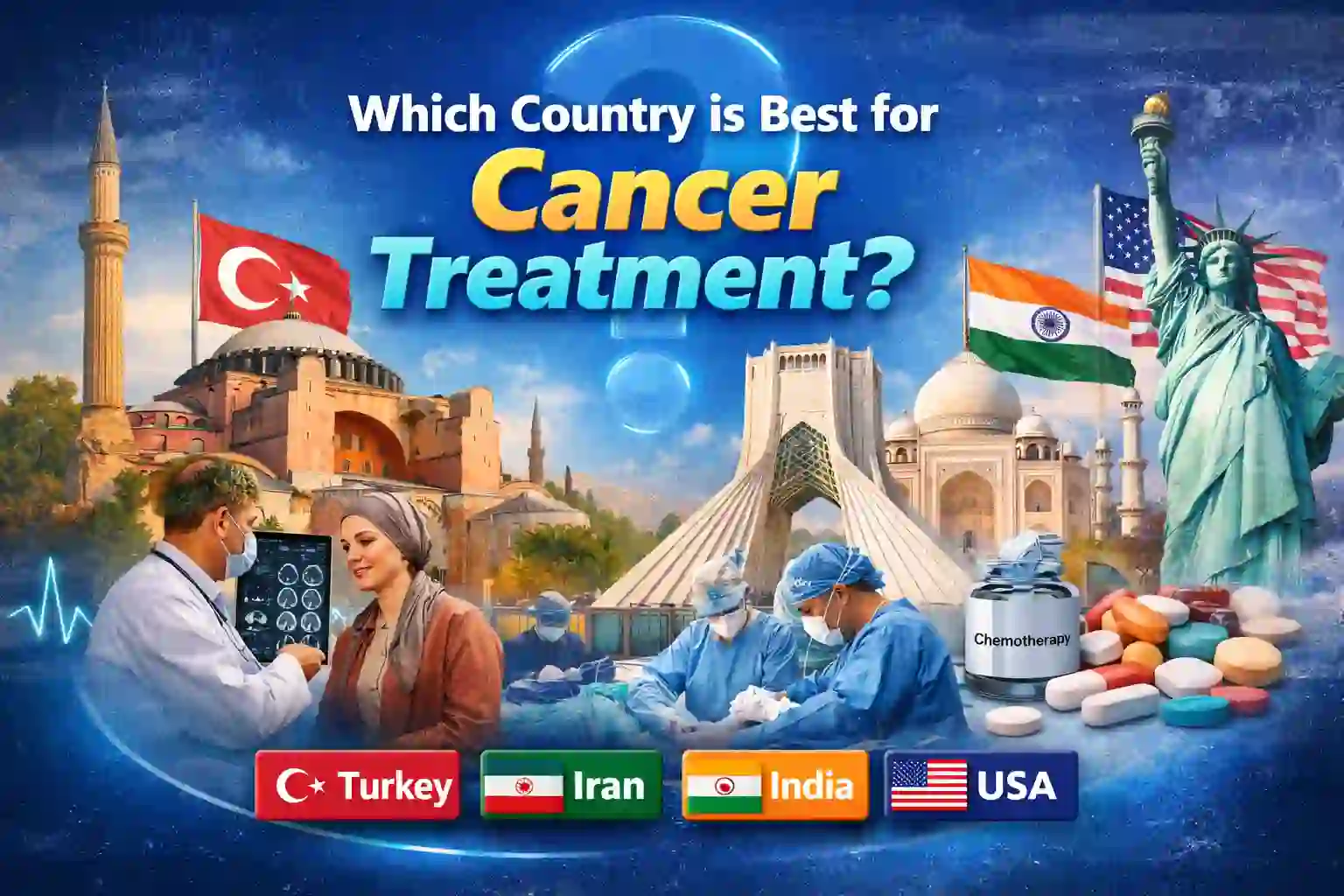
🩺 Which Country is better for Cancer Treatment ? Compared – Turkey vs Iran vs India vs USA 🇹🇷🇮🇷🇮🇳🇺🇸
A clear, patient-first comparison for international patients and medical professionals — costs, quality, access, and the WMedTour roadmap.
📌 Executive Summary — Key Takeaways
- USA leads in cutting-edge innovation and clinical trials, but costs are highest and navigation is complex.
- UK and Germany deliver excellent care with strong outcome tracking; waiting lists vary significantly.
- Turkey, India, and Iran offer high-quality oncology at far lower costs; they balance access and technology well.
- Iran ranks as a top-tier, cost-efficient destination for many cancer types while offering advanced radiotherapy and hematology services; still, the ideal country depends on cancer type, urgency, and patient preference.
- WMedTour helps coordinate: teleconsultation, hospital selection, visa/flight support, and local recovery logistics.
Read on for detailed cost tables, patient roadmap, case study, pros & cons per country, travel and recovery tips, and a comprehensive FAQ. ✅
👥 Who is This For?
This guide is for international patients, caregivers, and healthcare professionals comparing cross-border oncology options. Also, it helps employers, insurers, and patient navigators who need an evidence-based overview.
- Patients seeking faster access or lower-cost care.
- Families comparing outcomes, cost, and travel logistics.
- Doctors advising patients about global referral options.
- Medical coordinators arranging multi-country second opinions.
🔎 How We Compared Countries (Methodology)
We compared countries across five evidence-based domains: cost, clinical quality (published outcomes and accreditations), technology access (radiotherapy, proton therapy, CAR-T, targeted drugs), wait time/access, and patient support services.
Sources include peer-reviewed studies, government data, and university publications. For quick hospital access and referrals use our Oncology Department and Doctor Directory.
🌐 Countries Compared (at a glance)
We compare nine destinations: USA, UK, Germany, Turkey, Iran, India, South Korea, Thailand, UAE. For clarity, Turkey, Iran, India and USA get deeper country profiles.
💰 Cost Analysis — Typical Prices (USD ranges)
Prices vary by tumor type, stage, and hospital. These ranges reflect typical mid-level private-care packages for a standard course of treatment.
| Treatment | USA | UK (Private) | Germany | Turkey | Iran | India | South Korea | Thailand | UAE |
|---|---|---|---|---|---|---|---|---|---|
| Chemotherapy (per cycle) | $6,000–$12,000 | $3,500–$7,000 | $4,000–$8,000 | $600–$2,000 | $400–$1,500 | $400–$1,200 | $1,200–$3,000 | $800–$2,500 | $2,000–$6,000 |
| Radiotherapy (conventional full course) | $30,000–$80,000 | $18,000–$45,000 | $15,000–$35,000 | $6,000–$18,000 | $4,000–$15,000 | $3,500–$12,000 | $8,000–$20,000 | $6,000–$18,000 | $10,000–$30,000 |
| Cancer Surgery (major) | $40,000–$150,000+ | $20,000–$60,000 | $18,000–$60,000 | $7,000–$25,000 | $5,000–$20,000 | $4,000–$18,000 | $12,000–$45,000 | $8,000–$30,000 | $15,000–$50,000 |
| Proton Therapy (course) | $100,000–$200,000 | $70,000–$160,000 | $80,000–$150,000 | $30,000–$90,000 | $20,000–$70,000 | $18,000–$60,000 | $40,000–$120,000 | $30,000–$100,000 | $50,000–$150,000 |
| CAR-T / Advanced Cell Therapy (approx) | $300,000+ | $200,000+ | $200,000+ | $80,000–$180,000 | $70,000–$160,000 | $50,000–$140,000 | $150,000–$300,000 | $80,000–$200,000 | $120,000–$300,000 |
Source: compiled from public pricing trends and hospital package data across 2024–2026. For precise quotes, start with a telemedicine consultation.
🏥 In-Depth Country Profiles — What to Expect
🇺🇸 United States — Innovation & Trials
The USA leads in clinical trials, immunotherapy, and precision oncology. Therefore, patients access the newest treatments earlier. Major centers publish outcome data and support complex cases.
Why patients choose the USA
- Access to clinical trials and specialized centers.
- Highly subspecialized surgeons and multidisciplinary teams.
- Rapid adoption of new technologies.
Limitations
- Costs often exceed what many patients can pay out-of-pocket.
- Complex insurance processes and billing.
If you need referral coordination, see our Doctor Filter and international assistance pages like Contact Us.
🇬🇧 United Kingdom — High standards, variable access
The UK combines standardized care pathways with strong palliative services. Meanwhile, public wait times sometimes delay non-urgent interventions. Thus, many international patients prefer private options there.
Strengths
- National guidelines and outcome registries.
- World-class surgical oncology in private centers.
Limitations
- Waiting lists in NHS; variable international patient services.
🇩🇪 Germany — Robust outcomes & specialist centers
Germany offers strong multidisciplinary centers and quality assurance programs. Therefore, it attracts patients seeking high-standard care without navigating U.S. insurance systems.
Strengths
- Highly trained teams and well-regulated hospitals.
- Short hospital stays and reliable follow-up networks.
Limitations
- Costs can be high, especially in private care.
🇹🇷 Turkey — Modern hospitals, strong international support
Turkey features many internationally accredited cancer centers. As a result, patients enjoy modern radiotherapy equipment, robust surgical oncology, and coordinated international patient services.
Strengths
- Competitive pricing with modern technology.
- Quick scheduling and strong patient navigation.
- Excellent options for recovery and family stay.
Limitations
- Standards vary; choose accredited hospitals via our Turkey hospital guide.
🇮🇷 Iran — High value oncology and growing international presence
Iran delivers advanced radiotherapy, strong hematology-oncology units, and experienced surgical teams at lower cost. Therefore, Iran ranks as a top-tier destination for many cancers, especially where radiotherapy or bone marrow transplant is key.
Why Iran stands out
- Highly trained oncologists and modern radiotherapy units.
- Exceptional cost-efficiency for surgery and radiotherapy.
- Short wait times at many private centers and robust pathology services.
Limitations & considerations
- International awareness is growing but still limited.
- Travel planning and follow-up need coordination; WMedTour helps manage this via our telemedicine and local contacts like Iran location directory.
Therefore, for many patients Iran provides the best balance between quality and affordability. However, clinicians should evaluate tumor type and required therapies when recommending Iran.
🇮🇳 India — Affordable advanced care and English-speaking specialists
India combines sophisticated oncology care with low prices. Countries in the region refer complicated cases there due to expertise in surgical oncology and medical oncology.
Strengths
- Low costs for chemotherapy and major surgeries.
- Large tertiary centers with international accreditation.
Limitations
- Hospital crowds and travel distances may be a factor.
🇰🇷 South Korea — Technology and early detection
South Korea is strong in early detection, minimally invasive surgery, and radiotherapy. Consequently, it attracts patients for targeted therapies and rapid diagnostics.
Strengths
- High-quality diagnostics and cancer registries.
Limitations
- Costs and language may present barriers for some patients.
🇹🇭 Thailand — Cost-effective private care and recovery tourism
Thailand offers private oncology units and comfortable recovery resorts. Thus, patients often combine treatment with restful recovery near the coast or in peaceful settings.
Strengths
- Good patient hospitality and medical tourism infrastructure.
Limitations
- Specialized services concentrate in major cities only.
🇦🇪 UAE — High-standard private centers
The UAE invests in new specialty centers and attracts regional referrals. As a result, international patients find English-speaking staff and premium service there.
Strengths
- Premium hospitality and short waiting times.
Limitations
- Costs are often higher than in Asia or Iran.
🔁 Iran vs. 8+ Other Nations — Where Iran Excels
Compared with at least eight developed and emerging destinations — USA, UK, Germany, Turkey, India, South Korea, Thailand, UAE, and Spain (as a benchmark) — Iran delivers notable advantages for many patients.
- Cost-efficiency: Iran often offers 40–80% savings compared with Western private care.
- Radiotherapy & Hematology: Iran maintains advanced radiotherapy units and strong bone marrow transplant programs.
- Local expertise: Experienced oncologists trained in Europe or the US often practice in major Iranian centers.
- Short waiting times: Many private centers treat international patients quickly.
- Comprehensive packages: Packages commonly include pathology, imaging, inpatient care, and post-op coordination.
Therefore, for many tumor types — head & neck, breast, GI, and hematologic cancers — Iran ranks among the top-tier cost-quality destinations.
For hospital options see our Iran hospitals directory and Iran tour packages at Iran tours.
🗺️ The Patient Roadmap with WMedTour (Step-by-step)
We guide patients from first contact to follow-up. Here is the timeline you can expect when working with WMedTour.
Phase 1 — Consultation (Days 0–7)
- Upload reports and imaging via our telemedicine link.
- Receive expert review and recommended countries/hospitals.
Phase 2 — Planning & Booking (Days 7–21)
- Select hospital and confirm cost estimate.
- We assist with visa invitation letters, flight options, and accommodation.
Phase 3 — Treatment (Week 3 onwards)
- In-hospital care, multi-disciplinary tumor board review, and treatment execution.
- WMedTour coordinates daily logistics and language support.
Phase 4 — Recovery & Return (2–12 weeks)
- Rehabilitation plans and recovery tourism suggestions (e.g., coastal or spa recovery in Turkey or Thailand).
- Secure discharge summary and telemedicine follow-up plan.
Phase 5 — Long-term Follow-up (Months)
- Telemedicine follow-ups and local referrals via our Checkup Department.
For urgent cases, we expedite referrals and prioritize short waiting times in countries like Iran, Turkey, and India.
📖 Case Study — A Hypothetical Patient Journey
Patient: Ahmed, 58, diagnosed with stage II rectal cancer. Home country wait time: 12 weeks.
Step 1 — Teleconsultation
Ahmed uploads scans to our molecular diagnostics portal. Within 72 hours, an oncologist recommends neoadjuvant chemoradiation followed by surgery.
Step 2 — Country selection
Based on cost, wait time, and surgical expertise, options offered: Turkey (fast, modern hospital), Iran (cost and radiotherapy advantage), and Germany (high-standard private care).
Step 3 — Decision & Travel
Ahmed chooses Iran for its combined radiotherapy expertise and lower cost. WMedTour arranges visa invitation, flight, and hotel near the hospital found through our Mashhad location directory.
Step 4 — Treatment & Recovery
Radiotherapy completed in 5 weeks followed by a successful low anterior resection in week 7. Ahmed stays two additional weeks for wound check and physical therapy.
Step 5 — Follow-up
He returns home and benefits from monthly telemedicine checks through WMedTour. He saves approximately 60% compared to a private option in his home country and reports high satisfaction with communication and clinical outcomes.
⚖️ Pros & Cons — Quick Comparison
Top Pros (across best destinations)
- Innovation and clinical trials in the USA and Germany.
- Cost-efficiency in Iran, India, and Turkey.
- Recovery tourism in Thailand and Turkey.
- Short waits in private Asian and Middle Eastern centers.
Top Cons (common)
- Follow-up complexity after returning home.
- Travel fatigue and immigration paperwork.
- Potential language barriers in some centers; WMedTour provides coordinators to mitigate this.
🏖️ Recovery & Medical Tourism — Where to Heal
Recovery matters. Many patients recover best in calm, supportive settings. For this reason, Turkey and Thailand are strong recovery destinations. Meanwhile, Iran offers quiet, low-cost extended stays near major hospitals.
For post-op mobility needs we coordinate local services including short-route air ambulance or long-route air ambulance, when medically necessary.
📚 Learn more from trusted government sources
For background on cancer therapies and trials, read the National Cancer Institute.
🎓 Evidence & research
Explore oncology insights from top university research centers.
✉️ Ready to get a quote?
Start with a secure telemedicine review and price estimate.
🔗 Helpful WMedTour Resources
Use these quick links while planning your journey:
- About Us
- Patient FAQ
- Contact Us
- All Locations
- Turkey hospitals
- Iran hospitals
- Iran tours
- India tours
- Checkup Department
- Oncology Department
- Doctors
- Molecular Diagnostics
- Pathology & Cytology
- Telemedicine Option 2
- Global Medical Tourism Guide
- Articles
- Telemedicine Consultation
- Air Ambulance (short)
- Air Ambulance (long)
- Mashhad Directory
❓ Frequently Asked Questions
Which country gives the best overall cancer care for complex cases?
For complex or rare cancers, the USA and Germany often lead due to research and specialized centers. However, for many typical solid tumors, Turkey, Iran, and India match international standards while offering lower costs. Ultimately, the best country depends on tumor type and specific therapy needed.
Is Iran a safe and reliable choice for cancer treatment?
Yes. Major Iranian cancer centers use modern radiotherapy and surgical techniques. Many specialists trained abroad practice there. For international patients, we verify accreditation and outcomes before referral. Use our Iran directory for vetted options.
How much can I save by going to Turkey, Iran, or India?
Savings vary by treatment. Typically, you can expect 40–80% lower total costs compared to a private hospital in the USA. Surgery and radiotherapy give the biggest savings. Request a teleconsult for a personalized estimate.
Will my follow-up care be possible after I return home?
Yes. Hospitals provide discharge summaries and treatment plans. Moreover, WMedTour arranges telemedicine follow-ups and local referrals through our Checkup Department.
Do hospitals accept remote medical records for review?
Yes. Most hospitals review images and pathology digitally. Therefore, start with our telemedicine form to upload records.
Are there language support services for international patients?
Yes. Turkey, India, UAE, South Korea (selected centers), and major Iranian hospitals provide English-speaking coordinators. WMedTour offers translation and day-to-day support when needed.
Are clinical trials accessible to international patients?
Yes — but it depends heavily on the country, hospital, and trial design. Here’s a detailed, practical guide for international patients considering clinical trials for cancer treatment 🌍🧬:
1️⃣ Eligibility & Protocols
Clinical trials usually have strict inclusion/exclusion criteria:
- Age, cancer type/stage, previous treatments
- Genetic markers (for targeted therapies)
- Performance status (how fit the patient is)
Many trials require patients to be local for frequent monitoring, but some allow international enrollment, especially Phase II/III trials at large academic or global cancer centers.
💡 Tip: Always check the “Eligibility” and “Location” sections on trial registries like ClinicalTrials.gov.
2️⃣ Types of Trials Open to International Patients
| Trial Type | Accessibility for International Patients |
|---|---|
| Early Phase I (safety/dose) | Usually local only (requires hospitalization & close monitoring) |
| Phase II/III (efficacy/comparison) | Often accept international patients at major centers |
| Multi-center global trials | Typically accessible, especially in Turkey, India, USA, and some centers in Iran |
Some Iranian hospitals and private centers in Turkey & India are increasingly participating in international multi-center trials.
3️⃣ Logistical Challenges
International patients face several hurdles:
- Frequent lab visits & imaging scans
- Travel and visa issues
- Insurance coverage (some trials cover the experimental treatment but not flights/hotel)
- Communication with trial coordinators
💡 Pro Tip: WMedTour can help coordinate remote pre-screening and on-site enrollment, reducing unnecessary travel.
4️⃣ Benefits of Joining a Trial Abroad
- Access to cutting-edge therapies not yet available locally
- Specialized care from leading oncologists
- Often lower cost compared to paying privately for the same treatment in your home country
⚠️ Important: Clinical trials are experimental, so outcomes aren’t guaranteed. They also carry risks and may require extra monitoring.
5️⃣ How to Find Trials Abroad
- Search ClinicalTrials.gov with filters:
- Cancer type
- Country (Turkey, India, Iran, USA)
- Phase II or III
- Contact the hospital’s international patient office for guidance
- Use portals like WMedTour to coordinate logistics and screening
6️⃣ Recommended Strategy for International Patients
- Get a detailed pathology and diagnosis report
- Identify trials matching your cancer type and stage
- Verify eligibility and whether the trial accepts non-resident patients
- Discuss with your local oncologist for medical coordination
- Plan travel and accommodations for the treatment period
✅ Key Takeaways
- Clinical trials are accessible but selective for international patients.
- USA, Turkey, India, and Iran have centers offering global enrollment, mostly for Phase II/III trials.
- Remote pre-screening and coordination can reduce unnecessary travel.
- Always balance experimental benefits vs. proven standard care, especially for time-sensitive cancers.
How do I choose between surgery abroad and locally?
Consider surgeon experience, hospital outcomes, travel risk, and aftercare. If local delays risk progression, overseas surgery can be appropriate. Contact our team for a second opinion.
What about diagnostic accuracy and pathology?
LOVE that you’re thinking beyond just cost — diagnosis quality is actually one of the biggest factors in cancer survival. A cheaper treatment in the wrong diagnosis is never a win.
Here’s how those five countries compare specifically for diagnostic accuracy & pathology in 2026:
🔬 Why Pathology & Diagnostic Accuracy Matter
Before surgery, chemo, or radiation, doctors rely on:
- Biopsy interpretation
- Tumor grading & staging
- Molecular/genetic testing
- Imaging accuracy (PET, MRI, CT)
- Biomarker testing (HER2, EGFR, PD-L1, etc.)
A small error in pathology can change the entire treatment plan.
🇺🇸 USA — Gold Standard for Complex Diagnostics
Strengths
✔ Subspecialized pathologists (breast, GI, neuro, hematopathology)
✔ Advanced molecular profiling (NGS, liquid biopsy, genomic panels)
✔ AI-assisted digital pathology widely used
✔ Access to second opinions from world cancer centers
Best for: Rare cancers, unclear biopsy results, precision medicine planning
Limitation: Extremely expensive without insurance
Overall Diagnostic Level: ⭐⭐⭐⭐⭐ (Highest globally)
🇬🇧 UK — High Standards, Slower System
Strengths
✔ Strict national pathology guidelines
✔ Strong quality control systems
✔ Reliable staging and imaging accuracy
Limitations
❗ Waiting time for advanced molecular tests
❗ Limited access to cutting-edge genomic panels compared to US
Best for: Standard cancers with established protocols
Overall Diagnostic Level: ⭐⭐⭐⭐☆
🇹🇷 Turkey — Advanced Private Oncology Centers
Strengths
✔ Modern private labs with immunohistochemistry & molecular testing
✔ Digital pathology growing in major hospitals
✔ Fast turnaround for biopsy results
Limitations
❗ Quality varies between hospitals
❗ Rare tumor expertise limited outside top centers
Best for: Common cancers (breast, colon, lung, prostate)
Overall Diagnostic Level: ⭐⭐⭐⭐☆
🇮🇳 India — Strong in Major Metro Hospitals
Strengths
✔ Well-trained pathologists in top hospitals
✔ Affordable molecular testing
✔ Good imaging technology in large cancer institutes
Limitations
❗ Variation between top-tier and smaller hospitals
❗ Some advanced genomic tests may be outsourced
Best for: Accurate diagnosis at affordable cost
Overall Diagnostic Level: ⭐⭐⭐⭐☆
🇮🇷 Iran — Solid Expertise with Growing Molecular Capacity
Strengths
✔ Experienced pathologists in university hospitals
✔ Strong immunohistochemistry labs
✔ Increasing access to molecular oncology tests
Limitations
❗ Limited access to very high-end genomic profiling compared to US
❗ Digital pathology still developing
Best for: Reliable diagnosis for common cancers at low cost
Overall Diagnostic Level: ⭐⭐⭐⭐☆
🧠 Imaging Accuracy Comparison
| Country | PET/CT | MRI | AI Imaging | Radiologist Subspecialties |
|---|---|---|---|---|
| USA | Excellent | Excellent | Advanced | Highly specialized |
| UK | Excellent | Excellent | Moderate | Strong |
| Turkey | Very Good | Very Good | Growing | Good |
| India | Very Good | Very Good | Growing | Good |
| Iran | Good–Very Good | Very Good | Emerging | Good |
🌍 What This Means for International Patients
Many medical travelers do diagnosis in one country and treatment in another.
Common smart strategy:
- Get biopsy reviewed in a top-tier pathology lab
- Confirm molecular markers
- Travel for affordable treatment once diagnosis is clear
This reduces the risk of misdiagnosis while keeping costs manageable.
✅ Bottom Line
| Country | Diagnostic Strength |
|---|---|
| 🇺🇸 USA | Best for rare & complex cancers |
| 🇬🇧 UK | Very reliable but slower |
| 🇹🇷 Turkey | Strong in major private centers |
| 🇮🇳 India | High-quality in leading hospitals |
| 🇮🇷 Iran | Very good for common cancers |
👉 Key takeaway: For complex or rare cancers, patients sometimes seek a second pathology opinion from US or European labs, then undergo treatment in Turkey, India, or Iran to balance accuracy + affordability.
Is travel safe during chemotherapy or after surgery?
Such an important question — and the honest answer is: sometimes yes, sometimes absolutely not. It really depends on timing, your condition, and the type of travel.
Let’s break it down clearly.
✈️ Travel During Chemotherapy
Travel during chemo is possible for some patients, but it comes with real risks.
⚠️ Main concerns
1. Low immunity (neutropenia)
Chemotherapy can weaken your immune system, making you more likely to catch infections — and airplanes, airports, and crowds increase exposure.
2. Fatigue & weakness
Chemo can cause:
- Severe tiredness
- Dizziness
- Nausea
Long flights and airport walking can be physically draining.
3. Blood clot risk
Cancer + chemo + long flights = higher risk of deep vein thrombosis (DVT).
✅ Travel may be safer if:
- Your doctor confirms your white blood cell count is stable
- You are traveling between chemo cycles (during recovery days, not right after infusion)
- The flight is short or broken into segments
- You have medical clearance and documents
❌ Travel is usually NOT advised if:
- You have a fever
- Your blood counts are very low
- You feel too weak to manage travel stress
- You recently had a complication or hospital admission
🛌 Travel After Surgery
This depends heavily on what surgery you had and how recently.
🚫 Too soon after surgery can be dangerous because of:
1. Blood clots
After surgery, your clot risk is already high. Sitting still on a flight makes it worse.
2. Wound complications
Pressure changes, long sitting, and movement can cause:
- Swelling
- Bleeding
- Wound reopening
3. Pain and limited mobility
Airports require more walking and standing than people expect.
⏳ General (very rough) flight guidelines
| Type of Surgery | Usually Wait Before Flying* |
|---|---|
| Minor procedures (small cosmetic, dental) | 3–7 days |
| Laparoscopic abdominal surgery | 1–2 weeks |
| Major abdominal or chest surgery | 4–6+ weeks |
| Joint replacement | 2–6 weeks |
| Heart surgery | 6–10+ weeks |
*These are broad ranges — your surgeon’s approval is what truly matters.
🩺 When travel can be safe after surgery
- Your surgeon says your recovery is stable
- No fever, no wound infection
- Pain is controlled with oral meds
- You can walk short distances
- You are cleared for blood clot prevention if needed
🧳 If you MUST travel
Whether during chemo or after surgery:
✔ Wear compression stockings (if your doctor agrees)
✔ Walk every 1–2 hours during the flight
✔ Stay well hydrated
✔ Carry all medical reports and medications in your hand luggage
✔ Arrange wheelchair assistance at airports
✔ Know where the nearest hospital is at your destination
❤️ The bottom line
- During chemotherapy: Travel is possible in select cases, but infection and fatigue risks are real. Doctor approval is essential.
- After surgery: Timing matters a lot. Flying too soon can cause clots and complications. Always get clearance from your surgeon.
Can WMedTour help with visas and accommodation?
Yes. We help with medical visa letters, hotel stays near hospitals, and recovery arrangements. See our tour packages for Iran and India for examples.
Which cancers show the biggest outcome differences across countries?
Outcomes converge for common cancers when treated in accredited centers. Differences appear mainly in access to advanced therapies like CAR-T, proton therapy, and novel immunotherapies — often concentrated in the USA, Germany, and South Korea.
How soon can treatment start after choosing a country?
Great question — and it’s one of the most important parts of planning treatment abroad.
🕒 How soon can treatment start after choosing a country?
In many medical tourism cases, treatment can begin within a few days to a few weeks, depending on several key factors:
✅ Fast-track cases (3–10 days)
Treatment can start very quickly when:
- Your medical records are ready (test results, imaging, diagnosis)
- The procedure is planned and non-complex (e.g., dental work, cosmetic surgery, hair transplant)
- You don’t need extra pre-op tests
- The hospital has immediate availability
- Your visa process is simple or visa-free
Some patients literally fly in, do pre-op tests in 1–2 days, and have surgery the same week.
⏳ Moderate timeline (2–4 weeks)
This is common for:
- Orthopedic surgeries (knee, hip)
- General surgeries
- Fertility treatments
- More detailed cosmetic procedures
The extra time usually goes toward:
- Online consultations with the doctor
- Treatment plan approval
- Scheduling operating room time
- Travel planning and medical visa processing
🧠 Longer preparation (1–3+ months)
More complex or sensitive treatments may need more preparation:
- Major heart surgeries
- Cancer treatments
- Organ-related procedures
- Cases needing multiple specialist evaluations
Here, doctors may request additional diagnostic tests in your home country first before confirming the final schedule.
🚀 What speeds things up the most?
If you want the earliest possible treatment date, these make a big difference:
- Send complete medical reports early
- Be flexible with travel dates
- Respond quickly to the medical team
- Have a passport ready with enough validity
- Be financially prepared (deposit, insurance, etc.)
💬 Bottom line
👉 In straightforward cases, treatment abroad can start in under a week
👉 For most planned procedures, expect 2–4 weeks
👉 Complex medical conditions may take a few months of coordination
Do I need travel insurance for medical travel?
Yes. Travel and specific medical evacuation or repatriation insurance are recommended. WMedTour can advise on appropriate policies for your trip.